How to Train a Rottweiler to Be a Guard Dog (Vet-Reviewed Step-by-Step Guide)


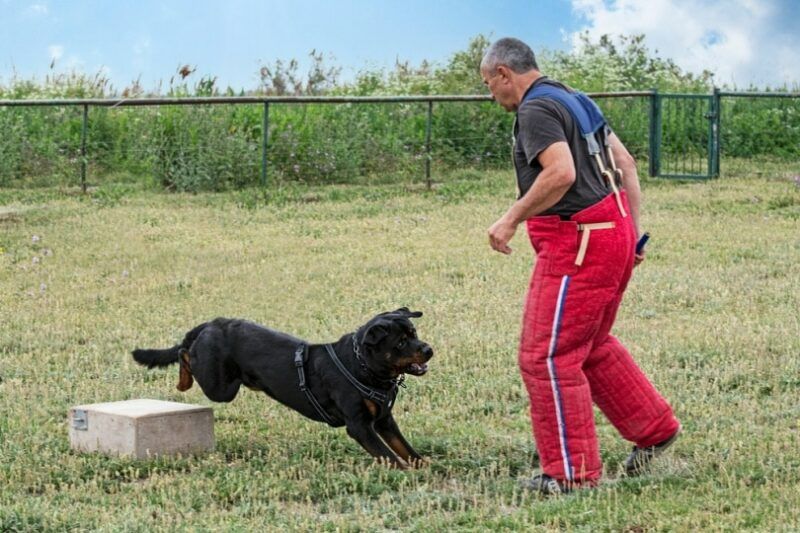
If you’ve just gotten a Rottweiler puppy, you may decide you want to train them to be a guard dog for your home. After all, the Rottweiler is known for being protective and territorial, which makes them an excellent choice to be a guard dog. You can absolutely train a Rottie to be a guard dog, but it will take time and patience, and you’ll need to start the right training when they are incredibly young, ideally during the puppy socialization stage. Training a Rottweiler is no small deal, so be prepared to put in the work. Also, note that this breed tends to do better with experienced dog owners, as inexperienced ones may find them challenging to work with, which can lead to poor training and behavioral issues.
If you’re up for the job, you’ll find you can train your Rottweiler to be a guard dog with the step-by-step guide below. Be forewarned, there will be a lot to teach your pup, but with a bit of effort, you’ll soon have an effective guard dog!

Before You Begin
You don’t need extensive equipment for training your Rottweiler, but some preparation will make training smoother and safer. However, you will need plenty of treats to serve as incentives and rewards (or a favorite toy that will work as an incentive), a good leash, and a friend whom your dog isn’t familiar with later on in training. You might also want to use a clicker as you train, but that is optional.

How to Train a Rottweiler to Be a Guard Dog
1. Basic Obedience

To train your Rottweiler correctly, you’ll need to undergo three training series, beginning with basic obedience.
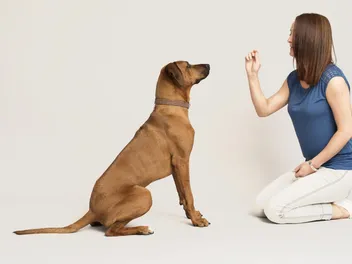
- Start obedience training with the basics. This means teaching your dog the commands for “sit”, “stay”, “leave“, “come”, and “speak”. This is the first place where treats or a clicker will come in handy.
- After your Rottweiler can follow these simple commands, it’s time to teach them impulse control. This means using these commands when other people are in your house, so your dog knows your home doesn’t need to be protected against everyone who isn’t you. This is where you begin differentiating between those who are friendly and those who could be dangerous.
- Next up are socialization skills. Your pup must be socialized from a young age with people who aren’t part of your immediate family, so they realize that not all strangers will be threats.
- If you’re having difficulty teaching your pet basic commands or socialization, you might consider taking them to a trainer or obedience class to get a professional’s help.
2. Guarding Their Territory

Once your pup has the basics down, it’s time to teach them where the territory to guard lays and where the boundaries are.
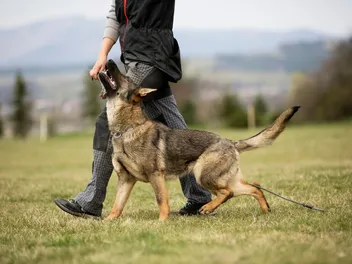
- Each morning and evening, get your Rottie on their leash and walk them around the area you want to protect (such as the front yard or the perimeter of the house). Doing this will let them know what belongs to their territory and what does not, while repetition will help your pet learn the boundaries of where they are guarding.
- Try to do your walks quietly, so your dog can concentrate and take in what they need to. Focus on calm, alert observation rather than excessive marking or barking.
- Once you’ve done this several times, it’s time to move on to leaving your Rottweiler alone and letting them spend time (on a long tether or within a fence, if outdoors) in the area you want to be guarded. Spending a few hours in the specific part of the home or yard they are protecting will give your pet the idea that everything within that section is theirs to protect. Placing items such as food, water, and toys there will help reinforce the idea. If your Rottie is only a puppy, they should still be supervised at this time.
- When you notice your dog taking an interest in strangers or barking at things while stationed in their area to guard, reward them so your pup knows this is what they should be doing. Of course, try to break your Rottie of any bad habits, such as barking at the mailman.
- Remember to never punish your pet for bad behavior! Negative reinforcement will do more harm than good.
- When you feel like your dog has learned that this area of the home or yard needs to be guarded, ask a friend (that your pet isn’t familiar with) to show up there and make some noise to get the Rottweiler’s attention. Once your pup has been alerted to the “danger” and begun barking at the intruder, have your friend pretend to be frightened and run off. This lets your dog know that barking at disruptions, such as strange people, will scare them away, so the home is protected.
- If your pet is stationed outside during the above step, ensure they are restrained so they can’t lunge at your friend, just in case!
- After your friend has “run away”, reward your pet for doing a good job guarding the home.
3. Barking on Command

You should have taught your dog to “speak” during the basic obedience training, but now it’s time to teach them how to bark on command (or at potential danger).
- Watch your pup to see what everyday things they tend to bark at, such as squirrels, the mailman, etc.
- When you notice your Rottweiler barking at a stranger approaching the house or something else that could be deemed a potential danger, give them the instruction to “bark” as soon as you hear them begin barking. Reward your dog afterward for good behavior.
- If your pup isn’t already barking, give them the “bark” command and reward them if they start to bark at the danger.
- Keep practicing this when you notice people or things you want to keep away from the house. After a few days, bring back a friend your dog isn’t familiar with and have them approach while you give the command to bark, so you can test how your pet is doing. Reward your Rottie if they bark!
- Ensure all human participants are safe and aware of the dog’s presence, and that your dog is under control, on a leash, or within an enclosed fence. Never encourage lunging or aggression.
- Keep practicing till your dog barks on their own at strangers, etc.
- Reward controlled alerting, not reactive or excessive barking at harmless stimuli.
Conclusion
Though it will take patience and time, you can train your Rottweiler to be a guard dog with this step-by-step guide. Start with the simple stuff, such as basic commands and socialization, then introduce a dog’s territory and get them to bark at desired stranger danger. It will be a process, but the rewards will be worth it! And, if at any point, you believe you aren’t as up to the task as you thought, don’t be afraid to call in the professionals to lend a helping hand!
Featured Image Credit: cynoclub, Shutterstock
Expert dog care, straight to your inbox
News, insights, expert advice, and everything dog.

No spam — unsubscribe anytime.
By signing up, you agree to our Terms & Conditions and Privacy & Cookies Policy.
How useful was this post?
Click a star to rate. You can leave written feedback afterwards. (We read all feedback.)
Misty Layne lives out in the woods in small-town Alabama with her two Siamese - Serafina & Jasper. She also has an array of stray cats, raccoons, and opossums who like to call her front porch home. When she’s not writing about animals, you’ll find her writing poetry, stories, and film reviews (the animals are, by far, her favorite writing topic, though!). In her free time, Misty enjoys chilling with her cats, playing piano, watching indie and foreign films, photographing abandoned places, and catching up on her never-ending TBR list.