7 Great Impulse Control Games for Dogs You Can Play Today!


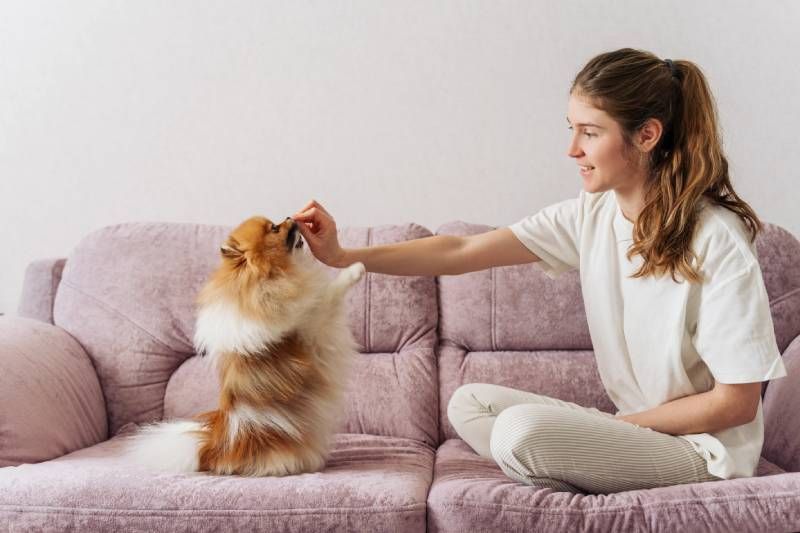
Like babies and young children, dogs naturally have little impulse control and generally just do what they want, when they want, without any concept of delayed gratification. Also, like kids, dogs can be taught to improve this crucial emotional skill through cleverly designed games. For ideas on how you can do this with your dog, check out the best impulse control games here and get started ASAP!

The 7 Impulse Control Games for Dogs
Impulse control can be taught from a young age, but it’s not something that all dogs master. How exactly do you know that your dog is struggling? Things like pulling on their leash, rushing to greet people, barely waiting for you to open the door before running outside, and snatching snacks from your hand are all perfect examples and are good signs that you need to try some of these impulse control games.
1. Leave It
“Leave it” is a common but essential command for establishing impulse control boundaries with your dog. First, select a high-value treat that your dog will go bananas over, like a piece of lunch meat. Leash up your dog, then clearly show your dog the treat while holding it out of their range. Tell them to leave it, and ignore their initial tugs at the leash. Once they settle down and let the leash go slack, you can praise them and give them the treat.
This command can be used with lower-value treats or toys to redirect their attention, and that’s very helpful for many dogs. However, we suggest starting with this method and removing the leash as they learn the command better. “Leave it” proves especially handy when you drop food on the ground, and you don’t want your dog to immediately scarf it down!

2. Red Light, Green Light
Yes, the classic children’s game can be adapted for canine impulse control training! The only thing you need to get started is a leash. Leash your dog up for a walk along a preferably familiar path, then suddenly stop while saying, “Red light!” Your dog will probably be confused at first and maybe tug on the leash, but you should stand firm and ignore the tugging while also ignoring them. Wait for them to let the leash go slack before continuing.
When you resume walking, first say, “Green light!” By teaching them that “green light” means go and “red light” corresponds to immediately stopping, you can help teach your dog to pause and wait for movement to resume on cue. This is super useful for safety purposes, such as if your dog suddenly moves toward a crowded street to retrieve a toy.
3. Drop It
“Drop it” is similarly important to “leave it” since both are important to keep your dog safe and keep them from putting potentially harmful objects in their mouths. That doesn’t mean it can’t be fun, though! Take an ordinary old toy of theirs that’s not really anything special, then choose a really delicious high-value treat your pup loves.
First, show them the toy and encourage them to play with it for a few seconds while concealing the treat. Then, show them the treat and say your command as they immediately ditch the toy for your super awesome treat. Repeat this regularly in short sessions every day to reinforce the command, and soon enough, you can apply the command to more distracting or real-life situations.

4. Puzzle Feeders
Puzzle feeders are often helpful for those dogs that swallow their food too quickly, and they may also support your other impulse control lessons. Snuffle mats are good options, forcing your dog to search through a mat for treats or kibble, but there are tons of puzzle-feeding options out there. Stuffing a Kong with a small amount of peanut butter or wet food is always a fan favorite for the peckish pup and offers a mentally enriching and highly reinforcing way for them to stay occupied during downtime.
Used as incentives or just passively with other techniques on this list, puzzle feeders are a great way to help turn your extremely restless food-motivated dog into a more patient problem-solver.
5. Wait for Food
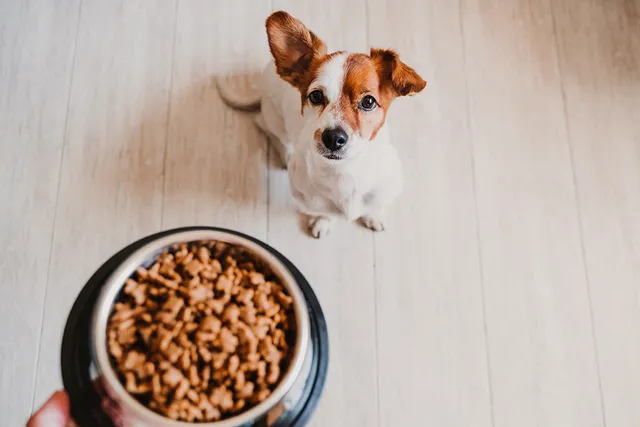
One of the simplest yet most effective impulse control games can be done at your dog’s mealtimes to teach impulse control around food, which helps encourage calmer behavior around food and reduce impulsive food-seeking behaviors.
To start, take your dog’s food bowl at mealtime, and slowly lower it to the ground while saying, “Wait.” If your dog acts excited and starts moving around or jumping, raise the food bowl back up and ignore them. When they’re calm, it’s chow time. Repeat this at every mealtime to further strengthen your dog’s impulse control.

6. Settle on Cue
Teaching your dog to settle on cue can be done as early as puppyhood in fact, works best when you start early. Select a comfortable blanket, mat, or bed to be your dog’s settle spot, and put it where you want your dog to settle. Now, the fun part begins!
Start slowly but generously with treats. Show your dog the spot, and heavily shower them with praise and a treat when they show the least bit of attention to it. When you’re doing this, use your chosen command. “Settle” works fine, but “Go to your bed” can work too. Settle is handy for when you want to keep your dog out of the way when you host an event or have people and provides you with a way to help manage their behavior and support safety.
7. Tug & Settle
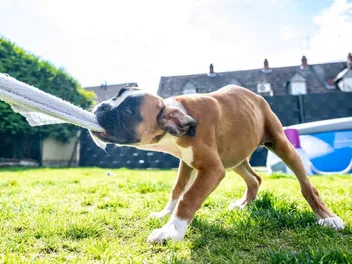
For this game, your dog will need to know a settle and release command already. To get started, take their favorite rope toy, and start a rousing game of tug of war. After a few seconds to a minute, drop the rope while saying your release command. Repeat this step until your dog understands that the game is over when you say the release command.
Next, start adding in your settle command after the release phase to tell your dog to go to their settle spot learned earlier. When they go to lie down, they immediately start the game back up again. This game helps teach your dog to shift from high arousal to a calmer state during exciting situations, which you can imagine potential uses for at the dog park or on walks.
Conclusion
Impulse control doesn’t come naturally to dogs, but they’re capable of learning self-control through consistent training, patience, and plenty of treats. Start with simple commands, and you can then help reinforce that foundation with puzzle feeders and advanced games like Tug & Settle.
Featured Image Credit: Galina Tsyrulnik, Shutterstock
Expert dog care, straight to your inbox
Vet-reviewed advice, training tips, and the best of Dogster. Free, and you can unsubscribe anytime.
By signing up, you agree to our Terms & Conditions and Privacy & Cookies Policy.
Codee Chessher is a freelance writer whose motto is: there is nothing a well-worded sentence can't accomplish! He loves to write about pets, travel, DIY, and more. Codee's experience is varied, but the written word has always been his strongest and biggest passion.
Join the conversation
Ask a question, share your story, or send private feedback.