How to Calm a Dog Down: 10 Vet-Verified Tips


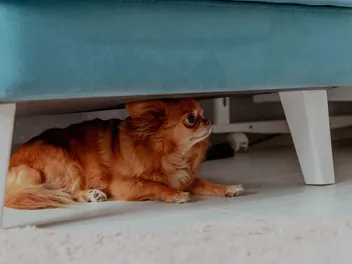
Anxiety isn't reserved just for humans. Unfortunately, dogs can experience stress and fear too. They can become anxious for several reasons, which may involve thunderstorms and fireworks. Whatever the reason, knowing specific techniques can come in handy to calm a dog down in certain situations.
In this article, we’ll list 10 tips you can try in hopes of calming your dog and reducing anxiety in your anxious pup.

The 10 Tips for Calming Down a Dog
1. Designate a Quiet Place
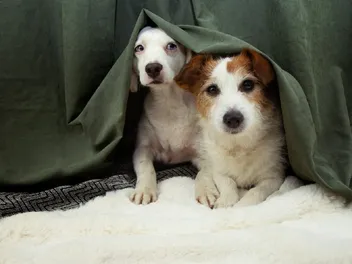
Many dogs get anxious when it storms or when loud, booming fireworks light up the sky. These types of sounds are louder to your pooch due to their strong sense of hearing, and designating a quiet place in your home can work wonders during these events.
Try shutting the door and playing soft, soothing music. You can also try playing white noise through a sound machine, as this may help drown out the stressful sounds and reduce stimuli. Ensure you leave water in the room for your pup and monitor often to ensure your canine pal is okay.
2. Try a Calming Vest

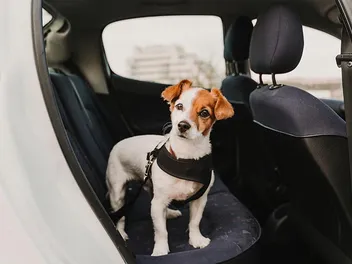
A calming vest is an option worth trying during storms or fireworks. The idea is to apply enough pressure to your doggie’s torso to help make them feel more secure and safe. These vests are often compared to the comforting effect of being held or swaddled. However, studies remain inconclusive, and more research is required into their efficacy.
The gentle pressure may help reduce anxiety and promote a sense of calm. These vests can be used during stressful situations as needed, depending on your dog’s response.
3. Speak to Your Vet
For moderate and severe cases of anxiety impacting your dog’s behavior and everyday life, it's important to consult with a veterinarian. They may suggest behavioural modification and training through the guidance of a professional and certified canine behaviorist, alongside other methods using calming supplements or medication in some cases. Depending on the issue, your vet may prescribe medication with instructions for when and how to give it to your dog. These types of medications may work well when you know a storm is approaching or some other event you know will cause stress and anxiety, such as fireworks. Some medications are used in advance of known stressors, like storms or fireworks, while others may be given more regularly. Follow your vet’s instructions as some medications may need to be started a few days in advance of the upcoming event.
If your dog suffers from anxiety, we suggest speaking with one of our vets to learn more ways you can support them.
4. Give your Dog Proper Exercise

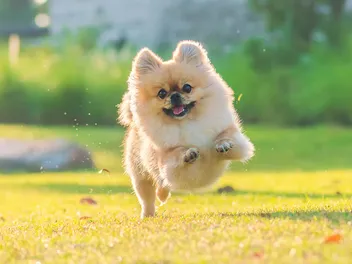
Exercising your dog is important on many levels, and for hyper dogs, it helps calm them down. Some dogs may become bored or frustrated due to insufficient exercise, which can lead to destructive and undesirable behavior. A telltale sign that your dog needs more exercise is if your dog starts showing signs of destructive behavior or hyperactivity.
Taking your dog on a walk is an excellent form of exercise. If that’s not possible, you can always ensure you have plenty of interactive toys for your pooch to play with. Throwing Frisbee in the backyard is another fun activity for both of you to enjoy, and it can help reduce excess energy that contributes to hyperactivity.
5. Show Physical Affection
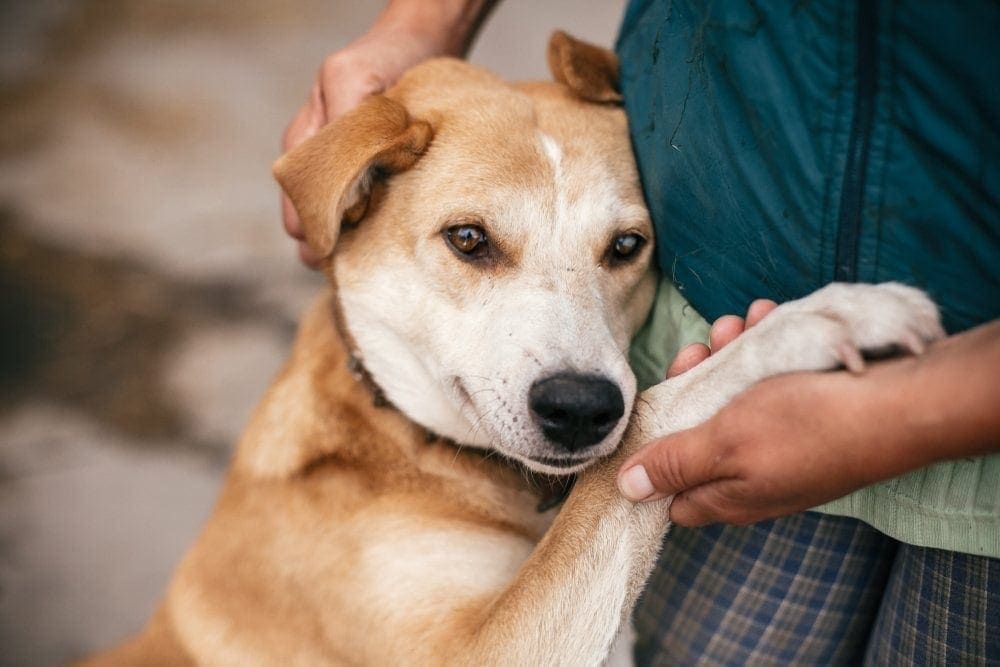
Some dogs respond well to their owner’s physical touch. If you have a small dog, you can try holding your pup, especially during stressful events, if they are comfortable with it. For larger dogs, stay close and gently pet them, paying attention to their body language and stopping if they seem uncomfortable. This technique may not work for all dogs, but it’s worth a shot.
6. Learn Your Dog’s Body Language

Your dog may be stressed without you realizing it, so it’s important to learn your dog’s body language to help calm them down. Signs to look for are drooling, panting, a tucked tail, tucked ears, yawning, lip-licking, and raised hackles.
You can help calm your dog down if you notice these signs in the body language. If you’re unaware of your dog’s body language, you won’t know if your dog is stressed.
7. Avoid Eye Contact
When a dog is showing hyperactivity, it can help to avoid making eye contact. Making eye contact with a hyperactive dog may invoke more of the same behavior because they feel they are receiving the attention they are seeking. In some cases, it’s appropriate to ignore this behavior until your dog calms down.
After your dog is calm, reward them with a treat. Over time, your dog may learn that calm behavior is rewarded and hyperactive behavior may decrease. However, this approach may not be suitable for dogs experiencing anxiety.
8. Try CBD Oil Under Veterinary Guidance

CBD oil is a compound found in cannabis and hemp, but it is not the same compound that causes the “high” from THC in marijuana, which can be toxic to dogs. While scientific evidence on CBD oil's effectiveness is still limited and inconclusive, it may be something to consider in accordance with your veterinarian’s recommendations. Never give your dog any supplements without discussing it with your vet first.
It’s imperative to note that the U.S. Food and Drug Administration (FDA) has not approved CBD oil for dogs, and no dosing chart is available. Given this fact, you must use it with caution under veterinary guidance and start with a minimal amount.
However, some anecdotal reports from owners suggest it could help alleviate anxiety and stress and may help reduce signs in dogs with certain medical conditions, though more research is needed.
9. Turn On Some Classical Music
Music therapy has been proven to alleviate stress and anxiety in humans, and it may also work for your canine pal. While evidence in dogs is still limited, there is generally no harm in trying.
Some believe classical music is most effective in easing signs, so the next time your pooch is anxious or stressed, put on a little Beethoven, Bach, or Mozart. Classical music may have more of a calming effect on dogs. However, further studies are needed, but experiments lean toward music therapy giving some relief in stressed or anxious dogs.
10. Pheromones

Studies suggest that using pheromones could bring some relief to your stressed-out pooch. One of the most common options is an Adaptil diffuser. Adaptil is a drug-free solution often recommended by veterinarians that may help reduce stress and anxiety in some dogs.
The diffuser releases dog-appeasing pheromones (DAP) that mimic those naturally produced by lactating, nursing mother dogs. These pheromones help calm anxious puppies while the mother is nursing, and they may also have a calming effect on some adult dogs when exposed.

Conclusion
No one likes to see their beloved canine stressed and anxious, and by applying the techniques listed above, you can help reduce stress for your doggie. You should always consult your veterinarian for advice just to be safe.
Not every method and technique works the same for every dog, and you may need to try a few before you find success.
See also:
Sources
Sounds Only Dogs Can Hear: Higher Pitches Is Where They Shine
How to Calm a Dog Down: 11 Tips for Calming Your Dog - 2026 - MasterClass
10 Medications for Dog Anxiety: Managing Your Dog’s Anxiety with Help | PetMD
How to Keep Your Dog From Chewing and Scratching Everything | PetMD
7 Proven Ways to Calm Your Anxious Dog – Central California SPCA, Fresno, CA
Musical Dogs: A Review of the Influence of Auditory Enrichment on Canine Health and Behavior - PMC
Featured Image Credit: Bogdan Sonjachnyj, Shutterstock
Expert dog care, straight to your inbox
News, insights, expert advice, and everything dog.

No spam — unsubscribe anytime.
By signing up, you agree to our Terms & Conditions and Privacy & Cookies Policy.
How useful was this post?
Click a star to rate. You can leave written feedback afterwards. (We read all feedback.)
Rachel Giordano is a writer and musician living in Pensacola, Florida, with her partner and their two dogs, Aero, a Border Collie/Sheltie mix and Sophie, a Boston Terrier. Rachel holds a Bachelor of Arts degree in communication and loves writing about animals of all types. When she’s not writing about pets, she loves to write suspense/thriller novels. A musician by night and writer by day, she enjoys educating the public about the needs and requirements of animals, big and small.