How to Train a Bloodhound: 7 Vet-Approved Tips


In this article
Training your dog is a vital part of being their owner. Without early training and a firm yet kind hand, your Bloodhound may become self-willed and set in their ways. Therefore, proper training is essential to ensure your dog is well-behaved and agreeable.
Each breed comes with unique training needs and challenges, and the Bloodhound training is no exception. To learn more about how to train a Bloodhound, take a look at these seven crucial tips.

Before You Start
When training a Bloodhound, it isn’t wise to dive in without adequate preparation. Before you start, you will want to understand how Bloodhounds think and have treats on hand.
Understand How Dogs Think
Dogs don’t understand prolonged cause and effect like humans do. If your Bloodhound does something good and you give them a treat 10 minutes later, they will not make the connection to what you are rewarding them for. Therefore, you need to provide them with immediate consequences, whether positive or negative, for their actions.

Remember the Treats
Positive reinforcement training is the ideal method for dogs. Punishments are less effective and do not contribute to a strong bond with your pet. To encourage your dog toward desired behaviors, purchase treats ahead of time, and have them ready. Give them to your dog when they perform a task correctly.

The 7 Crucial Tips to Train a Bloodhound
1. Start With Early Obedience Classes
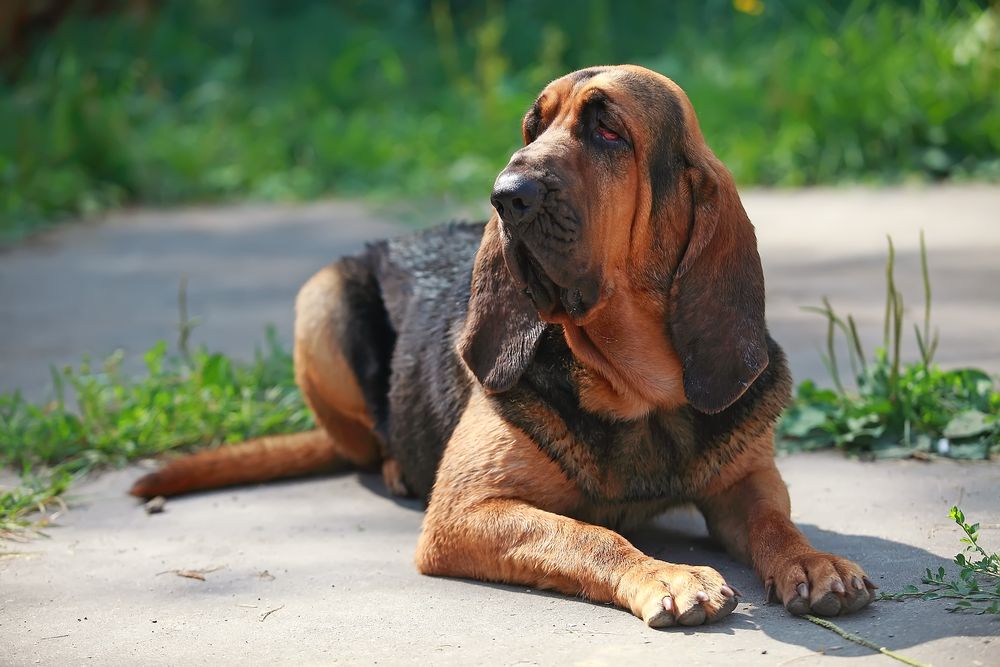
When your Bloodhound is still a puppy, getting started on obedience classes is important. Bloodhounds are not particularly self-willed, but their dedication to tracking a scent can distract them during training.
Without early training, they may become stubborn. However, Bloodhounds are eager to please their owners, so with a confident and steady trainer, your dog can be an attentive student.

2. Understand Your Bloodhound’s Personality
Bloodhounds are inquisitive yet independent dogs. They like to take charge, so you must show them you are the leader as their owner and provider. Owners who are too harsh with their dogs will not see much success.
Bloodhounds thrive off of positive reinforcement, such as treats and pets. If you use punishing methods with your dog, they may become distrustful or uncooperative.
3. Keep Lessons Short and to the Point
No matter how intelligent your dog is, it is essential to remember that they do not have the same attention span as a human. While humans can dedicate several minutes or hours to a task, dogs need lessons in much shorter bursts, or they will lose interest.
Therefore, keep all Bloodhound training sessions to a maximum of 15 minutes or ideally, less. During this time, focus on only one task to prevent your dog from becoming confused.
4. Use Simple and Consistent Commands
Consistency is vital when training a Bloodhound, so always use the same commands for the same task. For instance, if you are trying to teach your dog to sit, you should not say “sit” once and then “down” the next. Instead, pick one command and stick to it. This will instill the command in your Bloodhound’s mind.
At the same time, avoid using too many words. When commanding your dog to sit, simply say, “Sit.” Don’t say, “All right, now it is time for you to sit if you want the treat.” Your dog can pick up simple verbal commands, but that doesn’t mean they understand your language. The easier you make it for your Bloodhound to understand you, the more successful you will be.

5. Start With Basic Commands
Don’t bite off more than you can chew when you start training. It may be exciting to think about all the neat tricks you could teach your dog, but rather than rush in, first focus on the basics. The basic commands you should start with are as follows:
- Come
- Heel
- Stay
- Sit
- Down
You can graduate to more complex tasks once you have mastered these commands with your Bloodhound. But without this basic foundation, you will not set your dog up for success.
6. Be Consistent With Your Expectations
Consistency with your commands and consistency with your expectations are important. For instance, if you are trying to train your Bloodhound to stay off the couch, do not give your dog “cheat days.” Anytime your Bloodhound is on the couch, you must reinforce the appropriate boundaries.
Your Bloodhound will never learn if you pick and choose when to enforce your demands. All you will accomplish is confusing your poor pup when you randomly decide a certain behavior is an issue again.
7. Be Patient
Training a dog is not an easy or quick task. It is an endless process that requires regular work. It can be easy to feel exhausted or frustrated when your dog does not immediately understand your commands but don’t allow your composure to slip. Dogs are clever animals, and they can understand our emotions fairly well.
Your Bloodhound may associate training time with negative emotions if you become angry with them during training. This will only make them unhappy and unwilling to train. Instead, focus on developing your patience. Take breaks when needed, and remember that your dog is trying their best too.
Bloodhounds are eager to please their owners, so there is no malicious reason that they do not immediately understand your commands. Give them time, and focus on the positives, such as the time you spend with your dog. If you consider taking the time to strengthen bonds, your sessions will likely be more fruitful.


Final Thoughts
Bloodhound training requires a firm and steady hand and a lot of love and praise. Bloodhounds are curious, independent dogs that can be biddable if their owners properly engage with them. We hope that this article has helped you to understand how to approach training this breed. Remember that no matter what happens, you and your dog are a team, and your Bloodhound wants to learn just as much as you want to teach them.
Related Read: How Long Do Bloodhounds Live?
Sources
Featured Image Credit: Degtyaryov Andrey, Shutterstock
Expert dog care, straight to your inbox
News, insights, expert advice, and everything dog.

No spam — unsubscribe anytime.
By signing up, you agree to our Terms & Conditions and Privacy & Cookies Policy.
How useful was this post?
Click a star to rate. You can leave written feedback afterwards. (We read all feedback.)
Pets are Jordyn’s passion, especially cats. Whenever she has the opportunity, she loves to learn about animals and share her knowledge with everyone. She is devoted to her mischievous tabby cat named Jack and works hard to buy him his favorite toys and treats. Discovering new ways to better care for her pet is always on the top of her to-do list, and she is eager to help pet parents everywhere who have similar pursuits. In her free time, she loves to write, read, and take long walks. She has a creative spirit, which often helps her to come up with funny cat names.