Dogster is reader-supported. When you buy via links on our site, we may earn a commission at no cost to you. Learn more.

Dog Nutrition

What Is Choline Chloride in Dog Food? Vet-Approved Facts & Benefits

Brooke Billingsley
By Brooke Billingsley · Reviewed & fact-checked by Dr. Maxbetter VizelbergVet Approved
Dr. Maxbetter Vizelberg
Reviewed & Fact-Checked byDr. Maxbetter VizelbergDVM (Veterinarian)
A native of New Orleans, Louisiana, Maxbetter has been cultivating his interest in veterinary medicine since he's been a kid. From being read Russian children’s stories about “Doctor Aybolit” by his grandmother to interning at the Israeli Wildlife Hospital to working at numerous small animal hospitals, he has thoroughly enjoyed learning about and sharing his love for animals with others over the years. He prides himself on educating others to help give their animals the best possible lives and strives to provide the best medical care to his patients. Outside the clinic, he can be found performing his rap songs at open mics, playing soccer and basketball, and going on hikes with family and friends. He currently practices in New York City.View authorThe information is current and up-to-date in accordance with the latest veterinarian research. Learn more
Updated on June 16, 2026
Share
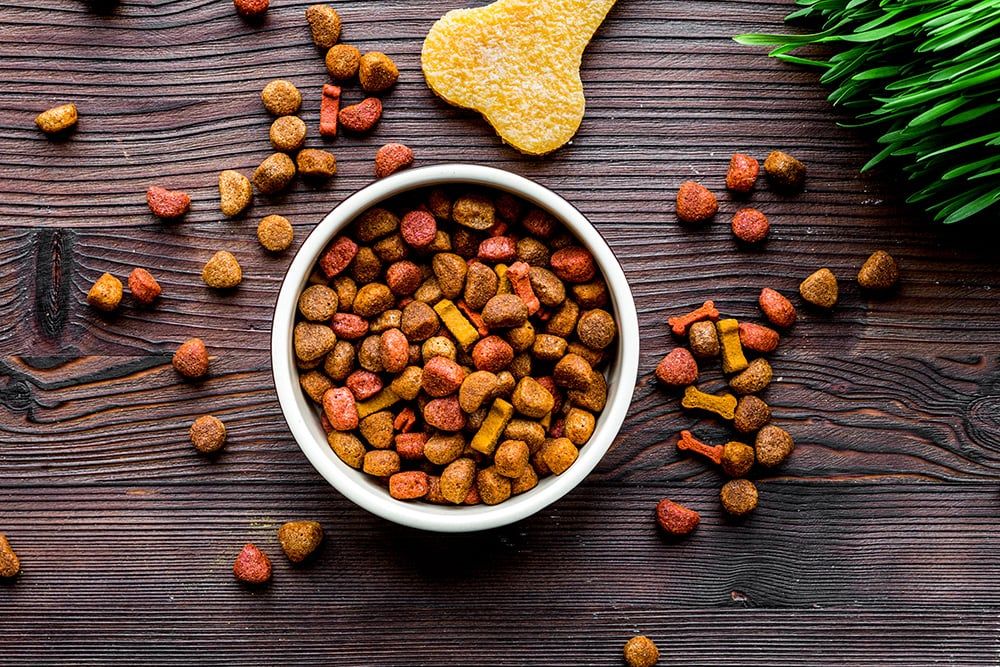
Dog food in a bowl

If you’re one of the people who read the entire ingredients list on your dog’s food before purchasing it, you have likely spotted a few words you weren’t familiar with. One of the things you have likely seen in your dog’s food ingredients is choline chloride. What is choline chloride? Is this something that is essential for the health of your dog, or is it a cheap, unhealthy additive? Here’s what you need to know!

divider dog paws 4 oct 2024

What Is Choline Chloride?

The scientific answer to this question is best defined by the National Library of Medicine, which says that choline chloride is “a quaternary ammonium salt with choline cation and chloride anion.” Choline chloride is a water-soluble salt that primarily shows up in animal feed and it is beneficial for animals. It’s an organic compound that is mass-produced throughout the world, with hundreds of thousands of tons produced annually. The majority of choline chloride produced in the world goes into animal feed.

Image By: BearFotos, Shutterstock

Is Choline Chloride Healthy?

Choline, on its own, functions as a neurotransmitter, which means that it helps support healthy nervous system function for your dog. Choline, also known as vitamin B4, exists in a pill version that is used to help support detoxification within the liver, and it serves as a precursor to chemicals used by the nervous system for a variety of functions, like dopamine and acetylcholine. It is sometimes used to provide additional support to animals with epilepsy and other seizure disorders, as well as cognitive dysfunction or decline.

As choline chloride, it not only serves as a neurotransmitter, but it also supports growth. In fact, it’s often added to pet food to enhance growth and development. It helps support liver function and healthy metabolism. It’s commonly used in chicken feed, but it is used in multiple types of pet feeds, including dog food. While the manufactured form may be added to dog food, choline chloride also naturally occurs in a variety of foods, like soybeans, liver, eggs, and fish.

divider dog paws 4 oct 2024

Final Thoughts

Although it may sound like a scary chemical, choline chloride can be extremely beneficial to your dog in their food. This chemical compound supports healthy hepatic and nervous system function, as well as growth and development. It serves as a building block for other chemicals that are used by the nervous system. It’s a functional neurotransmitter that has shown some promise in supporting dogs with neurological dysfunction, like epilepsy and cognitive decline.

If you’re unsure if this ingredient is a good option for your dog, talking to your vet or a board-certified veterinary nutritionist is your best starting point. They will be able to give you a more in-depth explanation of the importance and function of this chemical, and they can hopefully help ease your concerns associated with it.

See also: 

Sources

Featured Image By: 279photoStudio, Shutterstock

The Dogster Newsletter

Expert dog care, straight to your inbox

News, insights, expert advice, and everything dog.

No spam — unsubscribe anytime.

By signing up, you agree to our Terms & Conditions and Privacy & Cookies Policy.

Click a star to rate. You can leave written feedback afterwards. (We read all feedback.)

Brooke Billingsley
Authored by

Brooke Billingsley

Leave a Reply

You're very welcome to leave a comment or question. Please know that all comments must meet our community guidelines, and your email address will NOT be published. Let's have a positive and constructive conversation.

Sodium Selenite in Dog Food: Vet-Verified Nutrition Info, Risks & FAQ

Sodium Selenite in Dog Food: Vet-Verified Nutrition Info, Risks & FAQ

Feeding your dog a safe and healthy diet every day is an essential part of pet parenting and one that many owners feel like they are always searching for. New…

Annaliese Morgan
By Annaliese Morgan · 1 month ago
DL-Methionine for Dogs: Vet-Verified Benefits, Uses & Side Effects

DL-Methionine for Dogs: Vet-Verified Benefits, Uses & Side Effects

DL-Methionine, a form of the amino acid methionine, is found in many commercial dog foods and other dog treats and supplements. Methionine is vital to the prop…

Nicole Cosgrove
By Nicole Cosgrove · 1 month ago
Taurine for Dogs: What Is It & Info to Know (Vet-Approved)

Taurine for Dogs: What Is It & Info to Know (Vet-Approved)

It seems everyone has an opinion on the secret to living longer these days, but now science suggests that taurine might be part of the answer. Recent studies h…

Nicole Cosgrove
By Nicole Cosgrove · 1 month ago
What Ingredients to Avoid in Dog Food: 6 Vet-Verified Additives to Keep Away

What Ingredients to Avoid in Dog Food: 6 Vet-Verified Additives to Keep Away

Pet owners are putting more effort into their pets, including choosing high-quality pet foods to help them live long and happy lives. With many dog foods on th…

Nicole Cosgrove
By Nicole Cosgrove · 1 month ago

6 Foods High In Thiamine for Dogs: Vet-Approved Vitamin B1 Sources

Thiamine, also known as vitamin B1, is an essential nutrient for dogs and humans. Dogs require it for carbohydrate metabolism, optimal growth, and efficient ne…

Oliver Jones
By Oliver Jones · July 1, 2026
6 Foods High In Thiamine for Dogs: Vet-Approved Vitamin B1 Sources

Is Glycerin in Dog Food & Treats Bad for Dogs? Vet-Reviewed Safety Guide

We all know that one key to a healthy dog's life is high-quality dog food. You look for ingredients such as whole meats and grains and ensure the diet is compl…

Chris Dinesen Rogers
By Chris Dinesen Rogers · June 29, 2026
Is Glycerin in Dog Food & Treats Bad for Dogs? Vet-Reviewed Safety Guide

What Is Chicken Meal in Dog Food and How Safe Is It? Vet-Verified Facts & FAQ

As a dog owner, you want to provide your pet with the best nutrition possible to ensure a long, happy, and healthy life. There are plenty of commercial dog foo…

Rachael Gerkensmeyer
By Rachael Gerkensmeyer · June 29, 2026
What Is Chicken Meal in Dog Food and How Safe Is It? Vet-Verified Facts & FAQ

What Are By-Products in Dog Food? Vet-Reviewed Facts & Info

I spend more time and consideration making sure the pet food I choose is good quality than I do my food. I check protein, fiber, and other nutrient ratios whil…

Matt Jackson
By Matt Jackson · June 29, 2026
What Are By-Products in Dog Food? Vet-Reviewed Facts & Info

Can Dogs Eat Cornmeal? Vet-Verified Facts

Cornmeal is often used in commercial dog food, so it is reasonable to assume that it’s safe for your dog to eat. And this is true; cornmeal isn’t toxic to dogs…

Kerry-Ann Kerr
By Kerry-Ann Kerr · June 29, 2026
Can Dogs Eat Cornmeal? Vet-Verified Facts

5 Vet-Verified Benefits of Venison in Dog Food: Canine Diet & Health

A vast selection of commercial dog foods are available, including ones with different meats and meat-based ingredients. Dogs are facultative carnivores which m…

Nicole Cosgrove
By Nicole Cosgrove · June 17, 2026
5 Vet-Verified Benefits of Venison in Dog Food: Canine Diet & Health

TBHQ in Dog Food: Vet-Approved Feeding & Safety Facts

TBHQ, or tertiary butylhydroquinone, is likely an ingredient that you aren’t familiar with. This chemical additive is commonly used in pet foods to extend shel…

Brooke Billingsley
By Brooke Billingsley · June 17, 2026
TBHQ in Dog Food: Vet-Approved Feeding & Safety Facts

Dog Nutrition: 6 Vet-Approved Essential Nutrients They Need

Nutrition and a healthy diet play a significant role in a dog’s health and well-being. Dog owners must stay on top of their dogs’ nutritional intake and ensure…

Jessica Kim
By Jessica Kim · June 16, 2026
Dog Nutrition: 6 Vet-Approved Essential Nutrients They Need

Love Dogs? So Do We! Join the Dogster Community

Stay informed with expert pet care insights delivered straight to your inbox! Discover professional guidance on animal behavior, feeding tips, trusted product picks, and much more.

You may opt-out at any time. View our Privacy Policy for more information.

The Dogster app on a phone