What Foods Reduce Anxiety in Dogs? 10 Vet-Verified Nutrients & Methods to Help

In this article
It can be quite heartbreaking watching your dog deal with anxiety and stress. Your first call should be to your veterinarian, particularly if the anxiety is severe because food alone is unlikely to solve the issue. That said, diet can be used alongside training, environmental changes, and medication to help with anxiety.
Here, we have a list of foods and methods that you can use to help your anxious dog.

The 10 Ways That Food Can Help Reduce Anxiety in Dogs
Besides being equipped with knowledge of the best foods for calming anxious dogs, you need to devise a way of serving them to your pup.
Dogs with anxiety issues should also be mentally stimulated, which can go a long way toward reducing stress. The following tips should give you a few ideas for using food to help your dog.
1. Antioxidants
Antioxidants have an important role in healthy bodies, as they scavenge free radicals, a source of oxidative stress. These are produced under stressful physiological conditions and are detrimental to brain health. Antioxidants are vital in stressed dogs to counteract the free radicals produced and to minimize their impact on the brain.
Good dietary sources of antioxidants include:

2. Alpha-Casozepine
Gamma-aminobutyric acid (GABA) is a neurotransmitter with calming effects. Alpha-casozepine acts on GABA receptors in the brain and has been proven to be effective in managing anxiety and stress. It's available as a supplement, made from cow’s milk.
3. L-tryptophan
L-tryptophan is an amino acid that's needed for the formation of serotonin. Supplementing it can ease anxiety and stress. There are many calming chews on the market that contain tryptophan, but certain foods also naturally contain high levels of this amino acid, including:

4. L-theanine
Theanine is an amino acid and a common ingredient in calming chews. It boosts dopamine and serotonin in the brain and has been proven to help anxious dogs with storm phobias and fear of strangers. The main source of L-theanine is green tea, but this contains caffeine, which is bad for dogs. So, if you want your pup to get more L-theanine, it’s best to stick to supplements and chews made for canines.
5. Probiotics
A relatively new area of research is the role of the gut microbiome in the regulation of stress and emotions. The gut-brain axis refers to the two-way communication between the brain and gastrointestinal system and explains how stress can result in signs like inflammatory bowel disease. A good microbiome has positive effects on mood.
Scientists are still looking into the links, but focusing on gut health could lessen anxiety. If your anxious dog has frequent digestive upsets, we recommend consulting with a veterinarian to rule out things like parasites and food allergies. They may then recommend adding good bacteria to your dog’s gut via a probiotic.

6. Prebiotics
Prebiotics are food sources that promote the growth of good gut microbes. Certain kinds of fiber are prebiotic and can improve gut health and possibly mood. You can add prebiotics to the diet in the form of commercial supplements or whole foods, including:
7. Food Puzzles
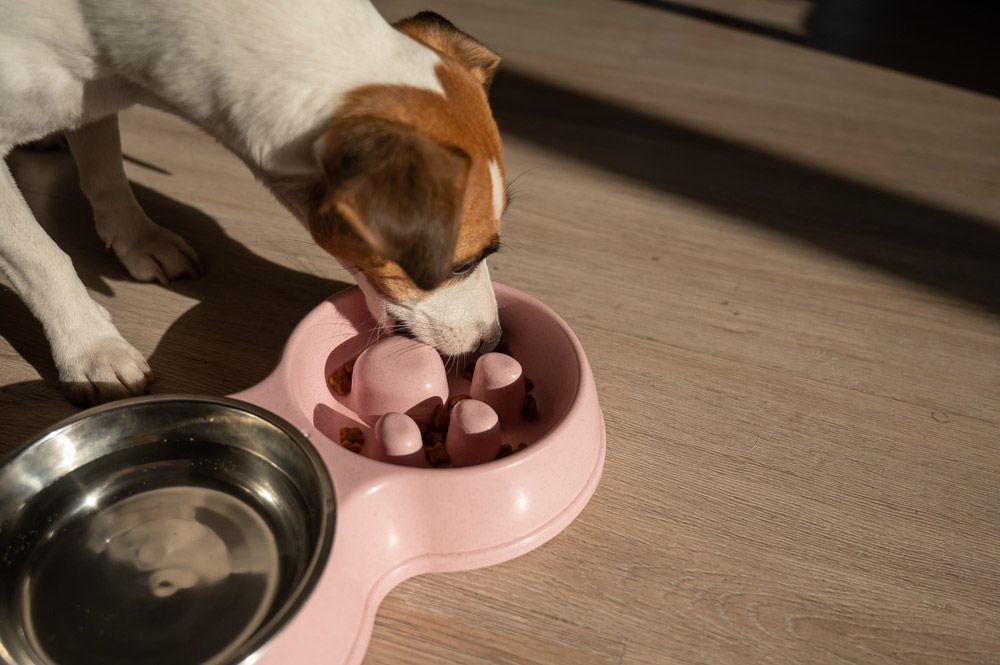
Simply setting your dog’s food bowl down every day can get boring after a while. Consider using a food puzzle several times a week to mix things up. You can still use your dog’s regular kibble, but making them work for it can provide mental stimulation to enrich their lives and reduce stress. They get positive reinforcement for earning the food rewards.

8. Different Mealtimes in Multi-pet Homes
If your dog is experiencing anxiety around mealtimes and you have multiple pets eating at the same time, you might want to separate them. You can try feeding them at different times, in separate rooms, or on opposite sides of the room, particularly if there are any resource-guarding issues.
9. Snuffle and Lick Mats
Sprinkle a few pieces of kibble or dog treats in a snuffle mat, which will take time for your dog to sniff out. There are also lick mats, which are made with silicone and have lumps and bumps that you can spread wet dog food or peanut butter on. Both options will keep dogs busy, and they’ll enjoy the time spent locating and eating their treats.

10. DIY Food Games
A great way to make mealtime fun is the dog-treat version of the “shell game.” You can use three paper or plastic cups or even emptied and cleaned yogurt containers. Punch a hole in each of the three cups, and put a treat under one of them (you can let your dog see you do this). Your dog just needs to knock over the cup to retrieve the treat. After you've put the treat under one cup, you can test your dog by switching the cups around. Some dogs will likely knock them all down in their enthusiasm, though!
Signs of Anxiety in Dogs
Dogs are expressive animals, and their body language shares a great deal about how they are feeling. However, for humans, the signs of anxiety can be subtle and misread. This is why getting to know dog body language is essential, so you can learn the nuances. Many videos that show “guilty” dogs after having done something wrong are actually dogs that are stressed and fearful.
Signs of anxiety in dogs can present as the following:
If your dog is showing any of these signs and you are seeking the best possible treatment for your pup, we recommend speaking with a vet.
Conclusion
Using food to help your dog with anxiety can be beneficial. That said, you should figure out what is causing the anxiety in the first place. Take your dog to the vet to rule out any underlying health conditions and get medication or supplements if needed.
Stress can negatively impact your dog’s health, so it's crucial to manage it properly. With persistence, help from professionals, and plenty of love, you will likely find your dog becoming more well-adjusted and happier.
Featured Image Credit: Reshetnikov_art, Shutterstock
Expert dog care, straight to your inbox
Vet-reviewed advice, training tips, and the best of Dogster. Free, and you can unsubscribe anytime.
By signing up, you agree to our Terms & Conditions and Privacy & Cookies Policy.
Kathryn was a librarian in a previous lifetime and is currently a writer about all things pets. When she was a kid, she hoped to work in a zoo or with wildlife in some way, thanks to her love for animals. Unfortunately, she's not strong in the sciences, so she fills her days with researching and writing about all kinds of animals and spends time playing with her adorable but terribly naughty tabby cat, Bella. Kathryn is hoping to add to her family in the near future – maybe another cat or two and a dog.
Join the conversation
Ask a question, share your story, or send private feedback.