5 Herbs That Are Good for Dogs: Vet-Verified Safety & Benefits


In this article
Adding herbs and spices to our meals not only enhances the flavor, but many of them also have various health advantages. So, if we can benefit from specific herbs, maybe our dogs can too? This is broadly true, but it’s essential to only use herbs that are safe for canines.
The following 5 herbs are known to be safe for dogs and can provide them with health benefits. Just be sure to check with a vet before attempting to treat your dog with herbal remedies.

What Are Herbs?
Herbs are typically classified as the leafy or flowering parts of plants that are used in the culinary and medicinal fields. In cooking, they can add flavor, color, and texture, and in medicine, they may be able to relieve pain and other side effects of illnesses. Spices are usually the non-leafy parts of such plants (seeds, roots, etc.).

The 5 Herbs That Are Good for Dogs
1. Basil

| Scientific name: | Ocimum basilicum |
| Other common names: | Sweet basil, Thai basil, Saint Joseph’s wort |
| Risks: | Too much can lead to stomach upset; some dogs might be allergic. |
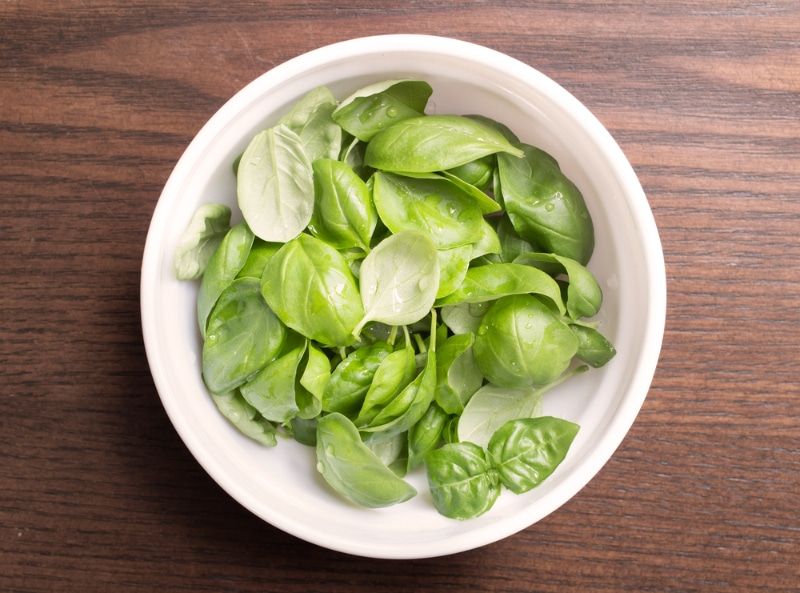
Basil has many health benefits, including providing antioxidants, minerals, and vitamins A, B’s, C, and E. It’s also known for its anti-inflammatory, antiviral, and antimicrobial properties. Additionally, it can have a calming effect on anxious dogs.
You can sprinkle a pinch of basil on your dog’s food, but be sure to use it in moderation, as too much can lead to vomiting and diarrhea.
2. Cilantro

| Scientific name: | Coriandrum sativum |
| Other common names: | Coriander, dhania, Chinese parsley |
| Risks: | Too much can lead to stomach upset; some dogs might be allergic. |
Cilantro, also known as coriander, is a hit-or-miss herb for humans. However, it offers numerous health benefits. It is an excellent source of minerals like niacin, thiamine, potassium, zinc, riboflavin, and folate, along with vitamins A, B6, C, E, and K. Additionally, it has antifungal and antimicrobial properties, is rich in antioxidants, and can soothe a dog's upset stomach.
However, consuming an excessive amount of cilantro can also, ironically, cause an upset stomach.
3. Curly Parsley

| Scientific name: | Petroselinum crispum |
| Other common names: | N/A |
| Risks: | Large amounts are toxic. |
Flat-leaf parsley is the most familiar type of parsley, but it can cause photosensitization (dermatitis and sunburns) and gastrointestinal problems in dogs in large amounts. Curly parsley is considered safer for dogs, albeit only in small quantities. It contains beneficial nutrients like folic acid, antioxidants, and vitamins A, C, and K and can help freshen your dog's breath.
4. Dill

| Scientific name: | Anethum graveolens |
| Other common names: | N/A |
| Risks: | Dill essential oil is toxic and can cause dermatitis. |
Dill is generally safe for consumption, but you should avoid its essential oil form, as it is irritating to the skin, eyes, and respiratory tract. This herb has antispasmodic properties that aid in maintaining digestive tract health and reducing flatulence. It can also provide relief from constipation and bad breath, reduce inflammation, and free radicals.
5. Rosemary

| Scientific name: | Rosmarinus officinalis |
| Other common names: | Anthos |
| Risks: | Avoid giving rosemary to dogs with seizure conditions. |
Rosemary is an antioxidant and has antimicrobial and antispasmodic properties. It additionally contains iron, calcium, and vitamin B6. That said, excessive consumption of rosemary can lead to stomach upset, and some dogs may even have an allergic reaction to it.
Large amounts of rosemary oil or extracts can be linked to other problems, like seizures, so we recommend avoiding these forms of rosemary.

Herbs That Can Be Used with Caution
1. Mint

| Scientific name: | Mentha sp. |
| Other common names: | Garden mint |
| Risks: | English pennyroyal must be avoided; all mint can be toxic in large amounts, causing gastroenteritis. |
Mint is a large family of plants, and among them, peppermint is known to be particularly beneficial to dogs. It can have a calming effect on upset stomachs and reduce nausea. Mint also contains many nutrients, including fiber, phosphorus, copper, calcium, iron, folate, riboflavin, magnesium, manganese, zinc, niacin, vitamins A and C, and antioxidants.
If you're thinking of offering mint to your dog, know that only fresh or dried leaves should be given in small amounts. Mint essential oil and large amounts of mint can be toxic to canines.
English pennyroyal mint (Mentha pulegium) contains pulegone and is toxic. Extreme cases can lead to liver failure, although this is most commonly associated with pennyroyal oil exposure.
2. Oregano

| Scientific name: | Origanum vulgare |
| Other common names: | Greek oregano |
| Risks: | Large amounts and oil of oregano can be toxic. |
Oregano is known to aid respiratory and gastrointestinal problems. It has anti-inflammatory, antifungal, and antimicrobial properties and contains antioxidants, manganese, tryptophan, calcium, omega-3 fatty acids, and vitamins E and K.
However, giving moderate to large amounts of oregano to your dog can be toxic, and you must avoid oil of oregano altogether. Ask a veterinarian how much oregano would be appropriate for your dog.
Herbs and Spices That Dogs Should Avoid
The herbs listed above are safe for dogs as long as they are given in small amounts and a vet gives you their approval.
Still, you should also know what herbs and spices are never safe to give dogs. A few of the following might be safe in tiny amounts, but it’s best to err on the side of caution not give any of these to your pup.
- Allspice: This contains the toxin eugenols, which can cause vomiting, a decrease in body temperature, and an increase in the pulse rate.
- Bay leaves: This contains eugenols, which cause vomiting and diarrhea and the possibility of an intestinal obstruction.
- Cayenne: This irritates the mucous membranes and gastrointestinal tract.
- Cocoa: This is highly toxic and can result in diarrhea, vomiting, tremors, seizures, rapid heart rate, and death.
- Onions/Chives: These cause damage to red cells and can lead to anemia and stomach upset.
- Garlic: Like onions can lead to anemia and gastrointestinal upset.
- Nutmeg: This contains the toxin myristicin and in large amounts, can lead to hallucinations, increased heart rate, high blood pressure, stomach pain, and seizures.
If your dog eats any of these herbs or spices, particularly if they consume a large amount, take them to a vet immediately! You can also call the Pet Poison Helpline (for a fee) for recommendations to help your dog.

Conclusion
If you're thinking about incorporating herbs or spices into your dog's diet, you’ll need to have a conversation with a veterinarian first, especially if your dog has any health problems. Even safe herbs can have risks. It's generally best to avoid essential oils, as these are much more concentrated and more likely to cause adverse reactions.
Also, while herbal remedies can be beneficial, they must be given with caution and in consultation with a vet.
See also:
Sources
Featured Image Credit: yingko, Shutterstock
Expert dog care, straight to your inbox
News, insights, expert advice, and everything dog.

No spam — unsubscribe anytime.
By signing up, you agree to our Terms & Conditions and Privacy & Cookies Policy.
How useful was this post?
Click a star to rate. You can leave written feedback afterwards. (We read all feedback.)
Kathryn was a librarian in a previous lifetime and is currently a writer about all things pets. When she was a kid, she hoped to work in a zoo or with wildlife in some way, thanks to her love for animals. Unfortunately, she's not strong in the sciences, so she fills her days with researching and writing about all kinds of animals and spends time playing with her adorable but terribly naughty tabby cat, Bella. Kathryn is hoping to add to her family in the near future – maybe another cat or two and a dog.