Can Dogs Eat Chickpeas? Vet-Verified Nutrition Facts & FAQ


In this article
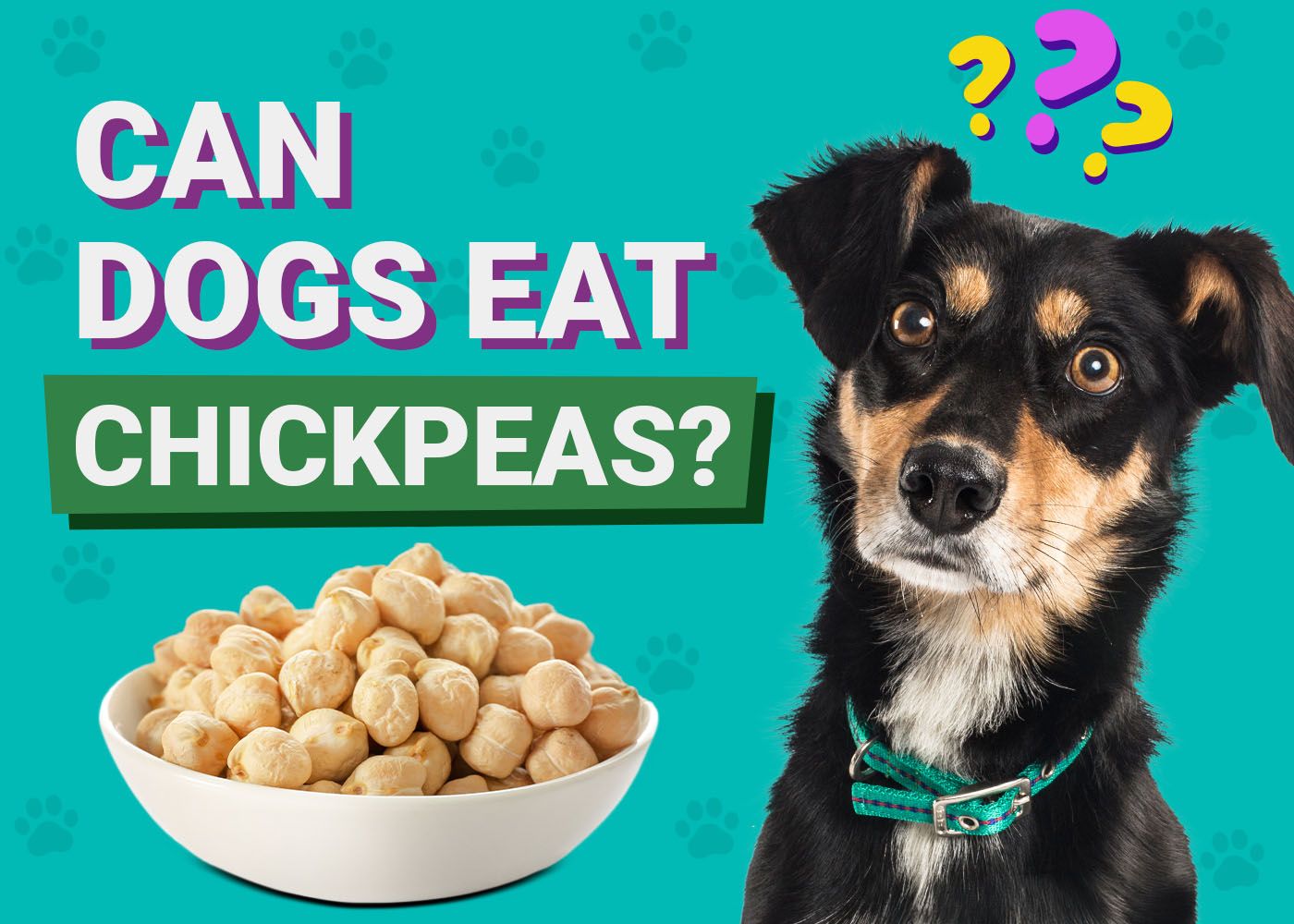
Chickpeas have a pleasant, nutty taste that lends itself well to many dip, salad, and curry recipes. They can provide many nutritional benefits for humans, but can you share this legume with your dog?
Offering chickpeas in their plain form to your pup is safe and does provide some great nutritional benefits. However, it would be best if you learned more about them before giving them to your dog. Not all chickpea varieties and forms are safe for our pets, so read on to find the benefits of offering this legume to your canine family members, as well as our recommended feeding guide.

What Are Chickpeas?
Chickpeas, also sometimes called garbanzo beans, are annual legumes of the family Fabaceae, which is known as the pea, legume, or bean family. They’re a key ingredient in many Mediterranean and Middle Eastern dishes and can be very versatile.

Can Dogs Eat Chickpeas?
As we mentioned, yes, dogs can eat chickpeas. However, the bulk of your pup’s diet should come from commercially prepared dog food, as it will contain all the necessary vitamins and nutrients your pet needs to thrive.1 While chickpeas certainly have a lot of health benefits to offer, your dog will still need food specially catered to their nutritional needs.
Benefits of Feeding Chickpeas to Dogs
Macronutrient Profile
Chickpeas have an impressive macronutrient profile. They’re very rich in protein, with a one-cup serving offering 14.5 grams. They’re also high in fiber, at 12.5 grams per cup.
While dogs are considered omnivores, protein is an essential macronutrient for their diet. It provides the amino acids necessary for immunity, muscle development, and weight management. However, animal protein sources will have the most essential amino acids. Plant-based protein, like that found in chickpeas, is often less digestible for dogs.
Fiber is a type of carbohydrate essential for a dog’s gastrointestinal functioning. It promotes colon health and can positively affect the bacteria in your pup’s intestines.
It is important to remember, however, that the above-quoted protein and fiber intake is for a one-cup serving. One cup of chickpeas is a lot for dogs and is much more than we would recommend giving them in one sitting. So, while this legume is a decent source of protein and fiber, the amount your dog would get from the portions you’d offer is less.

Vitamins & Minerals
Chickpeas are high in vitamin A, vitamin B9 (folate), vitamin B6 (pyridoxine), potassium, and magnesium.
- Vitamin A is essential for immune function, vision, and growth. It can also contribute to healthy skin. Dogs not receiving enough vitamin A may become night blind and suffer from skin problems.
- Vitamin B9 is required for metabolic functions such as red blood cell production and DNA synthesis. Dogs deficient in vitamin B9 may have problems gaining or maintaining weight, have blood issues (such as anemia), and suffer from decreased immune function.
- Vitamin B6 is necessary for amino acid metabolism and helps create neurotransmitters. It’s also required to form hemoglobin. A deficiency in this vitamin can cause a functional iron deficiency, where the body may not be lacking in iron, but it cannot be incorporated as it needs to be into hemoglobin.
- Potassium plays a role in many bodily functions, like transmitting nerve impulses and maintaining the acid-base balance. Deficiencies can cause anorexia, lethargy, and problems with walking.
- Magnesium is involved in bone composition and metabolizing carbohydrates and fats. Dogs deficient in this mineral may experience stunted growth, mobility issues, and anorexia.

How to Offer Chickpeas to Your Dog
Not all chickpeas are created equal, so it’s important to know which types will be best (and safest) for your dog.
Prepared dried chickpeas are typically the best to offer your dog as they’re soft and easy to digest. You can soak the dried beans overnight to prepare them for cooking (long soaking method), or if you’re short on time, try the quick soaking method. This involves putting your dried beans in a large pot, covering them with water, boiling them for two minutes, turning off the heat, covering the pot with a lid, and letting them sit for an hour (or until they’re soft).
Dried, unprepared chickpeas shouldn’t be offered at all as they can present a choking hazard and can be hard on the digestive system. With cooked chickpeas, you might want to smash them a little bit to reduce the potential for choking.
Canned chickpeas can be problematic as salt is often used in excess to keep them preserved for longer. However, you can mitigate some of this sodium by opting for low-sodium varieties and rinsing them thoroughly to remove as much salt as you can.

Frequently Asked Questions (FAQ)
Can Dogs Eat Hummus?
Though the main ingredient in hummus is chickpeas, this dip is not something you should share with your dog. Traditional hummus contains ingredients that are not safe for pets, such as garlic and oil. Garlic in all forms (e.g., raw, cooked, powdered, etc.) is toxic for dogs as it can kill their red blood cells, potentially leading to hemolytic anemia or even death. While some cooking oils are safe and non-toxic for dogs, eating too much oil can lead to obesity and even pancreatitis due to its high fat content.
However, if your dog is begging for a taste of your hummus and you feel you absolutely must offer them some semblance of this delicious dip, you could theoretically make a dog-safe version by mashing chickpeas with a fork, mixing with plain Greek yogurt (unless you know they are lactose intolerant), and putting it on top of your pup’s dry food. However, we don’t necessarily recommend this unless you’re very careful, as it could make your dog more prone to stealing the unsafe hummus from your plate.
How Many Chickpeas Can Dogs Eat?
Not as much as you’re probably thinking. A tablespoon two or three times per week is enough for toy breeds, while up to five tablespoons twice or thrice weekly would be acceptable for extra-large dogs.

In Conclusion
Chickpeas are a non-toxic legume that dogs can safely eat in moderation. They offer a fair amount of protein, fiber, and nutrients like vitamins A, B6, magnesium, and potassium. You can offer dried and cooked chickpeas to your pup, but steer clear of canned varieties unless you buy low-sodium options and rinse them well in water.
Remember, however, that the bulk of your dog’s diet should come from commercially prepared dog foods that are complete and balanced for their life stage.
Sources
Featured Image Credit: engin akyurt, Unsplash
Expert dog care, straight to your inbox
Vet-reviewed advice, training tips, and the best of Dogster. Free, and you can unsubscribe anytime.
By signing up, you agree to our Terms & Conditions and Privacy & Cookies Policy.
Chantelle is passionate about two things in her life – writing and animals. She grew up on the prairies of Canada surrounded by animals and as an adult, she choose to share her home with five cats, two guinea pigs, and a bearded dragon. Chantelle, her husband, and their child take great pride in being great animal parents- the ones who spend a thousand dollars on wall-mounted cat shelves so that their cats can have an indoor jungle gym all year round. When Chantelle isn’t snuggling her cats on the couch or taking pictures of them being funny, she’s outside exploring in the Rocky Mountains, binging the same shows on Netflix over and over, and reading about whatever random topic pops into her brain.
Join the conversation
Ask a question, share your story, or send private feedback.