10 Reasons Why Your Shih Tzu Is Panting So Much: Vet Reviewed Causes


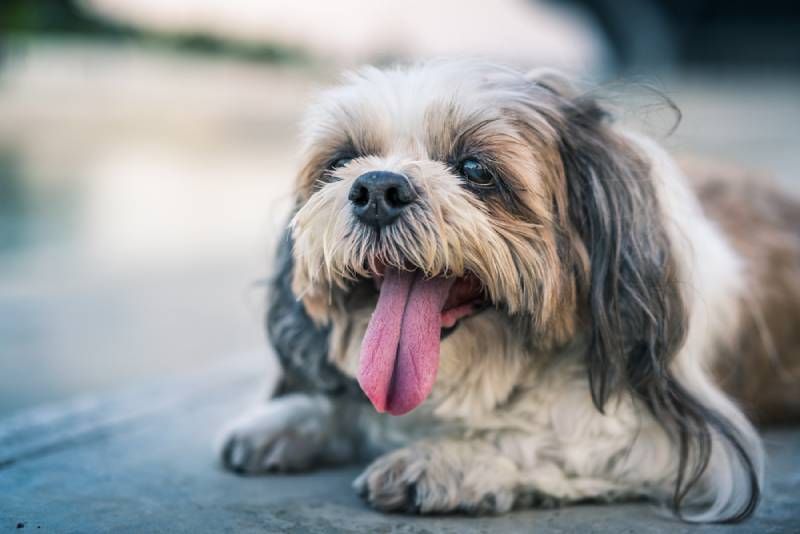
Panting is not often a cause for concern. Usually, dogs will pant after a burst of strenuous activity or when they need to cool down. But when your dog is panting in a heavy, intense way that is abnormal from his usual panting, that may be a sign that something is wrong.
There are many possible physical and emotional causes of abnormal breathing in a little dog, such as the Shih Tzu. In this article, we will look at 10 reasons why your Shih Tzu is panting so much. If you suspect that any of these reasons cause your dog’s excessive panting, reach out to your vet as soon as possible.

The 10 Reasons Why Your Shih Tzu Is Panting So Much
1. Anxiety or Stress
Excessive panting may indicate that your Shih Tzu is experiencing intense emotional difficulty. This can include anxiety, stress, or fear. If your Shih Tzu is panting due to intense emotion, you may notice that he is pacing, shaking, whining, or excessively shedding. You may also notice a change in your dog’s behavior. He may try to hide or stay clingy to you.
In some instances, the intense emotion that your dog is feeling may not be a bad one. If your Shih Tzu is excited, he may pant more than usual. Regardless, if you can determine the trigger of his panting behavior, you can work to minimize his emotional response.

2. Pain
Pain may cause your Shih Tzu to pant more than usual. If you think your dog is in pain, watch for other signs of physical distress, such as twitching muscles, shaking, hanging his head below the shoulders, and keeping his back arched. Depending on where the pain is located, you may also catch your Shih Tzu limping or having difficulty climbing onto and off of furniture.
If your dog is in pain, you need to consult your vet to determine the cause of the pain. Many medical complications may cause your dog pain, so it is vital to get a diagnosis as soon as possible so that you can alleviate your Shih Tzu’s struggles.
3. Heart Failure
Congestive heart failure is an emergency condition in which the heart is incapable of pumping enough blood throughout your Shi Tzu’s body.1 In a healthy dog’s heart, the heart valves open and close to allow blood to pass through different chambers of the heart. If one of these valves leaks or fails to do its task, it can lead to heart failure.
Signs that your Shih Tzu may have developed heart failure include coughing, shallow breathing, and lethargy. Depending on which side of the heart is most affected, you may notice signs such as swelling in the abdomen or limbs or bluish-colored gums.
4. Anemia
If your Shih Tzu has anemia,2 his red blood cell count is lower than it should be. This serious condition could result in oxygen deprivation, as red blood cells are responsible for carrying oxygen to the rest of the body.
Some signs of anemia include pale gums, lethargy, weight loss, loss of appetite, and an increased heart rate. An underlying disease may cause anemia, so it is important to get your Shih Tzu to the vet for treatment as soon as possible.

5. Lung Disease
Various lung diseases may contribute to your Shih Tzu’s excessive panting. Since the lungs are vital to your dog’s oxygen intake, it makes sense that your dog may breathe more intensely as a result. If your dog cannot get adequate oxygen with normal breathing, he may be panting harder to try and make up for it.
Respiratory diseases are common in dogs, with young and old dogs at risk for developing such a condition. Coughing and difficulty breathing are the most common signs of any lung disease.
6. Laryngeal Paralysis
Laryngeal paralysis occurs when the larynx is not functioning properly. Under normal circumstances, the cartilage flaps of the larynx will open when your dog is breathing and close when he is swallowing. But when these flaps are not working properly, the result is raspy-sounding, restricted breathing that may cause your dog to pant excessively.
If you have noticed your dog showing signs of a voice change, lethargy, coughing, or difficulty breathing, they are all potential signs of laryngeal paralysis.
7. Effects of Medicines
Is your Shih Tzu on any medication? If he is, there is a chance that his excessive panting is a side effect. Steroid treatments often cause Shih Tzus to experience increased panting. If the medication is the cause of the panting, discontinuing the treatment tends to put an end to the excessive panting after a few weeks.
However, speak to your vet before discontinuing any treatments for your dog. If you and your vet can determine that the medicine is the cause of your Shih Tzu’s panting, you can work together to find a solution for your Shih Tzu’s care.

8. Cushing’s Disease
Cushing’s disease is a serious condition that often affects middle-aged and senior dogs. This condition is a hormonal imbalance that occurs when the adrenal gland produces an overabundance of cortisol or stress hormones. Excessive panting is one of the early signs of this condition.
Untreated, Cushing’s disease can lead to high blood pressure, diabetes, changes to the liver, increased risk of clots, and chronic infections of the skin and urinary tract.
9. Brachycephalic Obstructive Airway Syndrome
In part, Shih Tzus are prone to excessive panting due to the structure of their faces. Their flat faces make them brachycephalic dogs prone to brachycephalic obstructive airway syndrome or BOAS.
Signs that your Shih Tzu may be dealing with BOAS include snoring, coughing, and gagging. You may also notice that your Shih Tzu has difficulty breathing or exercising. In severe instances, your dog may overheat, develop pale or blue gums, or even collapse.
See Also: Why Does a Shih Tzu Snort
10. Heat Stroke
Heat stroke is a heat-related condition that dogs may suffer from. It is also one of the most common and dangerous reasons your Shih Tzu may be panting. Heat stroke is often caused by dehydration and depletion of electrolytes. Initially, your Shih Tzu may display muscle spasms.
But without treatment, the complications can quickly progress to include major parts of the body, such as the heart, the central nervous system, the gastrointestinal system, and the coagulation system. Your dog may also experience complications with his kidneys and liver.
Heat stroke is a severe condition, and Shih Tzus are at higher risk of developing it due to their brachycephalic facial structure. If you notice any signs of heatstroke in your dog, such as excessive panting, disorientation, and weakness, take your dog to the nearest emergency veterinary center immediately. This condition can quickly become lethal.


Summary
Panting may be a sign that your Shih Tzu is excited or needs to cool down, but it also may be a sign of something much more serious. If you notice your Shih Tzu displays other concerning signs, such as weakness, pain, or disorientation, immediately take him to the vet. The sooner you can receive treatment for your Shih Tzu, the sooner he can return to his happy, healthy self.
Sources
Featured Image Credit: opalledo, Shutterstock
Expert dog care, straight to your inbox
News, insights, expert advice, and everything dog.

No spam — unsubscribe anytime.
By signing up, you agree to our Terms & Conditions and Privacy & Cookies Policy.
How useful was this post?
Click a star to rate. You can leave written feedback afterwards. (We read all feedback.)
Pets are Jordyn’s passion, especially cats. Whenever she has the opportunity, she loves to learn about animals and share her knowledge with everyone. She is devoted to her mischievous tabby cat named Jack and works hard to buy him his favorite toys and treats. Discovering new ways to better care for her pet is always on the top of her to-do list, and she is eager to help pet parents everywhere who have similar pursuits. In her free time, she loves to write, read, and take long walks. She has a creative spirit, which often helps her to come up with funny cat names.