Is Licking a Sign of Cushing’s Disease? Vet-Reviewed Facts


In this article
Cushing’s disease is an endocrine disease affecting approximately 100,000 dogs each year in the United States. Cushing’s disease can occur when there is something amiss with the pituitary gland and/or the adrenals, resulting in excessive amounts of cortisol being produced.
As dog owners, it’s important to keep an eye out for any unusual signs your dog is exhibiting. Licking is a normal behavior in dogs and it’s common for certain individuals to lick more than others. Occasionally, licking can be indicative of a behavioral issue or underlying medical condition.
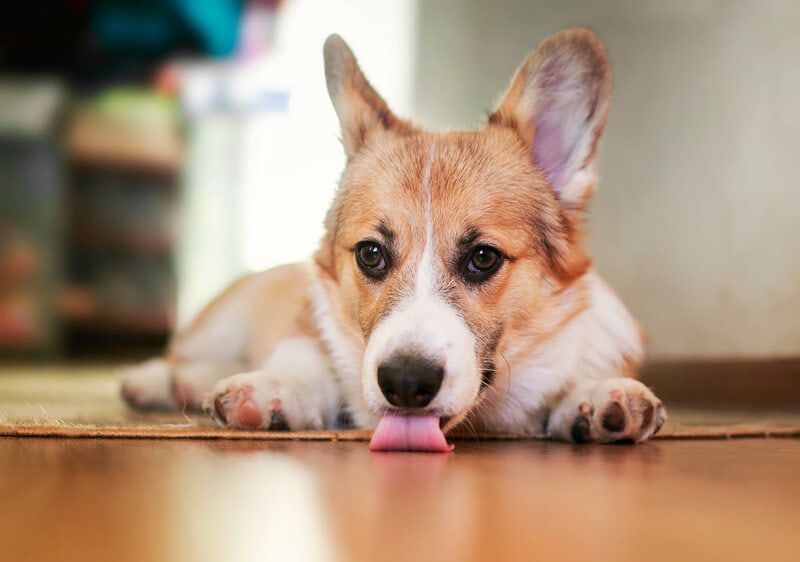
Excessive licking, especially of the floor or other inanimate objects, has been associated with Cushing’s disease, though it’s not typical and not considered a telltale sign. In these rare reports, licking might be the result of increased thirst, a normal sign of the disease. In this article, we’ll cover more about Cushing’s disease and how to tell when your dog’s licking may be a cause for concern.

General Information About Cushing’s Disease
Cushing's disease, also referred to as hyperadrenocorticism, occurs when the adrenal glands secrete too much cortisol.1 Cortisol is known as the stress hormone because it is released during stressful situations, such as “fight or flight” events. It can have several effects on the dog’s body.
Excess amounts of cortisol can lead to other serious health conditions including diabetes, chronic urinary infections, high blood pressure, kidney problems, and more, some of which can be life-threatening.
What Are the Clinical Signs of Cushing’s Disease?
There are quite a few clinical signs associated with Cushing’s disease.
Licking is not often listed as one of these signs because it is generally the result of either nausea or excessive thirst, two common side effects of the condition.
The following signs are all associated with Cushing’s:

What Are the Different Causes of Cushing’s Disease?
The pituitary gland is a pea-sized gland at the base of the brain that produces many hormones, including adrenocorticotropic hormone. The adrenocorticotropic hormone stimulates the adrenal glands to produce cortisol.
Cushing’s disease occurs when there is something amiss with the pituitary gland and/or the adrenals, resulting in excessive amounts of cortisol being produced.
Cushing’s disease can be categorized into three different types, all of which have different root causes.
1. Pituitary-Dependent Cushing’s Disease
Pituitary-dependent Cushing’s disease occurs when a pituitary gland tumor secretes too much of the precursor hormone that stimulates the adrenals to produce cortisol.
Pituitary tumors are often small in size and benign but neurological signs may develop as the tumor grows. The pituitary dependent cases are responsible for 80 to 85 percent of cases of Cushing’s disease in dogs.2
2. Adrenal-Dependent Cushing’s Disease
Adrenal-dependent Cushing’s disease makes up approximately 15 to 20 percent of cases. This occurs when there is a tumor on one or both of the adrenal glands, resulting in the excessive secretion of cortisol. Adrenal gland tumors may either be benign or malignant.
3. Iatrogenic Cushing’s Disease
The adrenal glands naturally produce two forms of corticosteroids: glucocorticoids and mineralocorticoids. Cortisol is one of the glucocorticoids and affects the metabolism of carbohydrates, fats, and protein, and reduces inflammation.
Corticosteroids as prescription medication can result in short- and long-term side effects and should always be administered under the supervision of a veterinarian.
Iatrogenic Cushing’s disease can be a long-term side effect that results from the long-term use of corticosteroids as treatment for other health conditions.
How Is Cushing's Disease Diagnosed?
Dogs showing the telltale signs will get any necessary diagnostics run to rule out other potential health conditions. Veterinarians often use a series of blood tests to diagnose Cushing's disease. Ultrasounds and CT scans are also highly effective in detecting tumors on the adrenal gland and help rule out any other diseases that could be causing similar signs. An MRI is another very effective way to diagnose Cushing’s since it allows for a thorough look at the adrenal glands.

What Is the Treatment for Cushing's Disease?
The treatment for Cushing’s disease will depend on the underlying cause. Options can include surgery, medication, and radiation. In the rare cases where the condition was caused by excessive steroid use, the dosage of steroids would either be reduced or discontinued altogether at the discretion of the veterinarian.
If the adrenal tumor is benign, surgical removal of the tumor can cure the disease. If medication is the recommended treatment, the drugs trilostane or mitotane may be prescribed and closely monitored by your veterinarian under a specific treatment plan.
The 11 Possible Reasons Why Your Dog Is Licking So Much
Licking is a normal behavior for dogs and often doesn’t cause any concern. Some dogs will naturally lick more than others, too. There are plenty of different reasons why dogs lick, and it’s a good idea to understand the behavior so that you can pick up on anything unusual that may point to an underlying issue that needs to be addressed.
1. Affection
Many dogs lick as a sign of affection. Lots of slobbery kisses may just be your dog’s way of telling you they love you. If you notice your dog likes to snuggle up with you and shower you with licks, they are likely just showing you some love.
2. Attention
Dogs will go to great lengths to capture your attention. Some may bark, whine, grumble, or even stare at you, but you can also expect certain dogs to lick you to put your focus on them. This could be because they are feeling hungry, are ready for their walk or playtime, or just want your undivided attention directly on them.

3. Boredom
They say idle hands are the devil’s workshop, but idle paws can lead to a lot of different behaviors. Licking is just one of the many things a dog may do if they are bored. If boredom is the root cause of excessive licking, it’s recommended that you provide your dog with other means of stimulation, like interactive toys, and maybe even an increase in their daily exercise.
4. Hunger or Thirst
It’s pretty common for dogs to lick if they are feeling hungry or thirsty. You may even catch them licking random surfaces that have drops of water or food residue on them. Make sure you always have fresh, clean water available for drinking, and try to stay on a regular feeding schedule. Some dogs will always be scouring their environment for any signs of something tasty, though.
5. Normal Grooming
Cats may be known for their grooming abilities and spend a lot of time doing so, but dogs will also take part in self-grooming to clean up a bit. Certain breeds are more prone to grooming themselves than others, but it’s important to contact your veterinarian if their grooming seems excessive or results in loss of fur or skin irritation, as it could be due to an underlying condition.
6. Itchiness
You may notice your dog licking a lot if they are feeling itchy. In this case, they will most likely be licking themselves in the area that is bothering them. This could be due to parasites, fungal infections, allergies, skin conditions, or other underlying health problems. If your dog is itching, it’s time to call your vet and get your dog in for an appointment so that you can get to the bottom of it and get them some relief as soon as possible.

7. Behavioral Issues
Excessive licking could be due to a behavioral issue such as separation anxiety or even more obsessive-compulsive behaviors. In these cases, your dog may be licking themselves, their family members, other pets, or even inanimate objects like the floor or the walls. If you suspect your dog’s licking is because of a behavioral concern, you will first want to set up an appointment with your vet to rule out any medical issues and then seek treatment options or even help from a professional trainer.
8. Cognitive Issues
With age, a dog’s cognitive function can decline significantly. Excessive licking is just one of the many signs of cognitive dysfunction that can happen during a dog’s senior years. Other signs may include pacing, excessive sleeping, confusion, or other behavioral changes.
9. Nausea
Nausea is something that can be related to many different conditions but in itself can result in excessive licking. An upset stomach may lead to a watery mouth, which can ultimately lead to licking. Your dog may have even gotten into something it shouldn’t have, which led to an upset stomach, or it could be suffering from another health issue.
If your dog is licking a lot all of a sudden and you suspect nausea, it’s a good idea to call your vet for the next steps you should take. They may want to see your dog at the clinic, or you may need to monitor them for a little longer.

10. Pain
One of the obvious signs of a dog being in pain is excessive and repetitive licking, which they do in the area where they feel discomfort or as a soothing behavior.
In severe cases, your dog may whimper or cry out in pain. This will warrant a visit to the veterinarian, so pay close attention to the area they are licking (if they are licking themselves excessively) and any other signs of pain so you can go over them at your visit.
11. Underlying Health Condition
There are plenty of underlying health conditions that could cause a dog to lick excessively. Most often, licking will be the result of other telltale signs of a condition, such as thirst, stress, or nausea. The best thing you can do is call your veterinarian and have your dog evaluated to rule out any underlying medical conditions that could be causing them to lick so much.
Summary
Licking may not be one of the telltale signs of Cushing’s disease, but excessive licking has been noted as a potential symptom of the condition, likely due to the increase in thirst caused by the effects the disease has on the body. Licking can be a completely normal behavior but may also be associated with behavioral issues or other underlying medical conditions. Any time your dog starts exhibiting unusual behaviors that are outside their norm, you should have them checked out by your veterinarian just to be on the safe side.
Featured Image Credit: Bachkova Natalia, Shutterstock
Expert dog care, straight to your inbox
News, insights, expert advice, and everything dog.

No spam — unsubscribe anytime.
By signing up, you agree to our Terms & Conditions and Privacy & Cookies Policy.
How useful was this post?
Click a star to rate. You can leave written feedback afterwards. (We read all feedback.)
I am a wife, mother, nature enthusiast, animal lover, and business major. I was born and raised in Ohio but now live in Tulsa, Oklahoma. We share our home with a German Shepherd, several snakes, tarantulas, and a couple rescue cats.
My husband and I enjoy traveling the US with our kids and photographing wildlife. My passion is to educate others on the importance of proper animal care, with an emphasis on reptiles and exotics since their care requirements can be much more complex. I am also a huge advocate for bully breeds. I feel most at home in the forest either on horseback or in hiking boots.