When Can My Dog Climb Stairs After ACL Surgery? Vet Approved Facts & FAQ
In this article
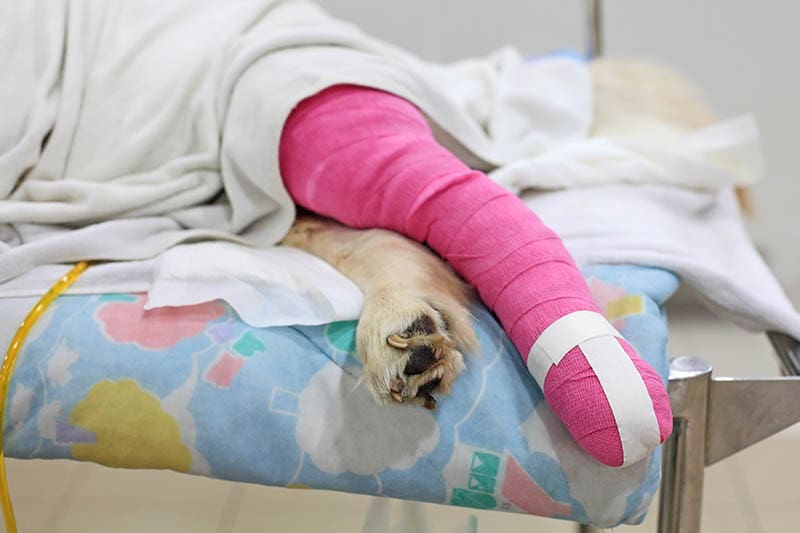
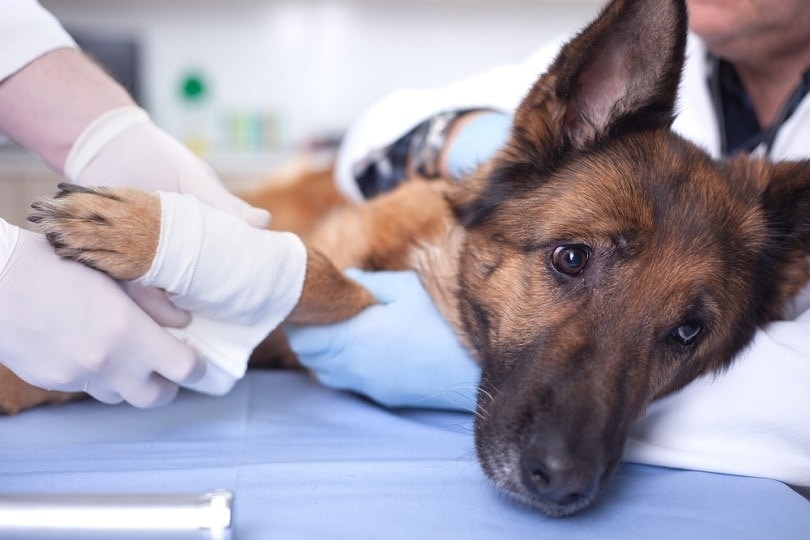
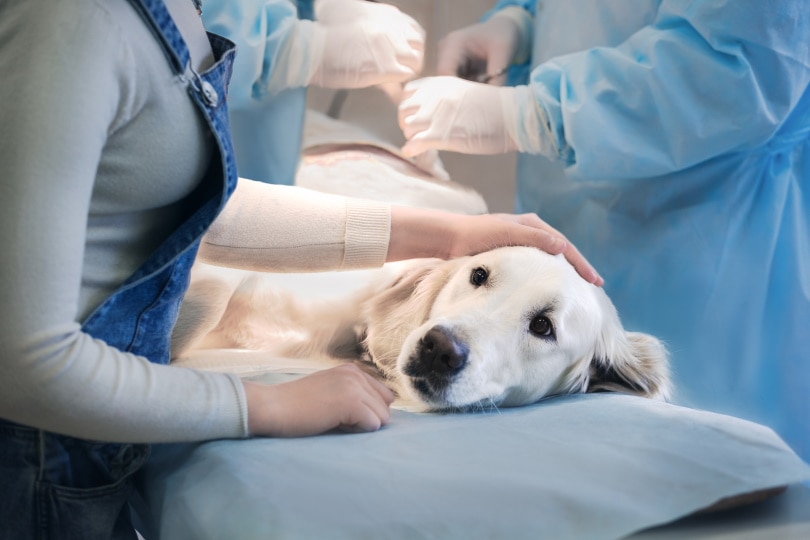
Surgery is often the only treatment option to restore your dog’s mobility when they suffer a devastating ACL injury. But the fix isn’t complete once you bring your dog home from the operation; the most critical part of their recovery is only beginning, and you have to monitor and attend to their needs over several weeks to ensure a smooth recovery.
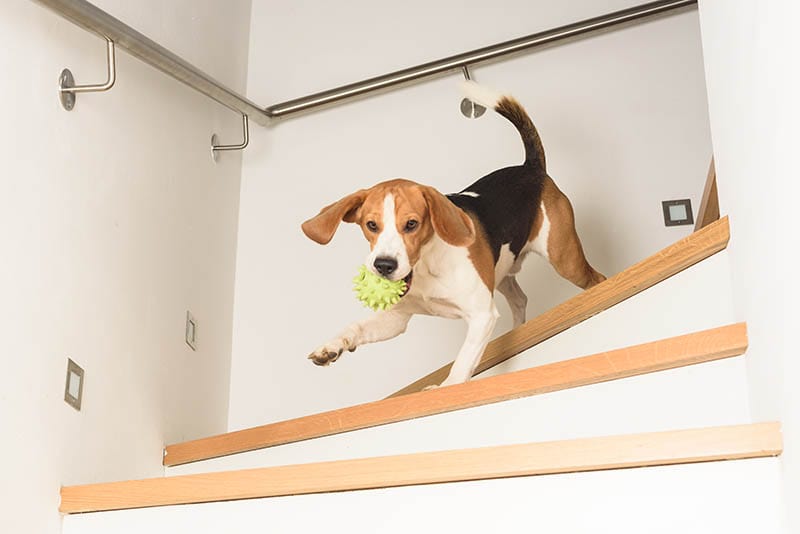
Central to the process is restricting movements, particularly when it comes to strenuous actions like jumping on furniture or walking up stairs. Being too relaxed about your vet’s post-operative instructions can spell trouble, as overexertion could disrupt the repair, hurt your dog, and extend the recovery time. Keeping your dog safe and comfortable is a top priority. Ideally, you should give them at least 6 weeks to recover from CCL surgery before letting them climb stairs.

How Long Does It Take for a Dog to Recover from ACL Surgery?
But before we go further, let’s sort out the terminology. Unlike their human owners, dogs don’t have anterior cruciate ligaments; theirs is called a cranial cruciate ligament, or CCL. A torn or ruptured CCL is a common injury in overweight, active, or bowed-legged dogs because all these factors put pressure on the CCL. As a critical support for the knee joint, a tear can significantly hinder mobility and cause severe swelling, instability, and pain.
While mild injuries may heal over time, most CCL injuries require surgery, and it is common for the ligament on the opposite leg to suffer the same fate eventually. The recovery time can vary depending on the surgical procedure. Dogs generally need to recover for 12–16 weeks before moving as they usually would. It can take another 8–12 weeks (about 6 months total) before they are ready for their usual exercise, games, and activities.
This might sound like a long time, but their activity level gradually increases week-to-week. Quite often, the most challenging part of the recovery period is trying to convince your dog to adhere to their prescribed rest. Therefore, dog parents must be strict about following the post-op plan.

When Can Dogs Climb the Stairs After CCL Surgery?
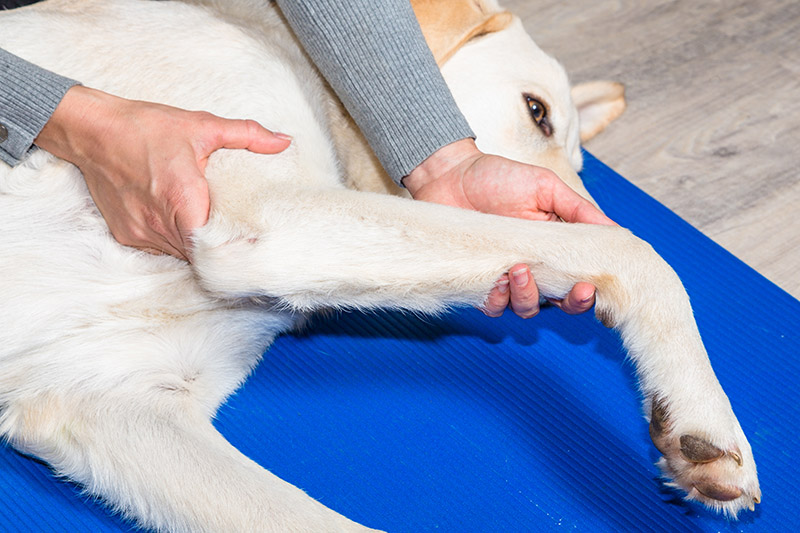
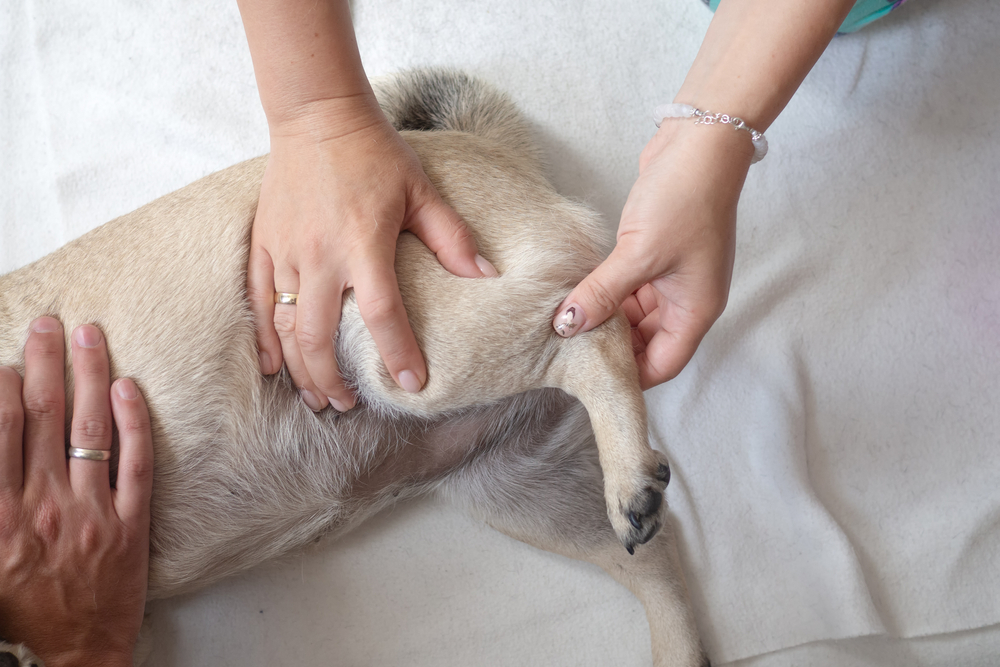
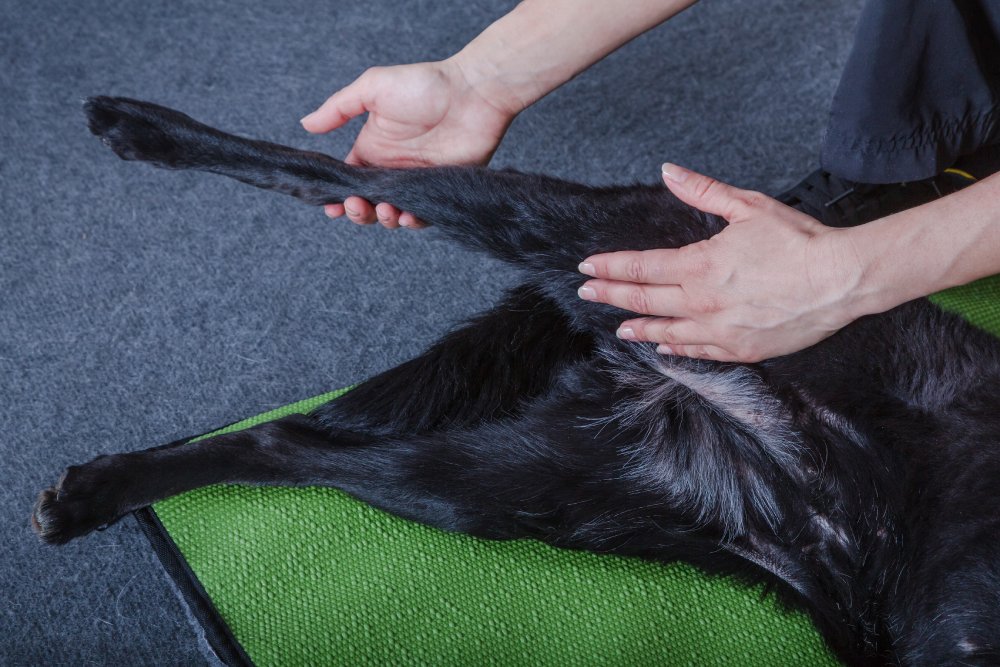
Following surgery, dogs must rest completely for the first 10 days, preferably in a crate or very small room, and only go outside on a leash when using the bathroom. Swelling will occur during the first week, and the fresh wound will require delicate care. After 2–3 days, you can use gentle passive range of motion (PROM) exercises to warm the joint, stimulate blood flow, and exercise the muscle.
Most dogs are ready to walk up stairs about 6 weeks after the CCL operation. But the general rule should never supersede your doctor’s post-operation instructions. They may have you wait longer to introduce stairs or ask that you only let your dog descend but not climb the stairs for a certain period. Follow up with your vet if you’re uncertain whether your dog is ready for stairs.
This will also likely depend on the number and depth of your stairs. If you only have one or two steps to get into the house, for example, your dog will likely be cleared to use those much earlier than if you have a lot of tall steps.
How to Introduce Stairs to Your Dog Post-Surgery
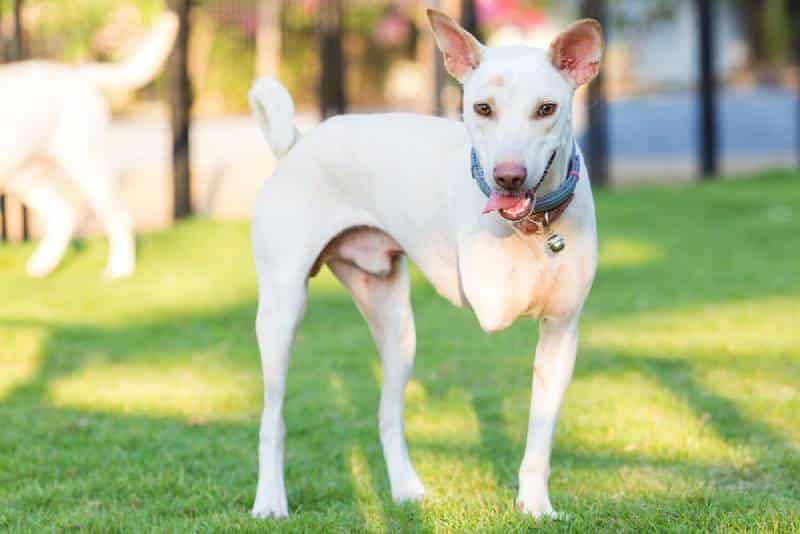
Waiting and gauging your dog’s ability and interest in stairs is a crucial recovery step. While tender on the lame leg, dogs remain open to further harm. Around 30%–50% of dogs that injure one CCL will damage the other, often within only a couple of years after the first. Putting more strain on the other leg to account for the lame leg can easily overexert an at-risk CCL and cause another injury.
What physical condition is your dog in, and how do you think their three good legs will tolerate the added pressure? Poor fitness and obesity are leading causes of CCL injury, and without their typical activity, it’s easy for dogs to fall out of shape while recovering.
Your dog may also be on medication, which could make them unaware of their threshold. You have to be responsible for them. Wait until they have had time to heal and get physically fit enough to handle stairs. Introduce stairs slowly, practicing basic up-and-down movements on a few steps.
You can use a towel sling for your dog to provide stability. Wrap the towel under the hind section so you can support your dog without lifting them. When your dog can move up the stairs unsupported, you must still supervise them to ensure they don't run up and down or try to jump off the steps.

How to Help My Dog Recover After CCL Surgery
Getting your dog back to their regular, stair-climbing selves is a rigorous, multi-faceted process. Controlled improvements in motion require strict guidance. Alongside a PROM, icing, and massage routine, you need to offer support and resources to push your dog through recovery without leaving the risk of a setback.
Here are some ideas to help your dog heal post-CCL surgery:
Over the first few months following CCL surgery, your dog will need constant supervision, plenty of rest, and extra affection. They don’t have a way to stay energized and upbeat while stuck in bed, so you’ll have to fill in the gaps with more attention and engagement.
Consult your veterinarian for any doubt or question you might have.
Summing Up
Steps aren’t always avoidable in your dog’s routine, but ideally, you should give them at least 6 weeks to recover from CCL surgery before letting them climb stairs. Every dog is different, and your observations and vet’s advice are better guidelines than average timeframes. Strive for gradual, steady progress without pushing your dog, and they’ll have the best chance of returning to their usual energetic selves in the fewest steps possible.
See also:
Sources
Featured Image By: Przemek Iciak, Shutterstock
Expert dog care, straight to your inbox
Vet-reviewed advice, training tips, and the best of Dogster. Free, and you can unsubscribe anytime.
By signing up, you agree to our Terms & Conditions and Privacy & Cookies Policy.
Nicole has loved animals of all sizes her whole life so it's no wonder she has dedicated her career to helping them through what she loves best: learning, writing, and sharing knowledge with others. She’s the proud mom of two dogs, a cat, and a human. With a degree in Education and 15+ years of writing experience, Nicole wants to help pet parents and pets around the planet to live happy, safe, and healthy lives.
Join the conversation
Ask a question, share your story, or send private feedback.