Torn ACL in Dogs: Vet-Explained Signs, Causes & Treatment Options

In this article
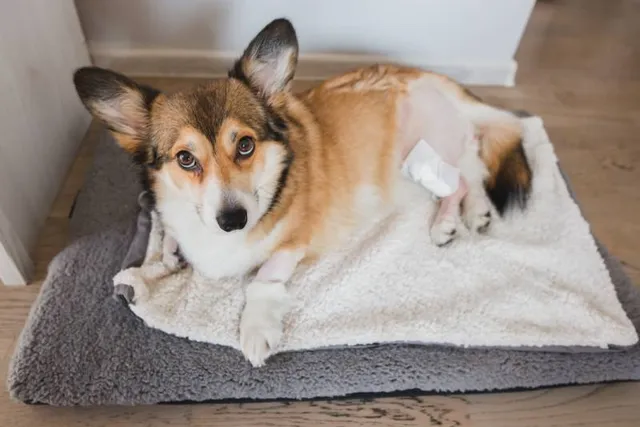
Many of you may already be familiar with the common human injury widely known as an “ACL” (anterior cruciate ligament) tear. However, far fewer people are familiar with the canine equivalent of this injury, which is called a cranial cruciate ligament (CrCL) injury.
In this article, we’ll learn what this musculoskeletal injury entails in our canine friends, as well as some common causes, signs, and treatment options associated with cranial cruciate ligament injury.

What Is a Torn ACL?
As mentioned, the example of a human’s ACL tear is often used interchangeably with a dog’s CrCL injury. Learning about cranial cruciate injury is very important for dog owners as it is the most likely reason for hindlimb lameness in dogs. In addition, it is also responsible for a significant proportion of causes of degenerative joint disease in a dog’s knee.
A little bit of limited background anatomy may help explain more. A dog’s knee is referred to as their stifle. This stifle joint consists of the kneecap (patellar bone) as well as the end of the femur (thigh) bone that connects to the top tibia (shin) bone and fibula bones below it. By definition, a ligament is a tough, fibrous tissue that connects bone to bone. Therefore, the cranial cruciate ligament attaches the back of the femur bone to the front of the tibia bone. Its purpose is to keep the tibia from moving forward when the limb bears weight. If there is a ligament tear, there will be excessive movement forward of the tibia which is diagnosed as a ruptured CrCL.
It is important to be aware that CrCL tears can sometimes be accompanied by potential injuries of the meniscus. The menisci are c-shaped cartilaginous disks that are shock absorbers in the knee joint between the femur and tibia. Oftentimes, if a CrCL is damaged, the meniscus can also be damaged at that time or even at a later date.
For a dog with an intact CrCL that is standing, the knee is always bent (to some degree), which means that the CrCL is load-bearing and working. However, when the cranial cruciate ligament tears, whether that is partially or fully, this failure then causes the stifle joint (knee) to become unstable. When such a tear occurs, you can imagine that this would negatively affect a dog’s ability to move and bring about significant discomfort.
A tear can happen acutely (all of a sudden) or chronically (over time). While any age or breed of dog can be affected, middle-sized to large dog breeds that are middle-aged have an increased risk.

What Are the Signs of a Torn ACL?
Some signs seen with this condition occur in whichever leg has a partial or full tear of the cranial cruciate ligament. This could be either or both rear legs.
One may see any combination of the following:
Is your dog presenting any of these signs? We suggest you speak with a vet online.
What Are the Causes of a Torn ACL?
There are a few causes and risks associated with a cranial cruciate ligament injury. A traumatic injury can occur in a number of ways such as when a dog is running and turning quickly, jumping off something high, or twisting their back leg/knee, which in turn tears the ligament. In addition, repeating small injuries over time can ultimately lead to the ligament becoming weaker. This allows for small tears to occur, also called “micro-injuries” which then ultimately allow for a larger rupture in the ligament over time.
A dog’s degeneration with age, genetics, as well as abnormalities in their anatomy and conformation, may all come into play in contributing to a cranial cruciate ligament injury. Some important risk factors that can also be at play with a CrCL include being overweight or not in good physical condition with regular activity.


How Do I Care for a Dog With a Torn ACL?
At the Veterinary Clinic
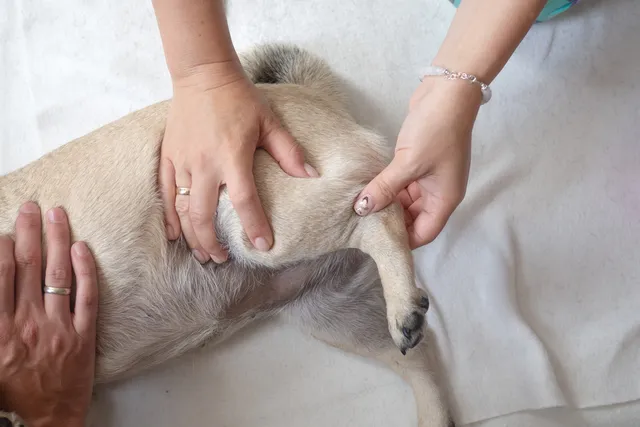
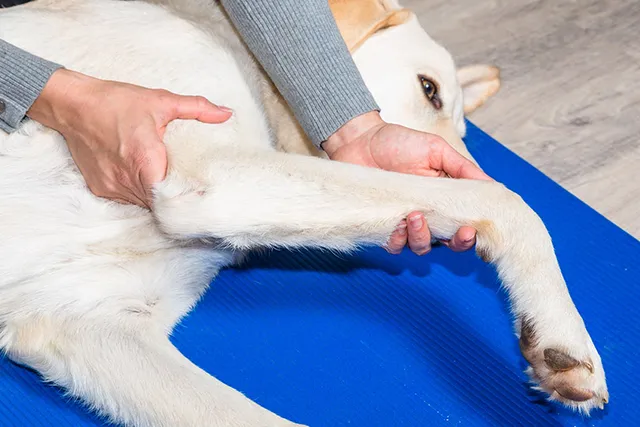
If you notice your dog in pain or limping in their rear leg, it’s a good idea to have your dog evaluated as soon as you can. Your dog’s vet will start with a complete history and full physical exam. Observing their gait, checking for medial buttress, and an orthopedic examination that includes palpation and manipulation of the knee joint are also key. From there they may need to sedate your dog to do some further manipulations such as a cranial drawer test, tibial compression test, and radiographs.
- Medial buttress. For dogs that have a torn CrCL, this is where the inside (medial) surface of the knee joint has a very firm swelling that can be appreciated on the affected leg.
- Cranial drawer and tibial compression tests. These two different palpation tests require veterinarians to use their fingers and hands in predetermined areas to check for stability (or lack thereof) within the knee joint. Abnormal movements as a result can then indicate that the cruciate ligament is ruptured.
- Joint health. Your veterinarian will be looking for joint swelling and signs of degenerative joint disease as well as rule out other potential causes visible on X-rays.
Sometimes, especially in partial tears or more difficult cases, further testing may be needed including magnetic resonance imaging (MRI), arthrocentesis (evaluating joint fluid), and arthroscopy (a minimally invasive procedure that evaluates the joint with a small camera).

Treatment
For the treatment of a dog with a torn CrCL, there are two broad options: surgery and non-surgery (also referred to as conservative/medical management). The decision between these two broad options is multifaceted and should be informed by many factors. This could include a dog’s size, age, activity level, other medical conditions, or if they are a good candidate for anesthesia. In addition, an owner’s finances and preferences obviously also weigh very heavily.
Surgical Stabilization
This is often the ideal recommended course of treatment for dogs that have a torn CrCL with or without an additional torn meniscus. These dogs experience faster healing, have the best chance of the knee returning to normal function, and have less expected osteoarthritis over the long term.
There are two groups of surgical options: osteotomy-based that cuts into bone (for example, tibial plateau leveling osteotomy aka TPLO, tibial tuberosity advancement aka TTA, etc.), and those that are suture-based (extracapsular suture stabilization, tightrope procedure, etc.). Some general practice veterinarians have had extra training on specific surgical procedures, but others may refer some or all of their cases to a veterinary specialist.
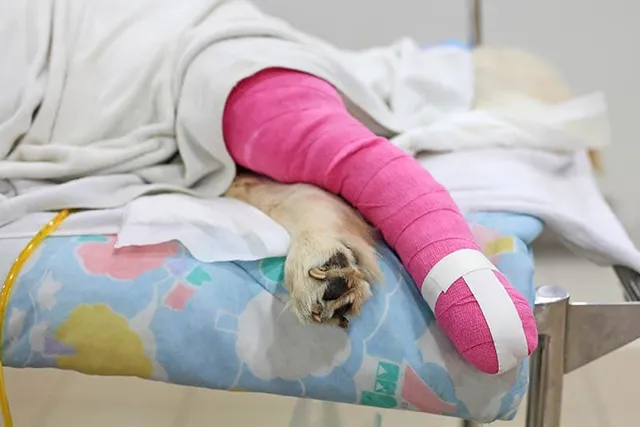
Post-operative management will be very important while a dog is healing, and your veterinarian will have many details to discuss. Generally speaking, after surgery there will be medication for pain and decreasing inflammation and an e-collar while the incision is healing. Of importance will be confinement and strictly controlled leash activity with physical rehabilitation
Weight management for overweight dogs will decrease the amount of load and stress on the joint while healing and thereafter. Nutritional supplements (for example, glucosamine-chondroitin and omega-3 fatty acids) can be helpful as well. All of these factors are very important and most dogs with a successful surgery and post-operative period return to normal function in 3–6 months.

Nonsurgical Management
When surgery is not an option, there are several factors that will come into play for longer-term care and a detailed conversation with your veterinarian will give more specifics. Medication to decrease pain and inflammation will be coupled with longer confinement and controlled leash activity than that for surgical cases. Activity restrictions and leash-based activities will help reduce pain during the healing process. Physical therapy, whether specific recommendations under veterinary care or physical rehabilitation, is also important.
In addition, there may be the potential for custom knee braces. This has limited information and evidence in veterinary medicine at this time, but the theory behind it is extrapolated from human medicine. Sometimes, it can be attempted as part of the recovery plan if surgery is not a viable option. Just like for surgery cases, nutritional supplements can also be helpful and weight management is imperative, too.
Frequently Asked Questions
Will my dog be able to walk normally again?
A dog’s overall prognosis after CrCL surgery is good, in the range of an 85–90% success rate. A small percentage of dogs may require additional surgery. It is important to note that all dogs with a torn cruciate ligament will develop some degree of osteoarthritis. The goal is to minimize this as much as possible with prompt treatment. Successful surgery can slow the rate of arthritis a CrCL dog will develop over time when compared to those who receive medical management.
What is the chance that my dog’s other leg will be affected?
While there is unfortunately no exact answer, it’s estimated that about 40–60% of dogs that have had a ruptured cranial cruciate ligament in one leg will have the same in their other knee in the future. Some risk factors to try to prevent another problem can include having a healthy weight as well as regular physical activity.
Conclusion
When a dog partially or fully tears their cranial cruciate ligament, equivalent to a person's ACL, they will often exhibit lameness and limping in their rear leg. Prompt diagnosis and surgical intervention usually provide the best possible outcome with the least amount of arthritis in the future.
If surgery is not an option, strict conservative management with your veterinarian’s recommendations will help to bring relief to your pooch.
Sources
Featured Image Credit: VP Photo Studio, Shutterstock
Expert dog care, straight to your inbox
News, insights, expert advice, and everything dog.

No spam — unsubscribe anytime.
By signing up, you agree to our Terms & Conditions and Privacy & Cookies Policy.
How useful was this post?
Click a star to rate. You can leave written feedback afterwards. (We read all feedback.)
Dr. Rachel Ellison DVM (Veterinarian)
Dr. Rachel Ellison lives on a mountain in Utah with her husband, daughter, and son, as well as their animal menagerie— a Bernese Mountain Dog, a Bengal/Siamese mix, and an orange tabby cat, as well as numerous chickens. During her free time, she enjoys being with those she loves, cooking and baking, reading, hiking, sharing her knowledge about cats, and exploring nature and the world around her.