Manganese for Dogs: Benefits, Vet-Reviewed Nutritional Information & Potential Issues

In this article
Most dog owners are completely aware of the importance of the nutrients that are essential for keeping their dogs healthy—protein, fats, calcium, vitamin A, and so on. But many are not as likely to be aware of the importance of manganese.
Manganese for dogs is vital for certain aspects of their health, so we’ll go over why it’s such an essential part of your dog’s diet and how you can ensure to include it in your pup’s meals.

What Is Manganese?
Manganese is a micromineral or trace mineral, which your dog’s body needs in small amounts. Manganese plays a role in more than 300 enzymatic functions, including converting your dog’s food into fatty acids and energy. It assists in the absorption and digestion of the carbohydrates and proteins in your dog’s diet.
Manganese can also contribute to your dog’s skeletal structure, it is essential to help develop and maintain strong and healthy ligaments because it is necessary to activate the enzymes that build collagen.
Manganese also helps with your dog’s brain and nerve functions. In fact, in a sense, it influences your dog's entire body since it plays an important role in the antioxidant activity of the superoxide dismutase enzyme. Antioxidant activity releases free radicals that damage the cells, proteins, and DNA of your dog’s body and brain.
However, too much synthetic manganese can be dangerous, as it is known to induce neurotoxicity, and the unfortunate side effect of manganese neurotoxicity is dementia.
Clearly, manganese is super important, but where is it typically found in its natural form?

Where Can You Find Manganese for Dogs?
Natural sources of manganese come from liver, heart, and meat, but not enough to meet your dog’s daily nutritional requirements. The best sources of manganese come from parts of animals that aren’t typically used in your dog’s food—wool, hair, and feathers. Pretty unappealing, isn’t it?
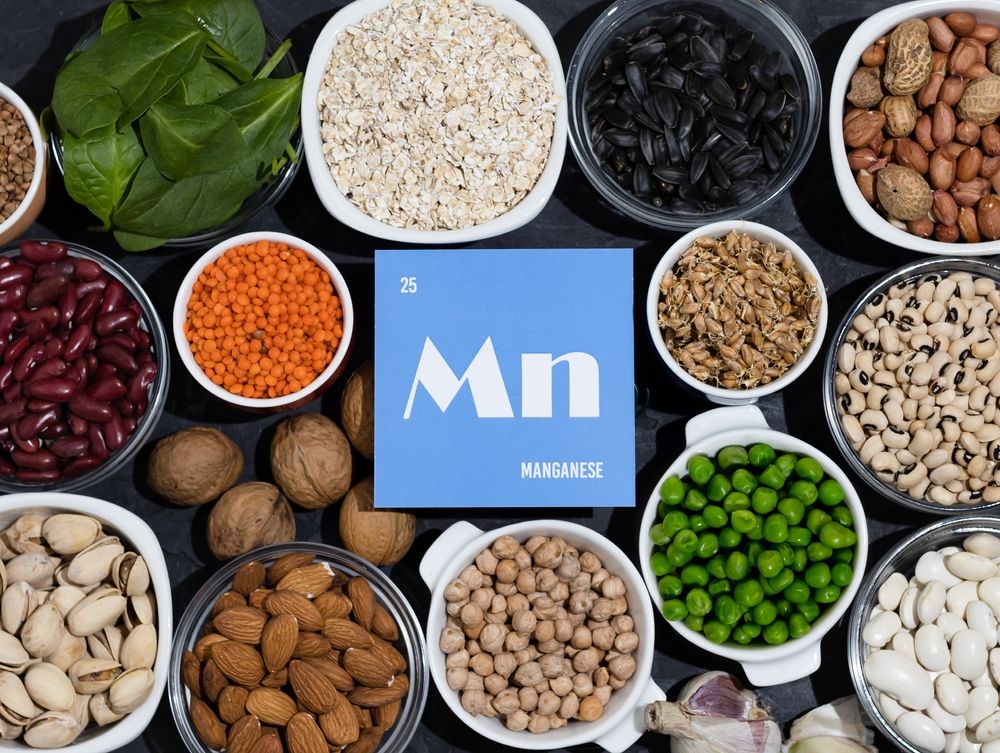
Whole grains, seeds, green leafy vegetables, and nuts are all sources of manganese, so if you provide your dog with these, he should have enough manganese to reap the rewards.
How Much Manganese Does Your Dog Need?
We can’t give you the exact amount that your dog would need every day because the amount will depend on your dog’s breed, size, age, activity level, typical diet, and health.
The usual amount required is relatively small, and experts in dog nutrition have recommended 2.3 milligrams of manganese for each pound of dog food. Young dogs will need larger doses to support their growth and development. For them, the minimum requirement is 3.8 milligrams of manganese for each pound of food.
Additionally, the breed of your dog is a factor. For example, sledding breeds, such as the Malamute, have trouble absorbing minerals, so these breeds will need a larger dose to make up for this. Lastly, if your dog is ill or stressed, the mineral intake might be affected.
Your best bet would be to consult with a vet regarding how much manganese would be suitable for your dog specifically. Finding the right dosage is vital as too much could have negative side effects and too little can result in a deficiency.
Manganese Deficiency
Manganese deficiency isn’t very common in adult dogs, but it is more likely to occur with puppies and young dogs.
Problems with a manganese deficiency might include:
This list is based on observational experience with dogs and on studies that were conducted on other mammals as there haven’t been any specific studies on dogs since it isn’t a common issue. However, impaired reproductive performance has been linked in female dogs with manganese, zinc, and copper deficiency.

Manganese Toxicity
While ingesting too much manganese has the potential to be toxic, there are actually no cases reported of this caused by the ingestion of manganese in its natural form. This might be because it’s actually quite challenging to find enough manganese that should make up part of your dog’s diet. However, cases of manganese intoxication in dogs overdosed on joint supplements have been reported, and manganese caused liver and kidney damage.
Therefore, the recommendation is that if your dog is receiving a supplement containing manganese, ensure you only offer the amount recommended by the veterinarian.
Adding Manganese to Your Dog’s Diet
We established earlier that the average dog should ingest 2.3 milligrams of manganese for every 1 pound of food. We’ll have a brief look at what foods can add the right amount of manganese to your dog’s diet.
This list is in order of foods that are highest to lowest in manganese:
And just to compare, you would need 10,000 grams of lean ground beef for that 1 milligram of manganese.
This is just to give an idea of the amount of food as well as the variety. You obviously wouldn’t want to feed an entire cup of blackberries to your dog every day, but combining a number of these foods, particularly if your dog is on a raw food diet, should give him enough manganese daily.
Again, consult with a vet about the safest way to get this mineral into your dog’s diet.
Supplements
There are a number of supplements that you can give your pup if you decide not to go with the food sources discussed above. For example, many dog food manufacturers ensure manganese is included as an ingredient, so be sure to look for high-quality and nutritionally balanced dog food.
There are also treats, like this one, that contain the right amount of manganese. You can also be on the lookout for supplements that can be added to your dog’s regular food.
Again, remember that too much manganese can also be a problem, and supplementation is the usual way this issue arises, so keeping an eye out to ensure you are offering the right balance is necessary.

Final Thoughts
Manganese is clearly an important mineral that supports many of the systems in your dog’s body and will help everything from the brain to ligament health. Speak to a vet if you’re unsure if your dog is receiving enough manganese in his diet and the best way to add some more in.
One of the best options to provide your dog with all of the essential nutrients is to ensure their diet is complete and balanced, which is especially important in homemade diets. They need to be carefully planned; otherwise, they won’t necessarily be a healthy alternative. Explore what works best for both your dog and yourself in conjunction with a vet, and you can rest assured that your dog will live a long and fruitful life.
See also:
Sources
Featured Image Credit: Kreminska, Shutterstock
Expert dog care, straight to your inbox
Vet-reviewed advice, training tips, and the best of Dogster. Free, and you can unsubscribe anytime.
By signing up, you agree to our Terms & Conditions and Privacy & Cookies Policy.
Kathryn was a librarian in a previous lifetime and is currently a writer about all things pets. When she was a kid, she hoped to work in a zoo or with wildlife in some way, thanks to her love for animals. Unfortunately, she's not strong in the sciences, so she fills her days with researching and writing about all kinds of animals and spends time playing with her adorable but terribly naughty tabby cat, Bella. Kathryn is hoping to add to her family in the near future – maybe another cat or two and a dog.
Join the conversation
Ask a question, share your story, or send private feedback.