What Your Senior Dog Isn't Telling You: A Vet's Guide To The 7 Quiet Signs Of Aging
In this article
Dogs instinctively conceal pain. After studying health data from thousands of dogs through Maven Pet, here are the patterns we've identified in senior dogs — and the signals most pet parents overlook.
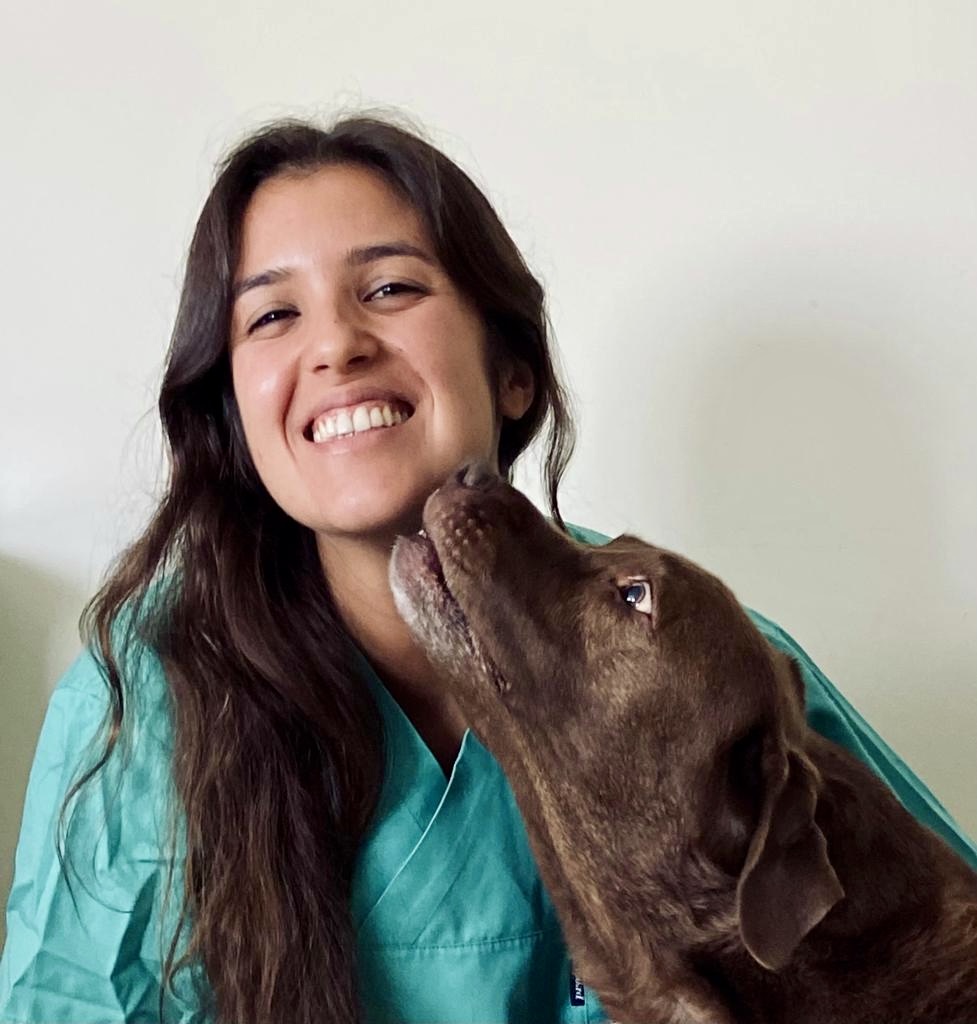
By Carolina Domingues, DVM, Senior Research Specialist at Maven Pet
As a veterinarian and research specialist at Maven Pet, I'm part of a team that analyzes real-world health data from thousands of dogs monitored at home. Our findings are validated in collaboration with the University of Trás-os-Montes and Alto Douro, the University of Florida, and Tufts University. And across all of that data, what I've observed in senior dogs has shaped something I believe every pet parent deserves to know.
The greatest challenge of caring for an aging dog isn't what's visible. It's everything your dog isn't letting on.
Dogs have a remarkable ability to adapt to discomfort. A stiff joint, a dull ache, the quiet onset of something off — they adjust so gradually that neither you nor they register a clear turning point. By the time a senior dog appears to be struggling, they've often been silently compensating for weeks, sometimes months.
That's why we conducted the Maven Dog Aging Report — a full year of data from thousands of dogs wearing Maven, comparing senior dogs with adult dogs side by side. From this internal report, we want to share the learnings that matter most to the pet parents who are paying closest attention to their dog's aging journey.


The Quick Answer For Senior Dog Owners
The seven most reliable early signs of discomfort in senior dogs are subtle shifts in sleep, breathing at rest, drinking, recovery after activity, daily activity levels, weight, and moments of confusion. In an analysis of thousands of dogs monitored at home through the Maven Pet dog health tracker, our 2026 internal report found that drinking time nearly doubles by the senior years (+93%), daily activity drops by 37%, and resting respiratory rate climbs 12.7% in early senior years (dogs aged 7 to 11) compared to adult dogs.
Here are seven of the quiet ways senior dogs tell us something is shifting. Some you can spot just by paying closer attention, and none of them require you to be a vet.
1. The Way They Sleep
The first thing most senior dogs change is how they rest. Not how much, but how well.
Watch for a dog who suddenly gets up multiple times at night or repositions every few minutes instead of settling. These are the earliest behavioral signs I look for when I suspect joint discomfort, cognitive decline, or breathing strain. They show up before the limp or the cough. Roughly 18% of the early health changes my team detects start as a quiet shift in sleep.
What you can do today: Watch your dog for five minutes while they sleep, once a week. You'll learn their normal, and the abnormal becomes obvious. All Maven Pet users can track their dog's sleep automatically, so they don't have to remember.

2. The Breathing You Only Notice When You Look
When dogs are uncomfortable, one of the very first changes happens before any visible sign. Their resting breath rate quietly creeps up. It goes unnoticed until you know what to look for.
A relaxed, healthy dog asleep takes fewer than 30 breaths per minute. Persistent counts above that can be one of the earliest signs of heart strain or pain. In our research, roughly 20% of early health signals show up first as a change in resting respiratory rate.
In our 2026 aging internal report, resting respiratory rate climbed 12.7% in early senior years (averaging 15.6 breaths per minute vs 13.9 in adults). Senior dogs in this stage were 57% more likely to be flagged by our respiratory rate monitor than adult dogs (33% vs 21% receiving at least one alert across nearly a year of observation).
What you can do today: Once a week, watch your sleeping dog for a full minute. Count the rise of their chest. Each rise followed by a fall equals one breath. Write the number down. Owners of dogs with heart conditions often track this automatically. The method is clinically validated in a peer-reviewed paper, which gives cardiologists the confidence to recommend it.
3. The Drinking Shift
A senior dog who suddenly drinks more isn't just thirsty. Increased water intake is one of the earliest signs of kidney disease, diabetes, and Cushing's. These three conditions hit older dogs hard, but are all manageable when caught early.
This is the strongest senior-specific signal we see in our data. Across thousands of dogs in our 2026 internal report, daily drinking time nearly doubled from adults to seniors (a 93% increase). Even in completely healthy senior dogs with no diagnosed chronic conditions, water intake rose by 45%. In other words, an uptick in your senior dog's water intake is not "just getting old" - it's a real physiological shift worth a vet conversation, even when nothing else seems off.
What you can do today: Once a month, fill the bowl with a measured amount in the morning and check what's left 24 hours later. No precision needed, just a consistent baseline so a sudden shift becomes visible. If you want to track drinking behavior over time without thinking about it, Maven does that automatically. Keep in mind it tracks behavior trends, not actual volume, so manual measuring remains useful when a pattern shifts.
4. The Recovery Time, Not The Activity Itself
This is the most underrated signal in senior dog care.
Owners often watch how much their dog walks. They miss how their dog recovers from walking. A dog who used to bounce back the next morning and now needs two quiet days is sending you information that's harder to see than a limp but just as important. Watch for reluctance to climb stairs the morning after a walk, decreased food interest the day after exercise, or lingering panting at rest. All of these matter, especially if your dog is developing early signs of arthritis.
What you can do today: For two weeks, jot down what your dog does the day after your longer outings. The slide from "recovers in hours" to "needs days" is gradual enough that you only catch it if you're tracking.

5. The Activity Gap Most Owners Don't Realize They Have
This was one of the biggest surprises in our research. Across more than 2,000 dogs in our dataset, the average dog gets about 33 minutes of real activity a day. Nearly half get less than 30 minutes.
When we focused on senior dogs specifically in our 2026 internal report, daily active time dropped by 37% from adults to seniors. The decline holds even in healthy senior dogs with no chronic conditions, confirming it reflects normal aging itself, not just disease. The drop is gradual enough that most owners miss it
A dog’s breed doesn't accurately predict the dog you actually have. What matters is the trend over time for YOUR senior dog. A 12-year-old who used to spend 40 minutes active and is now doing 22 isn't just aging. They may be telling you something hurts.
What you can do today: Walk your senior dog at the same time each day, and track how that walk changes month over month. The amount of change matters more than the number.
6. The Weight That Stays Quiet
Weight change in senior dogs happens slowly enough that it often goes unnoticed until someone who hasn't seen the dog in months points it out. Both directions matter. Loss of muscle mass (sarcopenia) is clinically significant even when appetite seems normal, and senior dogs can lose muscle while gaining fat, so the scale alone won't tell you the full picture. Weight gain increases the load on aging joints and can signal hormonal changes.
What you can do today: Have your vet weigh your dog every six months and ask specifically about muscle mass over the spine and hindquarters. That's where loss shows up first. Watch for weight change of more than 5-10% over six months, a pot-bellied appearance, or visible muscle loss over the hindquarters or spine.
7. The Moments Of Confusion
Canine cognitive dysfunction (CCD) affects an estimated 30 to 60 percent of dogs over 11. It's one of the most underdiagnosed conditions seen in older dogs because the early signs look exactly like "she's just getting old."
Watch for pacing in the evenings, getting briefly stuck in corners of familiar rooms, staring at walls, increased anxiety around dusk, or seeming confused in places they've lived for years. There's no cure for CCD, but diet changes, environmental adjustments, omega-3 supplementation, and certain medications can meaningfully improve quality of life when started early.
What you can do today: If you've seen two or three of those patterns over the last month, bring it up at your next vet appointment. Lead with "Here are three things I've noticed," not "I think she's getting senile."

It’s Not About The Diagnosis; It’s About Observation

If you read this list and felt a little behind, don't. We're all behind. It's common to find cases where the owner is doing everything right, and an early arthritis signal still goes undetected for months because the dog is that good at hiding it.
The goal isn't a medical surveillance program. It's the opposite. Most senior dogs will be fine, but knowing the difference between "just aging" and "something to mention to the vet" is what can turn a dog’s good last few years into great ones. Whether you use a notebook, a partner who watches with you, or a dog health tracker that catches the patterns automatically, the underlying skill is the same. You're learning to listen.
Your dog has been talking to you the whole time. Now you know what they've been saying.

Comfort Is The Goal
Senior dogs don't usually announce their discomfort. They adapt to it, compensate for it, and push through it in ways that can make them seem fine long past the point when they actually are. Across thousands of dogs analysed in Maven Pet's internal report, the three clearest aging signals were a 93% rise in daily drinking time, a 37% drop in daily active time, and a 12.7% rise in resting respiratory rate — all of which held up even in completely healthy senior dogs. Track patterns weekly, weigh monthly, and bring observations to your vet before they become emergencies. Comfort, not diagnosis, is the goal.
Expert dog care, straight to your inbox
Vet-reviewed advice, training tips, and the best of Dogster. Free, and you can unsubscribe anytime.
By signing up, you agree to our Terms & Conditions and Privacy & Cookies Policy.
Dr. Carolina Domingues is a veterinarian specialized in research, clinical development, and strategic partnerships within the animal health and technology sectors. As the Research and Partnership Specialist at Maven Pet, she leads research initiatives, oversees clinical trials, and collaborates with developers to integrate clinical insights into product innovation.
Join the conversation
Ask a question, share your story, or send private feedback.