Dog Brushes Based on Coat Type: 6 Vet-Approved Options
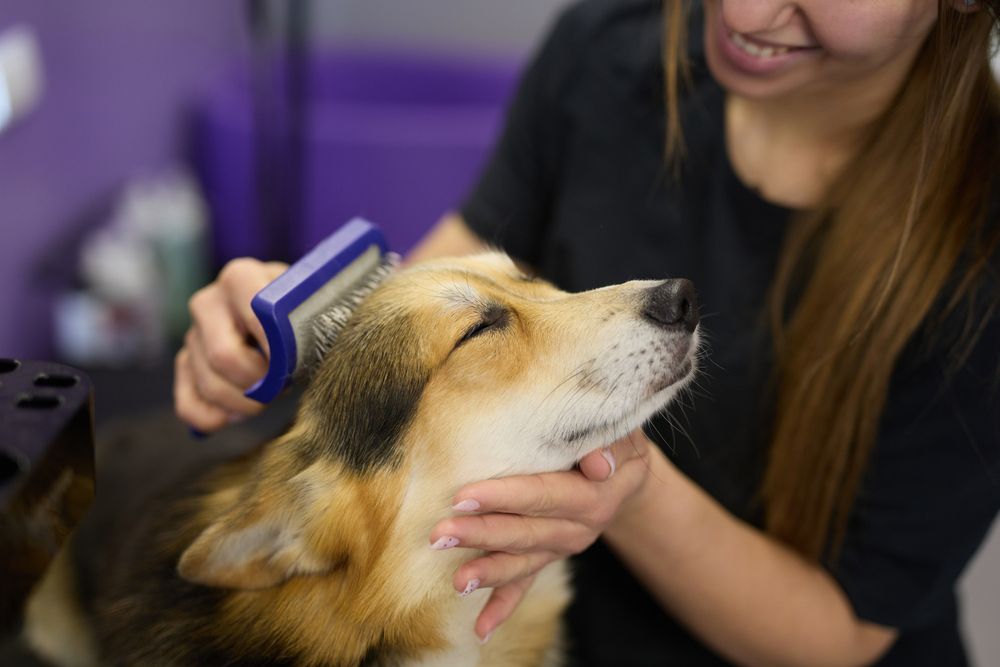
It may not be the priciest investment you make for your pet, but you can’t overstate the value of choosing the right dog brush. From head to tail, a quality brush appropriate for a dog’s coat type can make the difference in keeping their skin and coat healthy, clean, and looking great. Plus, your dog will have a better time during the grooming session.
With countless tools available for different coats, grooming is easier and more enjoyable than ever for owners and their dogs. At the same time, finding the perfect brush has only gotten more confusing. If you’re tired of wondering which brush is ideal for your pup, we’ll make it easy with this look at dog brushes based on coat type.

The 6 Types of Brushes Based on Coat Type
1. Slicker Brush

| Hair Length: | Medium–long |
| Hair Type: | Curly, wavy, wiry, double, silky |
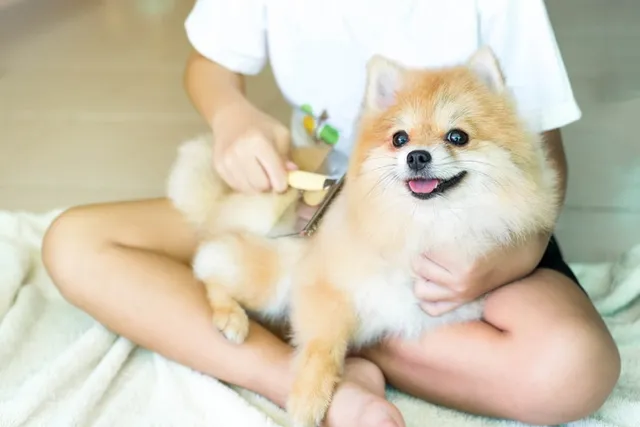
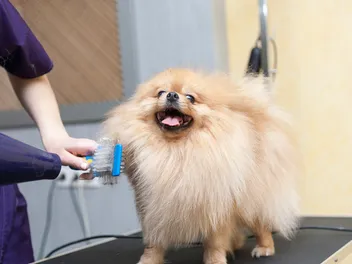
A slicker brush is the most commonly used grooming brush. It consists of a brush head (usually rectangular) covered in a dense array of short, thin wire pins. The pins are slightly flexible and have a kink to grab hair and debris without irritating the skin.
Slicker brushes break through tangles and mats while removing dead hair and debris. Pins come in varying lengths for different coat lengths, making them useful for long coats, double coats, curly and wiry hypoallergenic hair, and virtually any type except for smooth coats.
Although the pins must penetrate the coat, a gentle touch is needed to prevent them from scratching the dog’s skin. Brush burn causes irritation, which may make the dog lick or chew the area and expose them to infection. Avoiding over-brushing and using a pat-and-pull method can reduce the risk of skin damage and improve results.
- Our Recommendation: Evolution Self-Cleaning Dog Slicker Brush

The Evolution Self-Cleaning Dog Slicker Brush combines function and affordability for cost-effective at-home hair care. Stainless steel pins dig deep into coats to knock out mats and tangles as they grab loose fur. An ergonomic, non-slip handle makes brushing easy on the wrist while retracting pins knock the hair out of the brush with the push of a button.
2. Pin Brush

| Hair Length: | Medium–long |
| Hair Type: | Wavy, wooly, wiry, silky, double |
Pin brushes are effective for longer coats, particularly straight drop coats, but lack the slicker brush’s de-shedding and mat-breaking abilities. The brush is similar to a human hairbrush with its skinny, spaced-out pins and is effective for lightly removing loose hair and working small tangles. It’s an excellent finishing brush.
Though it isn’t as efficient as a slicker or rake, a pin brush typically features dull-coated or rounded tips to massage the skin rather than scratch and irritate it. It’s suitable for long-coated dogs with sensitive skin and offers an excellent introduction to brushing for puppies.
- Our Recommendation: Bass Brushes Style & Detangle Dog & Cat Oval Brush

The quality of the Bass Brushes Style & Detangle Dog & Cat Oval Brush is apparent with its sturdy bamboo handle and premium metal pins. Rigid pins glide effortlessly through light tangles and mats to smooth the hair and remove debris.
A comfortable grip stays easy on the wrist while rounded pin tips remain gentle on the body, ensuring comfortable grooming sessions for you and your dog.
3. Rake

| Hair Length: | Medium–long |
| Hair Type: | Double coat |
Rakes come in a couple of styles. Some have straight pins that sit parallel in one or two rows. The pins sink into dense coats to remove tangles and trap dead fur without damaging healthy hair. Though not always necessary for every grooming session, a rake can pull out significant amounts of fur with each pass during shedding season.
Other rake styles have curved blades, with dull outer edges that make contact with the skin and sharp inner edges that slice through mats. Many of these are dual-sided. One side has fewer teeth that are more spaced out to help break up mats without getting hung up, while the other has more tightly packed teeth to effectively catch loose fur.
De-matting rakes with curved blades are handy for Terriers and other wire-haired breeds that typically need hand-stripping. The primary issue many dog owners have is that the curved blades can strip healthy guard hairs. With overuse, you may risk thinning the coat.
- Our Recommendation: FURminator Dog Grooming Rake

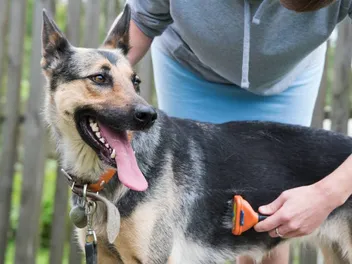
The FURminator Dog Grooming Rake features rounded stainless steel pins with varying spacing to break up tangles and remove fluffy fur from thick coats. The turning pins are easy on the body and help prevent mats without pulling on the coat. It’s well-made, comfortable to use, and a quality addition to the grooming arsenal.
4. Bristle Brush
| Hair Length: | Short |
| Hair Type: | Smooth, double |
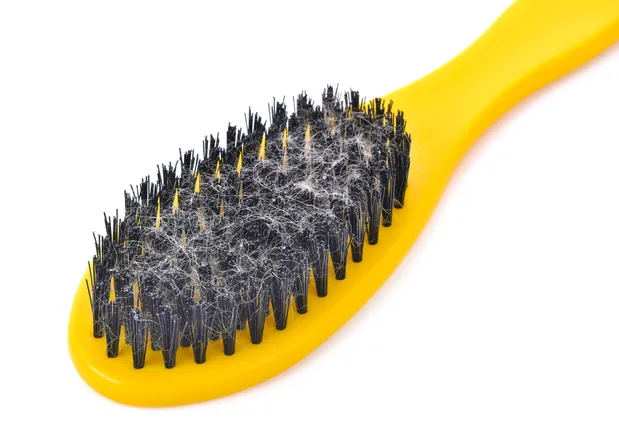
Bristle brushes are simple tools with dense clumps of bristles made from nylon or natural boar hair. Rather than push through the hair, these brushes act like brooms for the top of the coat.
Bristle brushes don’t break up mats or do much for de-shedding medium or long-haired dogs. Instead, they whisk away loose hair, dirt, and debris from short, smooth coats. The motion of the bristles dislodges dead hair and stimulates the skin while distributing bodily oils across the body.
You can also use a bristle brush as a finishing tool for longer-haired breeds after de-shedding. Each stroke shines the hair and removes any remaining fine debris, leaving the coat healthy and looking its best. Some brushes even combine pins with bristles, giving you dual benefits in a single stroke.
- Our Recommendation: Safari Bristle Dog Brush

The Safari Bristle Dog Brush applies the brand’s comfortable and durable rubber/plastic design to a bristle format for various coat types. The soft bristles are gentle against the body but firm enough to smooth the hair and dislodge surface debris.
5. Shedding Blade

| Hair Length: | Short |
| Hair Type: | Double, smooth |
Shedding blades are handy de-shedding tools for short and medium-haired double-coated breeds when heavy spring and fall shedding seasons roll around. Gentle strokes don’t dig deep into thick coats but efficiently release dead undercoats without harming healthy guard hairs.
The blade is a looped metal band with a handle. On one edge of the band is a single row of triangular teeth similar to what you might see on a hand saw. Many blades also have different-sized teeth along the other edge to make the tool more versatile for various hair types.
Most products also allow you to undo the band, giving you a wide blade to go over the body in fewer passes.
- Our Recommendation: Safari Dual-Sided Shedding Blade

The Safari Dual-Sided Shedding Blade is a sturdy and gentle groomer for thick shedding coats. The ridged stainless steel blade glides through the coat to clear away tons of fluff, with two blade sizes to suit different coat types.
The comfortable grip makes grooming a breeze for owners, and the extendable band lets you work more of the coat with each pass.
6. Rubber Brush

| Hair Length: | Short |
| Hair Type: | Smooth, double |
Rubber brushes are gentle tools for brushing short-haired dogs who shed. Although they won’t penetrate long, dense hair or break through mats, they’re beneficial for dogs with smooth, tangle-free coats.
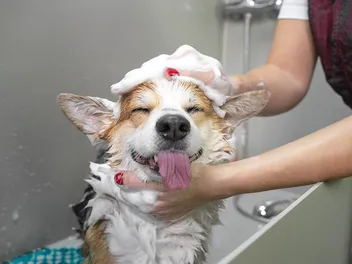
The soft, dull rubber bristles massage the skin, stimulate blood flow, and loosen shedding fur. There’s little risk of harming or stressing your dog as you brush with or against the coat in circular motions. The best part is that rubber brushes work dry or wet, giving you an excellent bathtime tool to work the shampoo into your dog’s coat.
Grooming gloves are rubber brushes with palm pads and fingers with short rubber nubs. Gloves are an excellent way to put dogs at ease since the experience is similar to being petted.
- Our Recommendation: Kong Zoom Groom

The Kong Zoom Groom is a top-rated rubber curry brush from a leading dog accessory brand. The rubber bristles are soft against the skin, allowing you to firmly work the brush into the coat without distressing your dog.
Whether brushing dry or during a bath, it dislodges loads of dead fur while offering a stimulating massage.
Conclusion
A proper grooming arsenal typically includes several tools to de-shed, de-mat, and smooth your dog’s coat. You may even change brushes as your dog moves through various life stages and enters different molting periods throughout the year. Although several options can often fit the bill, following these tips will ensure you get the most effective, convenient, and enjoyable dog brush for your pet’s coat type.
Sources
Featured Image Credit: hurricanehank, Shutterstock
Expert dog care, straight to your inbox
Vet-reviewed advice, training tips, and the best of Dogster. Free, and you can unsubscribe anytime.
By signing up, you agree to our Terms & Conditions and Privacy & Cookies Policy.
Nicole has loved animals of all sizes her whole life so it's no wonder she has dedicated her career to helping them through what she loves best: learning, writing, and sharing knowledge with others. She’s the proud mom of two dogs, a cat, and a human. With a degree in Education and 15+ years of writing experience, Nicole wants to help pet parents and pets around the planet to live happy, safe, and healthy lives.
Join the conversation
Ask a question, share your story, or send private feedback.