Dogster is reader-supported. When you buy via links on our site, we may earn a commission at no cost to you. Learn more.

Dog Health & Care

Do Dogs Get Sore Muscles From Exercise? Vet-Verified Facts & FAQ


Grant Piper
By Grant Piper · Reviewed & fact-checked by Dr. Lauren DemosVet Approved
Dr. Lauren Demos
Reviewed & Fact-Checked byDr. Lauren DemosDVM (Veterinarian)
As a veterinarian, Lauren is happy to share her rich experience in emergency medicine and cats, with our readers. She enjoys sharing helpful, real life tips for having pets as part of your life, and what to do in critical situations.View authorThe information is current and up-to-date in accordance with the latest veterinarian research. Learn more
Updated on June 17, 2026
Share
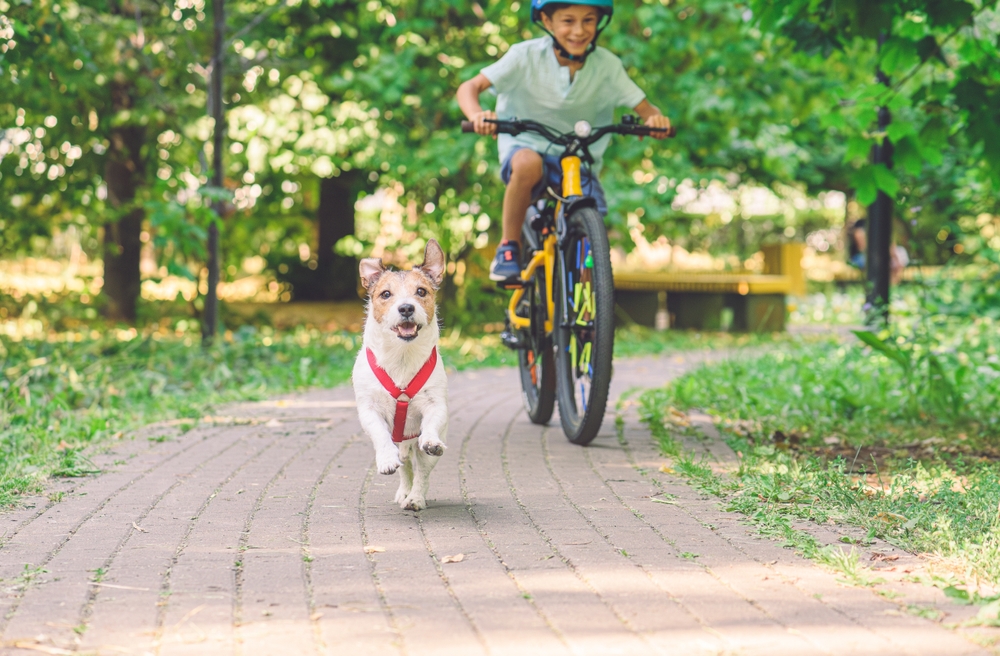
Happy boy on bicycle pursuits his pet dog running by park path on summer day

If you notice your dog acting gingerly after playing, it could lead you to wonder if they are sore. After all, humans can easily get sore after working out or straining themselves. This leads to an obvious question. Can dogs get sore muscles from exercise or working out? Yes. Dogs can get sore muscles from exercise. The reasons dogs get sore after playing are the same reasons people get sore after strenuous activities. Here is everything you need to know about muscle soreness in dogs, including signs and whether your dog is sore or if they could be injured instead.

divider dog faces oct 2024

Muscle Soreness in Dogs

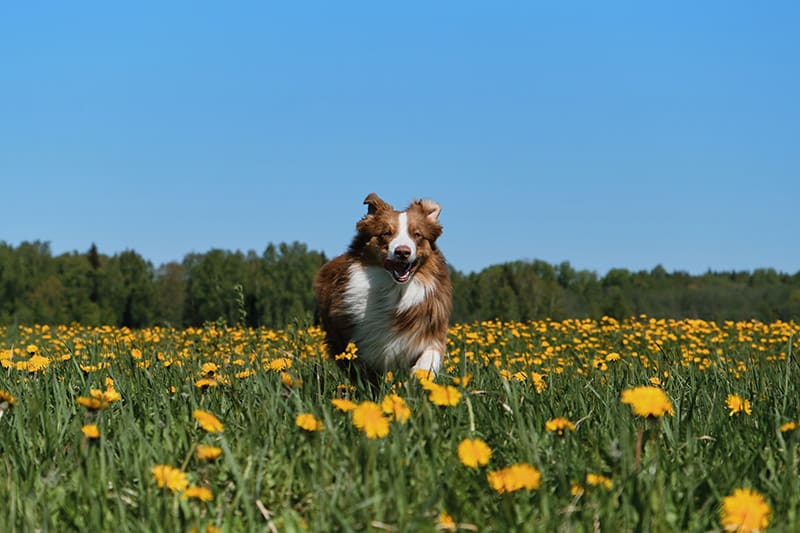
Dogs can definitely get sore muscles from exercise, though it can be more difficult to detect than in humans. Muscle soreness can occur after various types of exercise. Some people believe that dogs only get sore from high-intensity exercise, but that is not always the case. Low-intensity exercise can also cause muscle soreness in dogs.

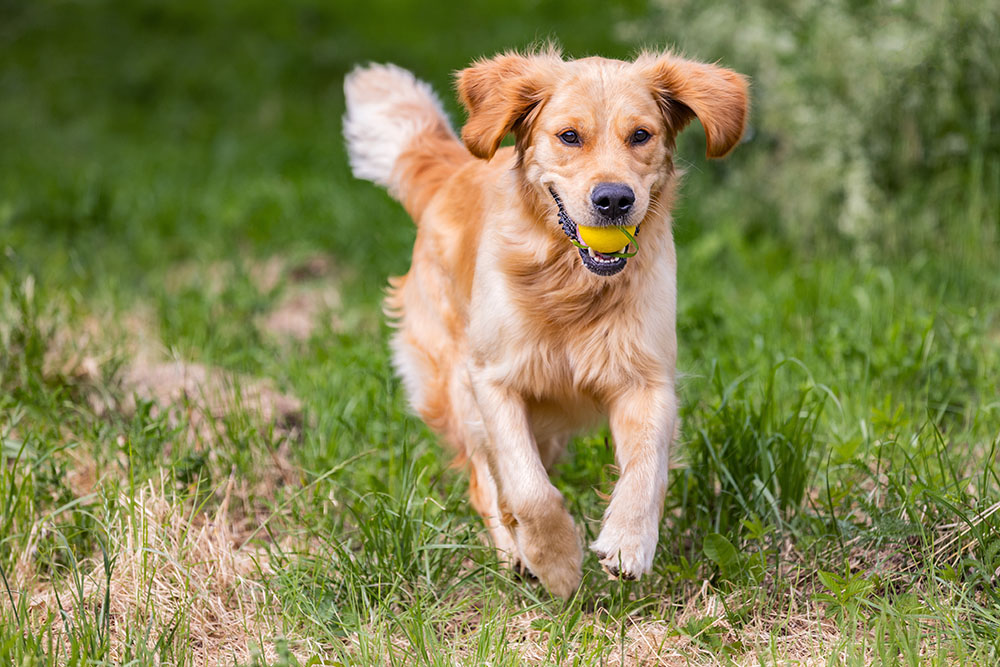
High-intensity exercise includes sprinting and jumping. This can be achieved through playtime outside. Low-intensity exercise can include long walks or hikes. If a dog is not used to getting long periods of low-intensity exercise, it can also cause muscle soreness. Muscle soreness can be impacted by a dog’s fitness level and age. Dogs with poor fitness or physical health will be more likely to develop muscle soreness than fit dogs. Older dogs are also more likely to get sore after exercise. Low-intensity exercise can affect older dogs more than it affects younger dogs.

Image Credit: Jaromir Chalabala, Shutterstock

What Causes Muscle Soreness?

Muscle soreness is caused by tiny rips in the muscle structure that occur during exercise. Exercise strains the muscles, causing them to become damaged over time. These rips, called microtears, cause your dog’s muscles to regenerate after periods of exercise. This process is what builds muscle mass as the muscles typically regenerate stronger and thicker than they were previously. This is the same reason why humans get sore after exercise.

It might sound like a bad thing; however, this tearing and healing process is natural but causes low levels of pain. Some people used to believe that soreness was caused by a buildup of lactic acid in the muscles, but this is no longer believed to be the driving cause of muscle soreness in dogs (or humans).

Signs Your Dog Has Sore Muscles

If you suspect that your dog could be suffering from sore muscles, there are some signs to watch out for.

The signs of muscle soreness in dogs include:

  • Slight limping
  • Stiffness of movement
  • Reluctance to run or play
  • Trouble getting up from lying down

If your dog is just sore, there is probably nothing to worry about. If you see signs of muscle soreness in your dog, you should decrease exercise and exertion until the signs abate. Continuing to push your dog when they are sore can lead to injury. This is especially true in older dogs and dogs with poor fitness.

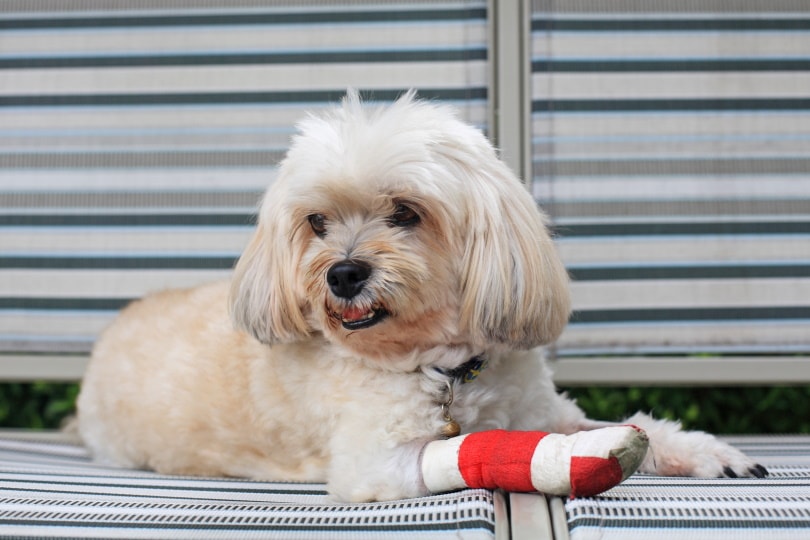
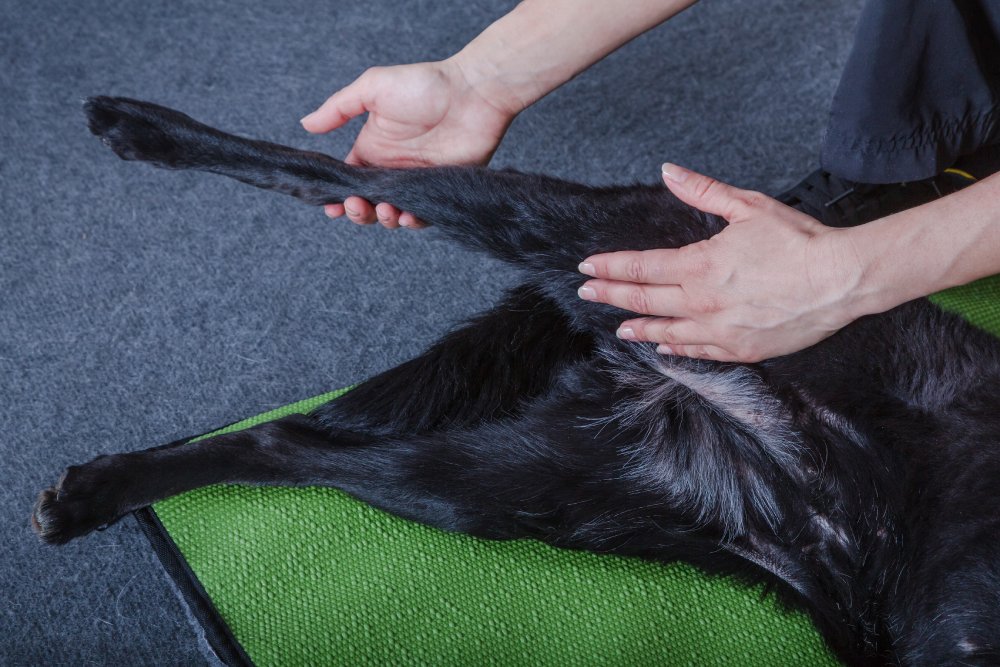
If your dog shows signs of limping, poor mobility, or pain for more than a couple of days after exercise, you should consider taking them to the veterinarian to check for injuries. Sometimes, dogs are not just sore but are actually injured.

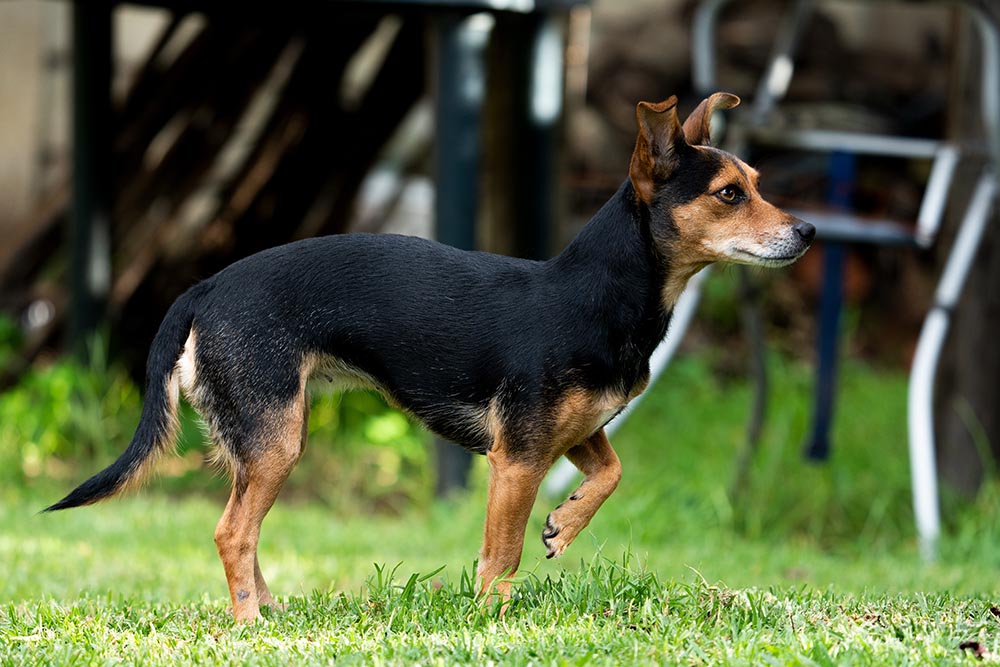
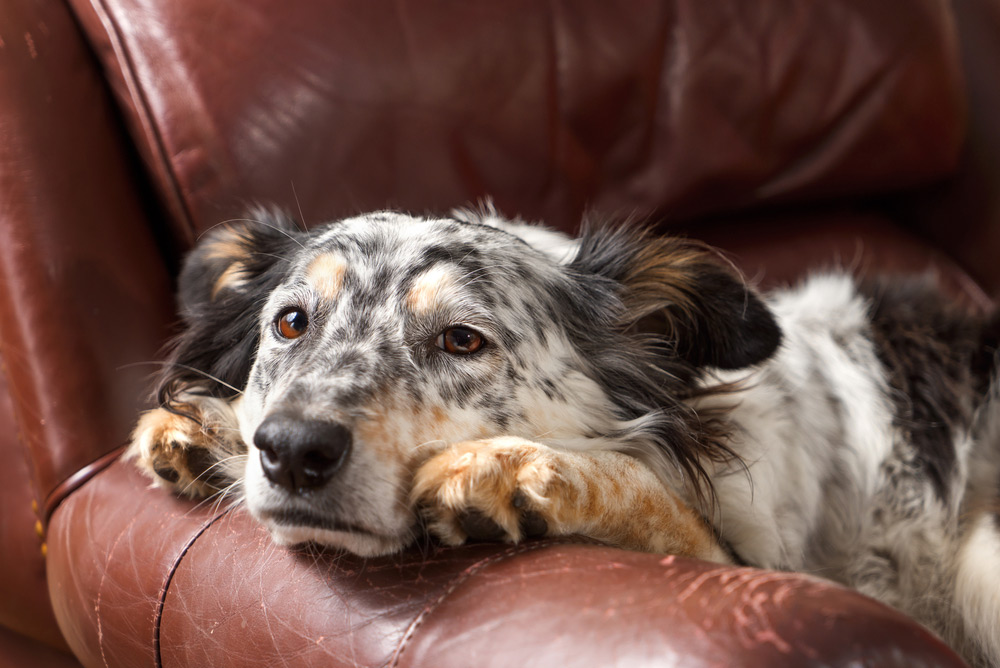
Image Credit: Phillip van Zyl, Shutterstockwd

Sore Muscles vs. Injury

Muscle soreness does not technically count as an injury. However, dogs can become injured during exercise. Injuries are more severe than simple muscle soreness. They can occur in the muscles (pulls, strains, sprains, and tears). Dogs can also injure their joints and tendons during high-intensity exercise. Signs of injury in dogs can be similar to sore muscles but are often more pronounced and longer-lasting.

Signs that your dog is injured beyond typical soreness include:

  • Pronounced limp
  • Pain aggression
  • Yelping or screaming when a specific area is touched
  • Unwillingness or inability to get up
  • Lethargy
  • Panting (from pain)
  • Excessive licking of a specific area

Injuries are typically more painful than muscle soreness. Injuries can also hamper your dog’s ability to move and function normally. If you suspect your dog might be injured, you should take the dog to the veterinarian for an examination. Most minor injuries resolve with time, rest, and low-level pain killers.

If your dog is showing any of these signs, we recommend speaking with a vet.

divider dog faces oct 2024

Conclusion

Any dog can get sore muscles after exercise. The process that causes soreness in dogs is completely natural, and it is very similar to the process that causes muscle soreness in humans. If your dog is sore, you should reduce exercise and activity levels to give them time to recover. Failing to do so can lead to injury. Injuries are more severe than muscle soreness and can be more painful and last longer. In most cases, soreness and minor injury should resolve in a matter of days with increased rest, but a trip to the veterinarian might be necessary if the soreness doesn’t go away within a couple of days.

Sources

Featured Image Credit: alexei_tm, Shutterstock

The Dogster Newsletter

Expert dog care, straight to your inbox

News, insights, expert advice, and everything dog.

No spam — unsubscribe anytime.

By signing up, you agree to our Terms & Conditions and Privacy & Cookies Policy.

Click a star to rate. You can leave written feedback afterwards. (We read all feedback.)

Grant Piper
Authored by

Grant Piper

How Much Exercise Is Too Much for a Dog? Over Exercise Signs (Vet Verified)

How Much Exercise Is Too Much for a Dog? Over Exercise Signs (Vet Verified)

Some dogs and puppies may seem like they have an endless amount of energy, but it’s very possible for dogs to get too much exercise. Even the most active dog b…

Jessica Kim
By Jessica Kim · 3 weeks ago
What Causes Intermittent Limping in Dogs? Our Vet Explains

What Causes Intermittent Limping in Dogs? Our Vet Explains

Intermittent lameness can be difficult to understand in your four-legged companion. What exactly causes dogs to experience on-again-off-again lameness? Often,…

Dr. Marti Dudley
By Dr. Marti Dudley · 3 weeks ago
My Dog Is Exhausted After Exercise, Is It Normal? 8 Vet-Verified Causes

My Dog Is Exhausted After Exercise, Is It Normal? 8 Vet-Verified Causes

Our dogs are typically happy-go-lucky animals that absolutely love to play! It's the most uplifting part of their day. So, if you've noticed that your pup is q…

Ashley Bates
By Ashley Bates · 3 weeks ago
Exercises for Dogs With Arthritis: 4 Different Ways

Exercises for Dogs With Arthritis: 4 Different Ways

Canine osteoarthritis, more commonly referred to as arthritis, is a term used to describe the abnormal inflammation of one or more joints in a dog’s body. It i…

Dr. Luqman Javed
By Dr. Luqman Javed · 3 weeks ago

Back Pain in Dogs: Our Vet Explains Signs, Causes & Treatment

You probably know that back pain is common in us two-legged humans. Many people don’t know, however, that back pain is also relatively common in their four-leg…

Dr. Joe Mallat
By Dr. Joe Mallat · June 17, 2026
Back Pain in Dogs: Our Vet Explains Signs, Causes & Treatment

Why Does My Dog’s Leg Give Out? 8 Vet-Reviewed Causes & What to Do

As a dog parent, we want our fur babies to stay fit and healthy forever, and it is sad and sometimes scary when something unexpected happens to them, especiall…

Annaliese Morgan
By Annaliese Morgan · June 17, 2026
Why Does My Dog’s Leg Give Out? 8 Vet-Reviewed Causes & What to Do

Physical Therapy for Dogs: Vet-Reviewed Explanation, Benefits & Costs

Physical therapy, or physical rehabilitation, is often used as the next step for healing and recovery for dogs with injuries or chronic issues. It’s usually re…

Jessica Kim
By Jessica Kim · June 29, 2026
Physical Therapy for Dogs: Vet-Reviewed Explanation, Benefits & Costs

11 Tips for Exercising Your Senior Dog - Vet-Approved Guide

If you have an old dog that’s not so keen on walks or you are unsure whether your regular routine is too intense for your aging dog, you are probably looking f…

Nicole Cosgrove
By Nicole Cosgrove · June 16, 2026
11 Tips for Exercising Your Senior Dog - Vet-Approved Guide

Are Frisbees Safe for Dogs? Vet-Reviewed Risks & Safety Tips

If you own a high-energy dog breed, finding ways to tire them out can be exhausting. Tossing a Frisbee can seem like a simple solution, but is the activity saf…

Elizabeth Gray
By Elizabeth Gray · June 27, 2026
Are Frisbees Safe for Dogs? Vet-Reviewed Risks & Safety Tips

Can Dogs' Legs Fall Asleep? Vet-Verified Facts & FAQ

We all know the tingling feeling that floods our legs when we sit in the same position for too long. This is known in the medical world as "transient paraesthe…

Chantelle Fowler
By Chantelle Fowler · June 17, 2026
Can Dogs' Legs Fall Asleep? Vet-Verified Facts & FAQ

Should I Exercise My Dog When They Have Diarrhea? Vet-Reviewed Care Facts

Exercise is important for your dog’s health, but what happens when their health has taken a turn for the worse? If your dog has diarrhea or is otherwise under…

Jordyn Alger
By Jordyn Alger · June 17, 2026
Should I Exercise My Dog When They Have Diarrhea? Vet-Reviewed Care Facts

How Do Dogs Feel Pain? Differences With Humans & Signs to Look For

Whether your dog’s suffering from a bee sting or healing from surgery, injuries will be a part of their life. If you’re lucky, those aches and pains will be mi…

Chelsea Mortensen
By Chelsea Mortensen · June 16, 2026
How Do Dogs Feel Pain? Differences With Humans & Signs to Look For

Love Dogs? So Do We! Join the Dogster Community

Stay informed with expert pet care insights delivered straight to your inbox! Discover professional guidance on animal behavior, feeding tips, trusted product picks, and much more.

You may opt-out at any time. View our Privacy Policy for more information.

The Dogster app on a phone