What Causes Intermittent Limping in Dogs? Our Vet Explains

In this article
Intermittent lameness can be difficult to understand in your four-legged companion. What exactly causes dogs to experience on-again-off-again lameness? Often, lameness stems from inflammation and discomfort. There are several possible causes for this type of lameness, though, varying from trauma to infection. To give you a more in-depth understanding, let’s discuss some of the common reasons dogs experience intermittent lameness below.

Potential Causes of Intermittent Lameness in Dogs
1. Lyme Disease
Lyme disease is an illness caused by a bacteria called Borrelia burgdorferi. This bacteria is transmitted to dogs and other mammals through deer ticks, otherwise known as black-legged ticks. An active Lyme infection can result in several different signs including nephritis, fever, lethargy, and intermittent lameness. The lameness can impact front limbs or back limbs and can shift between legs. Thankfully, Lyme disease can be addressed through treatment with antibiotics like doxycycline.

2. Arthritis
Arthritis is a common ailment of aging dogs. Arthritis is the bony and cartilaginous changes that occur to joints because of degradation. Dogs struggling with arthritis can appear to have intermittent lameness. Arthritic dogs may appear very stiff when first waking up in the morning or after lying down for a while. As arthritic dogs begin to move around, the lameness and stiffness can improve. However, joint supplements and pain medication can help assist dogs who struggle with arthritis.
If you’re concerned about your pet’s well-being, we recommend you contact a veterinarian.
3. Soft Tissue Injury
Soft tissue injuries can take a while to resolve completely and are often referred to as sprains and strains. The term “soft tissue injury” refers to muscle, ligament, and tendon injuries. Acute lameness is common when an injury first occurs and is often associated with overuse, overstretching, or twisting.
Owners often will rest their dog while signs of lameness are present. However, without enough rest, lameness can improve but come back very quickly once activity is reintroduced. Pain medications and rest are pivotal in addressing strains and sprains in our canine companions.
A common soft tissue injury dogs seem to be prone to is injury to the cruciate ligaments in the hind limbs. The cruciate ligament is the ligament that rests between the femur and tibia, preventing abnormal movement of the knee joint. It also allows the knee to act as a hinge joint. The ligament can slowly tear over time, resulting in a partially torn cruciate ligament or a completely torn ligament.
Partially torn ACLs can be acutely very painful, but discomfort can improve with time, although the risk of further damage is likely. Dogs with partially torn ACLs may seem very painful and exhibit an obvious lameness for a few days and then can return to a near-normal gait with rest and restricted activities.

Signs of Injury
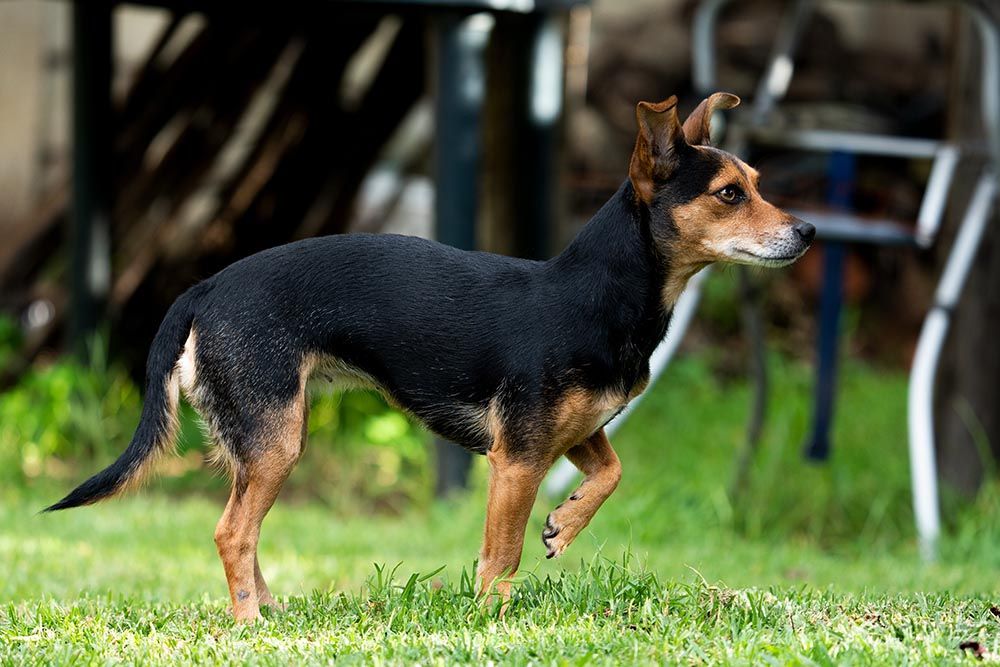
Lameness is often seen as a change in the way in which your pet uses a limb when walking. Dogs may take short, quick strides to alleviate pressure on a problematic limb, and an obvious “head bob” may be noted.
In addition to lameness or a change in your pet’s gait, you may notice:
How Should I Address Lameness in My Dog?
With the first sign of lameness, you should evaluate the affected limb if it is safe to do so. Check between toes for signs of irritation or foreign bodies. Torn toenails are often a cause of discomfort. If no foreign bodies or visible injuries are seen, it is time to rest your pet.
It is critical to allow your pet time to rest once lameness is noted. Avoid strenuous activities and activities that could exacerbate an injury like jumping or using the stairs. This can often be very challenging to the pet owner, as it is difficult to limit your pet’s activity, especially if you feel their quality of life is being impacted. Dogs will benefit from strict exercise restrictions. This means keeping Fido confined to a small space, like a crate or room, that doesn’t encourage jumping.
If the lameness persists, or if your dog is in significant discomfort, a trip to the veterinarian is needed.

Determining the Cause of Lameness
Your veterinarian will perform a physical examination and closely evaluate your pet’s gait to try to localize the area of lameness. A close evaluation of your dog’s walk will be helpful. If your dog only occasionally limps, it may be beneficial for you to record the abnormal gait so that it can be shared with your veterinarian.
In some situations, radiographs may be needed to check for bony changes that might be seen with fractures and arthritis. Additional advanced imaging like CT and MRI can be utilized in cases of lameness as well.
If other signs of illness are present, blood work may be recommended to screen for infection, including tick-borne illness.
Treating Intermittent Lameness
Treating your pet’s intermittent lameness will be dependent on the underlying cause. In most cases, rest will be of paramount importance. If dogs appear to be in significant discomfort, medication to address pain and potentially inflammation will be beneficial. Other modalities, including cold laser, acupuncture, and rehabilitation, can also be helpful.
In Summary
Intermittent lameness is not uncommon in our canine companions. Pinpointing the area in which the lameness originates is helpful, as it will direct diagnostics and diagnoses. If the intermittent lameness seems mild and your pet is otherwise doing well, it may be appropriate to initiate rest at home prior to seeking veterinary care. At the first sign of significant discomfort or if systemic signs of illness are noted, however, a visit with your veterinarian is recommended.
Related read:
Featured Image Credit: Phillip van Zyl, Shutterstock
Expert dog care, straight to your inbox
News, insights, expert advice, and everything dog.

No spam — unsubscribe anytime.
By signing up, you agree to our Terms & Conditions and Privacy & Cookies Policy.
How useful was this post?
Click a star to rate. You can leave written feedback afterwards. (We read all feedback.)
Dr. Marti Dudley DVM (Veterinarian)
Dr. Marti Dudley is a small animal veterinarian with a strong interest in preventative medicine and pet parent education. She enjoys being a resource for pet owners as she believes that having a team approach leads to the best possible care of pets. Dr. Dudley enjoys writing and has been able to use this skill as another avenue to educate pet owners outside of the traditional office setting.
Dr. Dudley has been practicing veterinary medicine since 2014. She has an interest in preventative care and emphasizes the importance of pet owner education. Dr. Dudley’s experience in veterinary medicine is broad, as she has worked as a general practitioner, which has allowed her to see and treat many different types of conditions.
Dr. Dudley received her bachelor’s degree in biology from Longwood University in Virginia. She earned her Doctor of Veterinary Medicine (DVM) degree from Ross University.