10 Common Health Problems in Rottweilers: Vet-Verified Facts


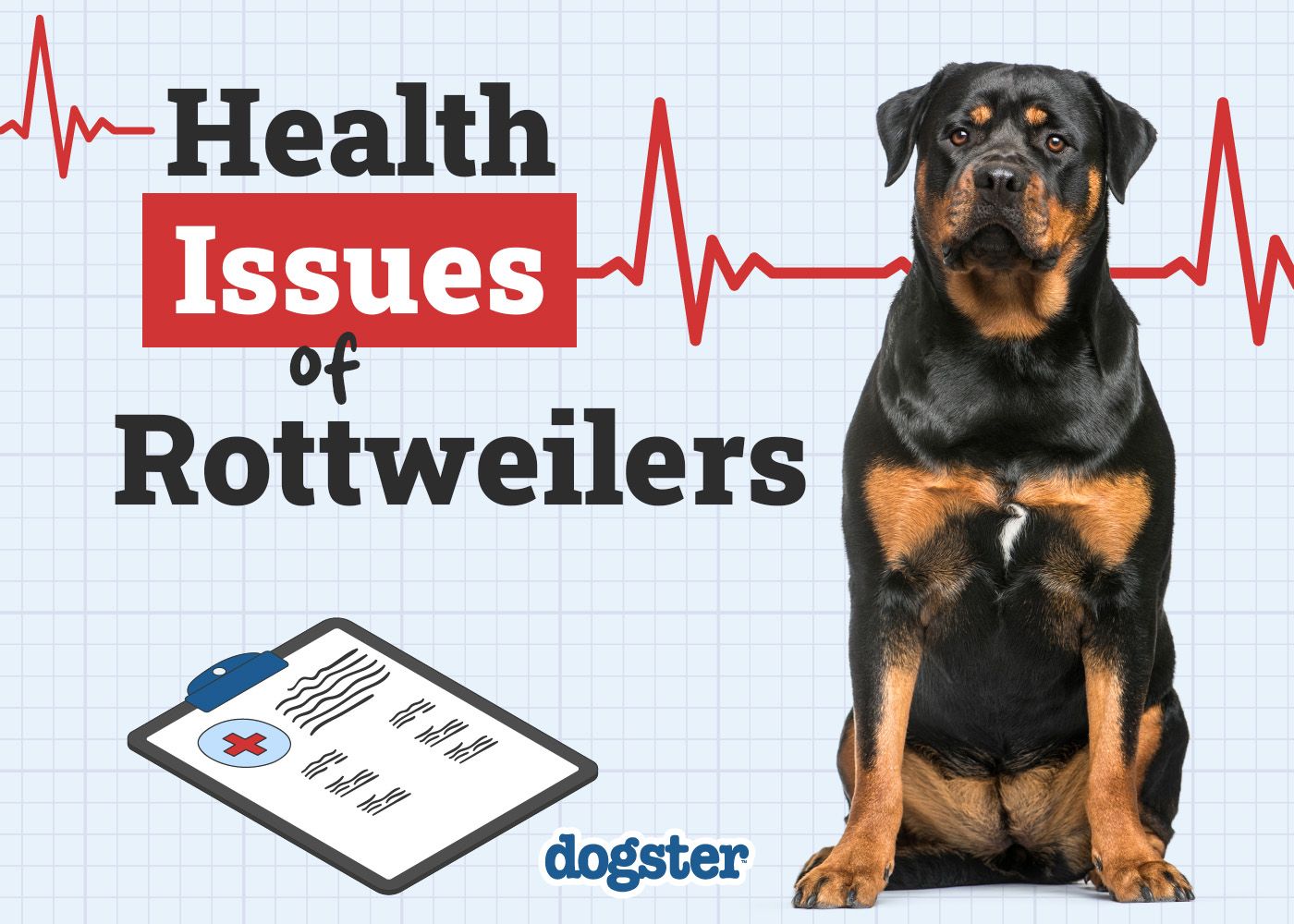
Rottweilers are medium-large muscular dogs known for their steadfast loyalty and devotion. Male rottweilers can weigh up to 135 pounds and reach 27 inches at the shoulders. They usually live 9 to 10 years. Rottweilers are descendants of Roman herding dogs subjected to further selective breeding in Central Europe.
During the Middle Ages, they were used to herd cattle and protect against attacks. Rottweilers, also known as Rotties, were the 9th most popular dog breed in the United States in 2023. While they are relatively healthy, they are vulnerable to several medical conditions.
Read on for more information about 10 health problems commonly seen in Rottweilers and a few tips on keeping your pet as healthy as possible.

The 10 Common Health Problems in Rottweilers
1. Hip Dysplasia
Hip dysplasia is a painful condition in which the hip joint becomes lax, leading to pain, instability, and the eventual erosion of the joint. While almost any dog can end up with the problem, it’s particularly prevalent in larger breeds, including Rottweilers.
Overweight animals of all sizes are also at heightened risk of developing the debilitating joint condition. Dogs can begin showing signs of the disease as early as 4 months old; others don’t have trouble until they reach their senior years. Medication, weight control, physical therapy, and nutritional supplementation can often manage mild cases. More severe cases require surgery.

2. Aortic Stenosis
Aortic stenosis is a hereditary cardiac condition defined by an abnormally narrow aortic valve that forces the heart to work extra hard to pump blood through the body. It often goes undetected in dogs with mild signs. This condition is congenital, meaning your dog is born with it. Given its hereditary nature, affected dogs should not be bred.
Often, the only sign of the condition is a heart murmur. Sometimes, aortic stenosis-related heart murmurs aren’t detected until a dog is 1 year old. Dogs with more severe symptoms often faint, have difficulty with exertion, and cough. Medication is usually prescribed to improve heart function. But with medication and mild activity adjustments, many dogs diagnosed with a mild form of aortic stenosis live long and healthy lives.
3. Elbow Dysplasia
Elbow dysplasia, similar to hip dysplasia, is the abnormal development of the elbow joint. The consequence is that the three bones of the joint (the humerus, radius, and ulna) do not fit together perfectly, leading to areas of abnormally high contact pressure. The condition may affect anywhere from 30% to 50% of Rottweilers, which can strike puppies as young as 4 months old.
There appears to be a strong genetic link to the disease, but it’s not currently possible to determine if a dysplasia-free animal carries the responsible gene. Affected animals should not be bred. Diagnosis usually requires a physical examination, diagnostic imaging (X-rays and CT scans), and arthroscopy. Two treatments are available, medical and surgical, and your vet will recommend the best one for your dog.
Unfortunately, Rottweilers are one of the breeds most likely to develop this painful condition, which will eventually cause arthritis as dogs age.

4. Entropion
Entropion is a painful condition in which an animal’s eyelid curls inward, bringing eyelash hair into constant contact with the cornea, which results in painful ulcerations. If left untreated for long enough, the condition can result in significant vision loss due to corneal changes or perforation.
Common signs that a dog has the condition include squinting, various types of ocular discharge, and pawing at the eye. It’s usually diagnosed when dogs are still puppies, and the only real treatment is corrective surgery. Ideally, this surgery will take place once the dog reaches adulthood, but earlier surgery may be necessary depending on the severity of the entropion.
Your veterinarian will probably recommend lubricant drops to make your dog more comfortable. Other interventions are also possible (application of a bandage contact lens or placing tacking sutures) until your dog is old enough to undergo surgery safely.
5. Ectropion
In ectropion, a dog’s eyelid (usually lower) droops towards the outside. The delicate inner eyelid tissue (the palpebral conjunctiva) is exposed to the environment and, at the same time, blinking is less effective because the eyelids lose their normal perfect fit. In mild cases, you may just need to look after your dog’s eyes more often, washing them out and applying lubricating drops.
In severe cases, the conjunctiva and cornea are prone to drying out, which can eventually lead to chronic inflammation, corneal abrasions, and ulcers. Both eyes can be equally affected, and the condition is generally found when dogs are still puppies if it’s hereditary.
Diseases such as hypothyroidism can also cause ectropion¹. Treatment usually involves regularly applying antibiotics and lubricating eye drops, although surgery may be recommended in particularly severe cases.

6. Cruciate Ligament Ruptures
The cruciate ligament is located in the canine knee and works with other anatomical structures to stabilize the joint. While some dogs end up with a ruptured cruciate ligament because of an accident, some breeds are more inclined to suffer a rupture of the ligament resulting from long-standing joint inflammation.
According to one study, Rottweilers are 3 to 7 times more likely to end up with this sort of rupture than other dogs. Limping is the most commonly seen sign. The condition is usually treated with surgery, rehabilitation, and weight management. There’s a genetic component to the disease, but as of yet, no way to test for the trait.
7. Osteochondritis Dissecans (OCD)
OCD occurs when a dog’s joint fails to develop correctly due to inflammation. Instead of turning into bone, with OCD, flaps of cartilage often slough off into the joint, creating pain and restricting movement. It’s an inherited disorder most often found in larger dogs such as Massifs, Bernese Mountain Dogs, and Rottweilers and is more common in male than female dogs.
The signs include limping, lameness, and pain. Once the disease process begins, the condition progresses until treated. Treatment includes weight management, medication, and exercise restrictions. Surgery is often appropriate for severe cases. Working with a reputable breeder who screens for inherited orthopedic conditions can decrease the chance you’ll end up with a dog with the disease.

8. Cancer
Rottweilers are also more likely than other breeds to develop cancer, specifically osteosarcoma and lymphoma. Dogs suffering from osteosarcoma, a painful bone cancer, become lame and lethargic. Many refuse to play as movement often causes extreme pain. Surgery to amputate the affected limb is the standard treatment for the condition.
Common signs of lymphoma include lethargy, weight loss, and fever. Life expectancy depends on when the disease is discovered and the stage at which treatment begins. When started early enough, treatment often results in remission. However, the cancer will eventually become active again. Large breeds are more likely than their smaller brothers to develop cancer, and there’s also a genetic component to the condition.
9. Juvenile Laryngeal Paralysis & Polyneuropathy (JLPP)
JLPP is an inherited disorder found primarily in Rottweilers and Black Russian Terriers. It’s a recessive trait, so dogs need two copies of the gene, one from each parent, to display signs of the disorder. The good news is that genetic testing enables breeders to identify their dogs as Clear, Carrier, or Affected. This prevents breeders from raising affected puppies while maintaining the diversity of the gene pool.
Dogs with the syndrome¹ often have weakened or paralyzed laryngeal muscles and sometimes have difficulty getting sufficient air when stressed. Some dogs also have hind leg weakness that progresses to the front legs over time. Aspiration pneumonia is always a possibility with this condition and needs to be treated aggressively when it occurs.
JLPP is most often diagnosed in puppies and is identifiable in puppies as young as 3 months old.
10. Allergies
In a UK study involving 5,321 dogs, Rottweilers were found to suffer from skin issues as their second most common health problem. The breed is prone to several skin conditions, such as otitis externa, pyotraumatic dermatitis (hot spots), and flea bite hypersensitivity (allergy).
Common locations for these lesions include around the paws, face, and tummy. While most skin allergies are caused by physical contact with specific allergens, some dogs have itchy skin due to food allergies. Although true food allergies aren’t common in all breeds, they occur more often in Rottweilers.
Remember to have regular vet visits when owning a Rottweiler tokeep their health and well-being. If you're concerned about your dog's health we suggest you speak to a vet.
Conclusion
Rottweilers are gorgeous, athletic dogs with muscular frames and sleek coats. They’re loyal, eager to please, and easy to train. Untrained rottweilers can sometimes be territorial, making obedience training critical. They were originally herders responsible for controlling Roman cattle herds.
However, they have also been bred to be very protective, so they require training and socialization to warm up to strangers. Rottweilers are smart and enjoy pleasing humans, making them well-suited for work as police and search and rescue dogs. They’re also popular therapy and service dogs.
See Also:
Sources
https://www.aspcapetinsurance.com/resources/signs-of-lymphoma-in-dogs/
https://www.petmd.com/dog/slideshows/general-health/dog-breeds-highest-cancer-rate
https://www.embracepetinsurance.com/health/cruciate-ligament-injury
https://vcahospitals.com/know-your-pet/aortic-stenosis-in-dogs
https://www.akc.org/expert-advice/health/hip-dysplasia-in-dogs/
https://www.akc.org/expert-advice/lifestyle/9-tips-finding-working-responsible-breeder/
https://www.akc.org/expert-advice/dog-breeds/most-popular-dog-breeds-of-2021/
https://www.ufaw.org.uk/dogs/rottweiler-elbow-dysplasia-fmcp
https://www.vscvets.com/surgery/surgery-procedures/osteochondritis-dissecans-ocd
https://www.akc.org/expert-advice/lifestyle/9-things-you-didnt-know-about-the-rottweiler/
https://www.petmd.com/dog/conditions/musculoskeletal/c_dg_hip_dysplasia
https://pets.webmd.com/dogs/features/dogs-and-cancer-get-the-facts#1
Featured Image Credit: rui vale sousa, Shutterstock
Expert dog care, straight to your inbox
News, insights, expert advice, and everything dog.

No spam — unsubscribe anytime.
By signing up, you agree to our Terms & Conditions and Privacy & Cookies Policy.
How useful was this post?
Click a star to rate. You can leave written feedback afterwards. (We read all feedback.)
Lorre Luther is a writer from Rotterdam. A former lawyer from the United States, she moved to the Netherlands to follow her dreams and become a writer. Lorre enjoys traveling and reveling in the astonishing beauty of our world. She has a soft spot for animals and is firmly convinced that cats are smarter than humans.