Cherry Eye in Dogs: Signs, Causes & Treatment (Vet Answer)

In this article
Your dog comes running in from outside, and you notice something red on their eyelid. It wasn't there earlier, so you go to the vet. Your dog's doctor lets you know your pup has a cherry eye prolapse. So, what is a cherry eye, and how do you fix it?

What Is Cherry Eye in Dogs?
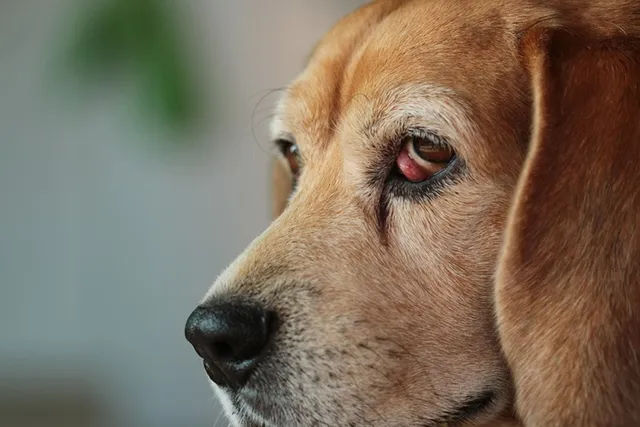
If someone tells you your dog has a cherry eye, they're referring to the third eyelid gland or nictitating membrane. Your dog can have a cherry eye on one or both eyes; some breeds develop it more commonly than others.
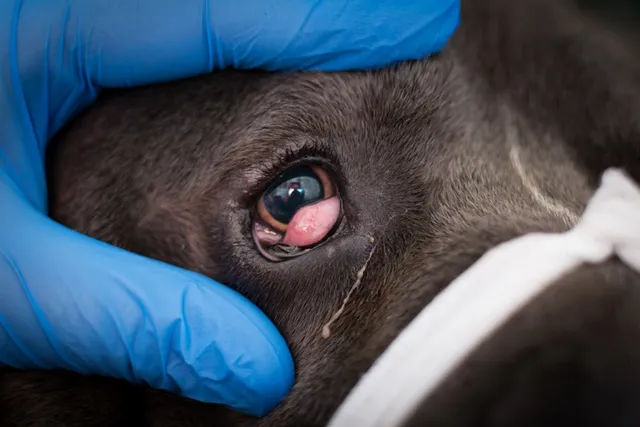
The third eyelid is seated between the lower eyelid and your dog's eye. It's a red or pink color, hence the nickname Cherry Eye. The third eyelid has a couple of functions. It can raise and protect the eye, and the gland is also responsible for producing part of the tear film.
What Are the Signs of Cherry Eye in Dogs?
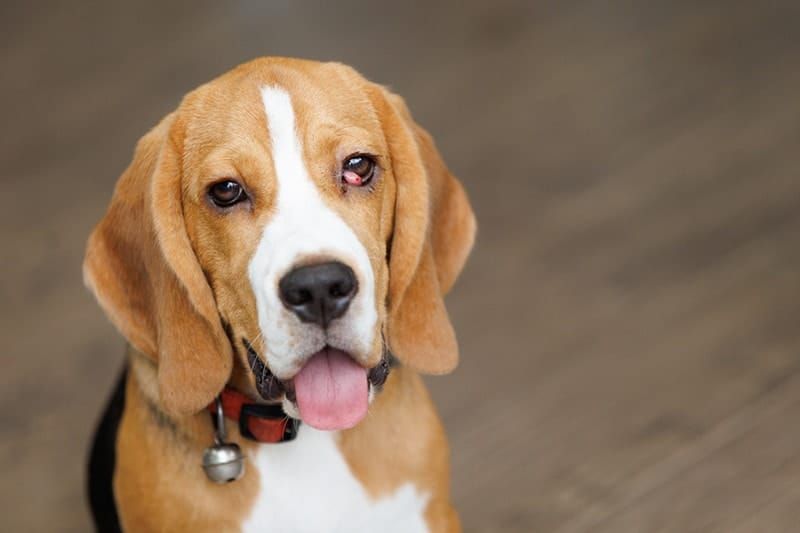
You'll be able to see a cherry eye when looking at your dog, although our dogs can have it to varying degrees. For some dogs, the third eyelid is raised all the way up and sticks out of the orbit of the eye. For some, it raises slightly or comes and goes. It will look like a red, raised mass coming from the lower eyelid.
Because the third eyelid gland produces part of the tear film, if your dog has a cherry eye, you might see signs associated with dry eye. Also known as keratoconjunctivitis sicca or KCS, your dog's eyes can try to compensate for the decreased tear production by making thick, gooey tears. These tears are often yellow or white.
If the dry eye continues untreated, your dog's eyes might get red and inflamed. Over time, the cornea can become scarred and pigmented.
Your dog might squint with a cherry eye, also known as blepharospasm. Because it can irritate your dog, you might also see them rub or paw at their eyes. If you notice your dog pawing at their eyes, or developing red spots, contact your vet for an assessment.
What Are the Causes of Cherry Eye in Dogs?
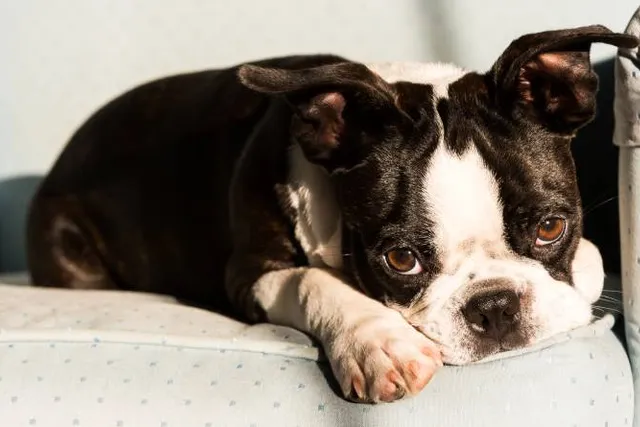
The most common cause of cherry eye in dogs is based on their conformation. It typically occurs in brachycephalic or short-nosed dog breeds, likely because their ocular orbit is very shallow. The eye doesn't sit way back in the bony orbit around the eye, so the third eyelid gland is pretty superficial.
In many brachycephalic dogs, it doesn't take much to cause displacement of the glands. There is a fibrous connection that helps anchor the third eyelid gland. If that is weak or damaged, your pup can develop cherry eye.
Some dog breeds have a prolapsed nictitating membrane relatively quickly, including:
Your dog can develop cherry eye randomly, but it can also occur secondary to trauma. Head, neck, or eye injuries can displace the third eyelid gland. It's widespread in those more predisposed dog breeds.
In rare circumstances, dogs can have a tumor or mass associated with the third eyelid that leads to a cherry eye.
How Do I Care for a Dog With Cherry Eye?
Contact your veterinary team immediately if you notice anything abnormal with your dog's eyes. You'll want to have treatment started sooner rather than waiting to see if it will go down on its own, especially in cases of potential trauma.
Your veterinarian will perform a thorough eye exam using tools like an ophthalmoscope to examine and visualize the eye.
Some of the common eye tests that they will likely do include:
Surgery to replace the glands and tack it in place is recommended for a cherry eye. Your veterinarian might refer you to a veterinary ophthalmologist or eye specialist for the procedure because not all veterinarians are comfortable performing it.
There are several methods to surgically correct cherry eye, with the two main procedures:
- Replacing the glands and suturing it in place
- Make an envelope in the conjunctiva and replace it there.
Both ways help preserve the function of the glands.
Surgical removal was used for many years, but this is no longer true. In certain situations, your veterinarian might recommend removal, such as if there is a tumor. If that is the case, you must treat your dog to supplement their tear production for the rest of their life. Surgical removal could also be recommended if your dog's cherry eye has been going on so long that the gland has scarring and is no longer functional.
Between diagnosis and surgery, your veterinarian might try lubricating eye drops to protect the eye and help make up for the lack of tear production. You will usually need to use these multiple times per day.
If your dog has had an injury to the eye causing a scratch (also called a corneal ulcer), your veterinarian might prescribe an eye antibiotic to help prevent secondary bacterial infections while the cornea heals.
After surgery, your dog will need time to recover. In most cases, your dog will need to wear an e-collar (Elizabethan collar or "cone") to keep them from rubbing their eyes. Your veterinarian will usually prescribe eye drops to aid in healing.
You'll want to keep your dogs quiet and calm while they heal. Don't use a collar with an attached leash; it's better to use a harness to minimize increasing the pressure around the eyes.

Frequently Asked Questions (FAQ)
If my dog has a cherry eye in one eye, will it develop it in another?
The chances are high that if your dog has a cherry eye in one eye, they'll develop it in the other. If a traumatic injury caused the initial prolapse, they might not have it develop, but the conformation of many of these pups is such that it comes out easily.
If my dog has a cherry eye repaired, will it occur again?
Unfortunately, some dogs will have cherry eye recurrence, even if the initial surgery was successful. According to VCA Animal Hospital, an estimated 5% to 20% of cases of dogs having surgery will have it recur.
Conclusion
If your dog develops a cherry eye, it is essential to have them evaluated as soon as possible. Doing so will help preserve the third eyelid gland's function and decrease the chances that your dog will develop secondary issues such as dry eye.
Sources
Featured Image Credit: Warut Chinsai, Shutterstock
Expert dog care, straight to your inbox
News, insights, expert advice, and everything dog.

No spam — unsubscribe anytime.
By signing up, you agree to our Terms & Conditions and Privacy & Cookies Policy.
How useful was this post?
Click a star to rate. You can leave written feedback afterwards. (We read all feedback.)
Dr. Samantha Devine DVM (Veterinarian)
Dr. Samantha Devine is a practicing veterinarian who enjoys caring for animals and sharing her knowledge with pet owners. Preventative care, ranging from nutrition to vaccination, is her specialty and passion!
With over 12 years of veterinary experience, Dr. Devine has extensive knowledge to share about small animal medicine, horses, aquatic species, and even zoo animals. She has also been writing for online pet sites for most of that time.