Cherry Eye in Cane Corsos: Signs, Causes & Treatment (Vet Answer)

In this article
One of the scariest moments a pet owner can experience is an unexplained change in their dog’s eyes. These fragile organs are often difficult to diagnose or treat conditions at home. Sudden changes to a dog’s eye with no known trigger can be even more distressing for owners.
One such condition that is unfortunately common in many breeds, such as Cane Corsos, is cherry eye. Knowing that Cane Corsos have a breed predisposition to cherry eyes, you may wonder if there is anything you can do to prevent it. The bad news is there is no way to prevent cherry eye in Cane Corsos or other dog breeds, but there are several ways to treat it, so let’s go over what precisely a cherry eye is, how it may impact your Cane Corso, and how it can be treated.

What Is Cherry Eye?
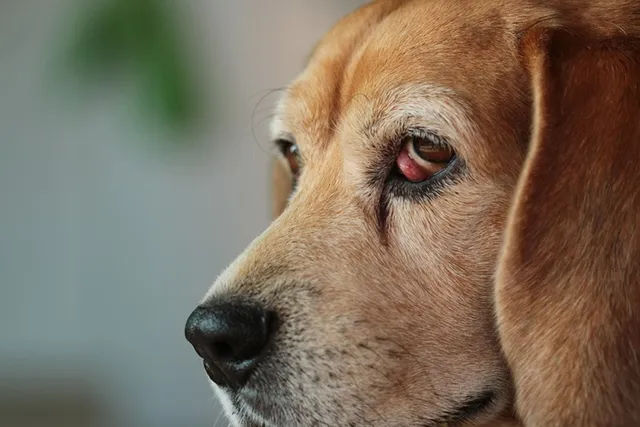
Cherry eye is the prolapse of the nictitating membrane of the eye. What exactly does that mean? Dogs and several other species have two eyelids you are used to seeing and a third eyelid, which comes out from the inner corner of the eye. It is light pink with no hair, and you may have seen it in your dog, especially if their eye was ever irritated.
This third eyelid (or nictitating membrane) is made up of three parts:
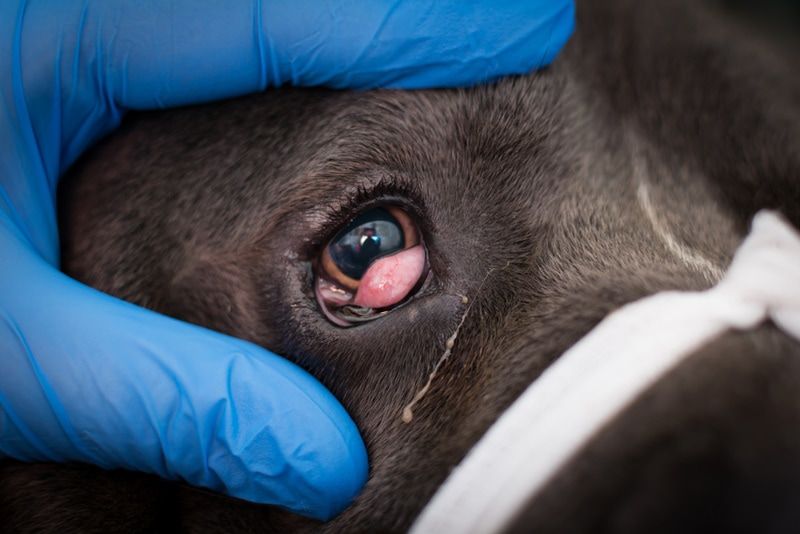
The lacrimal gland usually sits at the base of the third eyelid, where you cannot see it, and produces tears for the eye. When a cherry eye occurs, the gland, which is usually held in place by the connective tissues of the third eyelid, pops out from underneath and will be seen as a round, shiny, pink to cherry-red mass appearing at the inner corner of the eye that can vary in size but is usually under half a centimeter.

Causes of Cherry Eye in Cane Corsos
Cherry eyes are a genetic condition. More than one gene is likely responsible for predisposing a dog or breed to cherry eyes. Breeds with medium to short muzzles (brachycephalics) are predisposed to developing cherry eyes, which is the likely underlying cause in Cane Corsos. No inciting event needs to happen first, and as far as we know, cherry eyes happen spontaneously, usually in dogs under two years old.
Signs of Cherry Eye in Cane Corsos
Cherry eyes are not painful and often not noticed by the pet, though you may notice squinting of the eye or pawing at the face in some.
If you want more information or are concerned about the health of your pet, you should contact your vet.

How to Treat Cherry Eye in Cane Corsos
Treatment is advised for this condition, and it can consist of medical or surgical therapy or a combination of the two. We will go over each version of the treatment below.

Medical Management
Since cherry eyes cause inflammation that can inhibit proper tear production, a veterinarian will likely prescribe steroid eye drops to control inflammation and artificial tears to help keep the eye comfortable and hydrated.
For households that cannot proceed with surgery, this option can be a lifelong treatment, but the chances of the pet developing a significant dry eye condition called KCS (keratoconjunctivitis sicca) are higher when medical management is not paired with surgical correction.
Surgical Management
The optimal treatment for cherry eye is to surgically replace the prolapsed gland back into the area it belongs. Surgical approaches can include pocket techniques that use conjunctival tissue to form a pocket around the gland to hold it in place or tacking, in which the surgeon anchors the gland to the third eyelid or surrounding structures in a more normal position.
With the exception of some tacking techniques, the recurrence rate of cherry eyes after surgical replacement is well under 10%. In dogs that have had repeated failures of their surgical corrections, it may become necessary to remove the prolapsed lacrimal gland surgically rather than replace it.
This option is avoided if possible because rates of dry eye conditions like KCS are far higher in dogs who have undergone surgical removal, but each new surgery increases the risk also.

Recovery and Management After Cherry Eye Surgery in Cane Corsos
Immediately after surgery, your Cane Corso must always wear a cone to prevent rubbing, pawing, or scratching at their surgical site. You will likely have eye drops to administer for several weeks, and they will need a recheck to assess the gland's position after healing (if replaced).
Regular testing of tear production will be necessary for your Cane Corso throughout their lifetime. Regardless of the treatment, any eye that has experienced cherry eye is at increased risk of dry eye conditions like KCS, and unlike cherry eye, KCS can be quite painful, so regular monitoring for this condition is important.
The prognosis for Cane Corsos who develop cherry eye and receive timely treatment is very good. Complications from surgery are rare but may include scarring to the eye's surface, surgical site dehiscence (opening of an incision), infection, or inflammation.
Methods of Prevention of Cherry Eye in Cane Corsos
Cherry eye is a genetic condition that cannot be prevented in your Cane Corso. As part of a responsible breeding program, choosing not to breed Cane Corsos that develop cherry eye, and especially not breeding them with another Cane Corso that also developed it, can improve the rate of cherry eyes for the breed as a whole.
Since cherry eyes primarily occur in young dogs, often under a year of age and therefore before breeding age, this prevention plan is particularly accessible to breeders who want to reduce the occurrence of cherry eyes in their lines.


Conclusion
Cane Corsos are a dog breed predisposed to the development of cherry eye in one or both of their eyes. This genetic condition is not preventable but does have several avenues of treatment. Early intervention is vital for the long-term health of the affected eye, so if you notice a pink protrusion from the inner corner of your dog’s eye, please contact your veterinarian for the next available appointment.
This is not an emergency, and it is not painful, but delayed treatment can lead to other painful conditions. Be prepared for your Cane Corso to undergo surgery to correct their cherry eye, but surgery is most often successful with minimal risks. Now, if you suddenly notice a tumor-like mass coming from your dog’s eye, you can avoid panic and know just what to do!
Featured Image Credit: Todorean-Gabriel, Shutterstock
Expert dog care, straight to your inbox
News, insights, expert advice, and everything dog.

No spam — unsubscribe anytime.
By signing up, you agree to our Terms & Conditions and Privacy & Cookies Policy.
How useful was this post?
Click a star to rate. You can leave written feedback afterwards. (We read all feedback.)
Dr. Maria Zayas DVM (Veterinarian)
Dr. Zayas is based in Colorado with her animal friends - her dogs, cat, and fish. Maria has a strong passion for sharing her extensive knowledge about dogs to as many people as possible. With global travel experience, she prioritizes delivering accurate, informative responses to her clients' inquiries. Specializing in house-call veterinary care, she focuses on allergies, pain management, and tailored solutions for dog health care, stemming from a diverse background in shelter medicine and home health. Dr. Zayas holds a Bachelor's degree from Bryn Mawr College and a Doctor of Veterinary Medicine degree from Ross University School of Veterinary Medicine.