Dogster is reader-supported. When you buy via links on our site, we may earn a commission at no cost to you. Learn more.

Lifestyle

How Many Eyelids Do Dogs Have? Vet-Approved Facts

Nicole Cosgrove
By Nicole Cosgrove · Reviewed & fact-checked by Dr. Marta Vidal-AbarcaVet Approved
Dr. Marta Vidal-Abarca
Reviewed & Fact-Checked byDr. Marta Vidal-AbarcaBVSc GPCert Ophthal MRCVS (Veterinarian)
Dr. Marta has over 16 years of veterinary experience, working across the UK and Spain as a remote veterinary consultant and in the clinic. She graduated from Cardenal Herrera-CEU University in Valencia, Spain. She holds two Ophthalmology Certificates, GPCert Ophthal from ESVPS and UAB. She has wide experience in small animal internal medicine and surgery with a soft spot for dogs. Marta is a member of the Royal College of Veterinary Surgeons, and her main fields of interest are ophthalmology and critical care medicine. Dr. Marta loves being able to share the most helpful information with pet parents across the world as one of Pangolia's in-house veterinarians. She wants to provide details that can help in all aspects of pets' lives with their beloved ones. She loves knowing that she can support our readers and communicate about any medical topic that might be relevant to their pet's health and well-being.View authorThe information is current and up-to-date in accordance with the latest veterinarian research. Learn more
Updated on June 17, 2026
Share
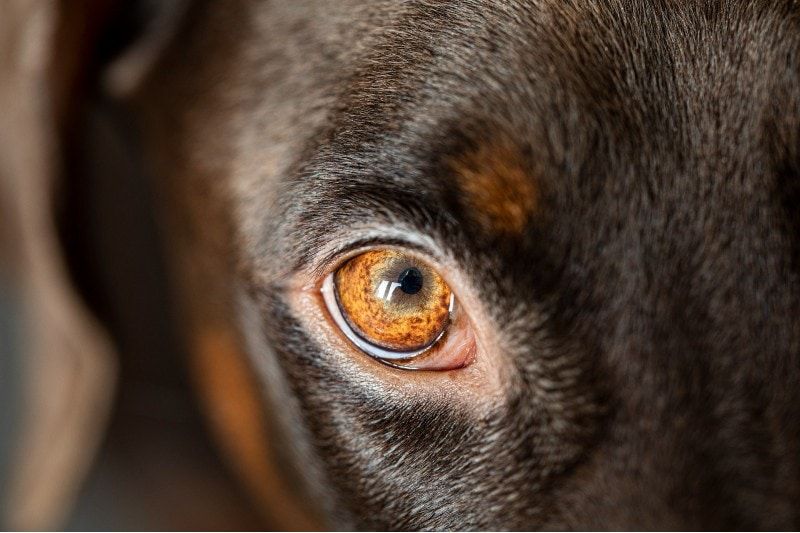
dog eyelid closeup shot

Humans have two eyelids per eye—the upper and lower ones. Your dog appears to have two eyelids per eye, but there’s actually a third one that’s hidden from view. So, how many eyelids do dogs have? They have three per eye.

If you’ve ever seen your dog deeply sleeping, you may have noticed a pink triangular membrane in the inner corner peeking through the external eyelids. This is known as the nictitating membrane, or “third eyelid.”

divider dog faces oct 2024

What Is the Third Eyelid?

The third eyelid is found at the inside corner of each eye of domestic dogs, other canines, felines, and other animals. It’s a triangular membrane of conjunctival tissue that covers the surface of the eye to provide protection. The third eyelid also has one of the most important tear glands at its base.

While all breeds have a nictitating membrane, it can vary in its appearance. Some dogs' third eyelids are very pale or quite dark, but most are pink.

They all serve the same purposes, however:

  • Protecting the eye from injury
  • Keeping the cornea clean and lubricated by spreading tears
  • Producing immunoglobulins to protect against infection
  • Producing tears

In wild animals, the third eyelid is an important feature that keeps the eye safe from injury, dirt, or infection—risks that these animals encounter regularly. Although domestic dogs live comparatively cushy lives, they still risk injury or infection to their eyes from daily activity.
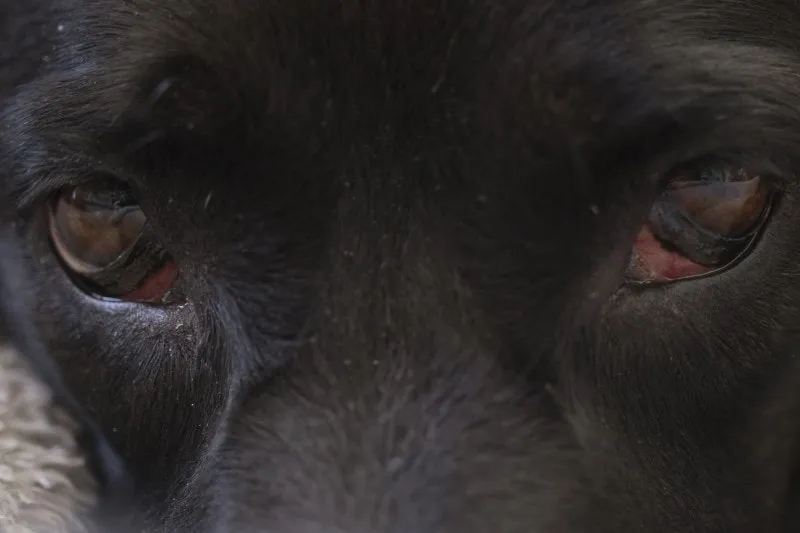
Image By: Sabrinasfotos, Pixabay
divider dog paws oct 2024

Health Conditions of the Third Eyelid

Although you may not see the third eyelid often, it can develop health conditions that are distinct from those that affect the other eyelids.

Cherry Eye

The most common third eyelid condition is “cherry eye,” or prolapse of the third eyelid gland from its normal position. When this occurs, the eyelid looks like a smooth pink or reddish mass above the edge of the eye. It can happen in one eye or both, simultaneously or at different times.

Cherry eye often becomes obvious when it’s a red, swollen mass that resembles a cherry. It can be large and may cover a portion of the cornea, or it may be small and only visible some of the time.

This can occur when the fibrous attachment that anchors the gland of the third eyelid is weak, enabling the gland to prolapse easily. Several breeds are prone to cherry eye, including Bulldogs, Boston Terriers, Beagles, Lhasa Apsos, Shih Tzus, Cocker Spaniels, and Bloodhounds. It can also occur in brachycephalic breeds of both dogs and cats, or those that have a “squished face” look.

Cartilage Eversion

Cartilage eversion, or scrolled cartilage, is less common than cherry eye and tends to affect large breeds. The third eyelid has T-shaped cartilage inside it, which helps it hold its shape. In young giant breeds, the T area can grow quickly, leading the cartilage to become bent, averted, or scrolled.

When this happens, the third eyelid is “rolled up” and looks like a pink or reddish mass in the corner of the eye. This can look similar to cherry eye, so it may require a thorough examination by a vet to distinguish between the two.

If you want more information or are concerned about the health of your pet, you should contact your vet.

divider dog paws oct 2024

How Are These Conditions Treated?

A poorly functioning nictitating membrane and an everted gland leave a dog’s eye at risk of dryness, itchiness, and discomfort. Repeated rubbing and scratching at the membrane can cause other eye injuries, such as corneal ulcers.

With both cherry eye and cartilage aversion, the recommended treatment is surgery. For cherry eye, the gland is returned to its normal position at the base of the third eyelid to ensure that it keeps functioning, while cartilage aversion is treated by dissecting the cartilage excess and removing it. The prognosis is good for both conditions with surgery.
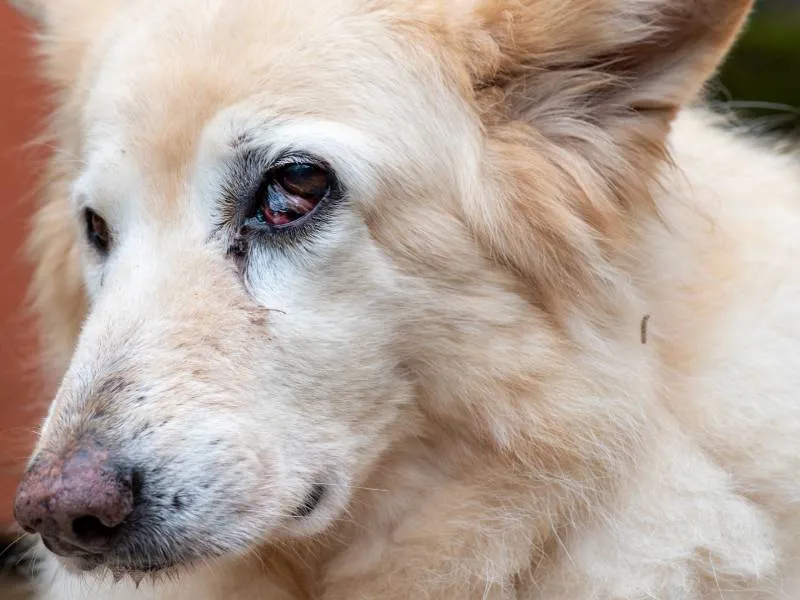
Image Credit: Alessandra RC, Shutterstock
divider dog paws 2 oct 2024

Final Thoughts

Although we may not see them often, dogs have three eyelids that are essential to the health of their eyes. In addition to the upper and lower eyelids that we can see all the time, dogs have a third eyelid that’s hidden in their inner corner. Since some conditions can affect the third eyelid and risk your dog’s eye health, it’s important to pay attention to this eyelid and visit a vet if anything looks strange.

See Also:

Sources

Featured Image Credit: Sabrinasfotos, Pixabay

The Dogster Newsletter

Expert dog care, straight to your inbox

News, insights, expert advice, and everything dog.

No spam — unsubscribe anytime.

By signing up, you agree to our Terms & Conditions and Privacy & Cookies Policy.

Click a star to rate. You can leave written feedback afterwards. (We read all feedback.)

Nicole Cosgrove
Authored by

Nicole Cosgrove

Leave a Reply

You're very welcome to leave a comment or question. Please know that all comments must meet our community guidelines, and your email address will NOT be published. Let's have a positive and constructive conversation.

Cherry Eye in Dogs: Signs, Causes & Treatment (Vet Answer)

Cherry Eye in Dogs: Signs, Causes & Treatment (Vet Answer)

Your dog comes running in from outside, and you notice something red on their eyelid. It wasn't there earlier, so you go to the vet. Your dog's doctor lets you…

Dr. Samantha Devine
By Dr. Samantha Devine · 4 weeks ago
Beagle Cherry Eye: Our Vet Explains What It Is & How It Is Cared For

Beagle Cherry Eye: Our Vet Explains What It Is & How It Is Cared For

You may have heard the term “cherry eye” before but are unsure what it means. Does it hurt your dog? How can you treat it? When should you be concerned? Cherry…

Dr. Kim Podlecki
By Dr. Kim Podlecki · 4 weeks ago
15 Fascinating Facts About Your Dog's Eyes & Eyesight

15 Fascinating Facts About Your Dog's Eyes & Eyesight

The love that comes with having a dog as a companion is so wonderful, but the fact that we can’t talk with our beloved dog seems like such an injustice. But th…

Nicole Cosgrove
By Nicole Cosgrove · 4 weeks ago
16 Dogs Prone to Cherry Eye: Vet-Reviewed Facts

16 Dogs Prone to Cherry Eye: Vet-Reviewed Facts

If you’re a dog parent, you might wonder what exactly cherry eye is and how it affects dogs, and then you might worry that your own dog might be a breed prone…

Kathryn Copeland
By Kathryn Copeland · 4 weeks ago

Can Dogs Sleep With Their Eyes Open? Vet-Verified Facts & Info

Dogs can have strange or unique sleeping habits, and it can take us time to get used to them. Sometimes, dogs may startle their owners by barking in their slee…

Jessica Kim
By Jessica Kim · June 17, 2026
Can Dogs Sleep With Their Eyes Open? Vet-Verified Facts & Info

Why Does My Dog Wink At Me? 4 Vet Reviewed Reasons & Tips

So your dog gave you a wink, and you think it has an underlying meaning. You took to Google to find out exactly what your dog is trying to tell you. Are they l…

Ashley Bates
By Ashley Bates · June 29, 2026
Why Does My Dog Wink At Me? 4 Vet Reviewed Reasons & Tips

Do Dogs Have Eyelashes? Breed Differences & Facts

All dogs have eyelashes, but some dogs have very short ones, others have just a few, and still others are blessed with long, thick lashes that curl into their…

Chelsie Fraser
By Chelsie Fraser · June 29, 2026
Do Dogs Have Eyelashes? Breed Differences & Facts

Why Do Chihuahuas Cry Tears? Vet-Verified Tips, Signs & Conditions

As a loving pet owner, it's natural to worry when you see your Chihuahua's eyes tearing up. But before diving into the possible reasons behind this phenomenon,…

Nicole Cosgrove
By Nicole Cosgrove · June 17, 2026
Why Do Chihuahuas Cry Tears? Vet-Verified Tips, Signs & Conditions

16 Dog Facial Expressions & What They Mean (With Pictures)

Communication is a nuanced thing. Many of us use verbal skills (which are complicated in their own right), body language, and facial expressions to get our mes…

Kathryn Copeland
By Kathryn Copeland · June 16, 2026
16 Dog Facial Expressions & What They Mean (With Pictures)

Do Huskies’ Eyes Change Color? Vet-Verified Anatomy Facts

Huskies are often known for their striking almond-shaped eyes with varied eye colors. While the most common and distinct color noted in huskies is a bright icy…

Annaliese Morgan
By Annaliese Morgan · June 29, 2026
Do Huskies’ Eyes Change Color? Vet-Verified Anatomy Facts

Are Dogs Color Blind? Vet-Approved Vision Facts

It is a common belief that dogs are colorblind and view the world in grayscale. However, research on canine vision has revealed that while dogs don’t see as ma…

Jessica Kim
By Jessica Kim · June 17, 2026
Are Dogs Color Blind? Vet-Approved Vision Facts

Can Dogs Be Nearsighted? Vet-Approved Signs, Diagnosis & Treatment

Nearsightedness, or myopia, is a refractive disorder that makes far-away objects look blurry. So, can dogs be nearsighted? The answer is yes, in some cases, do…

Kristin Hitchcock
By Kristin Hitchcock · June 17, 2026
Can Dogs Be Nearsighted? Vet-Approved Signs, Diagnosis & Treatment

Love Dogs? So Do We! Join the Dogster Community

Stay informed with expert pet care insights delivered straight to your inbox! Discover professional guidance on animal behavior, feeding tips, trusted product picks, and much more.

You may opt-out at any time. View our Privacy Policy for more information.

The Dogster app on a phone