CBD for Dog Seizures and Epilepsy: What Science Says (Vet-Reviewed)


Watching your beloved dog have a seizure is a scary and highly distressing ordeal for you and your dog. Luckily, there are treatments available that can reduce the frequency and severity of your dog's seizures. However, these medications often don't stop seizures entirely, while some may have certain side effects. So, what about a more "natural" alternative?
CBD has been widely discussed in health and wellness circles in recent years and is sometimes promoted as a treatment for a wide range of conditions in people, though claims are often overstated. As we discuss in this article, there is the potential for CBD to complement other anti-seizure drugs in dogs when used responsibly and under veterinary guidance, but more research is ultimately needed.
Is CBD a valid additional treatment for dogs suffering from epilepsy? Some preliminary studies suggest CBD may help reduce seizure frequency or severity in dogs with epilepsy, but the evidence is still limited, and more research is needed.

What Is Epilepsy in Dogs?
Types of Epilepsy In Dogs (by causes or etiology):
Dogs can suffer from different types of seizures, which can be incredibly frightening and disabling experiences.1

The two main types of seizures dogs suffer from are:
Seizures usually last only a few minutes, but some may last longer or occur close together.
Safety Tip: If your dog has a seizure that lasts longer than 5 minutes or attacks that are close together without regaining consciousness (status epilepticus), you MUST seek emergency veterinary treatment. These seizures can be fatal.
If you are concerned about the health and well-being of your pet, seek veterinary advice for the best course of action.
Can CBD Help Dogs With Epilepsy and Seizures?
From a purely objective perspective, cannabidiol (CBD) has not been researched enough to say it can definitively reduce or improve seizures in dogs.
Idiopathic epilepsy, a condition diagnosed when no underlying cause is found, is the most common form of epilepsy in dogs. Estimates suggest epilepsy affects around 0.5–1% of dogs, meaning roughly about 1 in 100 dogs may be affected, though figures vary by study.
Some studies and anecdotal reports suggest CBD may help reduce seizure frequency or severity in dogs when used in conjunction with other anti-seizure medications, but evidence is still limited and not yet conclusive.

How Does CBD Work in Dogs?
Cannabidiol (CBD) interacts with the endocannabinoid system (ECS), which is involved in regulating functions such as pain perception, immune response, and inflammation, although its exact mechanisms in the brain are still not fully understood.
While we can’t be sure how this interaction impacts seizures, CBD may influence neuronal activity in the brain and could have a neuroprotective effect during seizure events, although this has not been conclusively proven in dogs. These effects are thought to occur through indirect modulation of CB1 receptors and other signaling pathways in the brain, rather than direct binding.
Is CBD Safe for Dogs?
Current research suggests CBD may be tolerated by dogs at studied doses, but there is no formal veterinary consensus on its safety or efficacy.
Veterinary organizations such as the American Kennel Club Canine Health Foundation have supported studies into CBD use in dogs, with several results already published. Some studies report no or minimal observable side effects, while others note mild effects such as gastrointestinal upset or changes in liver enzymes.
While CBD is seen as safe, THC (tetrahydrocannabinol), the component of cannabis that causes the “high,” is toxic to dogs. There have been some reported side effects of CBD administered to dogs, but they are typically mild and include nausea, diarrhea, and ataxia (loss of coordination).

How Much CBD Is Considered Safe for Dogs with Seizures?
The dosage should be determined in consultation with a veterinarian and adjusted according to your dog’s size, condition, and the specific product used. It should never be administered without speaking to a vet, especially as interactions with other medications are possible.
Some studies have explored doses around 2 mg/kg every 12 hours (approximately 4 mg/kg per day), but there is currently no standardized or clinically approved dosage for CBD in dogs, and safety and effectiveness can vary. The dosage should be adjusted according to your dog's size and the individual product used. It is also very important to know the concentration of a product before administering it to your dog. CBD products are not consistently regulated, meaning quality, labeling accuracy, and cannabinoid content can vary significantly between products and regions, making their efficacy and safety less predictable.
What Types of CBD Are There For Dogs?
Some research suggests full-spectrum hemp extract may offer potential benefits due to multiple naturally occurring compounds, but there is currently no conclusive evidence that it is the most appropriate option for dogs with epileptic seizures. Ensure to discuss any product you consider with your vet, and that it comes with a certificate of analysis so you can be sure a full spectrum CBD contains minimal THC.
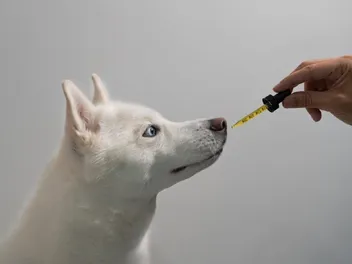
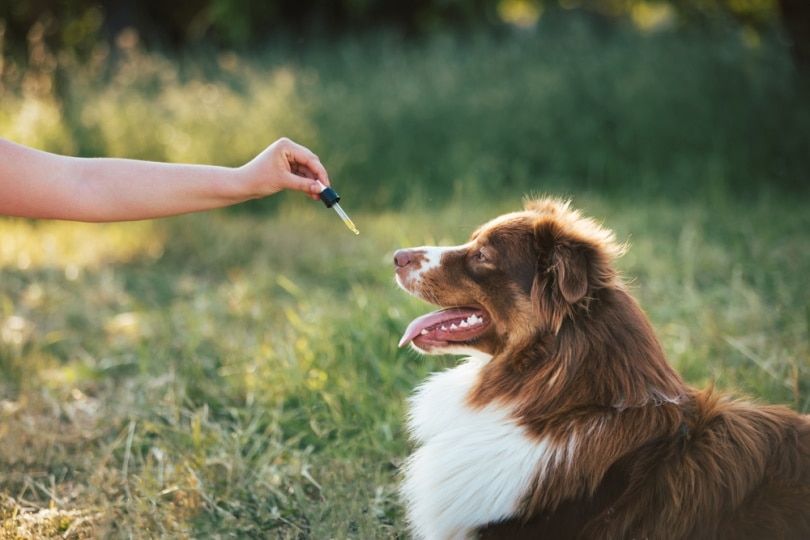
Oils are concentrated solutions of CBD in a carrier oil, which can be trickier to give to dogs but may allow more precise dosing. Biscuits and treats infused with CBD are also available, and while often easier to administer, they may provide less precise dosing compared to oils. Again, do not give your dog any CBD products before speaking to a vet.

Are There Any Breeds That Shouldn’t Have CBD?
While no specific breeds are known to require avoidance of CBD, there is no evidence of a “CBD-specific receptor” in dogs or other species, and CBD does not strongly bind directly to CB1 or CB2 receptors but instead influences the endocannabinoid system through indirect pathways. However, low doses are always recommended at the start of treatment and should always be under consistent veterinary guidance.
Will My Dog Get High?
This is a question often asked by concerned owners, and the good news is no, your dog will not get high from CBD. CBD products may contain little to no THC depending on formulation, with full-spectrum products legally allowing small residual levels. THC is the primary psychoactive compound in cannabis (alongside others in smaller amounts) and is the compound responsible for causing the “high.”
THC can be toxic to dogs depending on dose and exposure level and may cause significant neurological and gastrointestinal effects. Don't be tempted to use non-certified or low-quality CBD products (and don't ever give your dog pure cannabis plants either).
Conclusion
While short-term studies suggest CBD may be tolerated in dogs, there is currently no conclusive evidence supporting its long-term safety or effectiveness for treating epilepsy and seizures. However, there are promising studies and anecdotal evidence that suggest it may help reduce seizure frequency or severity in certain dogs when used under veterinary supervision.
See also:
Sources
https://www.allthebestpetcare.com/pet-nutrition/cbd-for-dog-seizures/#
https://www.frontiersin.org/articles/10.3389/fvets.2022.939966/full#B3
https://www.akcchf.org/canine-health/top-health-concerns/epilepsy/
https://avmajournals.avma.org/view/journals/javma/254/11/javma.254.11.1301.xml
https://vcahospitals.com/know-your-pet/marijuana-intoxication-in-dogs-and-cats
https://www.akc.org/expert-advice/health/does-cbd-work-for-dogs/
Featured Image Credit: 24K-Production, Shutterstock
Expert dog care, straight to your inbox
News, insights, expert advice, and everything dog.

No spam — unsubscribe anytime.
By signing up, you agree to our Terms & Conditions and Privacy & Cookies Policy.
How useful was this post?
Click a star to rate. You can leave written feedback afterwards. (We read all feedback.)
Nicole has loved animals of all sizes her whole life so it's no wonder she has dedicated her career to helping them through what she loves best: learning, writing, and sharing knowledge with others. She’s the proud mom of two dogs, a cat, and a human. With a degree in Education and 15+ years of writing experience, Nicole wants to help pet parents and pets around the planet to live happy, safe, and healthy lives.