Tri-Colored Australian Shepherd: Info, Pictures, Origin & History

In this article
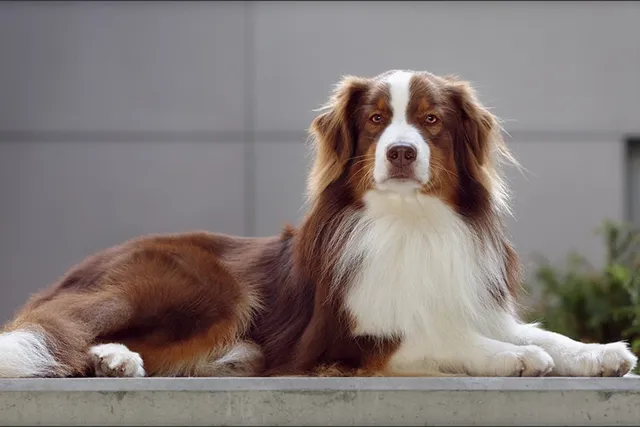
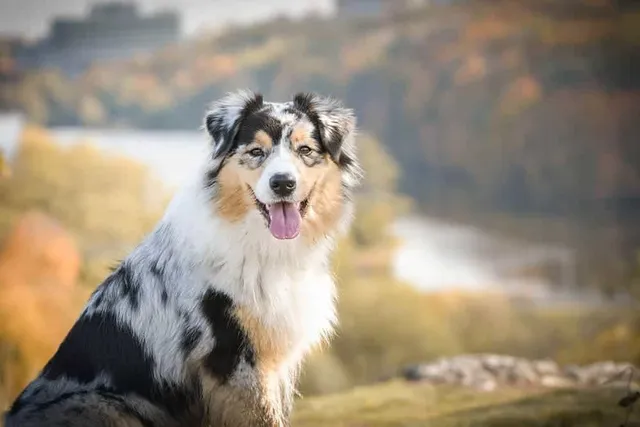
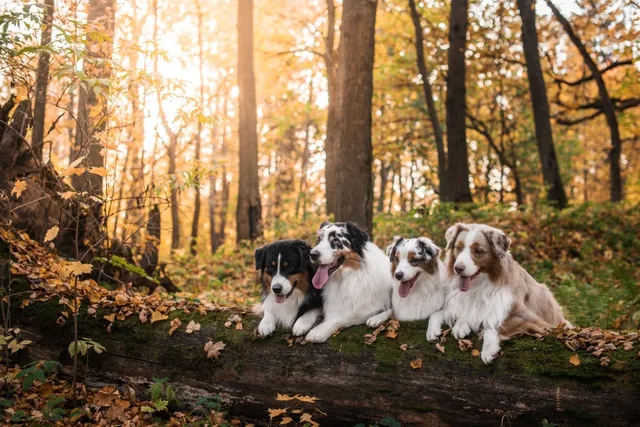
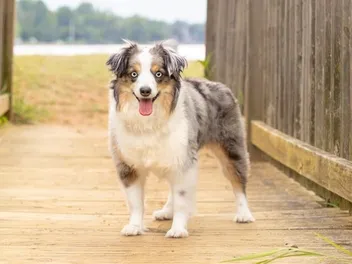
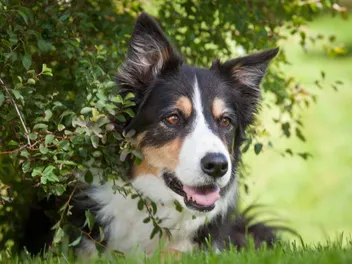
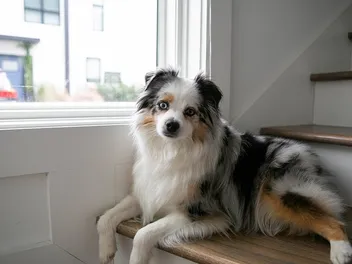
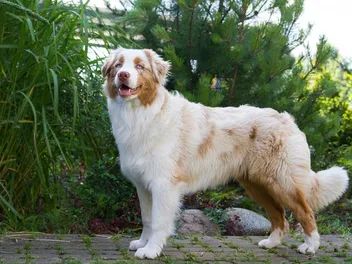
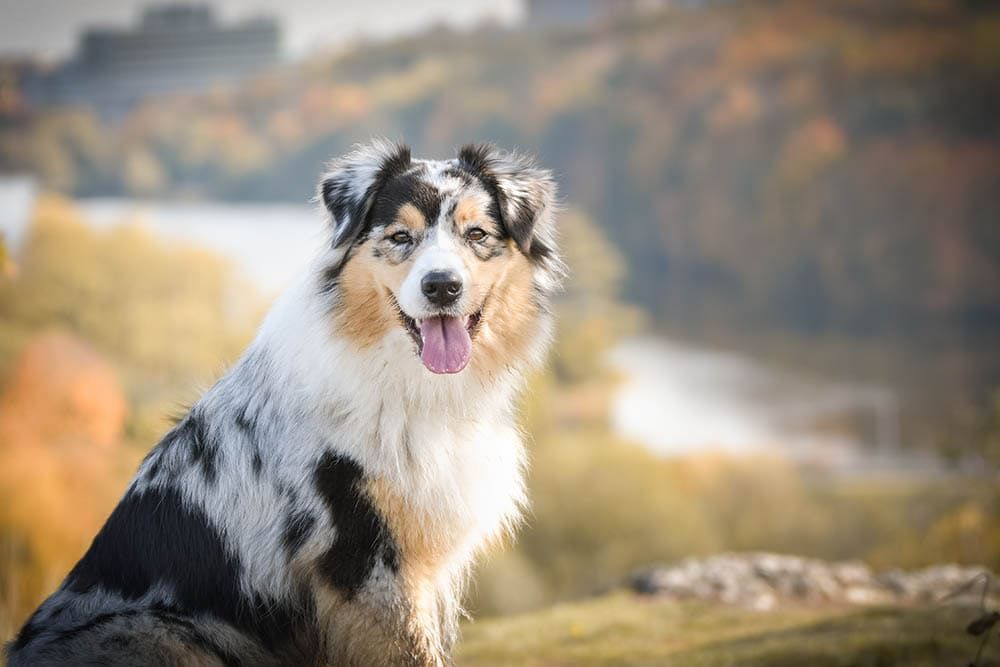
The Australian Shepherd is one of the only dog breeds that regularly have tri-colored coats. There are two recognized tri-color mixtures, black-white copper and red-white copper. A solid color Australian Shepherd is actually rare, with a solid red Aussie being the hardest to find.
Breed Overview
Height:
Weight:
Lifespan:
Colors:
Suitable for:
Temperament:
Genetically, Australian Shepherds are closely related to other herding dogs such as the Collie and the Shetland Sheep Dog. However, historians still disagree on how exactly the Australian Shepherd—with its European ancestry and American upbringing—acquired “Australian” in its name.
Australian Shepherd Characteristics

The Earliest Records of the Australian Shepherd in History
Many facets of the Australian Shepherd's history aren't well documented, but most accounts agree that this breed was derived from sheep-herding dogs that were owned by Europeans. The story disintegrates from there into a few different theories. Some parties claim that shepherds from Basque brought the formative dogs to Australia to work on ranches. They supposedly later emigrated to the U.S. where the breed was fully formed.
Other narratives skip Australia completely, saying that the shepherds brought them over straight from Basque. The timeline also differs, with some accounts claiming they were in the U.S. by the late 19th century, but others saying the Basque people didn't start immigrating with their dogs in large numbers until sometime around World War II. A marginal number of stories question how much the Basque people were involved at all.
Given that the modern Australian Shepherd shares similar genetics with several European shepherding dogs, even the German Shepherd, we theorize that all of these stories may be partially true. We know for a fact that the ancestors of the Australian Shepherd immigrated to America from Europe where they worked as herders. Shepherds from Basque used sheepdogs, so we have no doubt that this group of immigrants was involved.
Whether or not they stopped in Australia is up for debate, but we think it's highly likely because of their name. Since breeding wasn't standardized in America until the 20th century, it's also possible that the ancestors of the Australian Shepherd bred with many similarly sized dogs as they traveled, including the Australian Blue Heeler and the Scottish Border Collie.

How the Australian Shepherd Gained Popularity
Regardless of their genetic origin, Australian Shepherds were trained to be working dogs by their early handlers, who were typically shepherds. A labor shortage of farmhands during the 1940s resulted in more of these dogs being bred and trained for the field out west towards California.
By the time shepherding work started to decline in the U.S., a group of Aussie owners formed to specifically create a breeding standard for this new type of dog.

Formal Recognition of the Australian Shepherd
The Australian Shepherd Club of America was founded in 1957. This group directly oversaw the formation of the modern Australian Shepherd. True to the American dogma of pushing back against conformity, the club rejected an invitation to join the AKC because they didn't want to be bound by their strict breed standards and relatively small gene pool.
After the group splintered, the smaller ASA club accepted the invitation from the AKC, and the breed was formally recognized in 1991. Today, the Australian Shepherd Club of America is the largest breed-specific club in the country. The ASCA remains independent from the AKC, which means that the Australian Shepherd technically has two different breed standards within the United States.
Top 6 Unique Facts About Australian Shepherds
1. Australian Shepherds have many nicknames
Beyond the famous “Aussie” moniker, Australian Shepherds have also been called “Pastor dogs,” or “Spanish shepherds” These lesser-known nicknames hint at the Australian Shepherd's past as a working dog.

2. Australian Shepherds like to work
While some dog breeds have lost their inherited job skills from their early history, the Australian Shepherd can still be readily employed to herd animals (or children). Since they're smart dogs with excellent perception, Aussies are sometimes used to sniff out drugs or lead the deaf or blind.
3. Following the decline of sheep farming, Australian Shepherds found a new job in the show ring
Traveling “Wild West” shows featured athletic Australian Shepherds jumping through hoops, and performing awe-inspiring mental and physical gymnastics for enthusiastic audiences to enjoy. Perhaps these shows led to a greater awareness of the relatively new breed that helped lead to their enormous popularity today.
4. In 2022, Australian Shepherds are now the #12 most popular dog breed in the U.S.
Mixed-breed Aussiedoodles are also on the rise, especially in America.

5. Some are born with a natural bobtail
A genetic combination resulted in a bobtail somewhere along the line, and shepherds selectively bred dogs with this trait to make it a more common occurrence. Bobbed tails are actually preferred in shepherding because it’s safer not to have a long tail that can get caught. Show dogs are expected to have the distinctive bobbed tail, although it's estimated only about 20% of Aussies are born with one.
6. Aussies have a thick double-coat
This breed sheds more than some due to their beautiful double coat that's replaced twice a year, although they still shed some fur year-round. Be sure to brush them more frequently during their heavy seasonal shedding to prevent matting.

Does the Australian Shepherd Make a Good Pet?
Clever, smart, and cute, the Australian Shepherd wins its humans over with a shaggy smile and wag of its naturally bobbed tail. Given their herding instincts and love of running, this breed is the perfect fit for an active individual or family. This isn't a good dog for an apartment dweller or a family without a lot of time or energy because they need frequent exercise to stay in shape. A secured yard for romping a couple of hours a day works best.
Aussies are prone to hip and elbow dysplasia, which worsens with obesity. Physical exercise and a proper diet are vital components of a happy and healthy life for this energetic pup. Conversely, pushing your vibrant Aussie to run too much as a young puppy can increase their risk for hip dysplasia since their joints aren't fully developed until they're about a year old. You should aim for your puppy to receive at least thirty minutes of exercise each day while they're still growing. After their first birthday, your Aussie will benefit from more exercise, closer to one or two hours a day at minimum.
A bored Aussie can become destructive, especially if they're not under your supervision. To curb unwanted behaviors, you might try to engage their mind with a treat puzzle. And be careful. These dogs have bigger brains than most (literally), and they can be quite cunning and controlling without proper training.
Aussies are highly intelligent and tend to hold their humans in high regard, so with training, they'll strive to follow your commands. However, without training your dog may develop a strong will and a wariness of strangers that can result in unruliness. This is why early training and socialization are crucial to their growth. You should begin teaching them commands or enroll them in puppy school as soon as possible to build a healthy foundation.


Conclusion
Tri-colored Aussies share a confusing history with other Australian Shepherds with different markings. No matter where they originated from, it's clear that they're loved today in the U.S. and beyond. If you're considering an Australian Shepherd, make sure you have plenty of time and space for this energetic dog to run and relive its days herding sheep.
See also:
Sources
Featured Image Credit: dodafoto, Shutterstock
Expert dog care, straight to your inbox
News, insights, expert advice, and everything dog.

No spam — unsubscribe anytime.
By signing up, you agree to our Terms & Conditions and Privacy & Cookies Policy.
How useful was this post?
Click a star to rate. You can leave written feedback afterwards. (We read all feedback.)
Brooke Norris has 2+ years experience as a freelance writer. She graduated from University of North Georgia with a B.S. in Media Studies, and is intrigued by the idea of storytelling across different mediums. Currently she lives in New Orleans, Louisiana, with her husband and four pets. When she isn’t writing, you’ll probably find Brooke petting her dog, Tuggles, or one of her three cats, Satura, Rosie, and Demelza. They follow her around the house as she gardens, cooks, brews coffee, and otherwise makes their house a home.