Blockhead Golden Retriever: Info, Pictures, Origin & History

In this article
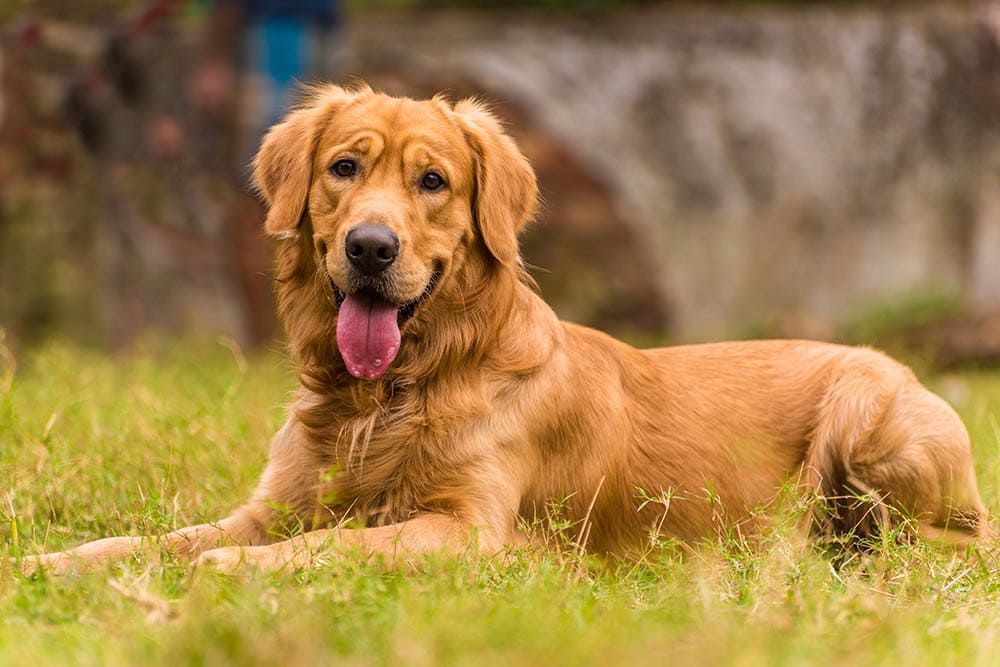
View 6 More +They say that you shouldn’t judge a book by its cover. But when a dog has such an adorable face and a really large head, like the Blockhead Golden Retriever, it’s not always easy to resist their charm! That’s why so many people are drawn to this particular Golden Retriever breed.
| Height: | 21–22 inches |
| Weight: | 55–75 pounds |
| Lifespan: | 10–12 years |
| Colors: | Dark golden, golden, light golden |
| Suitable for: | Active families, service roles, therapy, hunting, companionship |
| Temperament: | Loyal, attentive, affectionate, active |
Golden Retrievers have lustrous golden coats and kind features that make them look like puppies for much longer than many other breeds. However, some types of Goldies are more popular than others. Here, we discuss the origin and history of the Blockhead Golden Retriever and explain why they are so beloved among enthusiasts and potential owners alike.
Blockhead Golden Retriever Characteristics

The Earliest Records of Blockhead Golden Retrievers in History
First, it's important to note that Blockhead Golden Retrievers are nothing more than standard Goldies with large heads. Golden Retrievers come in three varieties: English, American, and Canadian.
The differences between these varieties are purely physical (such as the color and thickness of their coat) and will not affect their temperament or overall health. Also, there are two main types among these different varieties: the Blockhead and Slender-Head.
Since English Goldies are generally bigger than the other varieties, Blockhead Golden Retrievers may be more commonly found among English Goldens, but there’s no real evidence of that.
Therefore, the origins of Blockhead Golden Retrievers are the same as those of standard Golden Retrievers because "Blockheads" are not a different breed.
With that in mind, let's see when these magnificent dogs appeared in history.
It is widely believed that Golden Retrievers were first bred in Scotland in the mid-19th century by Sir Dudley Marjoribanks (later known as Lord Tweedmouth). This breed probably originated from crossing Flat-Coated Retrievers with Tweed Water Spaniels (a now-extinct Scottish breed).
However, historians have been unsure about the origins and timeline of Golden Retrievers for decades. The first written record of a Goldie dates back to 1868, but it wasn't until decades later that breeders began to organize and promote Golden Retrievers as a distinct breed. Moreover, one of the earliest recorded uses of the term "golden" refers to dogs with a reddish coat color, which may indicate that the retriever was already established by this time.
Indeed, there was a dog similar to today's Golden Retriever before “Yellow Retrievers” in the 1860s: the Setter. Lord Tweedmouth probably improved the early Goldens by crossing them with Setters. In fact, according to the Golden Retriever Club of America (GRCA), Golden Retrievers may owe more of their origins to the Setters than historians previously believed.

How Blockhead Golden Retrievers Gained Popularity
Right from the start, Golden Retrievers have been first-rate workers, regardless of the variety or shape of their heads. They were first used as hunting dogs, but due to their great versatility, they were able to perform many other tasks. Their docility and calm, sensible demeanor have made them useful in many other areas of activity, such as tracking, search and rescue, obedience competitions, shows, and guide and assistance dogs.
However, it wasn't until after World War I that the popularity of Golden Retrievers increased dramatically. Since the 1940s, their popularity has steadily grown, and they have become one of the most popular and beloved dog breeds in America. Their loyalty, intelligence, desire to please, and ease of training are just a few of the many personality traits that make them so beloved and unique.
Formal Recognition of Blockhead Golden Retrievers
The breed was officially recognized by the British Kennel Club in 1911 as "Retriever — Yellow or Golden" and finally "Retriever — Golden" in 1920.
The American Kennel Club recognized the breed in 1925, and the Canadian Kennel Club in 1927. The first Goldens were registered in France in 1934 and Australia in 1937. Finally, the first GRCA was founded in 1938.
Top 3 Unique Facts About Blockhead Golden Retrievers
1. English Golden Retrievers May Be Less Prone to Cancers
In an extensive 20-year study on mortality causes in North American dogs, researchers found that Golden Retrievers (and Boxers) died of cancer more often than any other breed. Additionally, a 1988 health report by the GRCA “identified cancer as the cause of death in 61.4% of dogs of this breed.”
Interestingly, the risk of cancer in English Goldens appears to be significantly lower, as a 2010 U.K. health survey estimated the mortality rate at 38.8%. Although much higher than the average for other breeds, this percentage is significantly lower than that seen in North American Goldens.

2. Blockhead Golden Retrievers Usually Come in Light Cream Colors
English Golden Retrievers typically have thick blond or light-colored coats and tend to be more muscular with blockier heads, hence why Blockhead Goldies may be easier to find in lighter colors.
3. Blockhead Golden Retriever Puppies Are Hard to Identify
It is quite easy to recognize this type of Golden Retriever when they are adults, but it is almost impossible to identify them when they are still small puppies. Indeed, you may have no idea that you have a Blockhead Goldie until your pup has finished growing and their head has reached their final shape.

Does a Blockhead Golden Retriever Make a Good Pet?
There are many reasons that you may want to own a Blockhead Golden Retriever besides their attractive looks. First, Golden Retrievers are known for being loyal and affectionate, and Blockhead Goldies are no different. They love to be around people and will often follow you around the house just to be near you. Golden Retrievers are also highly intelligent and easy to train. This makes them ideal for families with children who want to teach their kids responsibility through caring for a pet. Goldens can be used as service dogs and are often trained to assist those who have hearing or mobility issues.
In short, Blockhead Golden Retrievers are known for their loving, friendly, and compassionate nature. They can make wonderful family pets and great companions for seniors or people with special needs.
Conclusion
The origin and history of Blockhead Golden Retrievers are the same as those of standard Goldies, as this breed is nothing more than a type of Golden Retriever with a larger head! However, although they make wonderful companions, these dogs are difficult to identify when they are still puppies. That's why it's best to adopt an adult Blockhead if you want to bring this specific type of Golden into your home.
Sources
https://www.akc.org/expert-advice/dog-breeds/behind-the-breed-golden-retriever-history/
https://grca.org/about-the-breed/breed-history/the-origins-of-the-golden-retriever-revisited/
https://www.akc.org/expert-advice/dog-breeds/behind-the-breed-golden-retriever-history/
https://grca.org/about-the-breed/breed-history/the-origins-of-the-golden-retriever-revisited/
https://grcc.net/the-early-days-of-the-golden-retriever-in-canada/
Featured image credit: Neelsky, Shutterstock
Expert dog care, straight to your inbox
News, insights, expert advice, and everything dog.

No spam — unsubscribe anytime.
By signing up, you agree to our Terms & Conditions and Privacy & Cookies Policy.
How useful was this post?
Click a star to rate. You can leave written feedback afterwards. (We read all feedback.)

A biologist and science writer, Genevieve has a special fondness for capuchin monkeys, pumas, and kangaroos, which has inspired her to volunteer and work at wildlife rehabilitation centers in countries like Bolivia, Guatemala, Canada, and Australia. Now living as a Canadian expat in Argentina, she enjoys the sight of horses and cows outside her home office window every morning. Genevieve is the proud owner of three rescue dogs—Lemmy, Nala, and Pochi—and a lively kitten named Furiosa. She finds happiness and fulfillment in sharing her passion and extensive knowledge of animals with others.