My Puppy Still Has Worms After Deworming: Our Vet Explains

In this article
Puppies and worms are like peanut butter and jelly—not that they taste great but rather that they are commonly seen together. Puppies can acquire worms from their mother before they’re even born. They can also acquire them shortly after birth. Worms are so common in young puppies that a vet may forgo a fecal test at your first visit and instead just decide to deworm based on the high likelihood of an infestation.
Fortunately, many dewormers are safe and effective to use on puppies, though you should know what to expect following a deworming. Seeing worms in your puppy’s stool can be normal and doesn’t necessarily mean something went wrong, especially since they’re likely dying worms, not fresh ones. Read on to learn more!

How Do Puppy Dewormers Work?
Dewormers for dogs fall into many different categories based on how they kill the parasites. Some work by paralyzing the worms, causing them to lose their grip on the intestinal wall so they can then be pushed out of the body where they can’t survive.1 Others may block parts of the worms’ metabolic pathways so they can’t produce the energy that they need to survive.
Unfortunately, dewormers only work on adult worms, not larvae or eggs, as there's nothing to paralyze or metabolically disrupt in these other worm stages. This means dewormers used in puppies only kill the adult worms that are present at the time of deworming. They do nothing to the eggs or larvae in the system or help prevent future infestations.

Is It Normal to See Worms After Deworming?
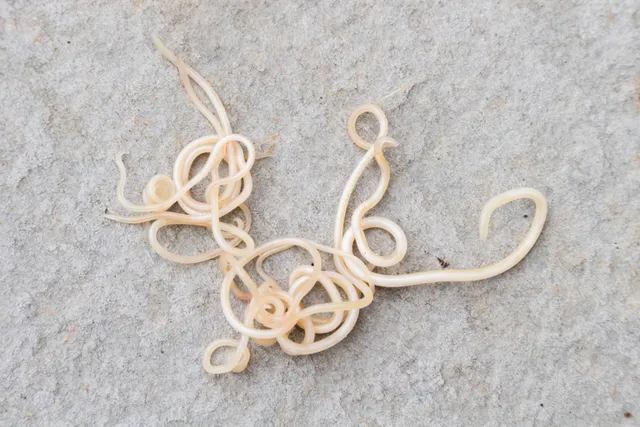
Now that you know how these medications get the job done, let’s look into what will be normal to see following a deworming of your puppy. Since most dewormers work by killing the adults or causing them to release from the intestine and get flushed from the system, it is completely normal to see worm bodies in your dog’s feces, especially if they had a heavy worm load. Depending on the dewormer, those worms are dead or will die shortly due to exposure to the environment. You might see worms in your puppy’s stool for a few days following deworming.
Puppies may also vomit worms for a day or two after deworming for similar reasons. The body is just trying to get rid of all the dead and dying parasites. Sometimes, your pup may experience diarrhea as a result of digesting the worm bodies. It should all clear up within a couple of days. If not, consult a veterinarian.
Does Seeing Worms After Deworming Mean It Didn’t Work?
Besides the expulsion of dead and dying worms, you might see worms in your puppy’s vomit or feces because the dewormer can only kill the adult worms in your puppy’s body, not the larvae or eggs. So, over a bit of time, those other stages can develop into adults, and these may appear during their potty breaks. This is completely normal and doesn’t mean anything went wrong. Your puppy just needs another healthy dose of dewormer.
How Often Should Puppies Be Dewormed?
Deworming often starts with the breeder. Since worms are common in newborn and young puppies, most high-quality breeders will start them on a deworming regime of every 2 weeks. After you bring home the puppy, the veterinarian may continue to deworm them at their vaccination visits, which typically occur every 3–4 weeks, starting at 8 weeks of age.
If your puppy didn’t receive any deworming before they came to you, the vet will likely recommend that they be dewormed at least twice, at 2 weeks apart. From there, fecal samples may be run to determine if further deworming needs to take place.
Older puppies and adult dogs should be dewormed as needed using a fecal test to diagnose worms. Dogs that spend a great deal of time outdoors, especially unsupervised, may need more frequent dewormings.

Do Puppies Really Need Deworming?
While parasites like worms are a natural part of the environment, they’re not something that you want your puppy to live with. Having a few worms usually doesn’t cause a dog much grief, but having a heavy load can be debilitating. Worms siphon nutrients and blood from the puppy, as they often need every bit of nutrition that they can get to grow and develop properly. A large number of worms can cause weight loss, a poor hair coat, and even anemia.
Also, many of the worms that seek housing in our puppies can infest us humans. Hookworms and roundworms are zoonotic, meaning humans can pick them up from canines. Petting your puppy or even letting them lick your face isn’t to blame, though. Rather, humans get infested when they come in contact with larvae or eggs that a puppy expelled into the environment. These parasites can live on grass or in the dirt where your puppy went to the bathroom, and they can infest you if you touch that grass or dirt and accidentally ingest the larvae or eggs. Children are especially at risk, since they tend to put things into their mouths from unwashed hands more readily than adults do.
Conclusion
It can be perfectly normal to see worms in your puppy’s poop following a deworming. This typically means the medication is doing its job of killing the adults and the body is getting them out the best way that it knows how. You shouldn’t be surprised to see worms in your puppy’s poop for up to 2 weeks following a deworming.
That said, seeing worms after a deworming can also mean your puppy is reinfested. The dewormer can only kill adult worms, so after a while, eggs and larvae that were present will have developed into adults. But this just means your puppy needs another dose. Speak to a veterinarian about the best deworming schedule for your puppy to help them stay healthy and worm free.
See also:
Sources
Featured Image Credit: D'Action Images, Shutterstock
Expert dog care, straight to your inbox
News, insights, expert advice, and everything dog.

No spam — unsubscribe anytime.
By signing up, you agree to our Terms & Conditions and Privacy & Cookies Policy.
How useful was this post?
Click a star to rate. You can leave written feedback afterwards. (We read all feedback.)
Dr. Chyrle Bonk DVM (Veterinarian)
On top of caring for animals and writing for veterinary publications, Dr. Chyrle Bonk owns a small cattle herd! When she’s not busy with those things, she can be found somewhere enjoying the Idaho outdoors with her husband and two kids. Dr. Chyrle Bonk received her Doctor of Veterinary Medicine (DVM) from Oregon State University in 2010.
Chyrle has practiced in a mixed animal clinic for over a decade. She also writes for various veterinary websites and magazines, like Dogster!