Why Is My Dog Throwing Up Worms: 3 Vet-Reviewed Reasons & What to Do


In this article
It can be distressing to see your dog throw up, at the best of times. But, if you also see worms in the vomit, it is even more concerning. Worms are not uncommon in dogs, with common types including roundworms, tapeworms, and hookworms.
Regardless of the type of worm in the dog’s gut, signs of infestation can be fairly similar. Signs include vomiting and diarrhea as well as an inflated belly, a lethargic state, poor skin and coat condition, and a change in appetite. However, while it is easy to assume that worms are the cause of the vomiting if you see them in the vomit, this may not be the case.
Many dogs have intestinal worms without their owners knowing because they may not show any signs. The first you know about your dog having worms may be seeing them in their vomit. In these cases, it is possible that vomiting might be a sign of something else, and the worms incidental. Whatever the cause however, clearing the worms is an important first step in getting your pup on the road to recovery.

The 3 Possible Reasons That Your Dog is Throwing Up Worms
1. Roundworms

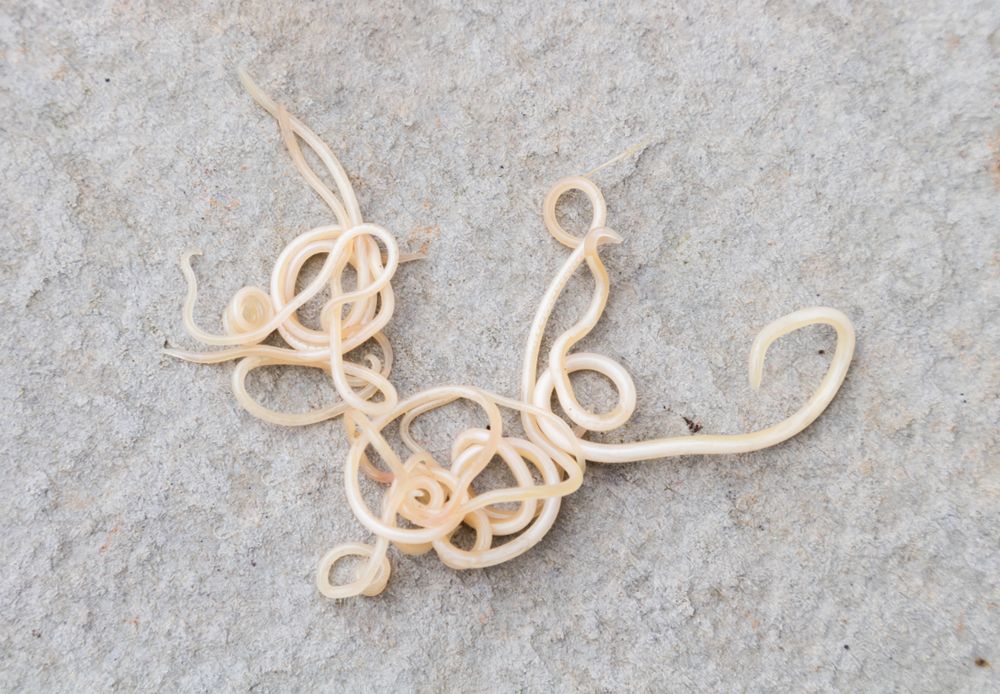
Roundworms are the most common of worm infestations in domestic dogs. They are especially common in puppies, who can pick them up from their mother while in the womb or from her milk. Many dogs have roundworms, and they show no signs of the problem, but puppies with significant infestations can have a pot-bellied appearance while suffering significant weight loss.
The worms can appear in a dog’s vomit and are a possible cause of the vomiting in the first place. Roundworm infestations can be passed on to people, and there is a significant risk for young children and pregnant women.
Causes
Dogs contract worms by ingesting the fecal matter of an infected animal, or by eating another animal, such as a bird or rat, that has been infected. It is common for puppies to contract worms from their mothers. This can happen when the puppy is still in the womb or when they are nursing.
Signs
Signs of a roundworm infestation may include a pot-bellied appearance, vomiting, diarrhea, poor coat quality and weight loss. A dog’s appetite is likely to change, either eating more because the worms are consuming all the nutrients, or eating less because their stomachs feel bloated and full.

Prevention
Ensuring a dog is wormed before and during her pregnancy is the best way to stop her puppies from becoming infected. Once a puppy is born, it should be wormed with an appropriate dewormer once it reaches 2 weeks, and then usually again at 5 and 8 weeks old. To reduce the chance of your dog or other dogs contracting roundworms, you should clear up dog mess as soon as possible and prevent your dog from eating wildlife, whether it is found alive or dead.
Treatment
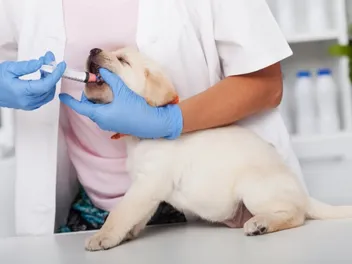
Treatment typically requires the administration of oral medication. Deworming liquid is usually given to puppies at 2, 5 and 8 weeks of age. Ongoing deworming treatments are then advised to be given throughout the dog’s life (at different intervals depending on the medication and the lifestyle of the dog). However, deworming treatment is not 100% guaranteed to work, and your vet will likely carry out a fecal analysis to ensure that your dog is worm free after treatment is complete.
2. Tapeworms

Tapeworms are also relatively common in dogs. They are long, flat parasites that are made up of lots of segments. They attach themselves to the wall of the dog’s small intestine and take the nutrients directly from their host. Adult tapeworms periodically release a segment of their body, which contains lots of eggs (a proglottid). These segments look like a grain of rice and may be visible to the owner around their dog’s bottom. Once the proglottid is released into the environment via the dog’s feces,
Once the proglottid dries out in the environment, it opens and releases eggs. These eggs are then eaten either by a flea or by another animal, such as a rodent, inside whom the eggs develop into larvae. A dog will then swallow a flea (when grooming themselves) or rodent that is infected with tapeworm larvae, and the whole cycle starts again.
Causes
Tapeworms are easily picked up by puppies and dogs, especially those that have fleas or who eat a lot of rodents. Because an adult tapeworm produces proglottids that are hermaphroditic i.e. contain both testes and ovaries, it only takes one tapeworm to reproduce. Dogs of all ages can contract tapeworms.
Signs
Dogs that are infected with a tapeworm may scoot their bottoms along the floor because the emerging proglottids can be very itchy. You may also notice the proglottid segments around your dog’s bottom or in their bed. They look like small pieces of white rice and may be moving. In severely infected animals, weight loss and coat changes may be evident.

Prevention
Tapeworms are most commonly transmitted by fleas, which means flea prevention is paramount in reducing the chances of infection. You should also prevent your dog from eating any wildlife and don’t let them eat their own or any other dog’s poop. Routinely deworming your dog every 3 months (once an adult) will prevent a heavy worm burden.
Treatment
If you believe your dog has tapeworms, you should take them to the vet as soon as possible. Tapeworms can be especially bad for puppies as they steal their nutrients, which can lead to stunted growth.
Your vet will treat tapeworms either with an injection or by administering worming tablets that specifically target tapeworms.
3. Hookworms

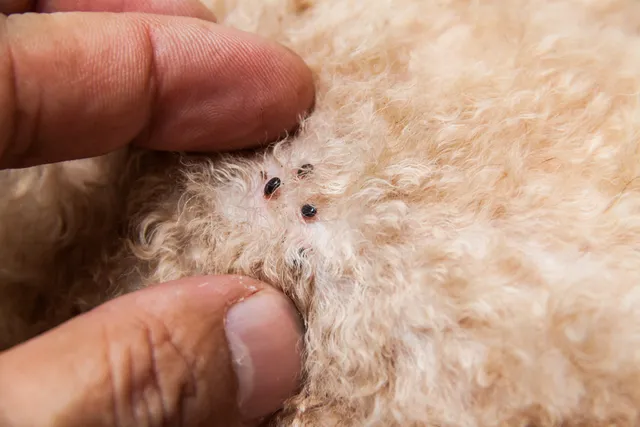
Hookworms are common in dogs, particularly puppies. They are very small and are very difficult to see with the naked eye, so you’re unlikely to see them in your dog’s vomit. These tiny worms have sharp teeth that they use to grab onto the inside of your dog’s intestine.
They also release an anticoagulant which means bleeding will continue even after the worm has detached itself from the inner wall. Infestations can be very dangerous, especially for puppies.
Causes
Hookworms can be passed from mother to puppy through her colostrum or milk. Additionally, hookworm eggs are released in the feces of an infected dog, so ingestion of feces or contaminated soil can lead to infection.
Hookworms can even penetrate your dog’s skin. From there they migrate through the bloodstream to the lungs, where they are coughed up and swallowed. Once they reach the small intestine, they mature and attach to the intestinal wall. Hookworms can “accidentally” infect humans through our skin, from contaminated soil. This causes a disease process known as cutaneous larva migrans, but because humans are not the intended host, the larvae die within the skin lesion and the disease is self-limiting.
Signs
In dogs, signs of hookworm infection include vomiting, diarrhea, and other gastrointestinal upset. Hookworms can also cause lethargy, and because they cause intestinal bleeding that continues even after the worms have detached themselves, they can lead to anemia, which can be severe in puppies.

Prevention
Hookworm prevention can be achieved through similar means to roundworms and tapeworms. However, larvae burrowing into the skin can be more challenging to prevent. Ensuring a bitch is clear of hookworm before breeding and keeping her away from contaminated areas is a good measure to take. Keep good sanitary and hygiene conditions around your dog and try to avoid any areas where infected dogs might have been. Routinely providing your vet with a sample to check for any parasites can be a very useful tool in keeping you and your dog safe.
Treatment
Treatment for hookworms is similar to treatment for any other types of intestinal worms. Puppies should be wormed with a deworming liquid at 2, 5 and 8 weeks of age. At this point, dogs should be routinely wormed every 3-6 months depending on their risk.

Vomiting In Dogs
Just because you have seen worms in your dog’s vomit, it doesn’t necessarily mean that the worms caused the vomiting in the first place. Vomiting may be a sign of another condition, and if it continues or your dog is lethargic or not eating, you should consult a vet and have the dog checked over. At the very least, they will be able to confirm the type of worms and the most appropriate treatment.
Frequently Asked Questions (FAQ)
Should You Take Your Dog to the Vet?
There are over-the-counter worming tablets and treatments available, and these can be effective against some infestations. However, you need to know what parasite you are dealing with so that you can get the correct medication. Prescribed medication is often more effective than over the counter medication, particularly as it means your vet can decide whether there is anything in particular that your dog needs.
Your vet will also be able to give your dog a once-over to ensure that the worms are the cause of the vomiting.

Can I Treat My Dog for Worms Without Going to the Vet?
There are over-the-counter and non-prescription treatments for worms, but these are not always as effective as prescription drugs, particularly if you get the wrong medication for the infection your dog has. And, although worms can cause vomiting, there may be other causes that your vet will be able to rule out.
Can Humans Catch Roundworms from Dogs?
It is possible for a human to catch roundworms if a larvated egg is ingested. This is more commonly seen in children who are likely to put their hands in their mouths after playing in contaminated dirt or sand. Dog roundworm larvae cannot develop into an adult worm in a human host, but the larvae can do damage by migrating through organs such as the eyes.
Do I Need to Disinfect My House If My Dog Has Roundworms?
You should always ensure the proper disinfection of any area that your dog may have defecated, regardless of whether they have roundworms or not. Giving your dog’s bed and anywhere they frequently lie a really good clean is a very good idea, particularly if your dog has been diagnosed with worms.
Although fleas transmit tapeworms rather than roundworms, it is a good idea to de-flea the house to help prevent the spread of these intestinal worms and to keep everybody comfortable and safe.
Conclusion
Intestinal worms are a major problem for some dogs. They are especially common in puppies, which can contract them from their mother’s womb or her milk, which is why puppies should be given worm treatments when they are still young. Pregnant bitches should be dewormed throughout their pregnancies.
Signs of a worm infestation can vary, depending on the species of worm involved, but can include a pot-bellied appearance as well as vomiting and diarrhea, both of which might contain visible worms. Your dog can also suffer from dermatitis, poor coat condition, and changes in eating habits.
Treatment is usually as simple as giving the dog a course of worming tablets, although your vet might sometimes opt for a worming injection.
Sources
https://www.pdsa.org.uk/pet-help-and-advice/pet-health-hub/conditions/worms-in-dogs
https://www.safarivet.com/care-topics/dogs-and-cats/parasitic-worms/vomiting-up-worms/
https://www.petmd.com/blogs/purelypuppy/lradosta/2011/dec/roundworm_infections_in_puppies-12187
https://wwwnc.cdc.gov/travel/yellowbook/2024/infections-diseases/cutaneous-larva-migrans
Featured Image Credit: MRAORAOR, Shutterstock
Expert dog care, straight to your inbox
News, insights, expert advice, and everything dog.

No spam — unsubscribe anytime.
By signing up, you agree to our Terms & Conditions and Privacy & Cookies Policy.
How useful was this post?
Click a star to rate. You can leave written feedback afterwards. (We read all feedback.)
Matt is a freelance writer from the UK. He lives with his partner and daughter, as well as two cats and one dog. A data analyst by profession, Matt moved from numbers to words more than 15 years ago and has been writing ever since. Having volunteered at a local animal sanctuary, he has a lot of experience with dogs, cats, and horses. Matt has also kept bearded dragons, a variety of birds, fish, guinea pigs, hamsters, mice, and rats. His daughter has adopted the same passion for animals, keeping and breeding snakes. A geek at heart, Matt is a member of a local board gaming group and regularly forces his family to “enjoy” board games with him at home.