How to Treat Your Dog’s Broken Nail: Vet-Explained Step-By-Step Guide
Sometimes we joke that breaking a nail is a minor but dramatic problem for people. Have you ever seen a dog break a nail? This seemingly minor injury can leave them bleeding, limping, crying, and even refusing to eat! Even though your pet will want relief, running them to the nearest veterinary clinic may seem a little extreme.
Well, we have good news for you. With a little instruction, you can almost always fix this at home if you feel comfortable trying. Read on for everything you need to know about broken toenails in dogs and step-by-step instructions to treat that nail!

How to Identify a Broken Nail
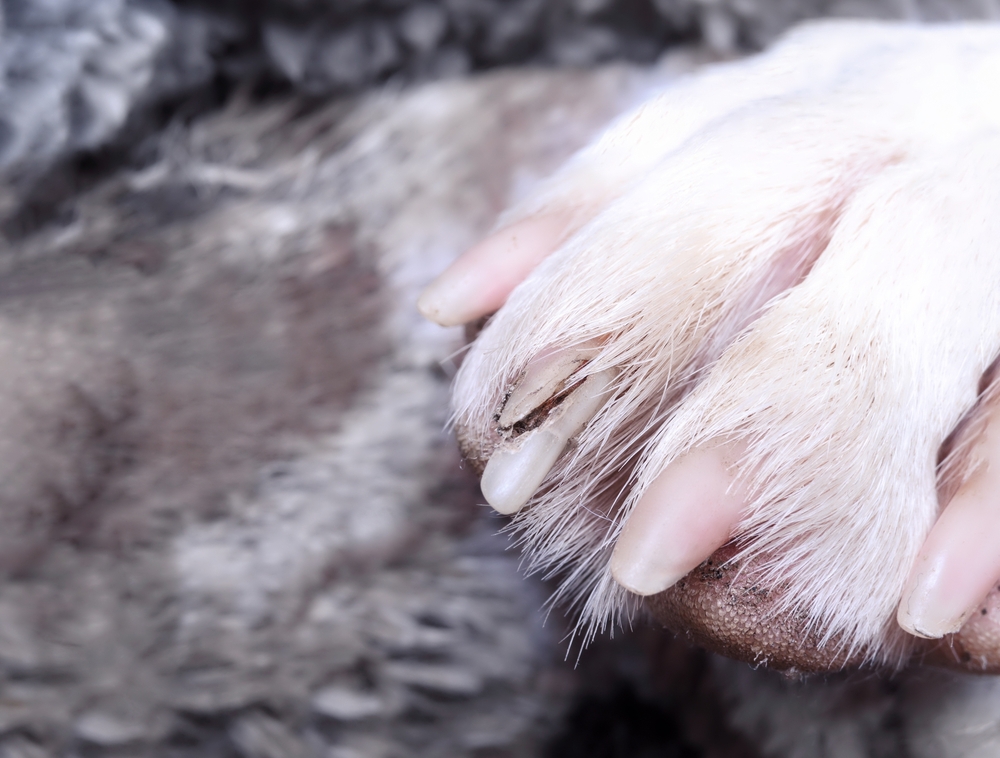
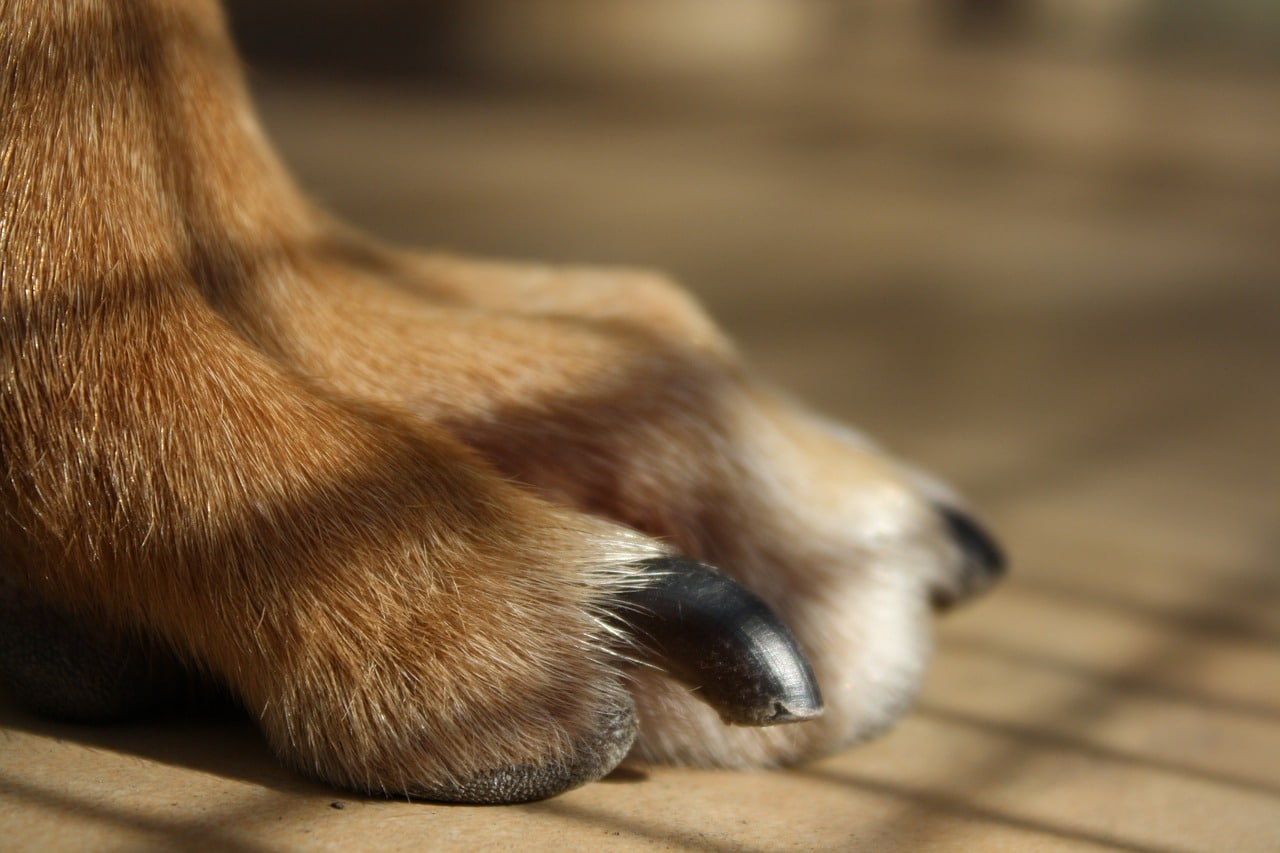
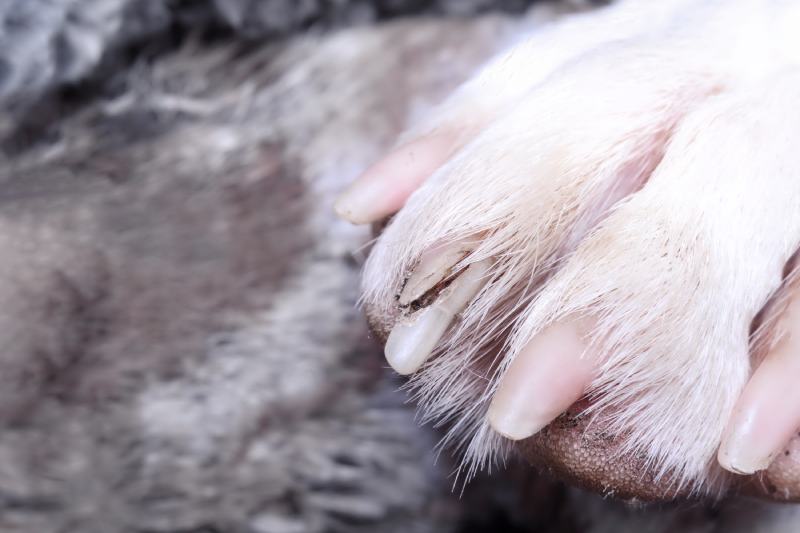
For most dog nails, the shell of the nail will be firm and smooth and will not flake off pieces when rubbed. Regardless of the exact location of the break, the first hint of a broken nail is any visible crack, divot, or partially attached piece of nail. If the break only involves the shell of the nail, this may be all you see.
More commonly, if a dog breaks a nail, it will affect the quick of the nail. For these breaks, you may notice bleeding, limping, refusal to walk on a limb, excessive licking of a toe or foot, crying, aggression, unwillingness to eat, hiding, or any other common stress behaviors for your dog.
When you check the affected foot, you will be looking for a nail that may be shorter than the rest, have a piece of nail attached but hanging or jutting out, a fleshy, softer appearing tissue missing the hard shell almost entirely, a crack running up the nail (this may be easier to feel than see), or a nail that appears to be sitting sideways.
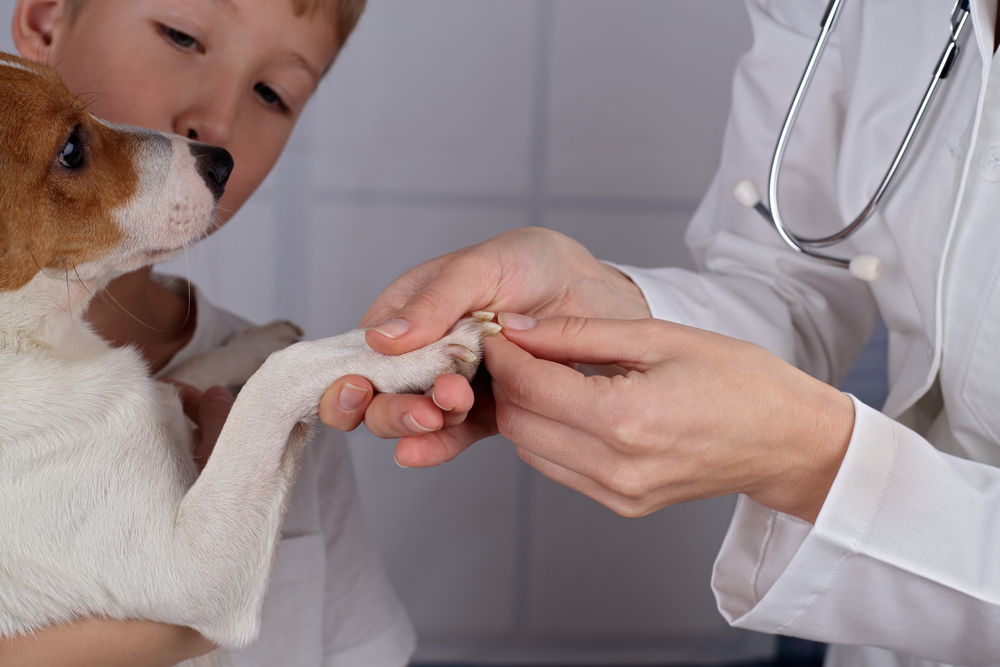
Be careful when examining this nail as it hurts quite a bit, and your pet may bite when looking at the paw. If they will let you look closely, it is important to identify exactly which nail and where on the nail the break is located if you want to try to fix it.

Before You Begin: What You Will Need to Treat a Broken Nail in a Dog
Now that you have identified a broken nail, if you want to try to fix this from home, you will need to collect some supplies first.
- Nail Clippers: I like this brand for broken nails on dogs of any size. You need the leverage of a full-grip handle and a sharp, high-quality nail-cutting surface.
- Styptic Powder: This is a powder designed to be applied to a bleeding wound to stop bleeding. You can buy Kwik-stop or in a pinch, you can also use corn starch.
- Bathroom Towel
- Muzzle: Treating a broken nail is usually very painful. The safest thing to do, even if your dog is very docile and would never otherwise try to bite, is to place a muzzle for the treatment.
- Hydrogen Peroxide (optional): If you would like to clean up any blood on your dog’s paw after treatment, you will need hydrogen peroxide to get it out of their hair.
- Gauze (optional): If you happen to have gauze this is the best thing to apply to a broken nail immediately after treatment. You can also use paper towels, tissues, toilet paper, a napkin, or the edge of the bathroom towel.
Step-By-Step Guide on How to Treat a Broken Nail
If you want to try and treat a broken nail at home, what you will need to do is trim the nail above the break. We have step-by-step instructions below on exactly how to do this.
1. Grab a friend.
Trimming a broken nail requires 2–3 people, one to do the trimming, and one or two people to hold and distract your dog depending on their size and temperament.

2. Gather all the supplies listed above.
Find a quiet, enclosed area, a bathroom usually works well if you have the space, bring your supplies here, and keep any other pets out. You will want to lay the towel open on the ground, set aside 1 tbsp of your styptic powder choice, open your nail clippers, and make sure they work and are in good condition, and arrange a few pieces of gauze or alternative paper product at your station if you have it.
3. Sit the dog on the towel and put on their muzzle if you have one.
Have your friend sit with your dog so that they cannot back up and so they can help lift the injured paw for you as needed. This is also when someone can distract them with treats if possible.
4. Carefully identify the broken nail and the highest part of the nail affected by the break.
To fix this break and relieve your dog’s pain, you will need to trim their nail above this break, but you want to be as close to the break as possible. The higher up you cut, the wider the nail is, and therefore the more a cut would bleed and the harder it may be to cut.
If you feel confident that you have identified the broken nail and the highest affected part of the nail, you can collect all your supplies to be an easy, quick hand’s reach.

5. Get ready to cut the nail when 100% ready.
You will place the nail clippers above the spot you want to cut while not touching the nail at all until you are ready to cut, as touching the nail likely hurts your dog. Cutting this nail through the quick is going to hurt. Firmly and quickly cut straight through the nail exactly how you want to trim the nail just at the level required to be above the nail break.
This is a good moment to pause and take a deep breath. Only proceed if you feel fully confident you have identified the break and can cut the nail in one try. If not, the best thing to do is contact your veterinarian about being seen so they can treat the nail themselves.
6. Control any bleeding.
After cutting, immediately press the cloth of choice against the cut. The nail will be bleeding from the flat, cut surface at the tip so do not pinch from the sides, apply it directly to the tip. With whichever hand is easiest, quickly pinch as much styptic powder as you can and then quickly move whatever you applied to the tip of the nail so you can firmly press the styptic powder to the bleeding tip instead.
Your dog will likely react when you cut the nail and may struggle immediately afterward. If you apply something—even a fingertip to the tip of the nail after it is cut—you can hold that paw in your hand to follow their movements until they settle. This toe will no longer hurt at this point, and you should be able to apply the styptic powder with little to no reaction from your dog, the worst is over!
7. Wait 5 minutes with your dog.
Do not allow them to lick their paw or walk around, even better if they do not put it down at all. Monitor for any bleeding and if you see any, tap more styptic powder into the cut surface of the nail. After 5 minutes of no bleeding, they should be ready to move around normally again. It is rare for them to need a bandage or medication at this point.
Give yourself a pat on the back, you did it! If there is any blood on their paw, it is now safe to clean this up with hydrogen peroxide.

8. Monitor the dog’s nail.
Over the next week please check the nail every day for signs of discharge, odor, bleeding, further nail breakage, and/or pain. If you note any of these signs, reach out to your veterinarian for next steps.

Common Reasons a Dog’s Nail Might Break
The most common reason a dog breaks a nail is that it is too long. The temperament and activity level of a pet play a role in how long a nail needs to grow past the quick before it is at higher risk of a break.
If your dog repeatedly breaks their nails or seems more brittle than you expect, the most likely reason for this is related to their nutrition. The keratin in their nails is a protein and they get the proteins they need for healthy nails from their diet.
Inflammation in the nail bed and toe, autoimmune diseases, allergies, ringworm, infections, endocrine disorders, and genetic disorders that affect keratin production are all possible reasons for a dog to have weak nails that are not related to their nutrition. Tumors of the nail bed can also, unfortunately, be the cause.

Final Thoughts
It can be scary cutting your dog’s broken nail the first time. And it will not be fun for the dog either. But you are doing this to help them. However, if you feel hesitation or nervousness, take the dog to the vet. Cutting the nail incorrectly may hurt the dog more and no one wants to do that!
Featured
Expert dog care, straight to your inbox
Vet-reviewed advice, training tips, and the best of Dogster. Free, and you can unsubscribe anytime.
By signing up, you agree to our Terms & Conditions and Privacy & Cookies Policy.
Dr. Maria Zayas DVM (Veterinarian)
Dr. Zayas is based in Colorado with her animal friends - her dogs, cat, and fish. Maria has a strong passion for sharing her extensive knowledge about dogs to as many people as possible. With global travel experience, she prioritizes delivering accurate, informative responses to her clients' inquiries. Specializing in house-call veterinary care, she focuses on allergies, pain management, and tailored solutions for dog health care, stemming from a diverse background in shelter medicine and home health. Dr. Zayas holds a Bachelor's degree from Bryn Mawr College and a Doctor of Veterinary Medicine degree from Ross University School of Veterinary Medicine.
Join the conversation
Ask a question, share your story, or send private feedback.