Gabapentin for Dogs (Vet Answer): Uses & Potential Side Effects

In this article
Gabapentin is an anticonvulsant that is FDA-approved in humans for treating seizures, nerve pain, and restless leg syndrome. Its use in dogs is extra-label (i.e., using a drug in a manner that differs from what is indicated on the label), but it is becoming more commonly utilized as an anticonvulsant, analgesic, and anxiolytic in our canine companions.
With increased use, it is essential to not only understand when gabapentin may be helpful but also be aware of potential side effects that need to be monitored for, as well as situations in which the drug is contraindicated.

What Is Gabapentin?
The most common brand name under which gabapentin is sold is Neurontin®. Other examples include Aclonium®, Gantin®, and Progresse®. In veterinary medicine, gabapentin has been used as an analgesic for managing various types of pain, for preclinical sedation, and as an anticonvulsant.
Gabapentin’s analgesic properties are beneficial in managing neuropathic pain, breakthrough pain (also known as maladaptive pain or a chronic pain state), cancer pain, and osteoarthritis. Neuropathic (or nerve) pain originates from a central or peripheral nervous system lesion. While gabapentin can be used as an analgesic, it should not be relied upon for managing pain in an acute setting, for instance, with acute postoperative pain. The reason is that such pain stems from inflammatory processes for which gabapentin is ineffective.
Gabapentin can be helpful for preclinical sedation, either alone or in combination with other anxiolytics or sedatives. It can help reduce anxiety and fear-based aggressive behaviors in dogs prone to aggression during veterinary clinic visits.
While not regarded as a first-line anticonvulsant in dogs, it can be helpful in cases with refractory seizures when not responding to more traditional treatments.

How Is Gabapentin Given?
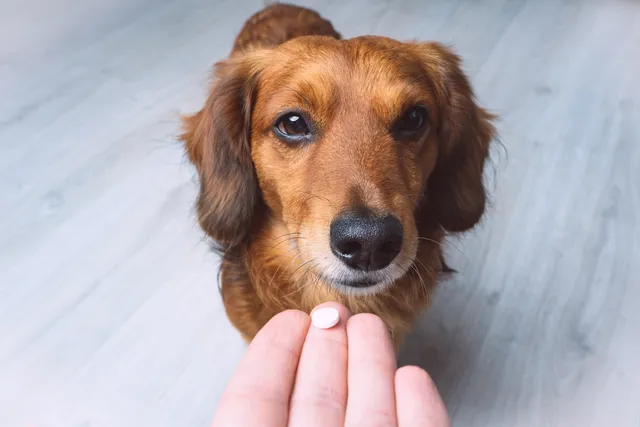
Gabapentin is available in various formulations, namely, capsules, tablets (including extended-release), and as an oral solution, all of which are administered orally. The drug can be administered with or without food. More recently, a compounded transdermal gel has also become available.
The dosage at which gabapentin is administered depends on the desired clinical effect and what condition is being managed. When treating neuropathic pain, speak to your vet about the dosage. Such frequent administration is necessary because not only is gabapentin rapidly absorbed, but it is also rapidly eliminated from the body. It helps maintain minimum target plasma concentrations and is crucial when attempting to achieve control over clinical signs.
Also, given this rapid absorption and elimination, it is not recommended that gabapentin be used as needed. This would not result in adequate plasma concentrations of the drug; therefore, it would not be effective but may still cause side effects.
Utilizing gabapentin for preclinical sedation requires a higher dosage given the evening before a scheduled appointment and then a repeat dose at least 1–2 hours before the appointment. Using such a high dose makes sedation more likely.
Suppose there is a significant concern for potential side effects. In that case, your attending veterinarian may recommend starting at an even lower dose and slowly titrating upwards, increasing the amount every 2–3 days until achieving an established analgesic dose. Such titration allows the patient to adapt and can limit side effects.
What Happens if You Miss a Dose?
The answer to this question is very much dependent on what gabapentin is being used for—management of neuropathic pain versus preclinic sedation. Missing a dose as part of preclinic sedation will likely result in less or poorer control of anxiety associated with a veterinary visit.
When missing a dose for a dog being managed for neuropathic pain, the dog may demonstrate an apparent relapse of clinical signs. However, given that such cases are often managed with several different analgesics, this may not be noticeable. Provided no more than one dose is missed, the dog should continue to be well-controlled as before with the resumption of regular dosing.

Potential Side Effects of Gabapentin
The most reported side effects described by owners administering gabapentin to their dogs are sedation and ataxia (loss of coordination). Sedation is typically transient, with such effects diminishing over time.
Several other side effects, ranging from common to rare, have been described in humans, including breathing problems, urinary incontinence, blurred vision, loose stools, and tremors.
Common Drug Combinations
Gabapentin is often combined with analgesics such as opioids and anti-inflammatories such as non-steroidal anti-inflammatories (NSAIDs) to help alleviate pain in dogs. Many of these combinations are effective in improving pain control.
Gabapentin is synergistic with NSAIDs (e.g., carprofen), meaning that using the two drugs in combination can enhance the effects of the other and, in so doing, reduce the dosage required to achieve desired results. A reduced dosage may also translate to a reduced likelihood of side effects.
Another common combination is using gabapentin with trazodone. This pairing is safe and useful, particularly in patients with significant anxiety requiring increased support before a scheduled veterinary visit.
It is not recommended to combine gabapentin with CBD oil, given that this drug can already cause sedation, which would be exacerbated by using it with gabapentin.

Frequently Asked Questions (FAQ)
Is It Safe to Use All Formulations of Gabapentin in Dogs?
No. The oral solution of gabapentin contains xylitol, which is toxic to dogs and should not be used. There is also no current research to support the use of extended-release tablets in dogs. Studies are required to assess the efficacy of these in dogs and the potential for side effects.
If you suspect your dog is in pain, we suggest you speak to a vet to see if there’s anything causing it.
When Is It Contraindicated to Use Gabapentin in Dogs?
Because gabapentin is predominantly excreted by the kidneys, dogs with kidney disease should not be treated with gabapentin. These patients may experience altered drug metabolism and, as a result, increased side effects (e.g., sedation and low blood pressure).
Another potential contraindication is dogs with pelvic-end weakness. As gabapentin is known to cause ataxia, using this drug in such animals will not only exacerbate their already existing clinical signs but may also decrease their ability to ambulate without assistance.
Lastly, because gabapentin also undergoes some liver metabolism, it should be used with caution in dogs with liver disease.
Which Is the More Effective Analgesic in Dogs—Gabapentin or Tramadol?
Recent research suggests that tramadol is ineffective in controlling pain associated with osteoarthritis in dogs. Thus, gabapentin appears to be the better choice, particularly in a dog with osteoarthritis that has a neuropathic pain component.

Conclusion
While gabapentin is becoming increasingly popular in veterinary medicine, it is crucial to understand what it can be used for and when it should be avoided. Its uses include analgesia (with specific types of pain), preclinic sedation, and anticonvulsant therapy.
It should be avoided in dogs with underlying kidney disease where drug metabolism and excretion would be impaired and side effects more likely. Gabapentin should not be utilized to treat acute postoperative pain, as it is ineffective in managing inflammation. Also, use with caution in dogs with liver disease.
Side effects typically include sedation and loss of coordination. These can be minimized by starting at a lower dose and slowly titrating upwards to allow the dog to adapt to the medication.
Sources
Featured Image Credit: Lindsay Helms, Shutterstock
Expert dog care, straight to your inbox
Vet-reviewed advice, training tips, and the best of Dogster. Free, and you can unsubscribe anytime.
By signing up, you agree to our Terms & Conditions and Privacy & Cookies Policy.
Dr. Matt Kopke BVSc (Veterinarian)
Dr. Kopke graduated from the University of Pretoria, South Africa, with a BSc in veterinary biology in 2009, a BVSc in 2013, and a BVSc (Honours) in small animal internal medicine and diagnostic imaging. in 2016. In 2014, he completed a small animal rotating internship at Onderstepoort Veterinary Academic Hospital (University of Pretoria), followed by a small animal internal medicine internship in 2015. From 2016 to 2017, Matt worked as an emergency veterinarian at Bryanston Veterinary Hospital. In 2017, he moved to New Zealand to begin a small animal internal medicine residency at Massey University, which he completed in 2020. Matt then joined the Veterinary Nutrition Group, providing remote consultancy in internal medicine and nutrition. In 2022, he became a Diplomate of the American College of Veterinary Internal Medicine in Small Animal Internal Medicine. Matt's professional interests include common feline gastroenterology conditions, nutritional management of pancreatitis, immune-mediated diseases, and the various ‘zebra’ cases that he attracts. In his spare time, Matt enjoys drinking coffee, watching horror movies, writing, drawing, and running.
Join the conversation
Ask a question, share your story, or send private feedback.