My Dog Is Losing Hair on Their Nose, What's Wrong? (Vet Answer)

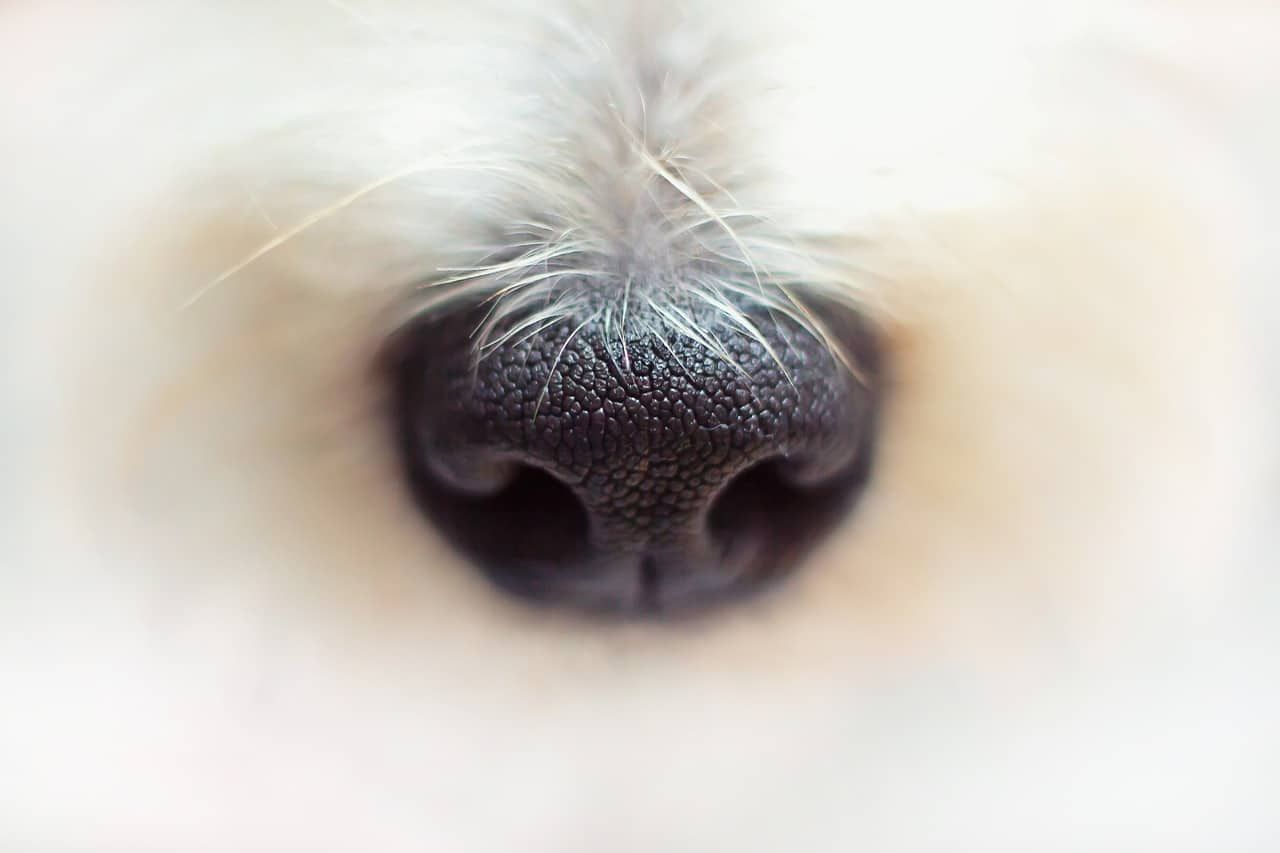
A dog’s nose is arguably their most important sensory organ. Even if they can’t see or hear, they can always follow their nose to food, water, and safety, although many of our dogs also seem to have a nose for finding trouble! Given how vital they are, if we notice something amiss with our dog’s nose, we’ll want to get to the bottom of it quickly. One thing that can affect the muzzle is hair loss, and this can happen for a number of reasons.
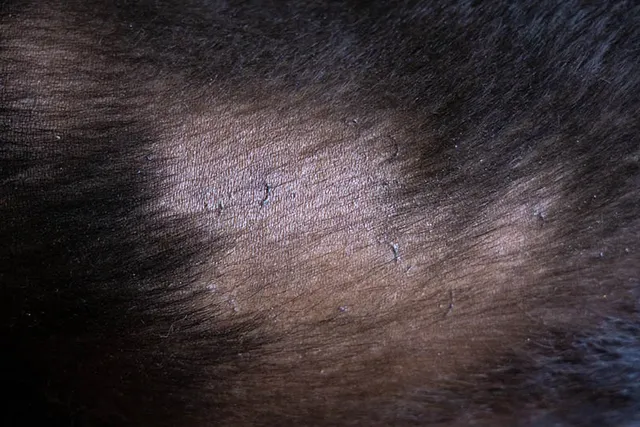
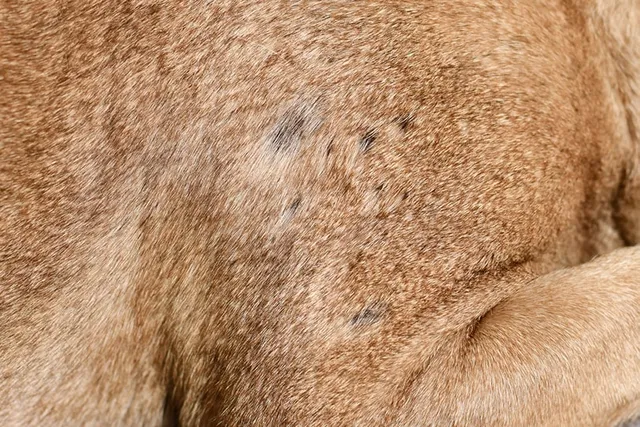
Of course, the nose itself, also known as the nasal planum, is hairless, but, with the exception of the hairless breeds, the skin of the muzzle should be covered in hair. When dogs start to lose hair around their nose, it is usually over the top of the muzzle. There may also be inflammation, infection, or bleeding involved, or your dog may show no signs of irritation at all. Even if your dog is showing no signs of discomfort, any sudden hair loss should be investigated by your vet to ensure that this baldness isn’t a sign of something more serious going on.
Let’s take a look at the most common reasons for a dog to lose hair on their nose, as well as what might need to be done to treat it.

The 6 Causes of Hair Loss on the Muzzle
1. Trauma/Friction
If your dog spends a fair amount of time with their nose under a fence or poking through the bars of a crate, the constant rubbing of the bridge of their nose will start to wear away the hair. In cases like this, you may occasionally notice scratches, scabs, or bleeding, but often, it is a gradual process, leading to the skin on top of the muzzle becoming traumatized, inhibiting hair growth.
Although this isn’t a sign of illness, it is something that should be addressed. If nosing under a fence is the issue, do a perimeter check and block any areas where your dog can poke their curious nose. Some people have made adaptations to their fences to allow their dogs to investigate the outside world without sticking their snoot under the fence. If your dog is wearing a bald patch on their muzzle by sticking their nose through the bars of a crate, you may need to reconsider how much time they are spending there.
2. Pemphigus Foliaceus
Pemphigus foliaceus (PF) is the most common autoimmune condition in dogs. It occurs when the body’s own antibodies attack the molecules that allow keratinocytes to stick to each other. This results in pustules, erosions, ulceration, and depigmentation of the muzzle and nasal planum, the inner part of the ears, and the footpads, which can be quite distressing and painful. The Chow Chow and Akita are the most commonly affected, as well as the Cocker Spaniel, Doberman, Dachshund, Collie, and Shar Pei. Even cats and humans can be affected by this condition.
Treatment of PF involves the use of medications to suppress the immune system (immunosuppressive drugs), with the success of treatment often being limited by how aggressive this therapy can be. The doses needed to cure the condition will usually result in too many damaging side effects, so there is usually a combination of immunosuppressive medications, antibiotics (if needed), and topical preparations used in the management of this disease.

3. Collie Nose
“Collie nose” refers to another auto-immune condition called discoid lupus erythematosus (DLE). As the colloquial name suggests, it is most often seen in Collies, but other breeds, such as the German Shepherd and Siberian Husky, can also be affected. The nose is the main area affected, but lesions can also appear around the eyes, ears, foot pads, and anus. The lesions caused by DLE are also stimulated by UV light.
You may have heard the term “lupus” in relation to a human health condition. This is a more serious but related condition known as systemic lupus erythematosus (SLE), which can affect multiple organ systems, whereas DLE is restricted to the skin, almost exclusively the nasal planum, and is relatively benign.
Treatment consists of a combination of antibiotic and immunosuppressive medications, as well as limiting exposure to sunlight and using moisturizing products with sun protection formulated for dogs.
4. Hyperkeratosis
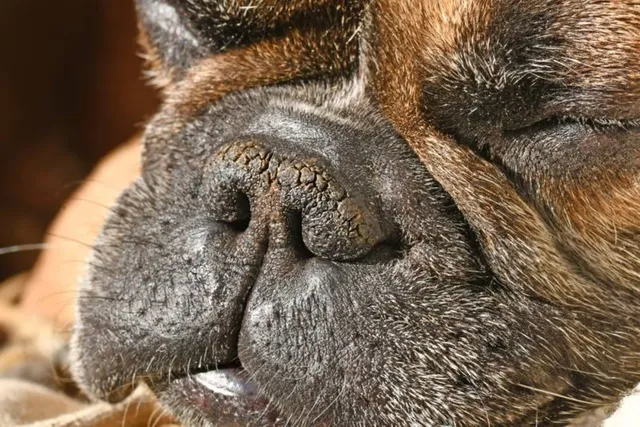
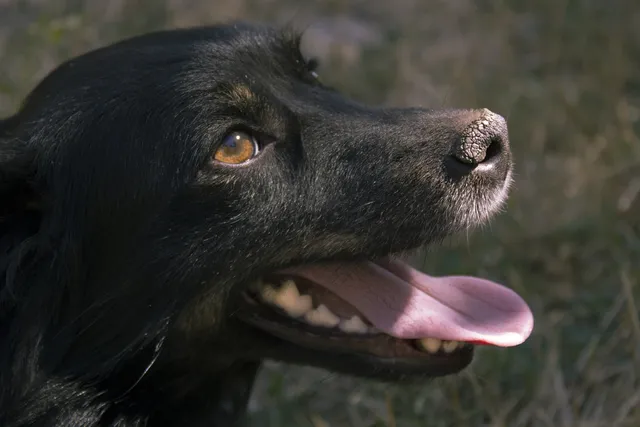
Thickening or overproduction of keratinocytes (the outermost layer of the skin) forms dry, peeling, thickened skin over the nasal planum. There are two major congenital (inherited) forms of this condition:
Nasal parakeratosis of Labrador Retrievers is an incurable condition that affects the nasal planum from a relatively young age. It can be managed with topical treatments like petroleum jelly, but secondary infections can occur. Genetic testing is available to detect this condition and is recommended for Labrador breeders.
Nasodigital hyperkeratosis can affect the nose and foot pads and is most common in Cocker Spaniels, Boxers, and Bulldogs. This overgrowth and accumulation of excess keratin can lead to painful lesions and ulceration but will generally respond well to surgical debulking and softening agents/balms.

5. Mucocutaneous Pyoderma
Caused by a bacterial infection, this condition can lead to painful, crusting, or erosive lesions on the nasal planum, skin folds, and lips. The lesions are usually bilateral (on both sides) but can be unilateral and are usually due to secondary infections associated with allergic hypersensitivity reactions (e.g., allergic rhinitis) or underlying endocrine (hormone) conditions like Cushing’s Disease.
Treatment involves using antibiotics to treat the infection, as well as diagnosing and treating any underlying disease.
6. Fungal Infections
These can either be superficial or deep mycotic infections. Superficial fungal infections appear as peeling, depigmented areas, which can mimic the signs of pemphigus foliaceus but usually respond well to systemic antifungal treatments.
Deep fungal infections, such as blastomycosis or histoplasmosis, can affect different parts of the body. If the nose is affected, there is a high chance that fungal spores will also invade the sinuses, and infection can spread to the lungs and other tissues. If diagnosed early and treated aggressively, dogs can recover. However, it is common for the infection to have traveled deeper into the body by the time treatment has started, in which case the chance of recovery reduces significantly.
Treatment of fungal infections often requires the use of oral antifungal preparations given for a period of at least 6 weeks, with treatment periods of 4-6 months not uncommon.

If you are concerned about the health and well-being of your pet, seek veterinary advice for the best course of action.

Summing Up
If you’ve noticed that your dog is losing hair on their muzzle, it’s worth taking a look at their daily habits to see if they might be poking that nose somewhere they shouldn’t. If that’s not the case, it is definitely worth a trip to the vet.
As you can see, there are a number of different conditions that can lead to hair loss in this area, with some more serious than others, but in each case, early diagnosis and treatment are the key to successful treatment or management. This is particularly true in the cases of pemphigus and fungal infections. So even if your canine companion doesn’t seem to be bothered by the situation, a vet checkup is definitely worthwhile, as not all of these diseases will cause irritation at first.
Because sun damage can trigger or exacerbate some of these conditions, make sure you take steps to protect your dog from excessive sun exposure. When the sun is out, protect the snout!
Sources
Featured Image Credit: Foto-Rabe, Unsplash
Expert dog care, straight to your inbox
News, insights, expert advice, and everything dog.

No spam — unsubscribe anytime.
By signing up, you agree to our Terms & Conditions and Privacy & Cookies Policy.
How useful was this post?
Click a star to rate. You can leave written feedback afterwards. (We read all feedback.)
Dr. Karyn Kanowski, BVSc MRCVS (Vet)
Dr. Karyn is originally from Queensland, Australia, and has resided in the UK for the past 10 years. She graduated from The University of Queensland School of Veterinary Science in 2010, and also holds a Bachelor’s degree in Zoology. Karyn is passionate about using experience, evidence, and working with pet owners to provide the best solutions for pets. She also believes in making reliable information about animal health accessible to everyone. 5 cats and 4 dogs let her share their home with her and her husband, and when she is not practising as a veterinary surgeon, she spends her time writing, gardening, and cleaning up pet hair!