Can Dogs Wear Glasses? Our Vet Explains the Benefits of Eyewear

In this article
Maybe you wear glasses, or you just saw a dog walk by with goggles on. You might be wondering if dogs need eyewear. If they do, what are the glasses used for? This article will answer some of the questions you might have about dogs wearing glasses.

Can Dogs Wear Glasses?
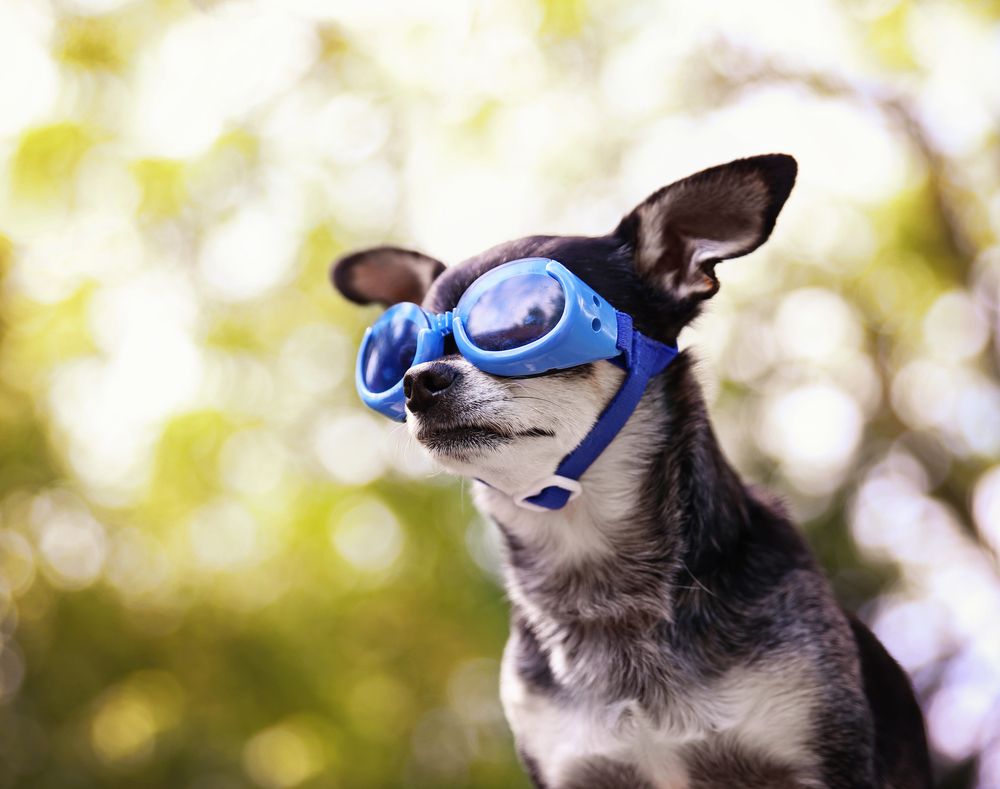
Dogs can wear glasses, but they differ from those you might wear. Instead, eyewear for dogs is usually a set of goggles, or "doggles" as they are also known, or a visor. An adjustable strap holds on the lenses, so you can ensure the goggles fit your dog comfortably and won't readily come off.
Sometimes, contact lenses are utilized in veterinary medicine. These aren't for altering vision but usually act as a protective barrier over the cornea. Typically, only veterinary ophthalmologists apply these lenses.

Reducing Exposure to UV Light
Some dogs have conditions that can be exacerbated by UV light. Sunglasses reduce sunlight exposure in people, decreasing the likelihood of cataract formation. We don't usually need to worry about that for our pups, who tend to develop cataracts secondary to genetics or health issues like diabetes.
Although you don't need to worry about cataracts for many pets, some dogs do have serious issues that can lead to vision loss. One condition is pannus. Pannus, or chronic superficial keratitis, is hereditary in several dog breeds, such as German Shepherds. If not treated, an opaque film develops and covers the eyes, eventually leading to vision loss. Sunlight exposure can worsen the issue.
If you live in an area with heavy sun exposure, your dog's prognosis may be poorer than that of a dog in lower-light areas. While standard treatment involves topical steroid treatment, protecting your dog's eyes from UV light may help.
Protecting Their Eyes From Irritants or Trauma
Dog goggles or visors are great for helping protect your dog's eyes from injuries or irritants. Some dogs are at a higher risk for certain injuries and may benefit from goggles, namely brachycephalic breeds, including:
These dogs are more at risk for eye issues because their ocular orbits tend to be shallow, increasing the risk for trauma. Brachycephalic dogs also aren't always able to fully close their eyes, making it hard to protect the center of their cornea just by blinking.
Some dogs perform activities that increase their risk for eye trauma, such as sticking their heads out a car window (which is generally not a good idea). Wearing goggles does help prevent small things from damaging the eyes while your pup's head is out the window.
Working dogs, such as search and rescue dogs, may also benefit from goggles. These dogs walk and run through uneven ground and dangerous terrain. Depending on the area, anything from branches to hazardous chemicals could injure your dog's eyes.

Vision Correction
Some companies have investigated using corrective lenses to improve dogs' vision. One example is a dog that had cataracts removed surgically but could not have artificial lenses implanted. These dogs tend to be very farsighted, so using goggles might help.
Conclusion
If your dog has eye issues, your veterinary ophthalmologist might recommend goggles to help protect its remaining vision. These lenses can reduce your dog's exposure to UV light and help protect its eyes from trauma.
Sources
Featured Image Credit: Annette Shaff, Shutterstock
Expert dog care, straight to your inbox
News, insights, expert advice, and everything dog.

No spam — unsubscribe anytime.
By signing up, you agree to our Terms & Conditions and Privacy & Cookies Policy.
How useful was this post?
Click a star to rate. You can leave written feedback afterwards. (We read all feedback.)
Dr. Samantha Devine DVM (Veterinarian)
Dr. Samantha Devine is a practicing veterinarian who enjoys caring for animals and sharing her knowledge with pet owners. Preventative care, ranging from nutrition to vaccination, is her specialty and passion!
With over 12 years of veterinary experience, Dr. Devine has extensive knowledge to share about small animal medicine, horses, aquatic species, and even zoo animals. She has also been writing for online pet sites for most of that time.