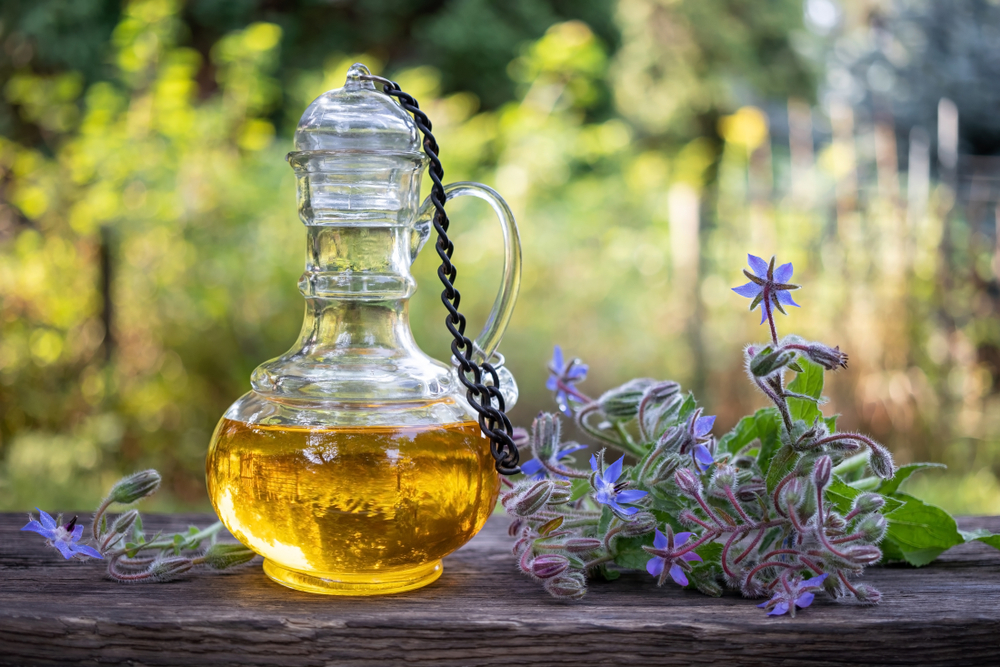
Borage oil is a nutritional supplement that is derived from the seeds of the Borage plant. It has become increasingly popular as a natural supplement for humans and more recently animals. It is rich in a type of omega-6 fatty acid called gamma-linolenic acid. It is thought to have benefits such as improved coat condition and skin health, reduction of inflammation, and promotion of good joint health in dogs.
Are you wondering if these reported benefits work for dogs too? Let’s discuss the potential uses and contraindications for dogs and allow you to make an informed decision on what is best to use for your canine companion.

What is Borage Oil?
Borage oil is an oil made from the seeds of borage plants, also known as Borago Officinalis and comes from the Boraginaceae family. You may have heard of it by other names such as Starflower oil, Tailwort, Echium Amoenum, and Common Bugloss.
It is native to the Mediterranean region; however, it is grown in many other countries. It is an annual herb which means it completes its life cycle in a single growing season. It is widely available as a healthcare product and can be bought in bottles as pure oil or in capsules.

Benefits of Borage Oil for Dogs
Borage oil is often chosen as a supplement due to the fact it contains a high amount of gamma-linolenic acid (GLA). This is often called the hidden healthy fat. GLA is a type of omega-6 fatty acid. It is thought to be able to reduce inflammation and help in the management of certain skin conditions such as dermatitis. It has also been suggested as a natural treatment for arthritis.
In general, fats are crucial for a variety of different things in human and dog bodies, such as the supply and storage of energy, regulation of hormone levels, vitamin absorption, and regulation of hormones.
Omega 6 fatty acids have a unique role to play. They are important for the normal development and growth of skin, bone, and hair.
- Improved coat and skin health: Owners have reported healthier, shiny coats. Some have reported an improvement in dry and itchy skin. Some dogs suffering from conditions such as dermatitis have seen an improvement after starting borage oil.
- Reduction of inflammation: It is believed that GLA has anti-inflammatory properties that can help to manage inflammatory disorders such as arthritis.
- Promote good joint health: By reducing inflammation, it is believed that borage oil can help in the maintenance of healthy joints.

Potential Problems of Using Borage Oil for Dogs
Despite the benefits listed above, some safety concerns need to be considered before using Borage oil for your dog.
If you suspect your pet is suffering from any of the following potential problems, we suggest you speak to a vet.
If you need to speak with a vet but can't get to one, head over to PangoVet. It's our online service where you can talk to a vet online and get the advice you need for your pet — all at an affordable price!

Pyrrolizidine alkaloids
Lots of borage plant species contain pyrrolizidine alkaloids. These are naturally occurring alkaloids that are well known for being hepatotoxic and genotoxic and can cause neurological damage to both humans and animals. Most manufacturers of borage oil ensure they remove pyrrolizidine alkaloids, and they will be certified as pyrrolizidine alkaloid-free, although there may still be a risk of residues left behind that can affect your dog.

Limited research
The current research on the effectiveness of borage oil for dogs is very limited. The studies available only include a small number of dogs. There are some studies available that hint at the potential benefits of GLA1 in borage oil. This is mainly for inflammatory diseases and skin conditions. None of them are conclusive and can be confidently extrapolated to the wider dog population.
To confirm the safety and efficacy of borage oil, more research is required. A larger trial would be necessary to confirm benefits for specific illnesses or health problems in the dog.
Side effects
As with any drug or supplement, there are side effects. With borage oil, commonly reported side effects can include gastrointestinal upset such as acute onset vomiting, and diarrhea. It can also cause excess gas. Dogs that have a history of seizure activity should not be given any supplements that contain GLA. This is because they are believed to lower the seizure threshold and can also interact negatively with anti-seizure medication.
GLA is also thought to potentially slow down blood clotting. Dogs that have any sort of issues with blood clotting, or bleeding disorders in general, or are on medication that may affect the ability of the blood to clot should not be given any supplements with GLA such as borage oil.
Difficulty dosing
The exact dose or dose range of borage oil for dogs is not yet known. More research is required to determine a safe dose. The appropriate dose can vary depending on your dog’s age, size, breed, and general health status.
Delayed onset of action
Administration of supplements with GLAs such as borage oil will not provide rapid results. It is advised to wait at least 8 weeks before assessing any changes as it can take a long time to build up in your dog’s system to have the desired effect. Depending on why the borage oil has been chosen for use, for example, to relieve pain from arthritis, this may not be an appropriate time scale.
It would not be fair to leave a dog in pain for 8 weeks, so an alternative therapy must be implemented to ensure the dog is as comfortable as possible.


Are There Any Alternatives to Borage Oil for Dogs?
Lots of owners find themselves enticed by the potential benefits but put off by the risk related to the administration of borage oil. Some alternatives offer similar benefits for your dog’s health without the same side effects and risks associated with borage oil.
Evening primrose oil
This is another oil that provides a good source of GLA. Evening primrose oil can help with the maintenance of a healthy coat and skin. It is thought to play a useful role in maintaining normal hormone balance and it may reduce inflammation and support joint health. In general, it is well tolerated by dogs.

Blackcurrant seed oil
This alternative oil is another good source of GLA. It also contains high amounts of omega-3 fatty acids. It is thought to be helpful to soothe sensitive or dry skin and support healthy joints and the functioning of a healthy immune system.
Fish oils
Fish oils do not contain as much GLA as borage oil, however, they do contain high amounts of omega-3 fatty acids called EPA and DHA. These are important for coat and skin health as well as good joint health. They also help with brain function.

Flaxseed oil
Flaxseed oil is a natural source of alpha-linolenic acid. The body can convert this to GLA. Flaxseed is also thought to improve skin and coat conditions and aid in the reduction of inflammation.
Balanced diet
Arguably, if you are feeding your dog a complete and balanced diet, you should be providing them with essential fatty acids from natural sources such as oily fish. There may not be a requirement to use supplements. This can be a much safer approach. Your vet will be able to advise you on what sort of diet would be suitable for your dog.
GLA is not the only fatty acid your dog requires, but it is a useful one. Luckily there are plenty of different sources.
If you are looking to improve your pup’s health, we recommend speaking with a professional.
Conclusion
Due to the lack of research on the usage of Borage oil for dogs, (including a safe dosage, as well as the risk of pyrrolizidine alkaloids exposure) use in dogs is not recommended. If owners would like to use borage oil, it should be used with extreme caution. Only borage oil that is certified as pyrrolizidine alkaloid-free should be considered. Ideally, the oil chosen should be specifically made for dogs, not humans.
If your vet agrees with you using Borage oil, start with a low dosage and gradually increase if required. Monitor your dog closely for signs of adverse reactions and stop immediately if you notice any.
Before starting any new supplements, you should always consult your vet to discuss changes you plan to make. Your vet will be able to advise you on the individual needs of your dog and any health issues that may mean certain supplements are not appropriate.
Featured Image Credit: Madeleine Steinbach, Shutterstock