Will CBD Calm My Hyper Dog? Vet-Verified Facts & FAQ


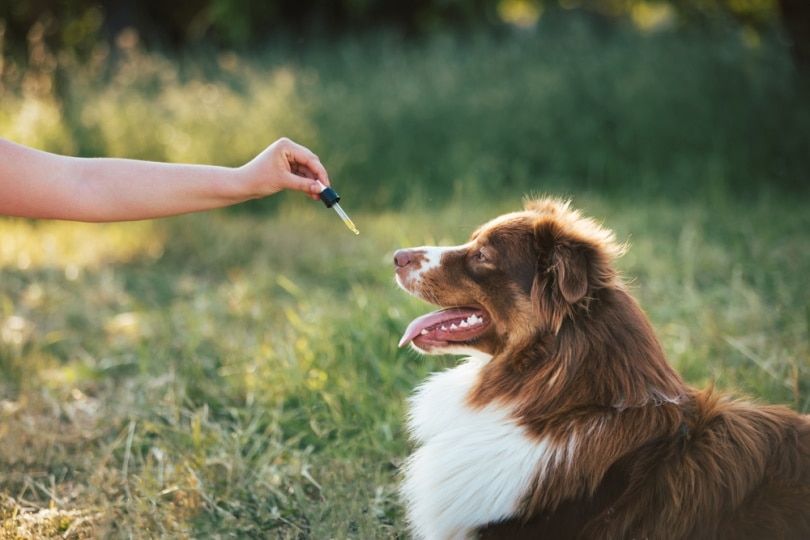
We’ve all seen hilarious videos online of dogs running wildly back and forth throughout their home or doing laps around their yard at superhuman speed. It’s funny to watch, but it can be distressing to own a dog with a seemingly infinite source of energy.
Some dogs naturally have more energy than others, but if your dog seems constantly hyperactive, you may start inquiring into ways to better manage that behavior, including options like cannabidiol (CBD). CBD has been studied in dogs for certain conditions such as pain, anxiety, and seizures, but evidence regarding its effect on hyperactivity is limited and not well established. Do not give your dog CBD without consulting with your vet, particularly if they are taking other medications.
Keep reading to learn everything you need to know about CBD and your hyperactive pup.

What Is CBD, Anyway?
Cannabidiol (CBD) is a naturally occurring compound found in cannabis and hemp plants. CBD is generally considered non-intoxicating and is widely studied for its potential therapeutic effects.1
When formulated for pets, CBD products are typically designed to contain only trace or non-detectable amounts of delta-9-tetrahydrocannabinol (THC), the compound responsible for the psychoactive “high.” THC content can vary depending on product quality and regulation, so verified testing is important. However, there are no licensed veterinary CBD products available on the market due to a lack of appropriate testing, which is why using such products should always be done under veterinary guidance.

Why Is My Dog Hyperactive?
A clinical diagnosis of extreme hyperactivity in dogs is rare and is sometimes referred to in older veterinary literature as hyperkinesis in dogs. It is typically described in young adult dogs showing persistent and excessive activity that does not improve with training or socialization. It is generally difficult to diagnose in puppies, as high energy levels are often normal during development.
Your pup may have poor impulse control, anxiety, a short attention span, or random energy bursts. This condition can also be marked by agitation and poor trainability.
In addition, there may be biological and environmental components to hyperkinesis. Let’s take a closer look at some of the causes of canine hyperactivity.
1. Breed
Dog breeds bred specifically to be highly active, such as those that would work or run all day, may be more susceptible to hyperactivity. Certain breeds simply need more activity in their daily lives and can become restless and “hyper” if they’re not given a way to burn off energy. This may not be a sign of clinical hyperkinesis, then, but rather reflects their natural energy levels and genetic predisposition for activity.

2. Early Socialization
As a puppy grows, they learn from their owners and the dogs they meet and play with what’s expected of them. They develop important skills such as bite inhibition and appropriate play behavior through guidance and experience. If a puppy is not given adequate training and positive experiences during this period, it may contribute to behavioral issues later in life, such as poor impulse control, hyperactivity, or anxiety.
It’s essential to get your puppy around other dogs as soon as possible when they’re quite little. Keep meetups small and intimate to prevent overstimulation. As they grow and become more confident, you can slowly expand their experiences to include a wider range of environments, such as a controlled dog park, always prioritizing safety and positive interactions.
3. Anxiety
Anxiety can present itself in dogs in somewhat similar ways it does for humans. Sometimes dogs with anxiety will exhibit nervousness that can mimic many signs of hyperactivity. They may be more prone to barking outbursts and destructive behaviors. In some cases, aggression can occur, depending on the individual dog and situation.
For some dogs, exercise, social contact, and consistent habits and routine can reduce anxiety levels.

4. Exercise & Diet
Hyperactive dogs may just not be getting the exercise they need. When you give your hyper dog a safe place to run, walk, and play, they can channel some of their pent-up energy into desirable behavior.
Required exercise levels can tie back into your dog’s breed, age, and individual temperament. High-energy breeds such as Siberian Husky and Labrador Retriever may require more structured activity, but all dogs benefit from appropriate physical and mental stimulation to prevent boredom and frustration.
Diet can also play a supporting role in overall health and behavior. Poor-quality nutrition may contribute to general health or energy imbalances, so it’s important to ensure your dog is eating a balanced diet. A vet is the best person to ask for advice regarding the optimal diet depending on your dog's age, breed, and size.
Will CBD Calm My Dog?
Please Note
CBD is not an established treatment for hyperkinesis in dogs, and there is currently no strong evidence that it prevents or treats hyperactive behavior. It interacts with the body’s endocannabinoid system, which plays a role in regulating various physiological processes, but its therapeutic effects in animals are still being studied.
Current research in veterinary medicine is limited, with some small studies suggesting potential benefits in areas such as pain management in dogs with osteoarthritis. However, large scale clinical trials are still lacking, and much of the reported benefit from pet owners remains anecdotal, particularly regarding anxiety or seizure management. Some owners suggest that it can have a calming effect which may help if your dog has excessive energy levels.
It is important to note that while CBD may help calm some dogs, it is not a sedative or a psychoactive and will not cause the same high as marijuana.

How Can I Pick the Right CBD for My Dog?
Do not give your dog a dose of your personal bottle of CBD oil. Even though CBD is non-psychoactive, it’s still important to consult with a veterinarian before giving your pooch a dose to prevent adverse effects or interactions with other medicines. Human-grade CBD may also include traces of THC, which is toxic for pets.
Firstly, you should consult with a veterinarian before deciding to give CBD to your dog. Even if legal restrictions prevent your vet from prescribing it, they can still provide guidance, assess your dog’s overall health, and help rule out underlying medical or behavioral causes such as hyperkinesis in dogs. They may also be able to assess the degree of your dog’s hyperactivity. In some cases, medication might not be needed to assist your dog, and behavioral training and environmental management might be sufficient.
If you proceed with considering CBD products, make sure they have no harmful additives like pesticides or herbicides. It should also contain no THC. It’s important to check for third-party testing results to ensure the product has gone through tests outside of the manufacturing facility. The manufacturer should also provide a certificate that tells consumers exactly how much CBD is in the product.

How Long Will CBD Take to Work?
Every dog will react differently to CBD, but most CBD products begin working within 30 to 90 minutes. Factors such as the product type, dosage, your dog’s metabolism, and whether the CBD was given with food can all influence onset time. However, evidence regarding CBD’s effectiveness for calming or hyperactivity in dogs remains limited.
The duration of CBD is measured in half-lives—the time it takes for the substance to halve in concentration. Depending on the formulation and dose, reported half-life estimates in dogs range from several hours to longer periods, though current research is still limited and somewhat inconsistent. It is also important to note that the noticeable effects of CBD may wear off before the compound has been fully eliminated from the body.
Are There Any Risks Associated With CBD?
While cannabidiol appears to be generally well tolerated in many cats and dogs, there are still potential risks and side effects to consider.
Some studies suggest that when CBD is given at the recommended dose, it can cause an elevation in alkaline phosphatase (a liver value on bloodwork). However, scientists are not sure if this elevation has any significance medically. More research is needed to determine whether these reflect meaningful liver effects or another physiological response.
Some anecdotal reports suggest that dogs can become sleepy after receiving large doses of CBD.
If you have any concerns about CBD, its effectiveness, or if it will interact with any medication your dog is currently on, be sure to speak with a vet. They can provide guidance and dosage suggestions.

Wrapping Up
CBD is an option that some pet owners explore when trying to manage behavioral or anxiety-related concerns in dogs. However, current evidence does not support it as a treatment for hyperactivity or hyperkinesis in dogs, and research into its behavioral effects in dogs remains limited.
If you are considering CBD for your dog, it’s best to consult a veterinarian first. A vet can help evaluate your dog’s behavior, rule out underlying medical or behavioral causes, and determine whether training, environmental changes, or other interventions may be more appropriate.
Sources
Featured Image Credit: 24K-Production, Shutterstock
Expert dog care, straight to your inbox
News, insights, expert advice, and everything dog.

No spam — unsubscribe anytime.
By signing up, you agree to our Terms & Conditions and Privacy & Cookies Policy.
How useful was this post?
Click a star to rate. You can leave written feedback afterwards. (We read all feedback.)
Chantelle is passionate about two things in her life – writing and animals. She grew up on the prairies of Canada surrounded by animals and as an adult, she choose to share her home with five cats, two guinea pigs, and a bearded dragon. Chantelle, her husband, and their child take great pride in being great animal parents- the ones who spend a thousand dollars on wall-mounted cat shelves so that their cats can have an indoor jungle gym all year round. When Chantelle isn’t snuggling her cats on the couch or taking pictures of them being funny, she’s outside exploring in the Rocky Mountains, binging the same shows on Netflix over and over, and reading about whatever random topic pops into her brain.