Get

In Your Inbox

Dogster is reader-supported. When you buy via links on our site, we may earn an affiliate commission at no cost to you. Learn more.

Why Do Dogs Yawn When You Pet Them? 5 Possible Reasons

Share

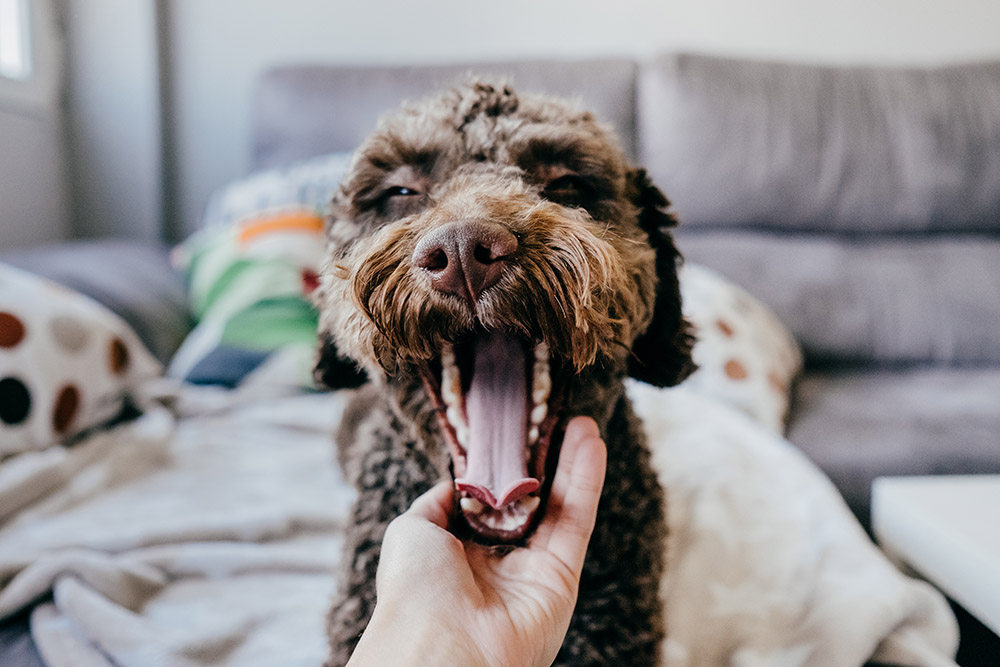
Brown Spanish Water Dog opening her big mouth like yawning and lying on the sofa

Yawning certainly is not something out of the ordinary if you have a dog. However, you may wonder why it seems to occur more often when you pet them. What purpose or, more correctly, purposes does yawning serve? Therein lies the answer to this question.

Think of the many situations where you may yawn. It is both a voluntary and involuntary act. Scientists know it happens across species and animal class lines, making it multifunctional. So, let’s get into some of the most likely reasons your dog yawns when you pet them.

Dogster_Website dividers_v1_Jan 18 2024-03

The 5 Likely Reasons Dogs Yawn When You Pet Them

1. Your Dog Is Tired

Let’s begin with the obvious answer for why your dog is yawning when you pet them. Your dog could simply be tired, and the response might have nothing to do with your actions but the animal’s internal state. Scientists have theorized that yawning increases intracranial circulation, thereby readying your dog for quality time with you.1 It can facilitate the transition from a restful state to an attentive one.

It occurs with the enhanced flow of cerebrospinal fluid in the brain. Intracranial circulation can also modulate levels of an inhibitory neurotransmitter called adenosine. This chemical rises during the course of the day to eventually promote sleep. If your pup was sleepy when you started petting them, they may yawn instinctively to rouse themselves.
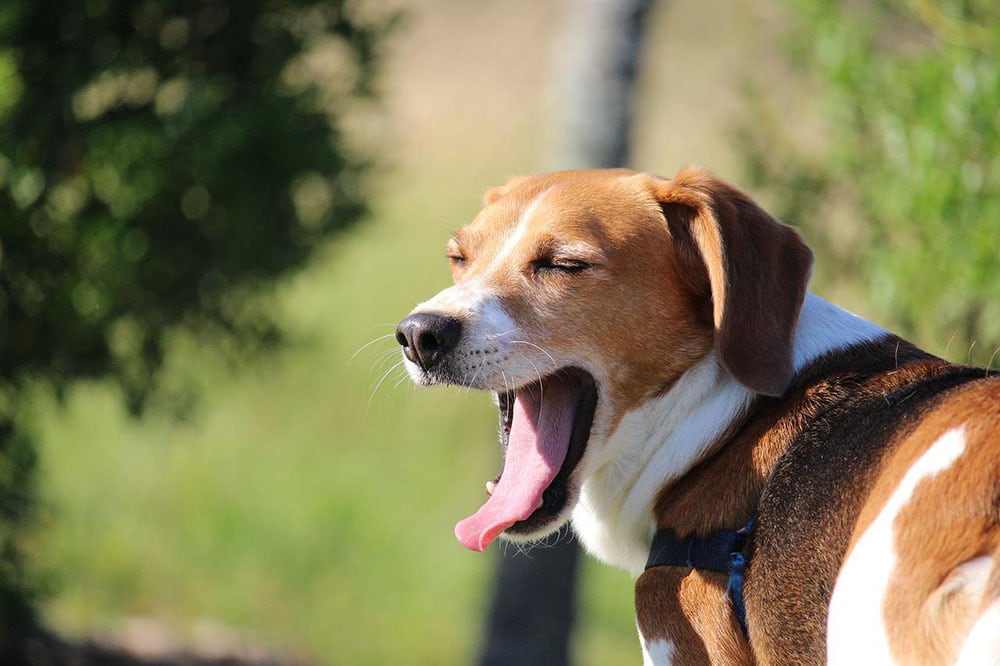
beagle yawning
Image Credit: RogerMayhem, Pixabay

2. They’re Excited

In the same context, your dog may yawn when they’re excited to increase intracranial circulation for a similar reason. Remember that the research points to it being multifunctional. As the excitement ramps up, so too may the degree and frequency of yawning. Other factors may influence it, including your pet’s internal state, the context, and even the ambient environment.

Another function of yawning is the regulation of the animal’s brain temperature. Research on humans has shown that reflexive or contagious yawning decreased when participants held a cold pack to their foreheads while watching a video of people yawning.2 This phenomenon is well-documented in humans, but not so much in dogs, so we can’t know for sure


3. Stress

The spike in intracranial circulation may also serve a calming function. A dog yawning when petted may be trying to settle itself down with this instinctive act. Research has demonstrated a correlation between arousal levels and yawning. It is quantifiable by increases in cortisol, the so-called stress hormone. The same study identified yawning as a response to moderate stress in social settings.3

The context is significant when you apply this information to petting. Your dog will welcome your attention with responses that are non-indicative of stress. A fearful pup may react differently to a stranger or an overly affectionate child. In these cases, yawning may signal a stressed animal perhaps trying to calm itself.

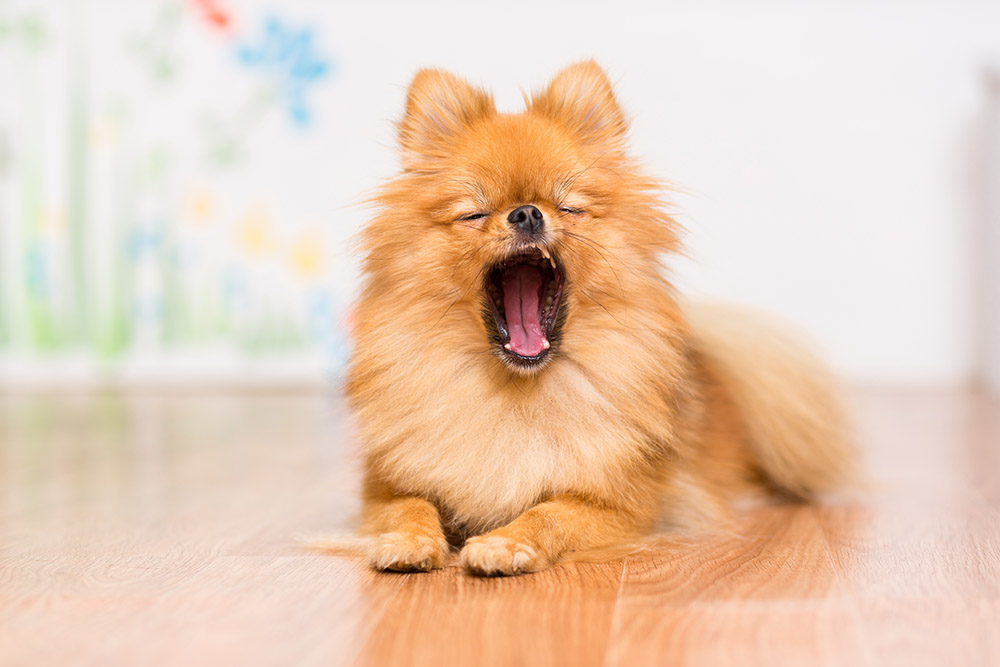
pomeranian dog yawning
Image Credit: Fayzulin Serg, Shutterstock

4. It’s a Neurophysiological Response

The biological reasons behind yawning underscore the fact that it may or may not have anything to do with petting your dog. The animal is simply responding to the circumstances. Yawning also serves to maintain homeostasis or a state of internal stability. It’s a vital way an organism ensures reproductive success and survival.

Remember that dogs still have what we may call primitive instincts. They may act seemingly inappropriately in a modern context, but they also haven’t had much pressure to change some behaviors. Yawning can be one way your dog is trying to maintain the status quo to conserve resources.


5. Yawning Is Canine Body Language

Some research suggests that yawning serves social functions, specifically with empathy. These questions are fiercely debated, with evidence supporting both hypotheses. However, an underlying social element may exist. One study considered the yawning contagion and mimicry between dog-dog, wolf-wolf, and dog-human pairings. Their findings support emotional sharing in these interactions.

Yawning can convey any of the emotions we’ve discussed, including ways to avoid conflict. A dog may be signaling that they are friendly. We must stress the context and its implications in interpreting this behavior. After all, it could also be coincidental.


cute dog sleeping and yawning on bed
Image Credit: eva_blanco, Shutterstock

Dogster divider_v2_NEW_MAY_24_

The How and Why of Canine Yawning

Canine yawning opens two exciting avenues of research. We’ve discussed the concept of yawning contagion. One animal does it, and another observing it does the same thing. You’ve undoubtedly experienced it yourself when a family member yawns, and you respond in kind. It may even occur with people you don’t know.

One study documented this behavior between dogs and humans. Surprisingly, the animals detected the difference between yawning and a similar gesture used as a control. It provides further evidence that our canine companions can recognize our emotions. Interacting with your pet is certainly a positive experience. You may even encourage it by how you talk to your pup.

A team of researchers took this body of evidence to the next level to test the neurophysiological basis for yawning between dogs of different sizes. They hypothesized that a larger animal would have a corresponding longer yawn to support the variations in intracranial circulation based on the brain size. The data also suggest biology trumps the purported social functions.

Dogster_Website dividers_v1_Jan 18 2024-03

Conclusion

Yawning is such a simple act that we may not consider its other implications. Yes, it serves physical functions to maintain homeostasis. However, it can also relieve stress, possibly communicate emotions, and prepare a pet for social interactions with their owner. All these reasons help explain why your pooch might yawn when you pet them. This body language may have helped forge our bond with our dogs.


Featured Image Credit: Lucia Romero, Shutterstock

Want content like this delivered to you?

Sign Up For Our Newsletter

News, insights, expert advice, and everything dog

* By submitting, you agree to our Terms & Conditions and Privacy & Cookies Policy.


How useful was this post?

Click on a star to rate (you can leave written feedback after clicking submit)

Help us improve Dogster for pet parents!

Your feedback really matters.

What did you like about this post? Also how can we improve it?

Join the conversation

Leave a Reply

You’re very welcome to leave a comment or question. Please know that all comments must meet our community guidelines, and your email address will NOT be published. Let’s have a positive and constructive conversation.


Talk With A Vet Online

Peace of mind,
anywhere, anytime

Affordable vet advice

Marigold Shocks Her Owner By Delivering 17 Irish Doodle Puppies in a Single Day

The one question vets hate hearing as they ultrasound expectant canine mothers is “how many puppies are there?” The reason is that, on...

Dogster’s Weekly Photo Contest Winners: Out Adventuring (March 12, 2026)

Every week our team gets the privilege of sorting through our readers photos to choose what dogs will win this weeks contest! See...

Ask Dr. Paola- Help! My Dog Gets Reoccurring UTIs (March 9, 2026)

Welcome to our “Ask Dr. Paola” series, where every Monday we bring expert advice straight from Dr. Paola Cuevas (MVZ) to help our...

DIY Repellents for the Dog Who Thinks Everywhere Is His Toilet

Dog urine and everything nice have a complicated relationship. One thrives, the other suffers, and if you’re reading this, you already know which...

More related

150+ Funny Dog Names: Hilarious Ideas for Dogs, Puppies, & Pets

Are you looking for the perfect funny (or punny) dog name for your new pet? You’ve come to the right place. In this...

Getting a Puppy While Pregnant: Pros, Cons & Vet-Approved Tips

Getting a puppy while pregnant isn’t a big deal—it’s once you have your baby that things become tricky. Puppies are hard work, and...

Boerboel Dog Breed: Info, Pictures, Care & Traits

The Boerboel has a presence that you can’t help but notice. It is a giant breed, with some pups tipping the scales at...

8 Best Dog Treat Pouches in 2026 – Reviews & Top Picks

A dog treat pouch is not just any other bag. You need a pouch you can easily open and close while you are...

Keep reading

How to Cook Salmon for Dogs: Vet-Approved Recipes & What to Know

Most pet parents know salmon is a nutritious treat for their canine friends. However, some owners don’t know the best way to cook salmon for dogs. Salmon should never be offered raw to a dog since salmon poisoning can occur...

raw salmon meat on wooden board

Bug-Based Dog Food: Safe, Healthy, or Just Weird?

You catch your dog mid-crunch in the backyard, mandibles working overtime on something small and wriggling. A cricket. A beetle. You wince, but your dog? They’re in heaven. Turns out, your instinct to be grossed out might be outdated. Insects...

golden retriever dog eating

Gravy Train Dog Food Review 2026: Recalls, Pros & Cons

Review Summary The best way to a dog’s heart is through their stomach, and feeding them nutritional and tasty food is a surefire way to make you their favorite person. Finding a brand that you and your dog likes can...

Dogster_Gravy Train Dog Food Review

9 Best Dog Foods for Toy Poodles in 2026 – Reviews & Top Picks

The Toy Poodle is a small dog breed popular for its boisterous personality and fluffy, curly coat. These Poodles, like other toy breeds, are susceptible to digestive upset and require a diet that’s ideal for their sensitive stomachs. In addition,...

poodle dog eating

10 Best Dog Foods for Huskies to Gain Weight in 2026: Reviews & Top Picks

It can be stressful to have a dog that is underweight, and Huskies are a breed that are particularly prone to this because of their high activity level. It can also be difficult to determine your Husky’s body composition due...

young siberian husky eating

Can Dogs Eat Couscous? Vet-Reviewed Nutrition Facts & FAQ

Couscous has become an increasingly popular grain in people’s diets because it’s delicious, versatile, and healthy. If you make couscous often and have a dog, you might have wondered if this food is safe to give to your pup. After...

Can Dogs Eat Couscous

Can Dogs Eat Chicken Nuggets? Vet Approved Facts & FAQ

We’ve all run by our favorite drive-thru on a busy day to grab food we shouldn’t be eating. There are even times we buy frozen foods at the grocery store so we don’t have to cook when we’re tired. One...

Can Dogs Eat Chicken Nuggets

Can Dogs Eat Bell Peppers? Vet-Verified Nutrition Facts & FAQ

If you have a dog, you know they love meat, which isn’t surprising since they were once predators that hunted other animals to survive. What is surprising is how many other foods the average dog loves, from bananas and cheese...

Can Dogs Eat Bell Peppers

Love Dogs? So Do We! Join the Dogster Community

Stay informed with expert pet care insights delivered straight to your inbox! Discover professional guidance on animal behavior, feeding tips, trusted product picks, and much more.


Sign up for the Dogster Email Newsletter