Get

In Your Inbox

Dogster is reader-supported. When you buy via links on our site, we may earn an affiliate commission at no cost to you. Learn more.

Why Dogs Play Too Rough — And the Simple Fixes That Prevent It From Becoming a Problem

Share

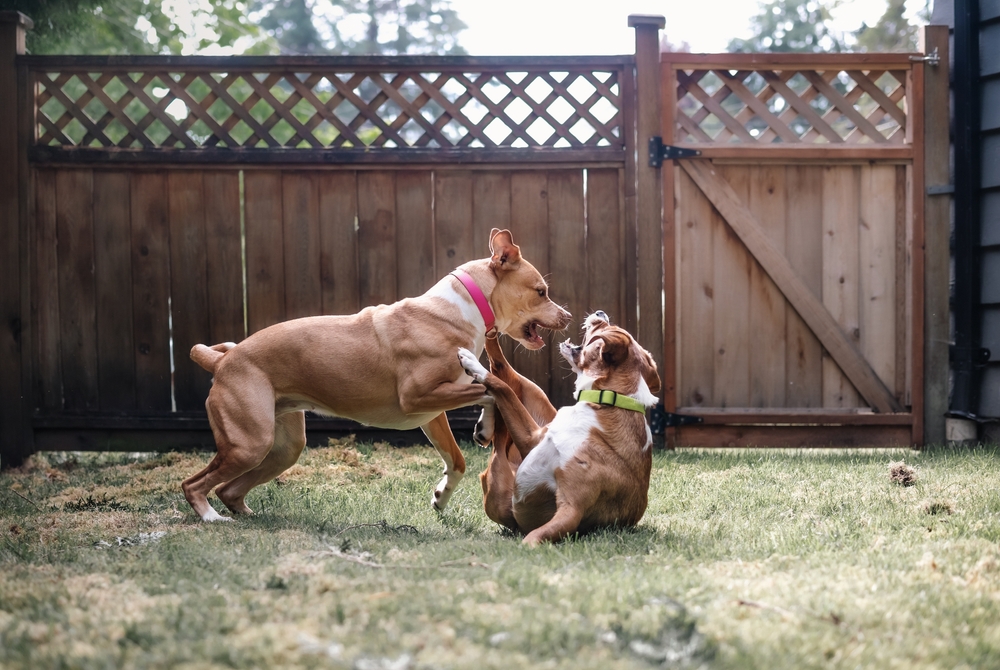
Two dogs playing rough in backyard

A dog that plays too rough with others is a problem that builds fast. One minute, the dogs are running and chasing, the next, someone’s yelping, another owner is looking over with concern, and you’re trying to figure out how to get control of a situation that escalated before you even saw it coming. Understanding why it happens is the first step to actually stopping it.

divider single dog paw oct 2024

It’s Crucial to Understand What You’re Actually Seeing

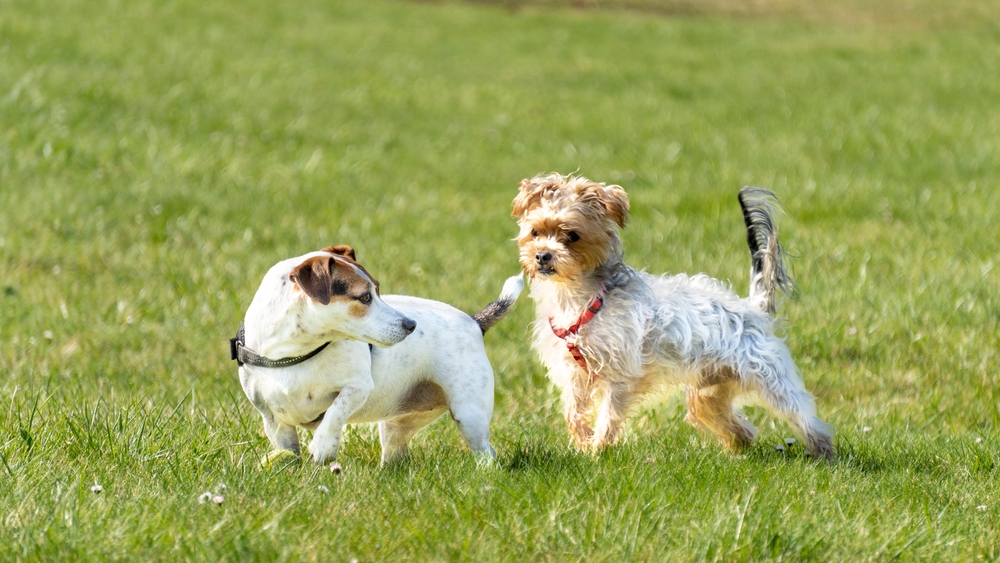
Rough play and aggression are not the same thing, and that distinction matters for how you respond. Dogs that are playing, even boisterously, typically show loose, relaxed body language. Tails wag in wide arcs, mouths hang open, and movements are bouncy and reciprocal. When play starts tipping into something more serious, the body stiffens. The tail may rise and move in tighter, stiffer wags. The mouth closes. Eye contact becomes fixed rather than casual.

Overexcitement is the most common culprit behind rough play. Some dogs simply have a hard time self-regulating once they hit a certain energy level, and without an owner stepping in, the situation escalates. It’s also worth knowing that certain breeds are naturally more boisterous. Terriers, herding breeds, and working breeds tend toward rougher, more persistent play styles. That doesn’t make the behavior acceptable, but it does help explain why some dogs need more active management than others.
two small dogs playing at the park
Image Credit: Photonaturepaysage, Shutterstock

What to Do in the Moment

The most effective immediate tool you have to help prevent your dog from playing too roughly is a reliable recall, a word or phrase your dog is trained to respond to that brings them back to you. Something as simple as “come” or “here” works, as long as it’s been practiced consistently before you need it in a high-distraction environment like a dog park. When your dog responds and returns to you, that break in the action gives both dogs a chance to reset.

If recall isn’t working yet, or if things have escalated too quickly, a distraction can help redirect your dog’s focus. A high-value treat, a favorite toy, or even a sudden sharp noise can interrupt the momentum. Once you have their attention, get a leash on them and create some physical distance between them and the other dog.

For situations that have gone beyond a distraction or recall being enough, a physical barrier helps. An umbrella, for example, could block the dogs’ line of sight, remove the visual trigger, and keep you out of the middle of the situation while you work on separating them.

The Setup Changes That Prevent It in the First Place

Managing rough play reactively is useful, but adjusting how and where your dog plays is what creates lasting change. Large group play environments are harder to supervise and easier for dogs to get overstimulated in. If your dog struggles with self-regulation, smaller, more controlled play situations with one familiar dog are a better starting point than a busy off-leash park.

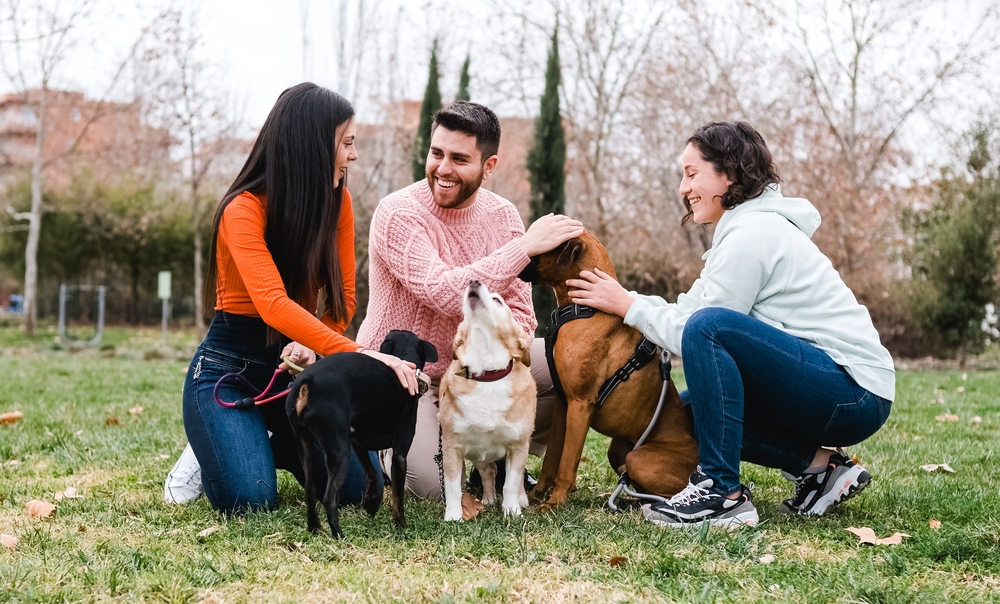
A well-fitted harness is worth having on your dog during play sessions where rough play is a risk. It gives you a secure point of control if you need to physically separate dogs, and it’s safer to grab than a collar during a heated moment. The other dog’s owner should have a leash accessible too, so both dogs can be managed if things escalate.

Keeping group sizes small and choosing play partners thoughtfully takes a lot of the guesswork out of the situation. Not every dog is a good match for every play style, and pairing a highly excitable dog with a calmer one often ends badly for both.

Reinforce What You Want to See

One of the most straightforward things owners overlook is rewarding calm, appropriate play. If your dog is interacting well, settling after being recalled, or checking in with you during a play session, mark that with praise or a treat. Positive reinforcement during play isn’t just for formal training sessions. It builds the habit of your dog looking to you for feedback during high-energy situations, which is exactly what you want.

Teaching a solid recall takes consistent practice, ideally starting at home with minimal distractions and gradually working up to more stimulating environments. If your dog won’t come when called in a quiet setting, they’re not going to come when called at a dog park. Build that foundation first before relying on it in difficult situations.

dog owners meet with their pets at the park
Image Credit: Daniel Megias, Shutterstock

divider dog paws 2 oct 2024

When to Step Back From Play Entirely

If your dog is still vomiting, consistently unable to calm down after being separated, showing stiff or aggressive body language rather than loose playful energy, or if other dogs are regularly showing signs of fear or stress around them, it’s time to pause open play sessions and consult a professional trainer or your vet. Some dogs need more structured behavioral work before group play is appropriate, and that’s not a failure. It’s just an honest assessment of where your dog is and what they need.

Rough play is common. With the right tools, most owners can get it under control before anyone gets hurt.

Featured Image Credit: sophiecat, Shutterstock


Did You Know? 

  • Our brand-new posts are rounded up and included in our weekly emails. Don’t miss out on the latest – sign up for our newsletter below!


Want content like this delivered to you?

Sign Up For Our Newsletter

News, insights, expert advice, and everything dog

* By submitting, you agree to our Terms & Conditions and Privacy & Cookies Policy.


How useful was this post?

Click on a star to rate (you can leave written feedback after clicking submit)

Help us improve Dogster for pet parents!

Your feedback really matters.

What did you like about this post? Also how can we improve it?

Join the conversation

Leave a Reply

You’re very welcome to leave a comment or question. Please know that all comments must meet our community guidelines, and your email address will NOT be published. Let’s have a positive and constructive conversation.


Talk With A Vet Online

Peace of mind,
anywhere, anytime

Affordable vet advice

Ask Dr. Paola- Help! My Dog’s Sleeping Habits Have Changed! (May 18, 2026)

Welcome to our “Ask Dr. Paola” series, where every Monday we bring expert advice straight from Dr. Paola Cuevas (MVZ) to help our...

The Crate Setup Most Dog Owners Get Wrong (And How To Fix It!)

Most people assume that if their dog hates the crate, the crate is the problem. So they try a bigger one, a different...

1,500 Beagles Rescued from Wisconsin Lab Farm – Here’s Where They’re Going

You may remember that a few weeks ago, we reported on a tense situation at Ridglan Farms, Wisconsin, a facility infamous for housing...

Dogster’s Weekly Photo Contest Winners: Window Watchers (May 11, 2026)

Every week our team gets the privilege of sorting through our readers photos to choose what dogs will win this weeks contest! See...

More related

How to Stop Diarrhea in Dogs: 5 Vet-Reviewed Tips

A dog having diarrhea is not a fun experience for anyone. In addition to the mess it can leave around your home and...

Can Dogs Eat Rambutan? Vet-Verified Safety Facts

If your dog is like most, they love to eat. They gobble up their food at every mealtime, go after scraps that fall...

15 Adorable Goldendoodle Haircuts (With Pictures)

Goldendoodles, with their curly locks and endearing expressions, are a joy to style. Their haircuts can range from practical and low-maintenance to stylish...

Giant Schnauzer vs Doberman: The Main Differences (With Pictures)

The Giant Schnauzer and Doberman Pinscher are both from the working group, well-known for their protective instincts. These dogs are loyal, alert, and...

Keep reading

10 Best Dog Foods for Great Danes in 2026 – Reviews & Top Picks

Caring for a Great Dane is an incredible experience but you may have problems locating the ideal food for your massive friend. Numerous companies produce dog food and treats, but fewer meals are designed for extra-large breeds. Great Dane adults...

Great Dane dog

10 Best Dog Foods for Chiweenies in 2026 – Reviews & Top Picks

Chiweenies are extremely small dogs. As you might guess, this is part of their charm. However, feeding these dogs can also be challenging because they are so tiny, and finding food that fits in their mouth is difficult. Finding food...

chiweenie

What Is Salmon Meal in Dog Food? Vet-Approved Facts & FAQ

Salmon meal is a rich, protein-heavy ingredient. Typically, it is created by drying salmon to remove most of its moisture content. This leaves a dried meal that is usually broken down into a powder. Since dry dog foods have little...

smoked salmon outdoors

What Happens to Dogs After Eating Chocolate? Long-Term Health Risks Explained

Few things spark panic faster than catching your dog licking up a chocolate crumb. That moment of “oh no!” hits every pet parent at least once and for good reason. Chocolate is delicious to us but dangerous to dogs. Their...

chocolate bars on white surface

8 Best Foods for Yorkie Puppies In 2026 – Reviews & Top Picks

Yorkies are known as some of the world’s smallest dogs. While they aren’t technically the smallest dogs out there (that award goes to the Chihuahua), they’re small enough that finding food for them can be a real challenge, especially when...

Yorkshire terrier puppy sitting on green summer grass with empty metal bowl

What To Add to Dog Food for Dry Skin: 9 Great Ideas

As dog owners, we understand the frustration of a pet that scratches and licks excessively, but it is much more agonizing for the dog. If you checked for fleas and there are none, your canine friend likely has dry, itchy...

woman feeding dalmatian dog

Can Dogs Eat Vanilla Wafers? Vet-Reviewed Facts & FAQ

Vanilla wafers are not toxic to dogs, although they certainly aren’t the healthiest. Therefore, they aren’t a good option as a treat or snack. If your dog accidentally eats a vanilla wafer, there isn’t much to be concerned about, though....

Can Dogs Eat_vanilla wafers

Can Dogs Eat Garlic Bread? Vet Approved Facts, Safety Guide & FAQ

Maybe you had some yummy garlic bread for supper and your dog stole a bite, or you’re just wondering if you can feed them some. Can dogs eat garlic bread? The short and simple answer is no. Garlic bread is...

Can Dogs Eat Garlic Bread

Love Dogs? So Do We! Join the Dogster Community

Stay informed with expert pet care insights delivered straight to your inbox! Discover professional guidance on animal behavior, feeding tips, trusted product picks, and much more.


Sign up for the Dogster Email Newsletter