What Were Chow Chows Bred For? Vet-Reviewed History of the Chow Chow


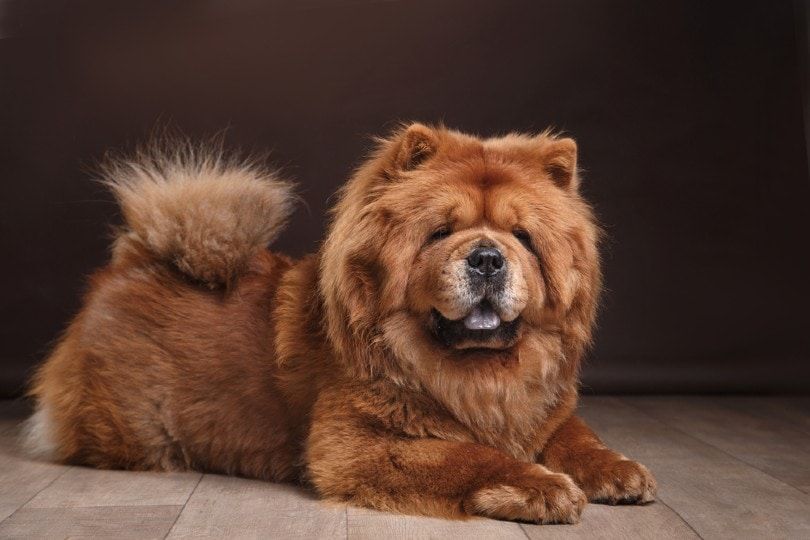
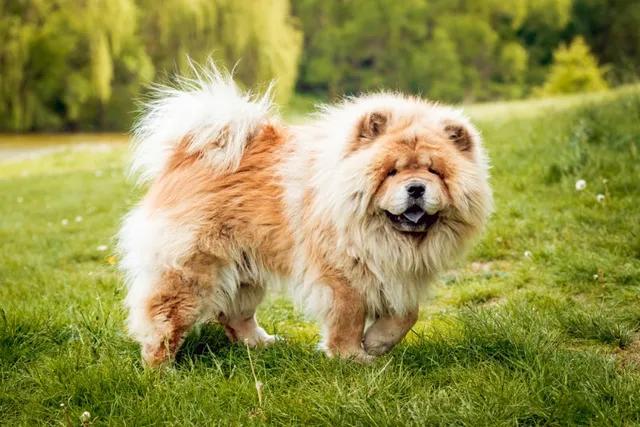
The Chow Chow breed is a fascinating one with their blue tongues, lion-like manes, and scrunched-up faces. Even more fascinating is their history, with one so long that it surpasses many modern dog breeds. The Chow Chow, or "Chow" for short, is a basal breed that originated in China. Chow Chows were bred for several different tasks, such as hunting, sledding, herding, and guarding. Their thick fur has also been used for warmth, and historically, they were sometimes used as a food source. However, with such a long history for this breed and few documents to confirm exactly how they came to be, there are debates about their origin.
If your interest has been sparked, keep reading because we have got a lot more to tell you about Chow Chow's history, what they were bred for, and other fascinating information you have probably never heard before.

Where do Chow Chows Come From?
Some researchers believe the Chow Chow’s ancestral lineage may date back thousands of years, though claims linking the breed directly to the Miocene period are not supported by modern evidence.1 More concrete evidence, such as ancient bas-relief carvings, suggests that Chow-type dogs existed in China around 2,000 years ago and may have been used as hunting dogs.2
Another theory is that the Chow Chow’s ancestors originated in Arctic Asia several thousand years ago before eventually making their way into China. However, the breed’s exact origins remain uncertain.

The Chow Chow Breed Over the Years
206 B.C. to 220 A.D.
Ancient paintings on pottery and ceramic models from the Han Dynasty (206 B.C. to 220 A.D.) show dogs resembling modern Chow Chows. During this time, these dogs appeared somewhat different from today’s breed but shared several recognizable features. They were probably used as guard dogs to watch over property and livestock and may also have been used to guard temples.
Historical accounts suggest that Chow-type dogs were used for hunting and were valued for their strength and bravery.
618 to 906 A.D.
During the Tang Dynasty (618 to 906 A.D.), historical accounts claim that one emperor became especially fond of Chow-type dogs and reportedly kept thousands of them, along with many staff members to care for and hunt with the dogs. While some details may be exaggerated, these dogs were considered highly valued during this era and were sometimes referred to as “Tang Quan” (Dog of the Tang Empire).

The Late 1200s
The next exciting historical reference connected to Chow-type dogs comes from the great explorer Marco Polo, who lived between 1254 and 1324 A.D. He reportedly reached China in 1275 and remained there for about 17 years. During this time, he described working dogs being used to pull sleds and guard or herd livestock in northern regions of Asia. Some historians believe these dogs may have included ancestors of the modern Chow Chow. Marco Polo also reportedly observed dogs being bred for food, a practice that existed in some regions at the time.
The 1700s
The 1700s were a pivotal period for the Chow Chow breed. English sailors started traveling to China and brought back many goods to sell in their own country. In 1781, one of the earliest documented Chow-type dogs was brought to England, helping introduce the breed to Europe. They were kept in the zoo and gained a lot of attention until they were finally bred as house pets.
Interestingly, another reliable piece of documentation relating to Chow Chows was written by Reverend Gilbert White. He wrote a letter to Daines Barrington in the 1780s where he described a Chinese dog resembling the modern Chow Chow, with only a few differences. He also wrote about how the breed was fed rice and sometimes raised for food in China, and used to pull snow sleds, backing up Marco Polo's witness reports.

The 1800s
Things really started to take off in England for the Chow Chow breed during the 1800s, when Queen Victoria reportedly received a Chow-type dog from China in 1865. Royal interest in the breed helped increase its popularity among dog enthusiasts in England.
Historical accounts also mention that Lord Hugh Cecil Lowther, the Earl of Lonsdale, owned a Chinese Chow Chow and introduced the breed to Lady Granville Gordon. She became interested in the breed, imported her own dogs, and helped promote Chow Chow breeding in England. Her daughter later became heavily involved with the breed as well. Eventually, with the increase in their popularity and numbers, the first Chow Chow club was formed in 1895.
The 1900s
The hype around Chow Chows eventually caught the attention of other countries and continents, including North America. President Calvin Coolidge got his hands on two Chow Chows in the 1920s, and they stayed with him in the White House.
Due to all the interest in this breed and its growing popularity in America, the Chow Chow Club of America was formed in the early 1900s, shortly after the breed was recognized by the American Kennel Club in 1903.

Chow Chows Today
Although Chow Chows were once among the more popular breeds in the United States, they are less commonly seen today and typically rank much lower in popularity according to the American Kennel Club.
Chow Chows today are valued as loyal and alert watchdogs. While they can form strong bonds with their families, they are often more reserved than overly affectionate. Historically, they were bred in China for working roles such as guarding and general utility, and they retain strong protective instincts.
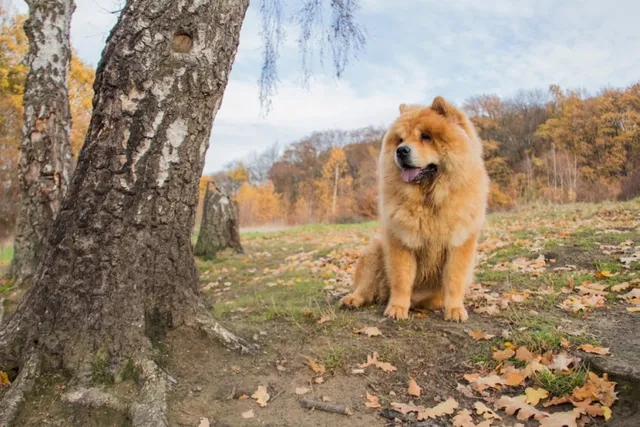
Although often seen with a red coat, they do have a range of colors within the breed, with some coats being black, blue, cinnamon, or cream.
How the Chow Chow Got Its Name
Just like there are multiple theories surrounding Chow Chow's origin, there are several theories surrounding the origin of their name. Although the Chow Chow originates from China, the English name “Chow Chow” likely developed through Western trade and adaptation rather than directly from a single traditional Chinese term.
In Mandarin, the breed is known as Sōngshī quǎn, though historically it has also been referred to by various descriptive names based on its appearance or perceived traits. Some of these include:
Some researchers believe the breed’s name may have roots in Chinese trade language, though the exact origin is uncertain. One theory suggests that English sailors heard a term sounding similar to “Chou” or “Chow” while in China and eventually adapted it into the name “Chow Chow.” Because some dogs in parts of China were historically used as a food source, later writers connected the name to this practice.
The most likely theory is that they were given the name Chow Chow by the English sailors. Throughout the 1800s, the sailors would collect bits and pieces from the Far East to take back to their country to sell. They called these knick-knacks "Chow Chow," and when they brought the Chinese dogs back, the name stuck.

How Chow Chows Have Changed Over the Years
We know from the sculptures that were created during the Han Dynasty from 206 B.C. to 220 A.D. that the dogs resembling modern Chow Chow had a square-ish body, ears that stood straight up, mane-like hair around their neck, and a curled tail that went over its back.
Looking at Reverend Gilbert White's description of this breed written in the 1700s, it resembles the sculptures from the Han Dynasty Era. In Rev. White's letter, he describes them as having "sharp upright ears" and that "their tails are curved high over their backs." He also notes that they have straight hind legs and blue tongues.
Modern Chow Chows are generally larger and often have more pronounced facial wrinkles than earlier descriptions suggest. However, many of the breed’s recognizable characteristics appear to have remained consistent over the centuries.
Conclusion
Chow Chows are one of the few oldest breeds still living in the world today. Their true origin isn't known, but there are several theories. Some of the earliest evidence associated with Chow-type dogs comes from sculptures and paintings created more than 2,000 years ago in China. Since then, they've been described in history by Marco Polo, Reverend Gilbert White, and several other recognized people.
With a history so long, the breed has served many different roles over the centuries. Chow Chows were bred for hunting, guarding, hauling, and herding. They've been alongside warriors in battle and next to royalty. Historically, they were also sometimes bred for their fur and as a food source in some regions of China.
See also:
Featured Image Credit: dezy, Shutterstock
Expert dog care, straight to your inbox
News, insights, expert advice, and everything dog.

No spam — unsubscribe anytime.
By signing up, you agree to our Terms & Conditions and Privacy & Cookies Policy.
How useful was this post?
Click a star to rate. You can leave written feedback afterwards. (We read all feedback.)
Keri-Beth is a freelance writer from South African who specializes in animals. She has grown up with a range of pets, volunteered at many shelters, and is highly passionate about pet care. Currently, Keri-Beth is raising two dogs - Benji, the Golden Cocker Spaniel, and Gracie, the Boerboel. With so much information out there, Keri-Beth has made it her questo to make pet care as easy and straightforward as possible for any pet parent in the world.
In her spare time, Keri-Beth enjoys photography, camping, and spending time with her husband, who is a professional drummer.