How to Dog-Proof a Fence: 10 Vet-Approved Tips


In this article
As a dog owner, you know the joys of having a dog. Dogs are loyal and loving companions that bring joy to your life every day. But if you don't have the right fence, it can be a nightmare trying to keep them in the yard or away from other people's property. Fortunately for those who love their dogs but need to keep them safe and contained when away, there are many ways that you can dog-proof a fence. Here are 10 tips on how to do just that.

The 10 Great Ways to Dog-Proof a Fence
1. Use Chicken Wire

One of the best materials that you can use to dog-proof a fence is chicken wire. It’s strong but not too strong, and it’s easy to install. It's also inexpensive and relatively easy to cut and shape to make it work for your needs, and it doesn't matter if the chicken wire has been used before.
The best part about using chicken wire as a dog-proofing material is that it can’t harm your dog. There are no sharp edges or points that can snag or cut them. However, you must have an existing fence to make use of this method.
Pros
- Easy to install
- Relatively low cost compared to many other options
- No sharp edges to harm your dog
Cons
- Only works when installed with an existing fence
- Can be difficult to install if you’re inexperienced
2. Make an Electric Fence
If you have an area of your yard where you don't want your dog roaming, an electric fence is a good choice. It can be used in any type of yard or environment, and it's easy to install.
First, find the perimeter of the area that needs to be fenced off (this will generally be marked by stakes). Then, dig holes for posts every 16 feet along this perimeter line, filling in with dirt from each hole as you go along. Next, lay out wire around the perimeter, and secure it with plastic ties at intervals of 4 inches apart — you may need more than one roll, depending on how big an area is being enclosed. Finally, attach flags every few feet so you can easily locate problem areas later (for example, if something has moved since installation).
The obvious downside to electric fencing is the fact that it carries an electric charge. If you or your dog touches the fence, it will zap you. It’s not a strong enough shock to cause serious damage, but it hurts nonetheless.
Pros
- Easy to install
- Effective
- Can be used to section out portions of your yard
Cons
- Potential to be dangerous
- Cannot be near metal objects
3. Use an Underground Fence
There are several different types of underground fences that you can choose from, but the one that we think is the most effective is the invisible fence. This is a system where you have an electric wire buried around your property that is attached to a receiver worn by your dog.
The plus side to an invisible fence is that it does not work without the receiver, so you can’t get zapped by walking through it. This type of fencing only works if you always keep the receiver on your dog, though. Most dogs are smart enough to figure out that when they don’t have the collar on, there are no yard boundaries.
Pros
- Easy to use
- Aesthetically pleasing
Cons
- Requires burial of wires
- Difficult to install
- Receiver must be worn by your dog at all times
4. Buy a No-Climb Fence
If you have a large dog that can easily jump or climb over a standard fence, consider purchasing a no-climb fence. It is made with strong materials that will hold the weight of your dog. Just make sure to get one with specifications high enough to handle an adult dog, and ensure that it is installed correctly.
Pros
- Doesn’t require professional installation
- Cheaper than most other options
Cons
- Doesn’t prevent all dogs from climbing the fence
5. Install Lattices on the Top of the Fence
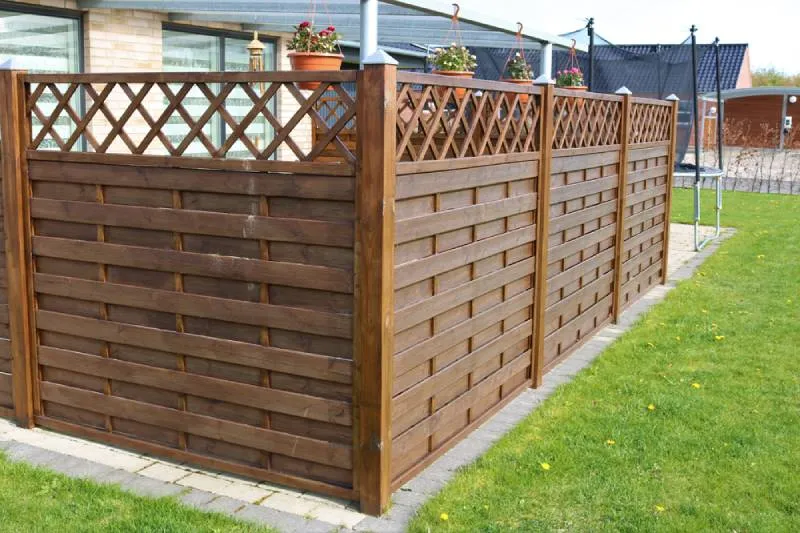
Lattices are great for keeping dogs from climbing a fence, and they only require a few nails to install. They can be used on the top of chain link fences, wooden fences, and vinyl fences.
This method requires you to have an existing fence in place, but you can match the lattice to your fence to make it aesthetically pleasing. Lattice can be purchased in wood to keep costs down or in no-maintenance vinyl material if you want it to last longer. However, it won’t work for all dogs.
Pros
- Easy to install
- Use with any type of fencing
- Available in multiple materials
- Aesthetically pleasing
Cons
- Doesn’t work for all dogs
6. Alternate the Way That the Fence Boards Are Placed
When alternating the way that the boards are placed, make sure your dog cannot easily see what pattern you are using. A pattern that is not easily visible, predictable, and identifiable by your dog is essential.
Keep in mind that if you use a fence board facing outward on one side of a section of fencing, then it should be facing inward on the other side of that same section of fencing. This fencing method prevents gaps between the boards in your fence that your dog can squeeze through. This method is visually appealing, but may not have the same strength as other fencing methods.
Pros
- Visually appealing
- Prevents gaps between boards
Cons
- Time consuming to build
7. Add Slats to Your Chain Link Fence
Adding slats to a fence is a great option for keeping your dog contained. The slats can be made from wood, metal, or plastic, depending on what you have lying around. You can attach the slats to the top of a chain link fence using zip ties or screws to make it sturdy and safe for both dogs and people. This can be done to new fences that are being built or existing ones that need updating!
Pros
- Adds privacy
- Can be done with existing or new-build fences
- Effective
Cons
- Expensive to install
- Slats can break down over time
8. Place Cement Footing at the Base of the Fence Posts
For the fence to be secure, you will need cement footing at the base of each post. Footings should be at least 12 inches deep and a minimum of 12 inches wide, away from the posts. It’s best to do this when installing a new fence, but be aware that this feature can be expensive. If you do it yourself, it may take a while.
Pros
- Effective
Cons
- Not easy to do with existing fences
- Expensive
- Labor intensive
9. Keep Obstructions Away from Fences
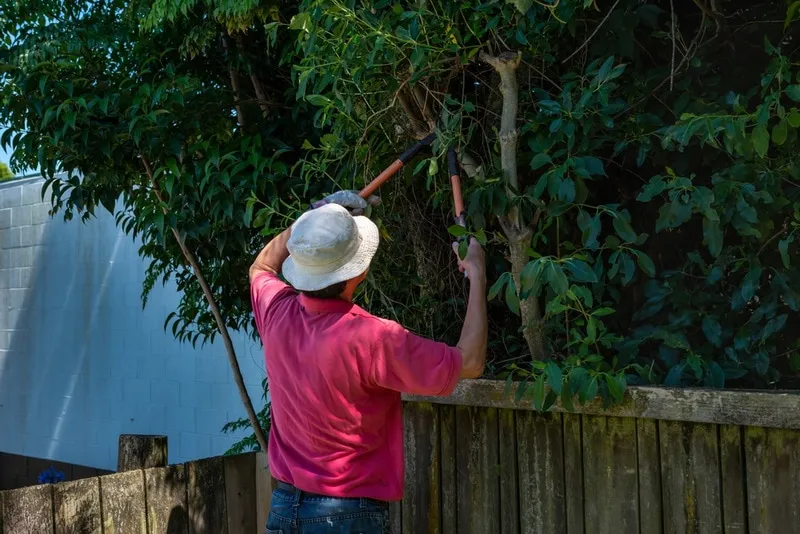
If there are any bushes, trees, or other obstructions near the fence, keep them trimmed back so they do not hang over into the yard. This will help prevent a dog from using those objects as footholds to jump over the fence and escape.
Pros
- Doesn’t require fence replacement
- Clean, uncluttered fences are less likely to be jumped over
Cons
- May require pruning of trees or bushes
10. Use Coyote Rollers or Lean-Ins
If you have a dog that likes to climb or is able to jump very high, coyote rollers can be placed on the top of your fence to stop them from escaping. In the same way that they prevent wild dogs from climbing into your yard, they'll also keep your domesticated dog from getting out.
Another option is to build a lean-in on the top of your fence. Do this by adding an angled panel on top of the existing fence that is slightly horizontal to the ground inside your yard. Make sure to lean your fence in rather than out. Otherwise, you will just make an easy escape route.
Pros
- Can be built onto existing fences
- Effective for climbers and jumpers
Cons
- Less aesthetically pleasing than most other options
Using These Tips to Keep Your Dog From Escaping Your Fence
Dogs that escape fences are much more likely to get lost or injured, so it’s important to keep them secure. Here are additional tips to help you keep your pet from getting out through the fence:
- Securely anchor the bottom of any fence panels to prevent them from being pushed over or pulled out.
- Add a strong wire mesh (preferably made of stainless steel) at least 2 feet above ground level. Your dog should not be able to dig under it, but it should still enable rainwater to drain through freely without causing erosion problems near the roots of nearby plants or trees when water hits the ground surface at speed after heavy rainfalls (which can happen frequently during rainy seasons).
- The landscaping in your yard can make the difference between your dog staying in or getting out. Dense shrubs along the fence provide a buffer zone and keep your dog a few feet away from the fence, making it much harder to jump out. Just be sure to check between shrubs regularly to make sure your dog isn’t digging a tunnel to the other side.
Final Thoughts
When you have a dog, you want to make sure they are safe and protected. That’s why it is important to take the time to dog-proof your fence so they don’t get hurt in any way. There are many fencing options available that work with any kind of yard or outdoor space. Hopefully, these tips will help you secure your fence and keep your dog at home!
See also: Best Puppy Foods in Canada
Featured Image Credit: Kimberly Hawkins, Pixabay
Expert dog care, straight to your inbox
News, insights, expert advice, and everything dog.

No spam — unsubscribe anytime.
By signing up, you agree to our Terms & Conditions and Privacy & Cookies Policy.
How useful was this post?
Click a star to rate. You can leave written feedback afterwards. (We read all feedback.)
Chelsie is a freelance writer who is passionate about helping owners and pets live their best lives. She resides in rural Alberta, Canada with her husband and two sons, and is currently a pet parent to four horses, four cats, and a Border Collie .