10 Police Dog Breeds: With Info & Pictures

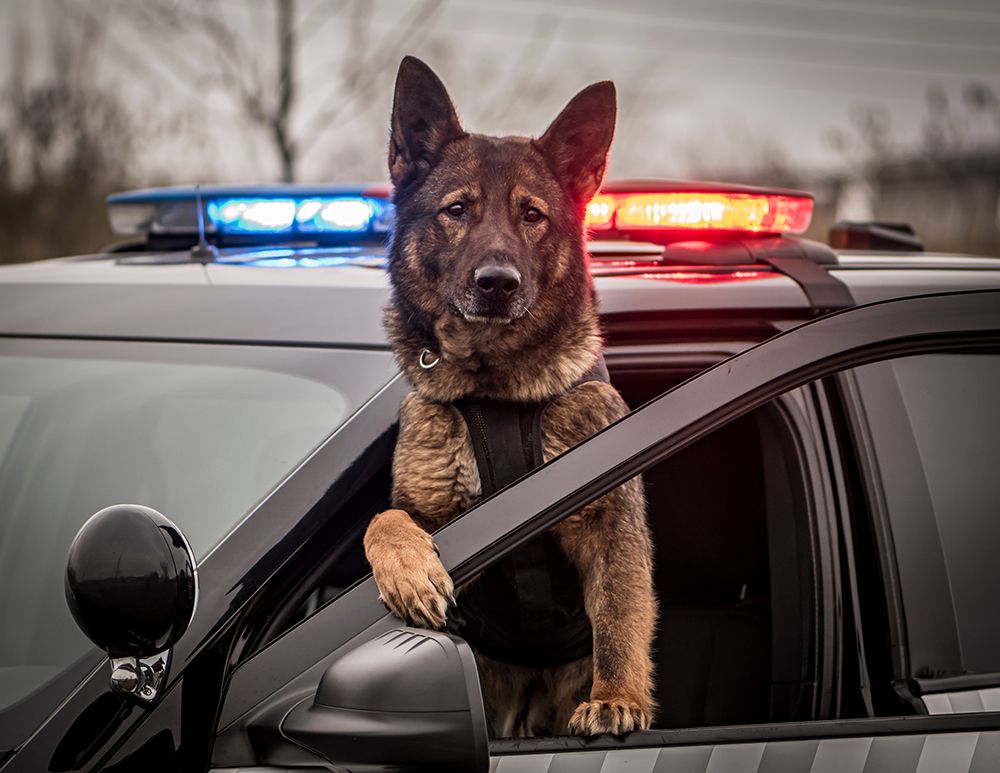
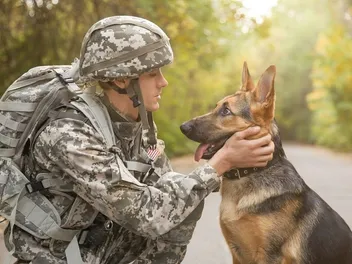
It takes a one-of-a-kind blend of talent, temperament, and determination for dogs to excel in the demanding field of police work. Police agencies rely on these canines to display unwavering excellence in their duties because lives and livelihoods depend on them.
Although the ideal qualities of a police dog exist at the individual level, some breeds are undoubtedly more suited for the work than others. You’ll discover how our canine companions are making a difference in communities across the globe by learning about these 10 police dog breeds.

How Are Police Dog Breeds Classified?
Police dogs help their teams protect the innocent, pursue justice, and reduce crime in numerous ways.
Essential roles that you might see them fill include:
Police work has been an easy transition for certain working dog classes because it takes advantage of traits they use in their traditional roles. For instance, herding breeds excel as apprehension dogs due to the intelligence, restraint, and athleticism that helped them manage their flocks. Hounds possess the acute olfaction needed for detection and search-and-rescue operations.

The 10 Police Dog Breeds
1. Labrador Retriever

Breed Overview
Origin:
Lifespan:
Height:
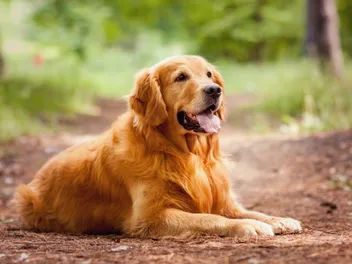
The Labrador Retriever name first appeared in England in the mid-1800s, but before that, the breed existed as the St. John’s dog, a native of Newfoundland, Canada. Renowned for their water-retrieving skills, these sporting dogs eventually gained popularity as pets because of their gentle, biddable personalities.
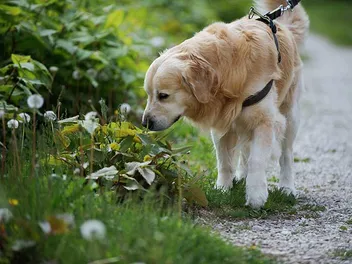
Until recently, the Lab had a well-deserved decades-long run as America’s number-one breed. The traits that make Labs one of the best family dogs also help them excel in police work. Labrador Retrievers are highly social, intelligent, and easy to train, making them some of the top search-and-rescue and detection dogs.
One study comparing Labs, GSDs, Belgian Malinois, and Rottweilers found they were the superior breed in narcotics detection1.
2. Belgian Malinois

Breed Overview
Origin:
Lifespan:
Height:
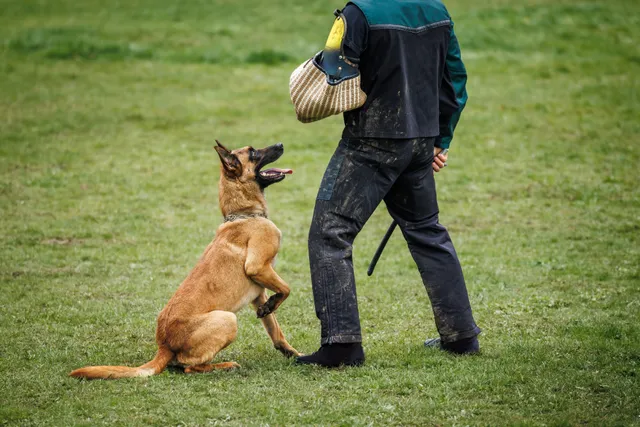
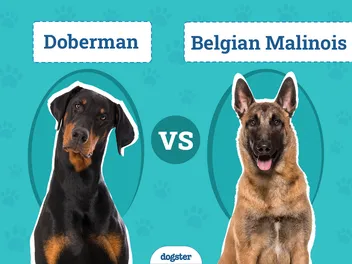
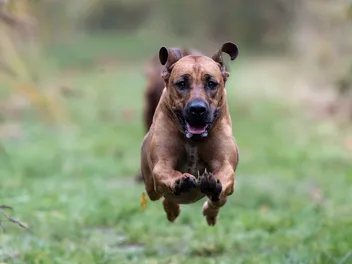
As the name suggests, the Belgian Malinois is a native of the Malines region in northwestern Belgium. Originally a herding dog, the Malinois developed into a versatile worker on the farm, possessing a well-rounded skill set that translated perfectly to police work.
Belgian Malinois form exceptional bonds with owners. They are tenacious, confident, and powerful, allowing nothing to hold them back in their duties if it means pleasing their people.
With one of the most athletic bodies and arguably the highest intelligence of any breed, the Belgian Malinois has become one of the most sought-after police dog breeds worldwide.
3. German Shepherd Dog

Breed Overview
Origin:
Lifespan:
Height:
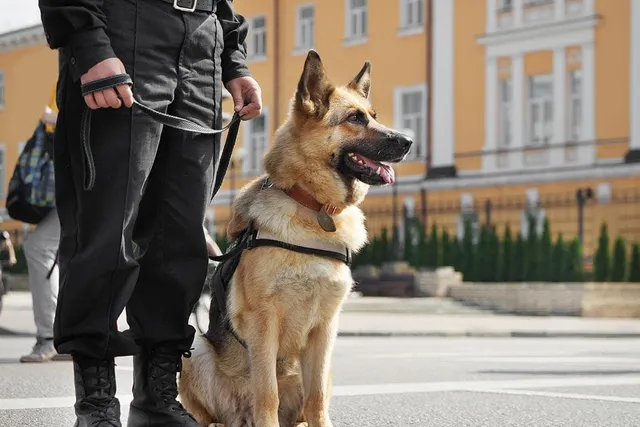
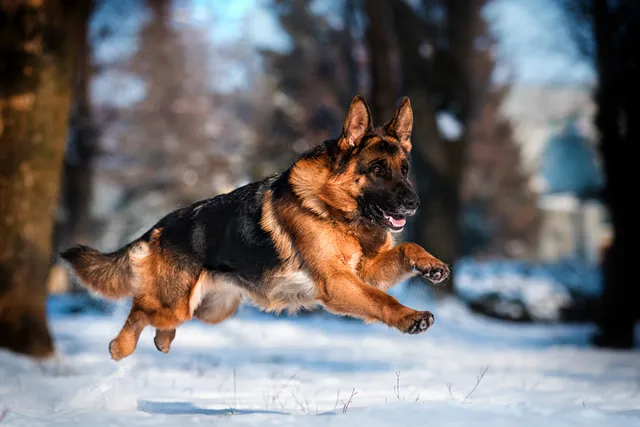
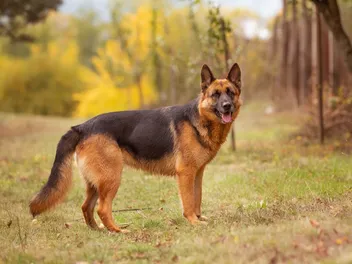
The German Shepherd worked barely long enough as a sheep-tending dog to earn their name before becoming the quintessential police and military breed. Captain Max von Stephanitz standardized the breed in 1889, pursuing a blend of utility and intelligence that defines the GSD today.
Following WWII, the dog’s fame as a war dog and Hollywood icon (thanks to dogs like Rin-Tin-Tin and Strongheart) helped them become as popular with families as they were with police forces.
German Shepherds are highly biddable, confident, and imposing when needed. They excel in all areas, whether detecting narcotics, providing security, or pursuing suspects.
4. Airedale Terrier

Breed Overview
Origin:
Lifespan:
Height:
As the “King of the Terriers,” the Airedale Terrier is the largest of this canine family. They sport all their smaller relatives' scrappiness and detection skills but in a much more capable body. Airedales originated as blue-collar working dogs and were non-specialized protectors against vermin, larger critters, and virtually any threat to the home and farm.
Germans first used Airedales as police dogs in the late 1800s. The breed became famous in WWI, taking a turn as a successful detection, messenger, and search-and-rescue dog.
Seeing their potential, the English made them a top police dog in the early 20th century. Though Airedales are less common in police work today, forces in select European countries still employ them.
5. Bloodhound

Breed Overview
Origin:
Lifespan:
Height:
Bloodhounds are the definitive tracking dog, sporting roughly 300 million scent receptors in their powerful sniffers. As a descendant of the St. Hubert’s hound (named after the patron saint of hunters), the breed emerged in the Middle Ages as a preferred scenthound for the aristocracy and slowly spread across Europe over the following centuries.
The Bloodhound arrived in America in the 1800s. For centuries, the breed worked to track people as much as they hunted game. Though Bloodhounds are notoriously independent, laidback, and relatively low energy, their profound ability to capture and stay on faint, far-away, and aged smells has made them invaluable to police agencies worldwide.
6. Boxer

Breed Overview
Origin:
Lifespan:
Height:
Descended from the Belgian Bullenbeisser breed, the modern Boxer evolved in Germany in the 1800s as a valued hunting dog for large game. Although the Boxers was undeniably strong and swift enough to manage their quarry, their bravery was their most impressive trait, prompting their move to guard and police work.
They’re known for their goofiness and independence as companions, and their affection and devotion to their owners have helped them succeed in detection and patrol work.
They’re considered less trainable and suitable for the job (primarily due to their brachycephaly) than GSDs and Malinois in America but have found favor with police forces in Europe.
7. German Short-Haired Pointer

Breed Overview
Origin:
Lifespan:
Height:
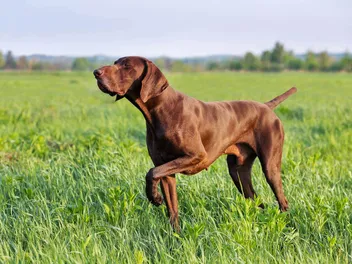
As perhaps the most versatile gundog, the German Short-Haired Pointer could do almost any job their hunting handler asked of them. Their sensitivity to scent made it easy to detect game, their power and speed let them take down dangerous animals, and their trainability allowed the perfect level of restraint to avoid scaring off their quarry.
As you can imagine, these traits, alongside their steadfast eagerness to please and protect their owners, make GSP exceptional police dogs. Modern forces employ the dog’s extra-sensitive nose for detection and search-and-rescue work, taking advantage of the friendly temperament in public areas like events, airports, and city sidewalks.
8. Beagle

Breed Overview
Origin:
Lifespan:
Height:
Beagles descended from various large and small scenthounds used in Britain through the Middle Ages, and their name first appeared in the late 15th century. The breed arrived in America in the early 1800s and gained AKC recognition in 1885.
Adorable looks paired with a curious and cheerful temperament quickly made the Beagle a coveted companion in the home. True to their nature, the Beagle plays a crucial role in detection work for police and security forces. Their powerful nose and compact bodies are uniquely beneficial, allowing them to catch the scent of drugs, explosives, and more in confined areas most dogs can’t reach.
9. Dutch Shepherd

Breed Overview
Origin:
Lifespan:
Height:
For the police agencies that employ them, Dutch Shepherds are like Belgian Malinois in being fast, quick-reacting, and highly driven alternatives to the GSD. Except for their birthplace, the histories that got them to this point are also similar.
Dutch Shepherds originated in the Netherlands as a versatile herding breed. When they weren’t herding livestock, they would pull carts or act as watchdogs for the family. The intelligence, devotion, restraint, courage, and athleticism that served their ancestors in these roles on the farm now help them perform vital jobs in police work, guide work, and search and rescue.
10. Doberman Pinscher

Breed Overview
Origin:
Lifespan:
Height:
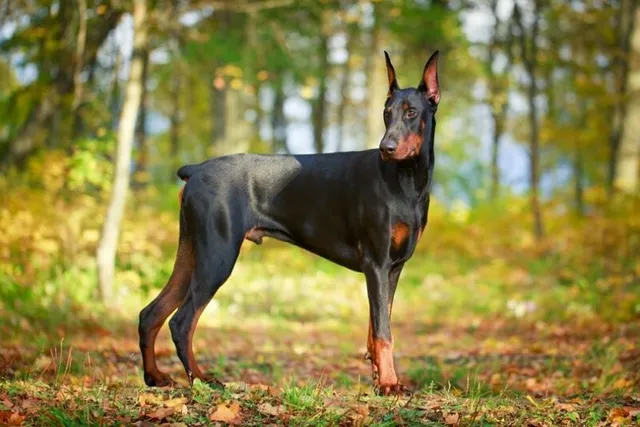
The Doberman Pinscher is a relatively new breed that came about specifically for personal protection, setting them up for a long history as a police dog breed. The “Tax Collector’s Dog” was the creation of a taxman, Karl Friedrich Louis Dobermann, who needed a loyal guardian against bandits. Dobermans combine several breeds to achieve the desired traits, likely including German Pinschers, Rottweilers, and GSDs. Although Dobermans are fast, strong, intimidating, and exceptionally smart, they have fallen out of favor among police forces in recent decades. A collection of mental and physical health issues, coupled with their independence, make them less stable than more popular breeds like Malinois or GSDs, but many Dobermans still find work in police roles.
Conclusion
It’s almost impossible to imagine where we would be today without police dogs. They possess skills no technology can replicate, and their dedication to duty often eclipses that of their human handlers. Although they are happy to do their work without the faintest consideration for its value, these police dogs deserve everyone’s appreciation for the profound benefits they’ve given to society.
Related post: Why Are Police Dogs Called K9?
Featured Image Credit: K9 and photography, Shutterstock
Expert dog care, straight to your inbox
News, insights, expert advice, and everything dog.

No spam — unsubscribe anytime.
By signing up, you agree to our Terms & Conditions and Privacy & Cookies Policy.
How useful was this post?
Click a star to rate. You can leave written feedback afterwards. (We read all feedback.)
Nicole has loved animals of all sizes her whole life so it's no wonder she has dedicated her career to helping them through what she loves best: learning, writing, and sharing knowledge with others. She’s the proud mom of two dogs, a cat, and a human. With a degree in Education and 15+ years of writing experience, Nicole wants to help pet parents and pets around the planet to live happy, safe, and healthy lives.