How Many People are Allergic to Cats, Dogs & Other Pets? Statistics Updated in 2026


In this article
Note: This article’s statistics come from third-party sources and do not represent the opinions of this website.
Pet allergies can be a debilitating condition and can sadly affect you whether or not there is a pet in the house. During an allergy flare-up, you may feel like you are the only person suffering from the infuriating symptoms, but the truth is, they affect many people.
Pet allergies are common, and they are common among people of all ages, races, and genders. Somewhere between 10%–20% of the world’s population is allergic to cats and dogs. Not only can cats and dogs trigger allergies, but other pets, such as birds, can also cause an allergic reaction. Let's have a look at how many people are affected by pet allergies.

The 12 Pet Allergy Statistics & Facts
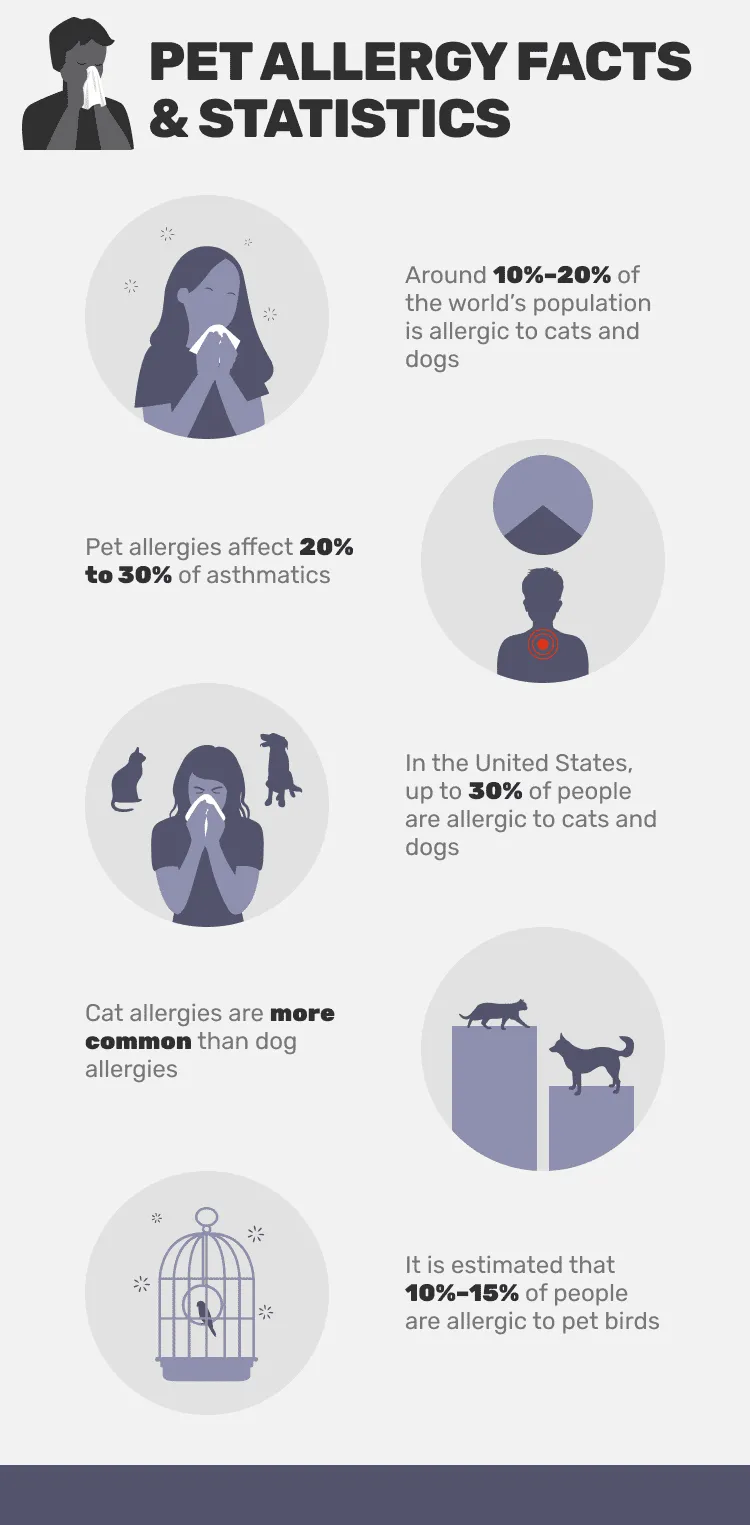
10%–20% of the world’s population is allergic to cats and dogs.
Allergies are the fifth leading cause of chronic disease among Americans of all ages.
Pet allergies affect 20% to 30% of asthmatics.
Some studies suggest that exposing young children to pet allergens during their first year may reduce their chances of developing allergies in general.
In the United States, up to 30% of people are allergic to cats and dogs.
Cat allergies are more common than dog allergies.
90% of children who have asthma also have allergies.
Approximately one-third of people who come into contact with rodents will develop allergies to them.
It is estimated that 10%–15% of people are allergic to pet birds.
Allergies can develop at almost any age, from infancy to adulthood.
Although pet allergies can develop, symptoms usually do not appear in children under the age of two.
Exotic pet allergies have become more common in the last decade.

How Many People Are Allergic to Pets?
1. 10%–20% of the world’s population is allergic to cats and dogs.
(AAFA)
Pet allergies are common, especially to pets with fur and dander, but when the animal’s fur is not what triggers the allergy but the protein found in the pet’s dander. In the USA, up to 67% of households own a pet, but many of these owners will experience pet allergies, especially if they already suffer from allergies or asthma. Allergies to cats and dogs affect 10%–20 % of the world’s population.
2. Allergies are the fifth leading cause of chronic disease among Americans of all ages.
(Haydel Asthma and Allergies)
Allergies are the fifth leading cause of chronic disease among all ages in the United States, and asthma, which is often triggered by allergies, is the third most common chronic disease in children under eighteen.

3. Pet allergies affect 20% to 30% of asthmatics.
(MAAA)
The most common type of asthma is allergic asthma. It is a respiratory condition triggered by pollen, mold, and dust mites. It causes the airways to narrow and mucous to build up, which makes breathing difficult. Pet allergies can trigger an asthma attack if a person suffers from asthma.
4. Some studies suggest that exposing young children to pet allergens during their first year may reduce their chances of developing allergies in general.
(aatozz)
Some studies suggest that if children are exposed to pet allergens in their first year of life, it may reduce the likeliness of having allergies. The theory implies that the more exposure they have to pets, the more protection they will get. While research may claim that exposure to allergens may reduce the risk of asthma, there is still no guarantee that the baby will be free from allergies growing up.
Cat & Dog Allergies
5. In the United States, up to 30% of people are allergic to cats and dogs.
(Filtrete)
Up to 30% of US citizens are allergic to cats and dogs, and with 67% of homes in the USA owning a pet, which equates to about 84.9 million homes, that’s a lot of cats and dogs for allergy sufferers! Furthermore, even homes without pets can contain irritants; over 90% of residents test positive for allergens, even if they don’t share a home with an animal. This is because the allergens can easily spread and are challenging to eradicate once they have settled.
6. Cat allergies are more common than dog allergies.
(AAFA)
Cat allergies are much more common than dog allergies. A similar protein is found in dogs’ dander, but the one in cat's dander is one of the smallest molecules, measuring about one-tenth the size of a dust allergen. Because the allergens are microscopic, they stay in the air for longer and are easy to inhale.

7. 90% of children who have asthma also have allergies.
(Healthy Children)
Cat allergies are the most common of all pet allergies. While allergies may not always cause asthma, 90% of children with asthma will experience allergies. Furthermore, studies show that up to 40% of children with asthma may develop allergy symptoms when exposed to cats.
Allergies to other Pets
8. Approximately one-third of people who come into contact with rodents will develop allergies to them.
(ehs.ucsf.edu)
This information comes from a study done by the University of California San Francisco based on the percentage of people who worked closely with laboratory animals, mainly rats and mice. Rodents have become a more popular household pet. Allergens from rats and mice come primarily from their urine, specifically the pheromones, which are proteins involved in communication. These proteins cause allergies in roughly one-third of people who come into contact with rodents.
9. It is estimated that 10%–15% of people are allergic to pet birds.
(Bird Supplies)
Pet birds can also be responsible for allergies and can be as much of a problem as cats and dogs for allergy sufferers. There are about 25–30 million pet birds in the USA, and approximately 10% to 15% of people can suffer allergies from the feathers of their pet birds.
10. Allergies can develop at almost any age, from infancy to adulthood.
(aatozz)
Pet allergies can develop in any person of any age at any time. If you don’t currently suffer from allergies, that may change for you at any point. Allergies can also change over time; the symptoms may vary depending on how much and how frequently you are exposed and how sensitive you are.

11. Although pet allergies can develop, symptoms usually do not appear in children under the age of two.
(aatozz)
Pet allergies can develop at any time in a person’s life, including in infants. Although pet allergies can develop, symptoms usually do not appear in children under two. Babies very often have runny noses and coughs, so it may be difficult to tell whether it is a common cold or allergies.
12. Exotic pet allergies have become more common in the last decade.
(Frontiers)
Exotic pets have become more popular, especially for those that live in small apartments that don’t have adequate space to own a dog or cat. People who are allergic to exotic pets will generally present the same symptoms as those from cats and dogs, which are usually respiratory-related. Because the occurrence of allergies to exotic pets is usually isolated, the incidence of allergies is unknown.
Frequently Asked Questions About Pet Allergies
How Many People Are Allergic to Pets?
Many people are allergic to animals, especially those with other allergies or asthma. Cat and dog allergies affect 10% to 20% of the world's population. Up to 30% of Americans are allergic to cats and dogs. A cat is more than twice as likely to cause allergies than a dog. People can also have allergies to other pets, such as birds, rabbits, and rodents.
What Causes Pet Allergies?
Pet allergies are caused by proteins, known as allergens, found on your pet and your pet’s dander. The animal’s skin, fur, urine, and saliva contain these allergens. The immune system responds to these allergens as though they are harmful, causing an allergic reaction.
Who Do Pet Allergies Affect?
Anyone can be allergic to pets. If your biological parents have pet allergies or if you have asthma, you are more likely to have or develop pet allergies.

What Are the Symptoms of Pet Allergies?
Symptoms of pet allergies may include:
Can I Get Rid of Pet Allergies?
Pet allergies are, unfortunately, here to stay. However, you can treat the symptoms that you experience from pet allergies. Over-the-counter medications, such as nasal corticosteroids, antihistamines, and antihistamine pills, are available. Immunotherapy, which includes allergy shots, can provide a more long-term solution by decreasing your sensitivity to the allergen.
Conclusion
People who suffer from pet allergies make up 10% to 20% of the world’s population and up to 30% of America's population. Cat and dog allergies are most common, with cats triggering twice as many allergies as dogs. People can also develop allergies to other pets, such as birds, rabbits, horses, and mice.
Pet allergies affect more people who already suffer from asthma. Some studies suggest that if a child grows up with cats around, they are less likely to develop allergies, but this doesn’t necessarily mean you should go out and buy a cat, as these allergies can occur at any time.
Related Read: Can You Be Allergic to Dogs & Not Cats? (Vet Answer)
Featured Image Credit: Prostock-studio, Shutterstock
Expert dog care, straight to your inbox
News, insights, expert advice, and everything dog.

No spam — unsubscribe anytime.
By signing up, you agree to our Terms & Conditions and Privacy & Cookies Policy.
How useful was this post?
Click a star to rate. You can leave written feedback afterwards. (We read all feedback.)
Nicole has loved animals of all sizes her whole life so it's no wonder she has dedicated her career to helping them through what she loves best: learning, writing, and sharing knowledge with others. She’s the proud mom of two dogs, a cat, and a human. With a degree in Education and 15+ years of writing experience, Nicole wants to help pet parents and pets around the planet to live happy, safe, and healthy lives.