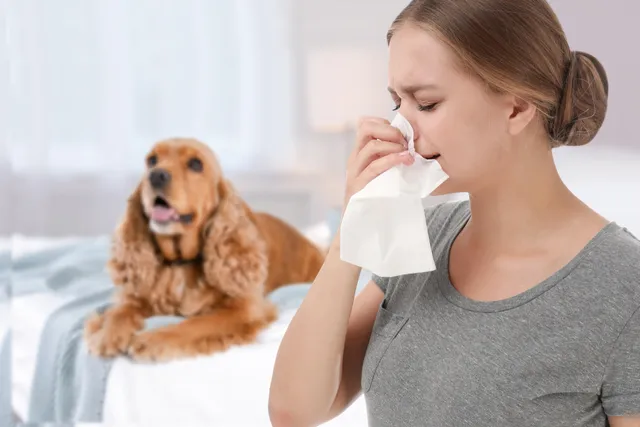
Can You Be Allergic to Cats But Not Dogs? (Vet Answer)


Every pet owner loves a cuddle with their furry friend. But what happens when this cuddling (or patting, or grooming) causes you to have a flare-up of allergy symptoms? This could mean you have a pet allergy—they’re surprisingly common.
It's possible to be allergic to cats but not dogs. The reverse is also possible: being allergic to dogs, but not cats. However, people who are allergic to cats are more likely to be allergic to dogs, and vice versa. Let’s explore why pet allergies occur, and some things that can be done to manage them.

What Is a Pet Allergy?
Pet allergies are not too different from other allergies, such as those caused by nuts or dust. An allergy occurs when your body’s immune system reacts abnormally to a foreign substance. Your body thinks that the substance might be harmful, even though it’s typically harmless.
When we think of pet allergies, we usually think of dogs and cats. These allergies are the most common, but dogs and cats are also the most common household pets. In fact, people can be allergic to rabbits, guinea pigs, horses…just about any species of animal!
Contrary to popular belief, most pet allergies are not actually caused by fur or hair. Instead, most allergies are caused by “dander”, saliva, and urine. Dander is the layer of dead skin cells at the surface of the skin, containing certain protein molecules that the body reacts to.
Some pets also carry dust, mold, and pollens in their coat, especially if they spend lots of time outdoors. Occasionally, “pet allergies” are not triggered by the pet at all, but by the dust and pollen within the hair coat.
Why Can I be Allergic to Cats But Not Dogs?
Dogs and cats secrete different proteins (“allergens”) in their dander, saliva, and urine. There is lots of variation in these allergens both across species (i.e. between dogs and cats) and within species (i.e. some cats or cat breeds have different allergens from other cats).
For these reasons, being allergic to cats does not necessarily mean that you’ll automatically be allergic to dogs. Similarly, you might be allergic to some dogs or cats, but not others. The body doesn’t recognize all proteins in saliva, urine, and dander as allergens—only specific ones. That being said, people who are allergic to cats are more likely to be allergic to dogs too. And people who are allergic to one or two cats are more likely to be allergic to many other cats.

What About Hypoallergenic Pets?
You may have heard about “hypoallergenic” pets—pets that are less likely to cause an allergy. Though it sounds perfect, there are a couple of myths that need debunking.
1. Shedding
Some breeds of dogs or cats that don’t shed hair have been called hypoallergenic. Unfortunately, this is probably not true. As we mentioned, most pet allergies are not reactions to hair, but rather to proteins secreted in saliva, urine, and dander. Hair isn’t usually the problem, so a dog or cat that doesn’t shed much is not necessarily better for someone with known pet allergies.

2. Hypoallergenic Breeds
Other breeds of dog have been put forward as hypoallergenic, meaning that (regardless of hair or shedding) they’re less likely to cause an allergy. Again, this is not true. All dogs and cats secrete potential allergens, so all dogs and cats can cause allergy symptoms.

I’m About to Get a Pet – How Will I Know If I’m Allergic?
The good news here is that people with dog or cat allergies may tolerate some breeds much better than others. Remember, being allergic to one cat or dog certainly doesn’t make you allergic to all cats and dogs.
The best way to know if you’re allergic to a dog or cat is to spend some time around them. Consider fostering for a couple of weeks to see if any allergies are triggered. Alternatively, arrange to visit someone who has the same breed of dog or cat.
If you’d prefer not to risk it, there are safer pet options. Fish, reptiles, and turtles are far less likely to cause allergies than dogs or cats.

How Can I Manage My Pet Allergies?
There are lots of steps you can take to minimize exposure to pet allergens and reduce your chances of allergy symptoms. The list below is not exhaustive, but it is a great start:
- Keep pets out of bedrooms or other places you sleep.
- Have someone else brush or groom your pet.
- Use pet-grade wipes to clean your pet after they have been outside.
- Wash clothes that have been in contact with pets.
- Wash your hands and face after touching your pet.
- Regularly wash bedding, rugs, or fabric furniture that your pet has spent time on.
- Wash your pet with dog or cat shampoo once weekly.

Conclusion
Pet allergies are common and often require ongoing management. If you have a known pet allergy (or non-pet allergy), it’s a good idea to spend time with pets before taking them on. This means you can be confident you won’t have an allergy to your pet, rather than assuming a “hypoallergenic” breed will be fine. Thankfully, there are lots of different breeds available, so there’s a good chance you’ll find one that you’re not allergic to. And if you do have a pet allergy, there are lots of ways to manage this at home.
If you think you have a pet allergy, or if you are showing allergy symptoms, always seek medical advice from your doctor to discuss testing and medications.
Sources
Featured Image Credit: Kmpzzz, Shutterstock
Expert dog care, straight to your inbox
News, insights, expert advice, and everything dog.

No spam — unsubscribe anytime.
By signing up, you agree to our Terms & Conditions and Privacy & Cookies Policy.
How useful was this post?
Click a star to rate. You can leave written feedback afterwards. (We read all feedback.)
Dr. Joe Mallat DVM (Veterinarian)
Joe is a veterinarian from Sydney, Australia. When he's not working, he enjoys cooking, exercising, and exploring the Australian wilderness. He has worked for 2 years at a mixed-species practice on the mid-north coast of New South Wales, treating animals of all sizes. His areas of particular interest include wound management, internal medicine, and oncology. Joe's love for the profession comes not only from helping dogs, but also from helping their parents and working with wonderful teams of people.
Joe completed his Bachelor of Veterinary Biology and Doctor of Veterinary Medicine at the University of Sydney in 2020.