Pet Allergies in Babies & Children: What Parents Must Know (Vet Answer)

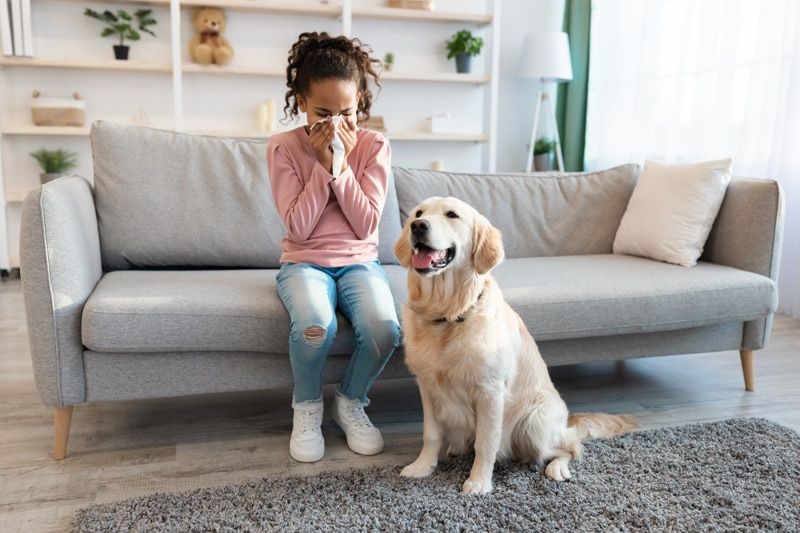
Allergies are always a problem in a vet clinic. Whether it is the pet that is allergic to living with humans or humans who are allergic to their pet, allergies are frustrating, hard work, and time-consuming. And when a child develops an allergy to a family pet, it is always especially sad and frustrating.
As a veterinarian, I always recommend you talk to your human doctor. I am not the person to ask about human medicine; it is not my area of expertise. So, with that said, I have no comment on human medications or treatments. Even though there are medications and therapy options, I am not in a position to comment on their best uses. Especially when it involves your kids, please talk to your doctor—your human doctor.

What Are Some Signs Your Baby Is Allergic to Your Pet?
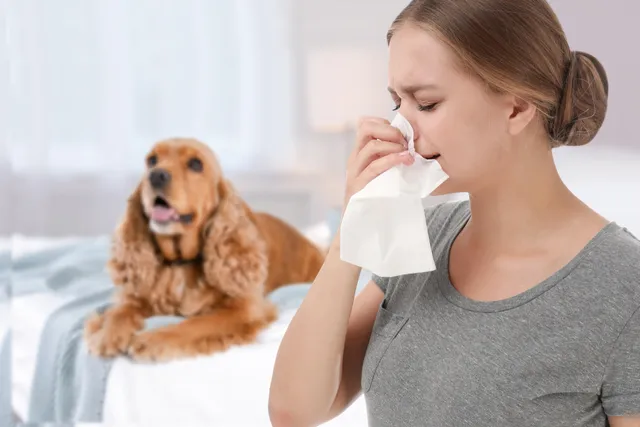
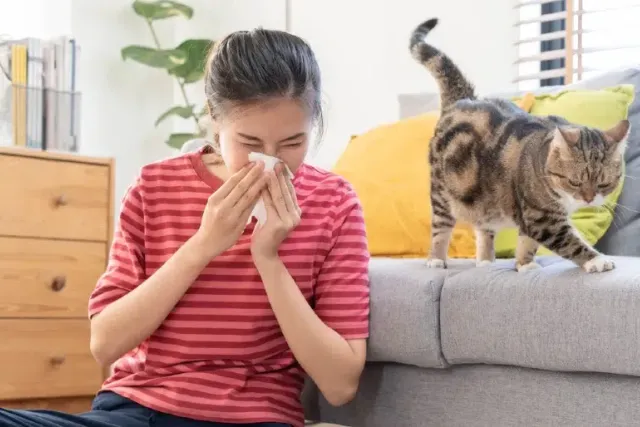
Red and itchy eyes, sneezing, coughing, asthma (wheezing and shortness of breath), hives, or rashes are some of the signs that might suggest an allergic reaction in children. If one or more of these clinical symptoms appear, it might take a bit of detective work on your part to rule your family pet in or out as the source. Just remember, things can change, and especially with babies and children, allergies can seem to appear out of nowhere.
While the most extreme allergies might indeed mean more severe courses of intervention, such as finding a new and safe home for your pet. But it might also be possible to find a way to live together by managing the allergen and mitigating its effects.

What Can I Do to Reduce Allergic Reactions?
It can be useful to imagine an allergy in terms of a threshold. Under the threshold, there is no allergic response, but over the threshold, there is a response. Lots of things add up to reach that threshold, but by chipping away at some of the things, you can control it might be possible to keep your home below the allergic response threshold.
- Creating a bit of separation between your child and the pet can be very effective. For example, you might try keeping the cat out of the kid’s bedroom or keeping the dog off the furniture so their dander doesn’t get embedded in the fabric. You might not be able to completely eliminate dander, but you might be able to reduce it by controlling where it spreads.
- Likewise, regularly grooming and bathing your animal can reduce the amount of allergens it sheds in the first place. Diligently cleaning and vacuuming can reduce the carrying capacity of the environment. Air filters can help further reduce the amount of dander in the air.
- Thoroughly washing your child’s hands after they play with the pet can keep allergens from getting onto their face and eyes. Of course, this approach becomes more difficult the more severe the allergy. And with children, it is especially important to carefully watch their symptoms and to be sensitive to their responses.
The overall goal is to balance your child’s needs with your pet’s needs. Many pets will not be happy living confined to a basement, but then again, some pets might not mind it. Most animals can learn to stay out of a child's bedroom, but this might not be enough of a barrier if your child is particularly sensitive.
Summary
Getting together to solve problems creatively can be an effective solution to allergies. Working together with your family to determine what works for your lifestyle. Working with your human doctor to find medical means of treatment and monitoring. And checking with your vet to ensure your pet’s health is not compromised by the changes to its lifestyle are great places to start.
Developing a system that prioritizes your child's health while providing a happy, healthy life for your pet looks different for everyone and every allergy.
See also:
Featured Image Credit: Prostock-studio, Shutterstock
Expert dog care, straight to your inbox
News, insights, expert advice, and everything dog.

No spam — unsubscribe anytime.
By signing up, you agree to our Terms & Conditions and Privacy & Cookies Policy.
How useful was this post?
Click a star to rate. You can leave written feedback afterwards. (We read all feedback.)
Dr. Chantal Villeneuve MS BVetMed (Veterinarian)
Dr. Chantal is passionate about the human-dog bond and improving animals' lives through their connections with their human companions. She has worked with almost every species, dogs, cats, rabbits, guinea pigs, birds, reptiles, amphibians, and even horses and mice - all are welcome. She is excited to use her writing to spread the things she has learned to help people connect with their dogs.