How to Get a Psychiatric Service Dog: 6 Vet-Approved Tips


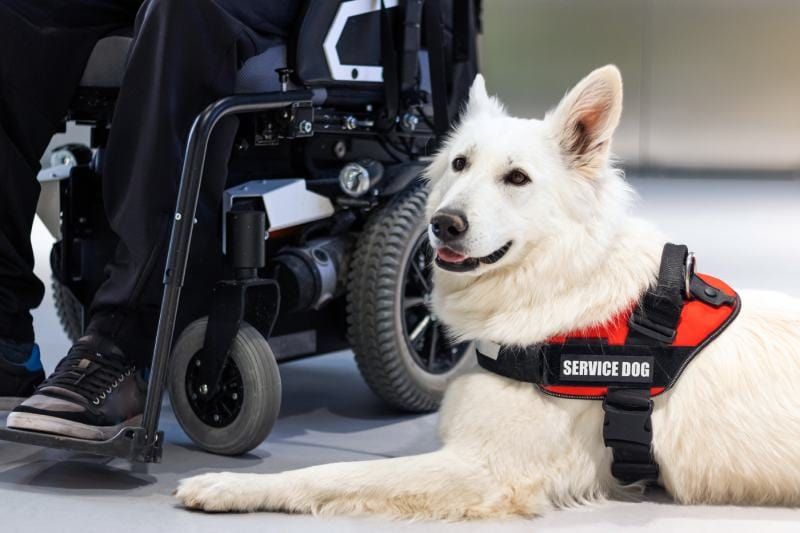
Service dogs play a very important role in the lives of their handlers. They aid people with both physical and mental disabilities and can help them lead more normal lives. A psychiatric service dog, or PSD, meets the ADA requirements for a service animal and assists those suffering from various forms of mental illness and disabilities.
If you or a loved one could benefit from a psychiatric service dog, we are here to provide you with the information you need to get one.

The 6 Tips on How to Get a Psychiatric Service Dog
1. Talk to Your Doctor
First and foremost, you need to discuss your mental health with your doctor. It is estimated that one in five adults in the United States live with a mental illness, and if you have not yet talked to a professional, you should do so right away so that you can be properly diagnosed and treated.
It’s important to understand your mental health condition and the various things you can do to cope. Once you’ve been diagnosed, your doctor can help you move forward with your desire for a service dog. For those who are already working with your doctor regarding your mental health, you should discuss your interest in a psychiatric service dog so they can help you get everything you need.
2. Do Your Research
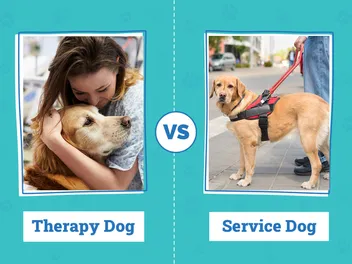
If you are interested in a psychiatric service dog, you should first do some research to understand more about what they are and the duties they perform. A psychiatric service dog is just that—a service dog. They are going to have different requirements than a therapy dog or an emotional support dog, so you should understand the differences between them.
Therapy Dog
A therapy dog is a pet dog that is trained to provide affection, comfort, and support to people. They often accompany their owners to places like hospitals, retirement homes, nursing homes, schools, libraries, hospices, or areas that have recently been struck by disaster.
They are typically used on a volunteer basis to improve the lives of others who get comfort from the presence of a dog. Therapy dogs are not considered service dogs and do not have public access rights.
Emotional Support Dog
Emotional support dogs, or emotional support animals, provide comfort to their owners with their companionship alone. These dogs have not been specifically trained for any task and are not considered service dogs.
With a doctor’s letter supporting the claim, an emotional support animal will fall under the “assistance animal” category under the Fair Housing Act. This is regarding housing laws only, but emotional support dogs do not have public access rights and should never be taken to places that only allow service animals.
Psychiatric Service Dog
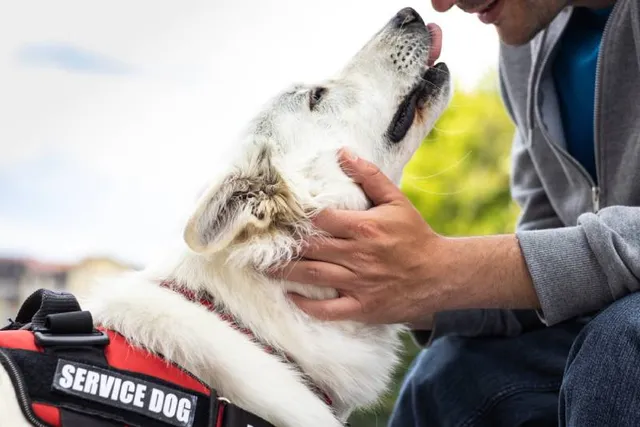
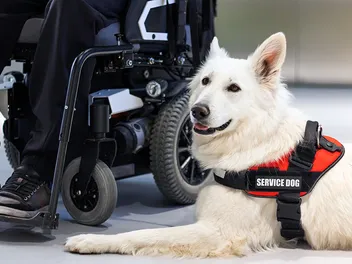
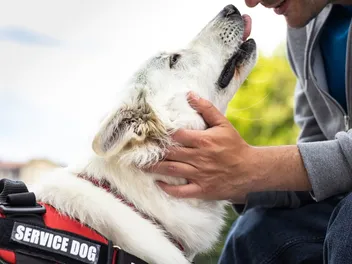
The psychiatric service dog will meet the ADA requirements to be considered an official service dog. With these dogs, their handler must have a disability and the dog must be specifically trained to alleviate that disability by performing specific tasks.
The purpose of a psychiatric service dog is to allow their handler to either improve or overcome their ability to function.
Their specific role will be dependent on the handler’s specific disability, and they will have gone through rigorous training to be successful at not only their specific tasks but also for obedience and public access. Unlike therapy dogs and emotional support dogs, psychiatric service dogs will have public access rights under ADA law.
Common Duties for a Psychiatric Service Dog
3. Know the ADA Requirements for a Psychiatric Service Dog
The Americans with Disabilities Act of 1990 or ADA is a civil rights law enacted to prohibit discrimination based on disability to ensure the disabled have the same rights and opportunities as others. This law protects individual’s disabilities in all areas of public life, including jobs, schools, transportation, and all public and private places open to the public.
Requirements for a Service Dog
From guiding the blind, aiding the deaf, medically alerting those who suffer from ailments like seizures or diabetes, reminding those with mental illness to take prescribed medications, calming a person with post-traumatic stress disorder, and much more, service animals can play a significant role in improving the lives and functionality of those with various disabilities.
According to the ADA laws, to be considered a service dog, the handler must have a disability and the dog must be individually trained to do work or perform tasks to mitigate the disability.
The disability may be physical or mental, and it must impact the handler’s life to the point it limits daily life.
Psychiatric service dogs are necessary when a mental illness prevents the handler from functioning in their daily life. If the mental illness does not limit daily life, the individual would not qualify for a psychiatric service dog.
Where They Are Permitted
According to the ADA “State and local governments, businesses, and nonprofit organizations that serve the public generally must allow service animals to accompany people with disabilities in all areas of the facility where the public is allowed to go.”
Rules for Public Access
Under the ADA, the dog must be trained before it can be taken into public places. Service animals must always remain under the handler’s control. They should be harnessed, leashed, or tethered unless the individual’s disability prevents this or if this interferes with the service animal’s safe, effective performance of tasks. If these devices cannot be used, the individual must maintain full control through voice commands, signals, or other forms of effective control.
4. Understand the Potential Drawbacks
You should also consider whether taking a dog with you everywhere you go could do the opposite for your mental health. There are so many benefits to having a psychiatric service dog, but it’s important to understand the drawbacks so that you are fully prepared for this new adventure.
Not only will the dog garner you much more attention when out in public, but because so many people take advantage of the role of service animals, you may have negative experiences when out and about.
It’s fairly common for people to bring their pets in public spaces where only service animals are allowed, and it’s hard to tell the difference sometimes, so those with true service dogs may suffer ridicule from the general public because of this.
You will most likely be stopped by dog lovers wishing to pet your service dog and strike up a conversation, which will happen more than you realize. You may also run the risk of your dog having an accident in public, which can also be stressful.
We’re not saying the cons of having a psychiatric service dog outweigh the pros, but since this is to help with your mental health condition, you must be aware of what comes along with your dog’s public access.

5. Obtain a Psychiatric Service Dog Letter From a Mental Health Professional
To be eligible for a psychiatric service dog, your doctor will need to diagnose you with a specific mental illness, and they must verify that the mental illness limits you or inhibits you from functioning properly in daily life.
Some of the most common mental health conditions that may require the need of a psychiatric service dog include:
- Post-traumatic stress disorder (PTSD)
- Depression
- Anxiety disorders
- Obsessive-compulsive disorder (OCD)
- Attention-deficit/hyperactivity disorders
- Bipolar disorders
- Social phobias
- Schizophrenia
- Agoraphobia
- Claustrophobia
- Panic disorders
- Autism
6. Find Yourself a Psychiatric Service Dog
When it comes to finding a psychiatric service dog, you can either purchase from an organization that specifically trains these dogs, send your dog to be trained, or choose to train a dog yourself. Regardless, it is very important to find a dog that is well suited for the job and your specific needs.
A service dog organization will speak to you about your specific needs and will either pair you up with a dog already trained or will train one specifically for you. Not only will they come trained to perform their service dog duties but they will also be fully trained for public access.
While psychiatric service dogs can be any breed, certain breeds tend to perform better than others when it comes to a service dog role. Regardless of breed, the dog must be well-behaved, good-tempered, and calm.
They should also be adaptable to a variety of environments and situations enjoy human companionship and prefer to be always close to their handler. Dogs that exhibit fear, aggression, and nervousness, or are easily stressed will not be suitable for this role.
It can be difficult for your average person to go through the rigorous training required for service dogs. This process will take a lot of time, patience, commitment, and hard work. If you are committed to training on your own, do a lot of research on every aspect of training. This will include obedience, public access, and specific tasks.
If you elect to send your dog to be trained for this purpose, keep in mind that not all dogs are suited for the job, so you will need to keep this in mind and follow the professional trainer’s advice. While expensive, purchasing a trained service dog will undoubtedly be the easiest route for most people.

Conclusion
Psychiatric service dogs are different from both therapy dogs and emotional support dogs, as they are considered true service dogs and are allowed public access under ADA law. These dogs can help people with mental illnesses and disabilities to live a more functional life.
To obtain one of these dogs, you must first talk to your doctor and obtain the necessary documentation. Remember to do your research on the subject and understand everything it entails. You can either purchase a PSD, have one trained, or train one yourself if you have the knowledge and experience to do so.
Sources
Featured Image Credit: 24K-Production, Shutterstock
Expert dog care, straight to your inbox
News, insights, expert advice, and everything dog.

No spam — unsubscribe anytime.
By signing up, you agree to our Terms & Conditions and Privacy & Cookies Policy.
How useful was this post?
Click a star to rate. You can leave written feedback afterwards. (We read all feedback.)
I am a wife, mother, nature enthusiast, animal lover, and business major. I was born and raised in Ohio but now live in Tulsa, Oklahoma. We share our home with a German Shepherd, several snakes, tarantulas, and a couple rescue cats.
My husband and I enjoy traveling the US with our kids and photographing wildlife. My passion is to educate others on the importance of proper animal care, with an emphasis on reptiles and exotics since their care requirements can be much more complex. I am also a huge advocate for bully breeds. I feel most at home in the forest either on horseback or in hiking boots.