Dogster is reader-supported. When you buy via links on our site, we may earn a commission at no cost to you. Learn more.

Lifestyle

How Many Legs Does a Dog Have? Canine Anatomy Explained

Lorre Luther
By Lorre Luther · Reviewed & fact-checked by Dr. Paola CuevasVet Approved
Dr. Paola Cuevas
Reviewed & Fact-Checked byDr. Paola CuevasVeterinarian
Dr. Paola Cuevas is our Senior In-House Veterinarian at Dogster and Pangolia. She has over 19 years of experience working with an array of species and loves sharing her knowledge and experience with our readers and aims to provide assistance with any issue presented by your non-human family members. She received her degree from the University of Guadalajara, Mexico.View authorThe information is current and up-to-date in accordance with the latest veterinarian research. Learn more
Updated on June 27, 2026
Share
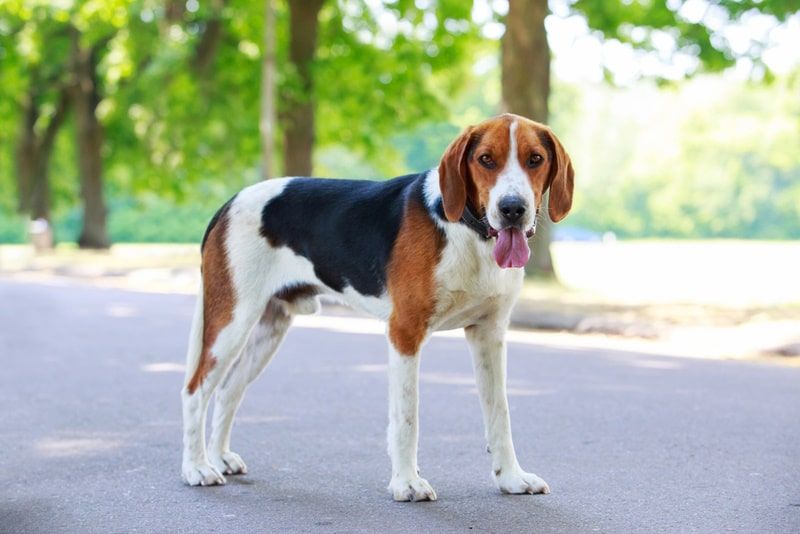
ameriacan-foxhound-dog-in-the-park

While most dogs have four legs, several have missing limbs but live happy, healthy, adventurous lives. Dogs lose limbs for all sorts of reasons, from accidents to amputations related to medical conditions, and many do fine once they've had time to become comfortable with new ways of getting around.

Dogs with three legs are often called tripods, and although they sometimes have slightly ungainly walks, many can run relatively well. Dogs with two legs can frequently move around independently, and some can even run depending on which limbs they're working with. With the assistance of prosthetic devices and mobility aids, many dogs with missing limbs can enjoy rich lives.

divider dog paws 3 oct 2024

Basic Dog Leg Anatomy

Most dogs have four legs, two in front and two in back. Each front leg has one elbow and wrist, also called a carpus. Their back legs have knees, which are commonly referred to as stifles, and their ankles are sometimes referred to as hocks. Dogs have ulnar and radial bones in their forelegs and have tibias and fibulas in their back legs.

While dogs and humans have elbows and knees, they function differently; dogs walk on all fours, and humans are bipeds. Having four legs instead of two legs and two arms like humans gives dogs an edge regarding stability.

However, walking upright allows humans to see far away and use their arms and hands to manipulate and carry things. It's also vital to humans' ability to walk for long distances.

You're welcome to use our images, but we require you link directly to Dogster.com for credit

Dogs With Two Legs

Dogs with two legs face more challenging mobility issues than those with three, and much depends on which limbs are involved. Dogs with two limbs on one side of their bodies can sometimes get around without supportive devices.1

Some dogs missing both back legs can run around pretty efficiently without assistance.2

Dogs With Three Legs

Dogs with three legs can learn to move around without prosthetic devices or mobility support. Those who have amputations after traumatic accidents can recover and live healthy lives, but tripods are prone to developing joint problems, as their remaining limbs are under increased strain due to gait alterations.

It's harder for dogs to adjust to the loss of a front leg than a hind limb. Smaller dogs also have fewer problems getting around on three legs than larger ones.
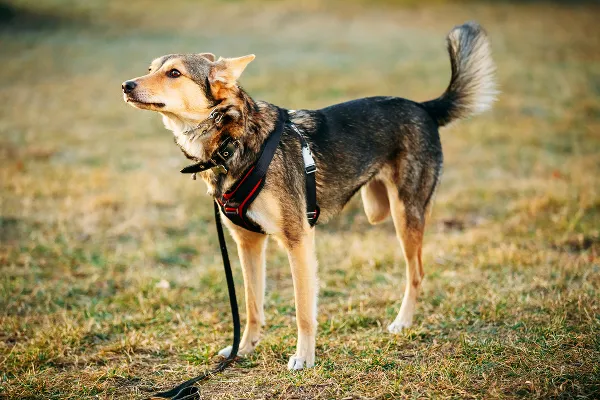
Image Credit: George Trumpeter, Shutterstock

Dog Prosthetic Devices

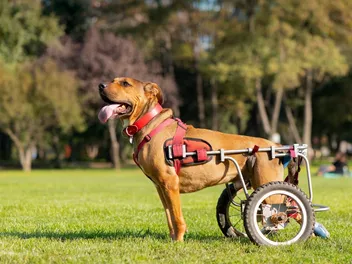
Dogs with missing limbs sometimes benefit from prosthetic devices. The prosthetics range from slip-on designs to implants that provide dogs with more mobility. There are also wheelchairs that can help pets with missing or paralyzed limbs get around.

Why Is It Easier for Dogs Who Are Missing Legs to Run Than to Walk?

Dogs typically walk with two or three feet on the ground at the same time, and it's difficult for them to do so when they only have three legs. Dogs have several other ways of moving, including cantering, galloping, and trotting.

They also amble, which is between a walk and a trot, and display rear-end swaying and what appears to be paw dragging. Trotting is usually the most efficient gait; it's relatively fast and involves a brief moment when their bodies are airborne. Dogs generally use a gallop for high speeds, in which their spines extend and flex, enabling them to release massive bursts of energy.

So now that you know all of this, we have a question for you:

You're welcome to use our images, but we require you link directly to Dogster.com for credit
divider dog paws 3 oct 2024

Conclusion

Dogs officially have four legs. Their front leg joints are wrists and elbows, and those in the back are knees and ankles. While most dogs have four legs, they can thrive with two or three, particularly with the help of mobility aids and prosthetic devices. While some are born missing limbs, most end up losing legs to amputations related to accidents and illnesses. Dogs with three legs can frequently run with abandon, and those with two legs can get around surprisingly well on their own.

Related read:

Sources

Featured Image Credit: Olga Aniven, Shutterstock

The Dogster Newsletter

Expert dog care, straight to your inbox

News, insights, expert advice, and everything dog.

No spam — unsubscribe anytime.

By signing up, you agree to our Terms & Conditions and Privacy & Cookies Policy.

Click a star to rate. You can leave written feedback afterwards. (We read all feedback.)

Lorre Luther
Authored by

Lorre Luther

Prosthetic Legs for Dogs: History, Types, FAQ & More Vet-Approved Info

Prosthetic Legs for Dogs: History, Types, FAQ & More Vet-Approved Info

Prosthetic limbs have been used for human rehabilitation for centuries—with some evidence dating back millennia—allowing people with severe injuries to stand,…

Nicole Cosgrove
By Nicole Cosgrove · 3 weeks ago
Dog Anatomy 101: Understanding Your Dog’s Body (Vet Answer)

Dog Anatomy 101: Understanding Your Dog’s Body (Vet Answer)

Have you ever found yourself wondering how many teeth a dog has? Or whether their front legs have elbows or knees? It sounds like you could use a crash course…

Dr. Karyn Kanowski
By Dr. Karyn Kanowski · 1 week ago
How to Care for a Tripod Dog: 10 Vet-Approved Recovery & Exercise Tips

How to Care for a Tripod Dog: 10 Vet-Approved Recovery & Exercise Tips

The term “tripod dog” refers to a dog with only three legs, but you might also hear them referred to as tripods. As you likely already know, the process of leg…

Annaliese Morgan
By Annaliese Morgan · 3 weeks ago
What Is a Digitigrade? Vet-Reviewed Science of How Pets Walk

What Is a Digitigrade? Vet-Reviewed Science of How Pets Walk

Have you ever sat and watched the way your pet walks? While this may not be a common thing to do, it is something that we should understand. There are classifi…

Melissa Gunter
By Melissa Gunter · 3 weeks ago

Dogs With Disabilities: Our Vet Explains Types & Gives Care Advice

The world is a difficult enough place to navigate at the best of times, and doing it with a disability is going to bring a whole host of challenges that most o…

Dr. Karyn Kanowski
By Dr. Karyn Kanowski · June 17, 2026
Dogs With Disabilities: Our Vet Explains Types & Gives Care Advice

75+ Tripod Dog Names: Ideas for You Special Pup

Dogs are amazingly adaptable, and it is surprising how well most dogs do when they have a leg amputated or removed. They learn to balance and can walk and run…

Matt Jackson
By Matt Jackson · June 17, 2026
75+ Tripod Dog Names: Ideas for You Special Pup

How Many Toes Do Dogs Have? Can They Have Extra Toes? (Vet-Verified)

The number of toes that your dog has is likely not something that you think about frequently. That said, most people are surprised to learn that most dogs have…

Ed Malaker
By Ed Malaker · June 17, 2026
How Many Toes Do Dogs Have? Can They Have Extra Toes? (Vet-Verified)

Why Does a Corgi Have Short Legs? Genetics & Breeding

Corgis are beloved for their short stature and adorable faces. The Pembroke Welsh Corgi stands at 10–12 inches and weighs up to 30 pounds. The Cardigan Welsh C…

Jordyn Alger
By Jordyn Alger · July 1, 2026
Why Does a Corgi Have Short Legs? Genetics & Breeding

Why Do Dogs Have Dewclaws? Vet-Approved Facts & FAQ

When you observe your dog’s paws, you will notice four toes on the back feet and four toes on the front feet. But you’ll also see a fifth digit, known as the d…

Rachel Giordano
By Rachel Giordano · June 17, 2026
Why Do Dogs Have Dewclaws? Vet-Approved Facts & FAQ

How to Draw a Puppy: Our Vet's Step-by-Step Instructions (with Video)

If you adore puppies and also like to draw puppies, we have something in common. Full disclosure: I am a vet, not an artist, but I do love to draw, and my fami…

Dr. Karyn Kanowski
By Dr. Karyn Kanowski · June 17, 2026
How to Draw a Puppy: Our Vet's Step-by-Step Instructions (with Video)

Do Dogs Have a Dominant Paw? Is Your Dog a Lefty or Righty? What Science Says

While the majority of humans are right-handed, dominant paws in dogs don’t lean heavily towards one side. Studies show that some dogs have a paw that they pref…

Jessica Kim
By Jessica Kim · June 16, 2026
Do Dogs Have a Dominant Paw? Is Your Dog a Lefty or Righty? What Science Says

How Fast Can a Dog Run? Breed-by-Breed Breakdown

You already know that your dog is fast, but have you ever wondered just how fast they are? As it turns out, the answer isn’t easy to give in a single sentence…

Quincy Miller
By Quincy Miller · June 17, 2026
How Fast Can a Dog Run? Breed-by-Breed Breakdown

Love Dogs? So Do We! Join the Dogster Community

Stay informed with expert pet care insights delivered straight to your inbox! Discover professional guidance on animal behavior, feeding tips, trusted product picks, and much more.

You may opt-out at any time. View our Privacy Policy for more information.

The Dogster app on a phone