A dog’s paws play a huge role in their everyday lives. Healthy paws are essential for walking and running comfortably, the pads act as shock absorbers and cushion the foot, while the toes and claws act as traction devices.
Knowing the basics of dog paw anatomy will help you figure out what is normal and what isn’t, helping you care for them. Routinely checking your dog’s paws will help prevent injuries and pick up issues sooner.
While the basic anatomy of a dog’s paw is the same for all canines, different breeds can have different shapes of paw. They are often grouped by shape into “cat feet”, “hare feet” and “webbed feet”, each of which has different advantages.
Keep reading to learn more about the main structures of your dog’s paw, and the function of the different parts.

The Claws

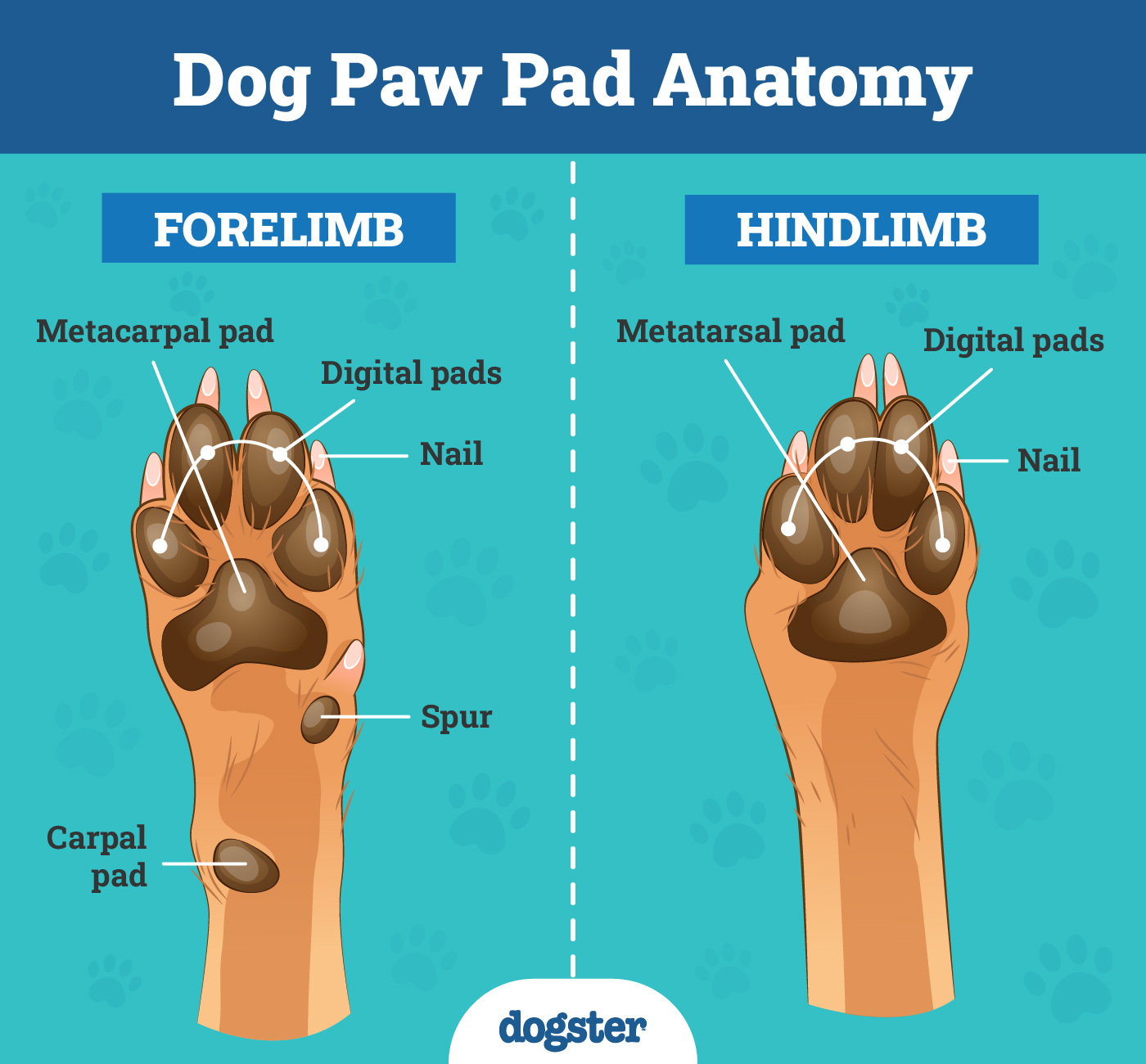
Each dog’s toe has a toenail (claw) associated with it. There are usually four nails on a dog’s rear paws that are attached to a toe and often five (including the dewclaw) on their front paws. Your dog’s claws are used for traction, scratching, digging, and holding.
In a normal healthy dog paw these claws curve slightly and point forwards towards their head, (except the dewclaws). Claws have an outer shell made of keratin which can be clear or black. Inside this is an inner core called the quick, which contains blood vessels and nerves. This is the part which hurts and bleeds if you cut a nail too short.
The Dewclaws

If you look at the inside of your dog’s front leg- around this wrist area they may have an extra fifth nail, called the dewclaw. The dewclaws can also assist with traction and balance, but are also used to help grip things which they are holding between their paws.
Most dogs have dew claws only on their front feet, some won’t have any while others will also have dewclaws on their back feet. Extra dewclaws on the back feet can sometimes only be attached by skin, meaning they are more ‘floppy’ and likely to be caught or broken than claws that are attached by bone and more stable. Some breeds, such as the Briard and the Great Pyrenees, can even have two dewclaws on each paw, but the extra one is only attached by the skin, not the bone.
The dewclaw doesn’t get worn down naturally through running and walking as the other claws do, so you must check and trim it as necessary to prevent it becoming too long.
The Pads
Digital Pads
The digital pads are the small, round pads under each toe (digit) on your dog’s feet. They provide cushioning and have thick, keratinised skin on the outside for protection.
A dog’s toes won’t wiggle like humans, but their paw prints are just as unique as a human fingerprint and can be used for identification.
Metacarpal and Metatarsal Pad
The metacarpal and metatarsal pad refers to the main, big heart-shaped pad in the center of the front and rear paws. This pad takes much of the dog’s weight when they walk and run. As with the digital pads, they contain fatty tissue that cushions and protects the bones of the paw, and an outer layer of thick keratinised tissue which is tough, and helps protect the paw from cold, warm and rough surfaces.
While panting is the main way a dog cools down, dogs can also sweat through their paws and release a small amount of body heat. Scent producing glands are also present on the foot pad and between a dog’s toes. These scents are believed to be a form of canine communication and used in marking territory. Dogs are often seen scratching the ground after urination and defecation.
Carpal Pad
Located at roughly the level of the dog’s carpus (wrist joint) is the carpal pad. These pads are only found on the front two legs and don’t touch the ground when your dog walks. Although it is a rough and leathery pad like all the others on your dog’s paws, it isn’t intended to support your dog’s weight but rather to help them come to a stop quickly or make an abrupt pivot.
The carpal pad is a bit smaller than your dog’s digital pads, and if they have long hair or feathering around their paws and legs, you may not notice it easily, but all dogs have one.

The Different Dog Paw Shapes
It might come as a surprise, but not all dog paw shapes are the same. Of course, the size will differ between small, medium, and large breeds, but depending on the breed, the paws can look different too.
All paws have the same basic anatomy we’ve discussed above, but let’s discuss some of the different foot shapes and why some dogs have specific types.
Cat Feet
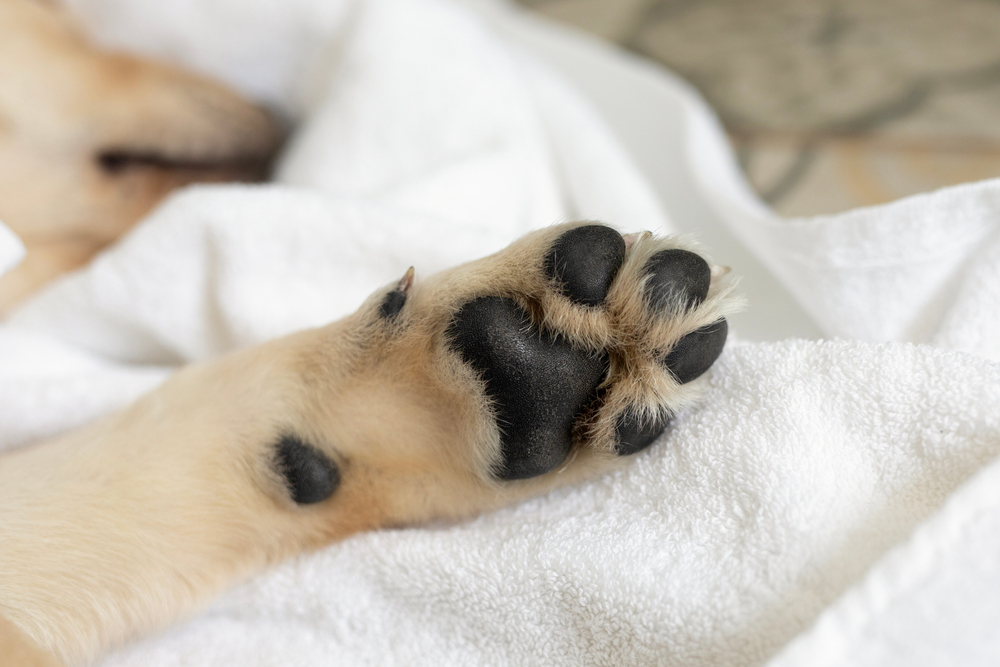
Dogs with “cat feet” have paws that are more compact and round like the feline paw. This paw shape is one of the more common types.
This shape aids in balance, agility, and stability. Bull Terriers, Old English Sheepdogs and Akitas are examples of breeds that commonly have this paw shape.
Hare Feet
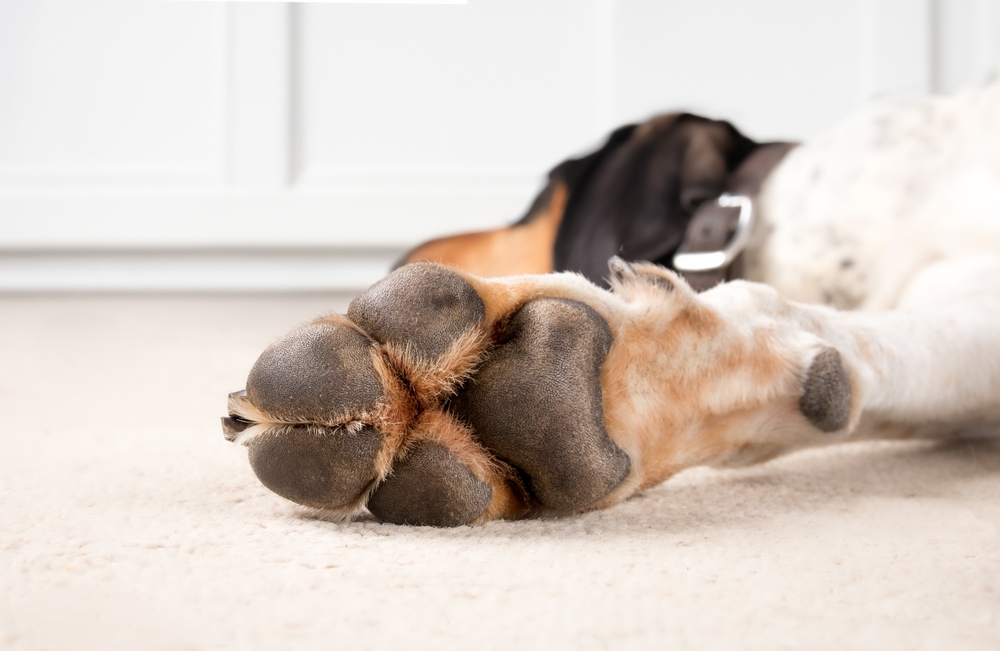
Unlike cat feet, dogs with hare feet have two elongated middle toes, giving the appearance of a rabbit or hare’s foot. This allows the dog to sprint and perform quick movements, even starting in a resting position.
Hare feet are perfect for sprinters! A few breeds with hare feet are Greyhounds, Samoyeds, and Whippets.
Webbed Feet
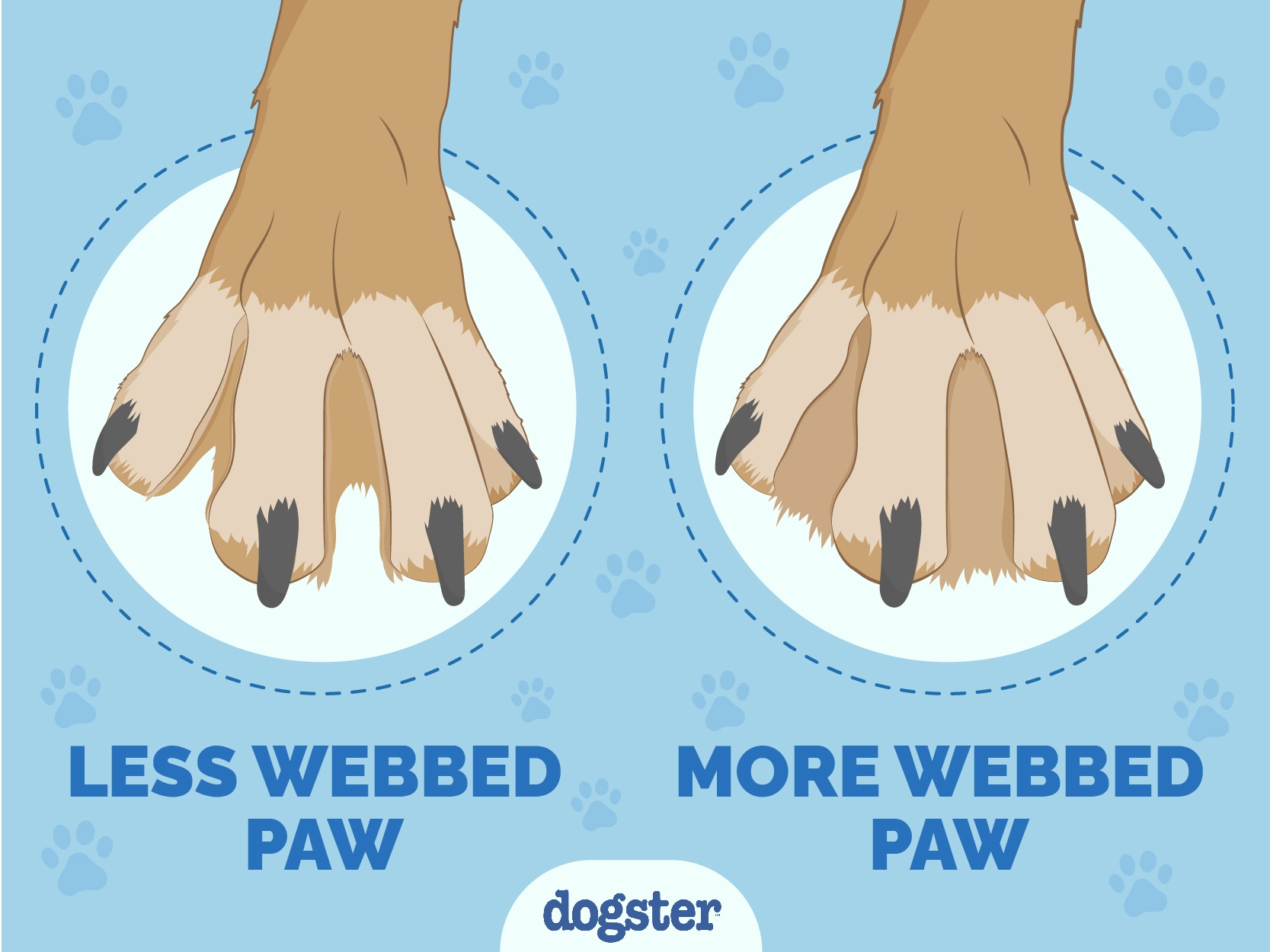
It isn’t uncommon to find a bit of webbing between your dog’s toes, but some dogs have skin webbing that extends further between their toes. These dogs are typically skilled swimmers and lovers of water. As well as helping with swimming, webbing is also useful for digging, and wading through snow.
It’s no surprise therefore that dogs who have been bred to work in water have webbed paws, such as the Portuguese Water Dog, Nova Scotia Duck Tolling Retriever, Otterhound and Irish Water Spaniel.
- Read this fun article about one of our pups’ feet: Penny’s Grinch Feet: The Time Her Toe Floof Actually Turned Green

How to Take Care of Your Dog’s Paws
Although your dog’s paws are remarkable, weather-resistant, and rugged, they aren’t indestructible. Paws can pick up foreign bodies that can cause discomfort between the toes, become injured, and suffer from burns or frostbite.
Be sure to take your dog to the vet if they are licking or chewing at their paws excessively. This is usually a sign of pain or irritation. Swelling of the paws, broken or inflamed skin, blisters and burns, and broken nails all warrant a trip to the vet.
Regularly check your dog’s paws and claws, ease your dog and their paws into new activities slowly, and get boots for your dog if you need to walk or run them on rough, rocky terrain or through snow and ice. Wash their paws if needed after a walk.
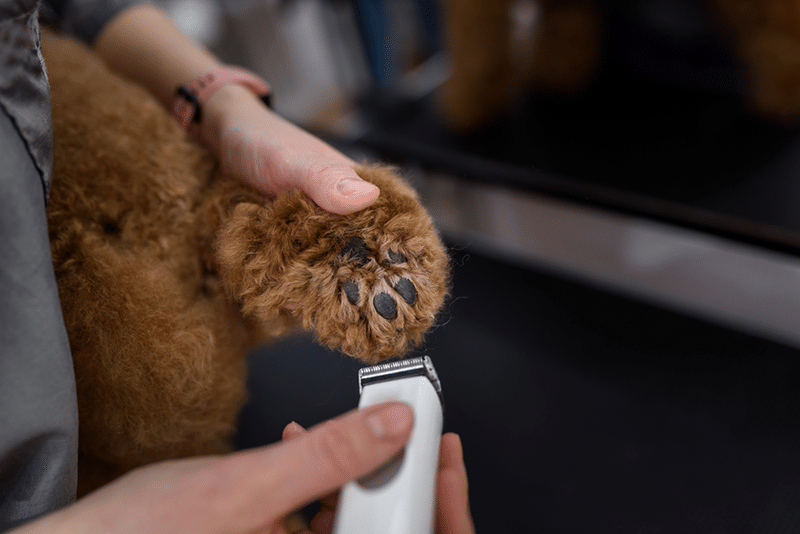
Regularly check and trim your dog’s nails if required, making sure not to cut into the sensitive part of their nails. If you don’t know how, take them to a professional groomer. Some dogs will also benefit from hair being trimmed around their paw and between the toes.

Conclusion
It can be easy to forget about your dog’s paws, but it’s essential to give them regular attention. Understanding your dog’s paw anatomy can help you pick up the signs of any problems earlier, and help you care for them. The anatomy of a dog’s paw is the same throughout the species, but the shape of the paw can differ.
Although dog paws are durable, they aren’t indestructible, and you need to care for them by regularly checking and trimming their nails if necessary and examining their pads and between their toes. Make sure you also protect their paws in hot or cold weather or when walking on tough terrain.
See also:
- Australian Shepherd Herding: A Complete Guide
- My Dog Is Drooling a Lot: When to Be Concerned (Vet Answer)
Featured Image Credit: BartTa, Shutterstock