Dog Parkour: What It Is & How to Do It With Your Pup

In this article
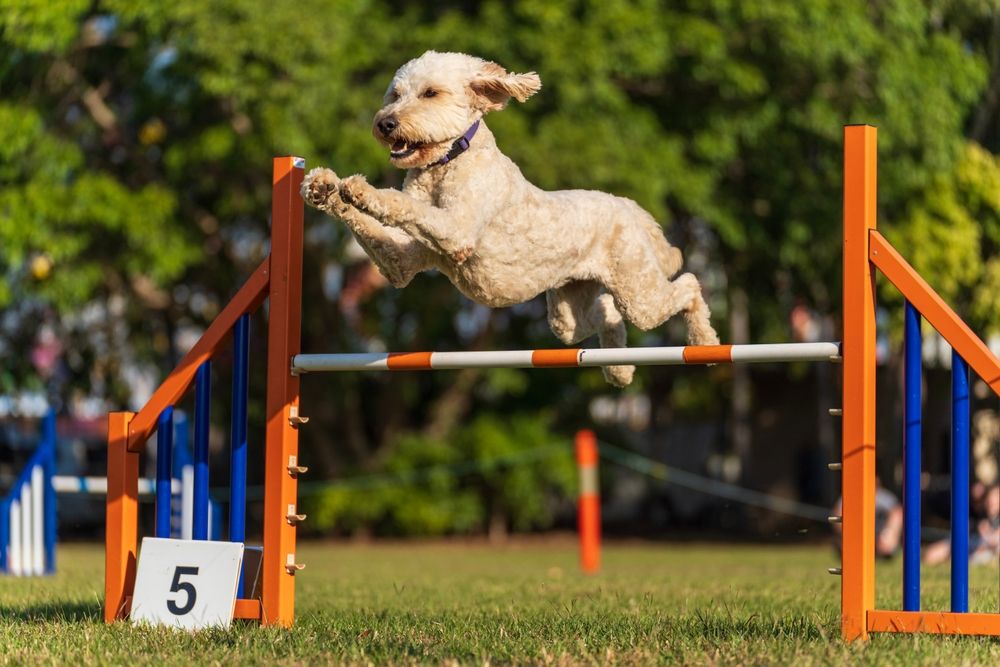
Dog parkour is the canine equivalent of parkour or free running. Dogs run over, under, and across obstacles in the environment. There are parkour courses and even competitive events, but you can also take part at home, and, unlike a lot of canine sports, you don’t need any specialized equipment.
Any dog breed can take part, although the obstacles that different dogs can negotiate will vary according to breed size and energy levels. Parkour benefits dogs because it provides physical exercise and also encourages an active mind because the dog will need to figure out how to tackle certain objects while listening to commands from the owner.
Fortunately, while the dog needs to tackle a lot of different obstacles and needs to be in reasonable physical condition, the owner does not have to take the same route, so humans don’t need the same level of coordination as their pups.

How Does It Work?

Dog parkour sees dogs taking on a series of obstacles in the environment. These obstacles can involve hurdles and balance beams set up for training, or a parkour session can use environmental objects like park benches, bollards, or even trees.
It can take a lot of training to encourage a dog to balance on a thin plank or jump from one bench to another, which is where the relationship between dog and handler comes in. Tasty rewards will also help.
The sport is considered an urban event, which means there aren’t really any organized events or competitions. Instead, owners video their dogs as they perform tricks and runs, and then send them into organized competitions for judging. This not only means that the dog is being tested but it challenges the handler to be able to find the most appealing runs with the greatest potential for tricks.
Parkour doesn’t require any specific equipment. Once trained, the dog will run without a leash or harness, and it will use objects in the environment rather than hurdles and beams. However, you can buy items for training in your yard, and you will likely need some kind of treat as motivation.
There are also no restrictions on dog breed or even age. If your dog is unable to perform certain tricks, don't encourage those tricks. If you have a toy breed, look for smaller obstacles that are suitable even for little legs.
Are There Different Types of Dog Parkour?

There are a lot of canine sports, some of which share some similar elements with dog parkour. These include:
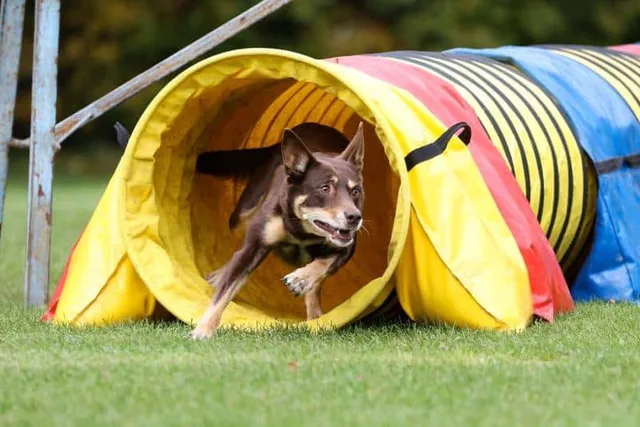
- Agility – Dog agility is one of the most common forms of canine sports and is seen at global exhibitions and dog shows. In agility, dogs compete to post the fastest time while tackling obstacles like tunnels, slaloms, and see-saws. The dogs must follow a predetermined path around the course and the handler ensures that they stay on the path while posting the quickest possible time. Agility is similar to parkour and requires similar skills, but it uses a set obstacle course rather than environmental obstacles.
- Dock Diving – A lot of dogs love dock diving, which sees them running to the edge of a jetty and jumping into a large body of water. Although there aren’t any obstacles to overcome, as such, it can be challenging to convince the dog to jump into unseen water, at least initially.
- Obedience – Dog obedience is extreme dog training. Handlers have their dogs perform a series of obedience skills. Some events use music and the competitors time their movements to the music while others are more free-form. Obedience is not as physically demanding as dog parkour, but it requires a strong bond between handler and dog, and it requires a lot of training and practice.
- Flyball – Flyball is fast, intense, and hard work. Dogs work in teams with each dog in turn running down a lane, clearing hurdles. At the end of the lane, the dog presses a launch pad and catches a tennis ball before running back to the start line before the next dog runs. The winning team is the one whose last dog crosses the finish line first.
Where Is It Practiced?

There are organized dog parkour training classes, although availability will depend on the popularity of the event in the area. You can also practice at home if you have enough outdoor space, and because the sport is an urban obstacle course, you can take your dog out to practice in parks, on streets, and in other locations.
Initially, though, you will need to ensure that your dog has excellent recall and that it follows your commands. Your dog will need to trust your judgment and be up for the challenge. Once your obedience training is good, you can start to introduce some basic parkour skills and master these before moving on to the more challenging elements of dog parkour.
There aren’t organized events in the traditional sense, but there are competitions. Competitions typically require that participants send in videos of their dog parkour runs. Judges will determine the best competitors and prizes may be awarded.
Advantages of Dog Parkour
- No Equipment Needed – Unlike a lot of canine sports and dog events, you don’t need any specific or specialized equipment for dog parkour.
- Any Dog Can Take Part – From the smallest to the largest breed, any dog can enjoy dog parkour. You can increase or decrease the difficulty of the parkour course by simply adding and removing obstacles to the run. Small dogs can take part, but you will need to choose the run carefully, while large dogs might find some obstacles too easy, so you will need to adapt.
- You Can Do It Virtually Anywhere – Once your dog has excellent recall and you have learned some of the basic tricks and skills, you can take your dog parkour virtually anywhere, although you should avoid doing it in areas that are too busy or where there are possible hazards.
Disadvantages of Dog Parkour
- No Organized Events – Dog parkour uses urban obstacles, in place of the more formal obstacle courses used in agility courses. This means less equipment is needed and it opens up the possibility of doing dog parkour virtually anywhere, but it also means few organized events take place.
Frequently Asked Questions
Which Breeds Are Best at Dog Parkour?
Any dog can take part in dog parkour, from toy breeds like Chihuahuas to giant breeds like Great Danes. You will need to choose obstacles and tricks based on your dog’s size, age, and physical activity level, but breed really doesn’t matter.
Do You Need Any Equipment?
You can benefit from setting up a few basic obstacles in a garden or yard, but you can also use items you already have, like chairs and wooden planks. Otherwise, the only equipment you need is a dog, and likely some treats.
How Can You Get Started with Dog Parkour?
You can find dog parkour training classes in some areas, but you can also start yourself at home. Ensure recall and basic obedience skills are up to scratch before introducing some basic obstacles to your daily training. Once you have a few basic skills, you can start to advance to more complex obstacles.

Final Thoughts
Dog parkour is the canine equivalent of parkour, and it sees dogs running over, under, and across obstacles in urban areas. Such obstacles can include bollards, benches, seats, and even trees and fences.
Although there are limited training class options available, this is one event that doesn’t require any special equipment so you can start training from the comfort of your own yard before progressing to more complex routes. And, if you do want to compete, you can find competitions that ask participants to send videos of their dogs completing the best parkour runs, with judges deciding the best runs and choosing the placings.
Sources
Featured Image Credit: Vincent_Nguyen, Shutterstock
Expert dog care, straight to your inbox
News, insights, expert advice, and everything dog.

No spam — unsubscribe anytime.
By signing up, you agree to our Terms & Conditions and Privacy & Cookies Policy.
How useful was this post?
Click a star to rate. You can leave written feedback afterwards. (We read all feedback.)
Matt is a freelance writer from the UK. He lives with his partner and daughter, as well as two cats and one dog. A data analyst by profession, Matt moved from numbers to words more than 15 years ago and has been writing ever since. Having volunteered at a local animal sanctuary, he has a lot of experience with dogs, cats, and horses. Matt has also kept bearded dragons, a variety of birds, fish, guinea pigs, hamsters, mice, and rats. His daughter has adopted the same passion for animals, keeping and breeding snakes. A geek at heart, Matt is a member of a local board gaming group and regularly forces his family to “enjoy” board games with him at home.