
19 Brindle Dog Breeds: Vet-Reviewed Info, Pictures & History


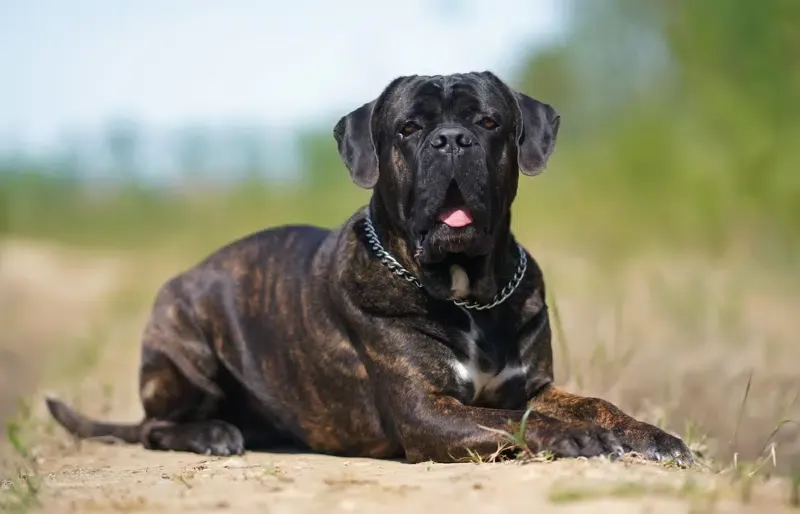
We discover new reasons to love our dogs every day, but from the outset, one of their most captivating traits is their varying hair color. While some present solid colorations, dogs appear in a wide variety of color and pattern combinations, producing exquisite merle, ticked, piebald, and brindle coats.
The “tiger stripe” arrangement defining the gorgeous brindle coat can appear on several breeds and in countless patterns. Does your favorite dog come in a brindle variety? Find out for yourself in this look at the traits and history of 19 brindle dog breeds; however, be mindful that this list is not exhaustive.

How Are Brindle Dog Breeds Classified?
Brindle is associated with one of the alleles at the K locus (CBD103), which plays a major role in coat color expression.1 The other alleles include the dominant black allele and the recessive yellow/fawn allele, which allows agouti-based patterns to show. Dogs with the dominant black allele will not display brindle because it masks other K locus patterns.
The brindle mutation interacts with other coat color genes, primarily the agouti gene, to produce different extents and intensities of brindle patterning across the body. Typically, brindle dogs have a light pheomelanin base coat pigmentation with stripes in darker eumelanin colors. If the light stripes appear on a dark base, the dog is called a “reverse brindle.”
The 19 Brindle Dog Breeds
1. Boxer

Breed Overview
Origin:
Lifespan:
Height:
Boxers appeared in Germany in the late 19th century, and the breed may have stemmed from ancient Molossian war dogs. Its most direct ancestor was the Bullenbeisser, a trusted working and hunting dog capable of fearlessly taking down large game.
The brindle coat and black mask are hallmarks of the breed, but Boxers earn love and appreciation more for their personalities. Although their intelligence and confidence can make them challenging to train, they are exceptional family dogs. Boxers are patient and protective of children, but gladly show off their fun-loving and goofy side to delight everyone in the home.
2. Plott Hound

Breed Overview
Origin:
Lifespan:
Height:
The attractive Plott Hound coat often appears in one of many brindle colors, adding a bit of flair to this otherwise low-key hunter. As North Carolina’s state dog, the Plott Hound originated there in the 1700s-1800s. Henry Plott, the son of a German immigrant, inherited his father’s German hunting dogs. Then, he developed the foundation for the Plott Hound breed in Haywood County.
The Plott Hound is a worthy farm dog and homestead protector, but they also excel in hunting. In the Appalachians, they’re fierce hunters of bears and mountain lions.
3. Cardigan Welsh Corgi

Breed Overview
Origin:
Lifespan:
Height:
Though not as popular as their stumpy-tailed cousin, the Pembroke Welsh Corgi, the long-tailed Cardigan Welsh Corgi has been around for much longer. The Cardigan Welsh Corgi has ancient herding dog origins in Wales, with some historical theories suggesting possible shared influences with early European working dogs, though its exact lineage is not definitively established.
The energetic, agile, undersized herder was talented at driving cattle while avoiding damaging kicks as they nipped the cow's heels. The Cardigan Welsh Corgi is one of the smarter and more energetic small breeds. They’re loyal, trainable, and affectionate with family but need quality training and ample exercise to keep them happy and well-behaved.
4. Great Dane

Breed Overview
Origin:
Lifespan:
Height:
Despite their name, Great Danes owe their existence more to German breeders than to the Danish. Early ancestors of the Great Dane were powerful boarhounds used for hunting wild boar and large game in Europe.
In the 1800s, breeders refined the Great Dane in Germany using selective breeding, including influences from Greyhound and mastiff-type dogs. Through selective breeding, they developed into the calm, friendly, and dependable companion dogs known today. Great Danes also make excellent service animals.
5. Bullmastiff

Breed Overview
Origin:
Lifespan:
Height:
Gamekeepers on country estates needed a specialized guardian in the 1800s since a surge in poaching gave wealthy landowners frequent issues. To fit the bill, breeders developed a Mastiff/Bulldog blend.
The powerful Bullmastiff was bred to track, intercept, and physically hold intruders until help arrived, without causing unnecessary harm. Although their poacher-battling days are long behind them, many of those traits persist in today’s Bullmastiffs.
They’re calm, easy-going, and patient with family. They are naturally protective and will position themselves between their family and perceived threats when necessary.
6. Irish Wolfhound

Breed Overview
Origin:
Lifespan:
Height:
The Irish Wolfhound has been revered as a large Irish hunting dog since ancient Roman times. Prized for their hunting prowess and ability to subdue wolves, these legendary dogs were coveted far and wide.
Sadly, the original Irish Wolfhound dwindled to near extinction by the 1700s. After searching Ireland for remaining dogs and adding in some other breed genetics, George Augustus Graham rebuilt and standardized the breed in the 1800s.
Modern Irish Wolfhounds may lack the intense hunting acumen of their forebears, but they remain desirable companions for their noble demeanor, courageous attitude, and grace in the home.
7. Basenji

Breed Overview
Origin:
Lifespan:
Height:
The Basenji was developed in Central Africa with long geographic isolation before being introduced to the Western world in the 19th and 20th centuries. They’re an ancient breed known for their unique vocalizations, cleanliness, and primitive behavioral traits. The short-haired, low-shedding dog has remained largely unchanged since their ancient African origins.
The Basenji still displays their wild ancestry in their independence and intelligence. Often described as cat-like, they require a patient and capable owner who can provide the mental and physical stimulation they demand.
8. Dutch Shepherd

Breed Overview
Origin:
Lifespan:
Height:
With a gold brindle or silver brindle coat, the gorgeous Dutch Shepherd has been a valuable farm and working dog since the 1700s. Farmers in the Netherlands needed a versatile herding dog that could work and offer protection when necessary.
As the need for herders dwindled, they took on new roles as guards, service animals, and military canines. Like many shepherd breeds, the Dutch Shepherd is intelligent and energetic.
They’re highly trainable and adaptable but require a firm leader who can provide adequate training, socialization, and exercise for optimal behavior.
9. Greyhound

Breed Overview
Origin:
Lifespan:
Height:
The Greyhound is a sighthound with speed and stamina that shares ancient ancestry with many other sighthound breeds. Sighthound-type dogs appeared as early as ancient Egypt, where they supposedly held a lofty position as the pharaoh’s hounds and worked to chase and take down wild game.
The Greyhound’s elegant form is a thing of beauty and function. As the fastest of all breeds, they rocket ahead of the competition thanks to their springy spine, muscular yet aerodynamic build, and powerful double suspension gait, allowing them to speed along at over 40 miles an hour.
While Greyhound racing is fading, they still make delightful companions due to their calm demeanor and sweet temperaments.
10. Mastiff

Breed Overview
Origin:
Lifespan:
Height:
The Mastiff is an ancient breed from England, and they were established before Roman forces landed on the island. The large, powerful breed was used by the Romans in arenas and military contexts as they took particular interest in the dog and shipped many back to Italy. In the Middle Ages, the modern breed came into shape as a fearless hunter, war dog, and guardian.
Their protective manner is as strong as ever in today’s Mastiffs. They’re affectionate and easy-going with family, and they stay watchful and ready to respond if they notice a threat.
11. French Bulldog

Breed Overview
Origin:
Lifespan:
Height:
The French Bulldog was derived from a toy-sized Bulldog, but found their footing in France. With the Industrial Revolution driving lace-makers out of England to find work, workers emigrated to northern French regions, taking their tiny lapdogs along. There, the small Bulldog developed erect ears and gained widespread popularity among elites and the working class.
Frenchies are still popular today due to their apartment- and city-friendly size and friendly temperaments. In 2022, the French Bulldog stole the Labrador Retriever’s top spot on the AKC’s list of most popular breeds.
12. Bull Terrier

Breed Overview
Origin:
Lifespan:
Height:
The Bull Terrier’s narrow eyes, sharp ears, and sloping muzzle become more intriguing under a brindle coat. The distinct look emerged in the early 1900s, which was a century after the breed came into shape from refined Bull-and-Terrier crosses in England.
The stubborn yet charming Bull Terrier has been a popular companion since their origins in the mid-1800s. Though many still maintain the old Bulldog’s edginess around other dogs, depending on training and temperament, much of their ancestors’ fighting drive has been replaced with a lovable, playful energy they hope to share with a devoted owner.
13. Cane Corso

Breed Overview
Origin:
Lifespan:
Height:
The Cane Corso’s ancient lineage is apparent in their timeless Molossian looks. The powerful, fearless protector evolved from ancient Roman war dogs. They eventually became guardians and versatile farm dogs in Italy.
While farming practices diminished in the 1800s and 1900s, the Cane Corso’s role became redundant, and the breed almost went extinct. Thankfully, devoted breeders worked with the small remaining stock in the latter half of the 20th century, reviving the Cane Corso into a top-20 AKC-recognized breed.
14. Cairn Terrier

Breed Overview
Origin:
Lifespan:
Height:
The brindle patterning isn’t as apparent on longer-coated breeds like the Cairn Terrier, which is a scrappy little dog that emerged on the Scottish Isles around the 15th–17th centuries. On the Isle of Skye, they were used to hunt foxes and rodents among stone piles called cairns.
Since they’re Independent, hardy, and bold, they had no issue taking on predators like foxes and badgers. The Cairn Terrier’s stubborn temperament is still evident in today’s pets, but that hasn’t made them any less lovable.
They’re bold, curious, and energetic, requiring supervision outside, lest they escape the yard and give chase to neighborhood animals. However, with their liveliness, loyalty, and joyous character, forgiving their mischief is all too easy.
15. Bouvier des Flandres

Breed Overview
Origin:
Lifespan:
Height:
As another long-coated brindle breed, the resolute Bouvier des Flandres was an effective cattle herder in Flanders, which stretched across France, Belgium, and the Netherlands. The breed developed over centuries in the Flanders region before formal recognition in the modern era. As a versatile worker, Bouvier des Flandres often did extra duty as a guardian and cart-puller.
The all-purpose brindle dog maintains their impressive work ethic and requires an owner who can satisfy their needs and manage their drive. They’re intelligent, affectionate, and loyal to a fault, and the rugged Bouvier can be a delightful and dependable family dog for the right owner.
16. Catahoula Leopard Dog

Breed Overview
Origin:
Lifespan:
Height:
The Catahoula Leopard Dog is well-known for their color variations and spotted merle coats, but brindle patterns can also appear. Though the precise history is hazy, Louisiana’s official dog likely originated around Catahoula Lake as a cross between European working dogs and regional dogs in Louisiana, with some historical theories suggesting possible indigenous influence.
The multi-faceted working dogs earned fame for their hunting acumen for wild and often dangerous game, and more so for their herding ability. The dog had an uncanny knack for controlling wild herds like a living fence. As a companion, the Catahoula is affectionate and easy-going with family but highly protective and territorial, requiring firm leadership and early socialization.
17. American Staffordshire Terrier

Breed Overview
Origin:
Lifespan:
Height:
The American Staffordshire Terrier appears in numerous colors, including several brindle varieties. Sharing common ancestry with the Staffordshire Bull Terrier and other bull and terrier-type dogs, the AmStaff’s history begins with these mixes that were popular for blood sports in the 1800s.
The American Staffordshire Terrier is smart, energetic, strong, and an excellent pet for those with time for them. The highly trainable dogs deserve abundant attention, socialization, and enrichment to thrive. While they love people, they may not always be the best with other dogs.
18. Boston Terrier

Breed Overview
Origin:
Lifespan:
Height:
The Boston Terrier can appear in brindle, seal, or black and white patterns, with the classic “tuxedo” look being especially well known. The Boston Terrier was developed in the late 1800s in the United States, originating from crosses between English Bulldog-type dogs and the now extinct White English Terrier. Originally bred down from larger fighting-type ancestors, the breed was gradually refined into a smaller, companion dog with a more stable and friendly temperament.
Often called the “American Gentleman” due to their distinctive markings and polite demeanor, Boston Terriers are lively, intelligent, and people-oriented dogs. They are generally easy to train and eager to please, though they can have bursts of independence and high energy. While affectionate with families and typically good with children, they still benefit from early socialization and consistent training to ensure balanced behavior around other dogs and new environments.
19. Whippet

Breed Overview
Origin:
Lifespan:
Height:
The Whippet is a sleek sighthound breed developed in England during the 19th century, primarily from small Greyhound-type dogs and other local influences. Originally bred by working-class communities, they were used for rabbit hunting and later became popular in informal racing, earning them the nickname “the poor man’s racehorse.”
The Whippet is known for its elegant build, exceptional speed, and calm indoor temperament. Despite their racing heritage, Whippets are typically gentle, quiet, and affectionate companions that enjoy relaxing just as much as sprinting. They are intelligent and generally easy to train, though they retain a strong prey drive, meaning secure outdoor spaces and supervision are important.

Conclusion
Although it can be difficult to predict when you might see the coat appear in a litter, brindle dogs come from all walks of life. If you’re set on the gorgeous aesthetics of the tiger-striped pattern, you shouldn’t have any trouble finding a brindle dog to fit your lifestyle. You have to be patient and keep looking, and a brindle pup will surely pop up for adoption eventually.
Featured Image Credit: Eudyptula, Shutterstock
Expert dog care, straight to your inbox
News, insights, expert advice, and everything dog.

No spam — unsubscribe anytime.
By signing up, you agree to our Terms & Conditions and Privacy & Cookies Policy.
How useful was this post?
Click a star to rate. You can leave written feedback afterwards. (We read all feedback.)

Nicole has loved animals of all sizes her whole life so it's no wonder she has dedicated her career to helping them through what she loves best: learning, writing, and sharing knowledge with others. She’s the proud mom of two dogs, a cat, and a human. With a degree in Education and 15+ years of writing experience, Nicole wants to help pet parents and pets around the planet to live happy, safe, and healthy lives.