How to Train a Labradoodle: 11 Vet-Verified Tips & Tricks


Although bringing home a new puppy is an exciting experience for you and your entire family, it's a great deal of work to ensure that you raise your dog properly. If you have recently welcomed a Labradoodle to the family, you may be wondering about the best tricks for proper training, especially if this is your first time owning a dog.
From house training and obedience training to socialization, there is a lot to learn, and we're here to help! We put together a list of 11 tips to get your puppy training off to the best start, and even if you have an older Labradoodle, this advice will still be useful!

Before You Start
It is important to understand that each dog is unique, and your Labradoodle may take longer to learn than other Labradoodles. Becoming a good trainer is just as important as training your dog, and you don't need to be a certified trainer. The more you know and understand about the training process, the more successful you will be.
The younger you start training your Labradoodle, the better, as early learning during developmental periods can support behavior formation, but that is not always an option. Older dogs can still be trained, but you may need more patience and time.
The 11 Tips & Tricks to Train a Labradoodle
1. Consistency
Whenever you learn something new, the best way to get results is with consistency, and it’s the same for a dog that is learning something new. Consistency is one of the most important aspects of training.
From the moment you bring your new dog home, you should begin a routine that includes the time they eat, when they walk, and when they nap. Your puppy will learn through a consistent schedule what is coming next and will anticipate the next activity. This will help reduce the likelihood of bad habits such as begging for food. Consistency supports learning and behavior development, and deviating from the schedule can disrupt your puppy’s training.
Consistency is not just about the routine; it is also about the commands and cues you use. Your Labradoodle needs to hear the same words in the same tone to learn and understand.

2. Positive Reinforcement
Positive reinforcement is another crucial aspect of training. It helps your puppy associate something positive with a certain behavior. This will encourage them to do it more as opposed to associating punishment with a certain behavior.
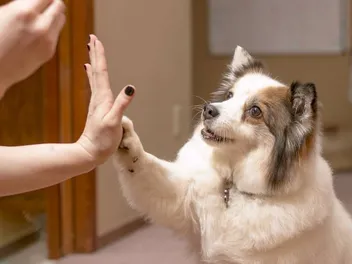
Positive reinforcement rewards your Labradoodle with a treat, praise, play, or other valued rewards for a desired behavior. For example, when you give your dog a treat for sitting after you say, “sit,” they will learn that sitting produces a reward. When your dog behaves correctly, try rewarding them with a treat consistently at first. Then, mix in other occasions when you just praise them, gradually transitioning to intermittent rewards to maintain the expectation and the unpredictability value of the reward high.
3. Verbal Cues
Verbal cues are helpful, and teaching your puppy basic cues is vital and the basis for obedience training and advanced training. Puppies can easily learn good behaviors using simple verbal cues, and they can be taught to reduce unwanted behaviors in the same way.
The most common and useful verbal commands for training your Labradoodle are:
- Sit
- Stay
- Down
- Come
- Good dog
- Drop
- Fetch
- Yes/no
- Good boy/girl
- Potty
It will be much easier for you to control your pup's behavior if you teach them the meanings of each cue by consistently using it with the respective action and reinforcing the desired response.

4. Socialization
Early socialization is essential for your new Labradoodle and helps your dog grow up well-adjusted and adaptable. Allow your pup to meet strangers and experience new sights, sounds, and environments as early as the primary socialization period at approximately 3–14 weeks of age. This can include puppy classes, controlled interactions with healthy, vaccinated dogs, or even friend visits.
Allow your Labradoodle to take their time and sniff around when meeting someone new, and don’t forget to praise and reward them during and after the introduction. If your dog or another dog seems uneasy or afraid, remove your dog from the encounter before they associate it with a negative experience.
5. Mind Challenges
Labradoodles are intelligent dogs, so it may be helpful to challenge their minds to prevent boredom. Mental stimulation is often unintentionally overlooked. Give your pup plenty of games and toys to play with. Puzzle feeders can be especially helpful when it comes to mental stimulation. Work on new tricks, play interactive games, and allow your dog to join you on appropriate errands. The more their minds are stimulated and challenged, the more engaged they may be during training, though individual learning speed will vary.

6. Short Training Sessions
Training can be mentally and physically tiring for a Labradoodle. Once your dog gets tired, they may lose interest and have difficulty maintaining focus. You may also begin to lose patience and become irritable if the training session lasts too long.
Keep training sessions short, about 5–10 minutes for young puppies and up to 10–20 minutes for older dogs. Monitor your dog, and watch for signs of them being easily distracted, bored, or tired. You will eventually learn when your dog is getting too tired, and you should try to stop training just before this happens.
7. Minimal Distractions
Dogs are easily distracted, especially younger ones still learning and exploring. It is helpful to minimize distractions when training since they could disrupt your dog’s focus and cause you to become irritable and impatient.
Distractions could be other dogs in busy environments, children running around the garden, or any distinct sounds or smells. Always start training for new behaviors in a quiet room away from any distractions.

8. Your Dog's Body Language
Dogs use their body to communicate, and you can learn a lot about how your Labradoodle is feeling by paying attention to their body language. Their eyes and ears, which are particularly expressive, provide important cues to their emotions. Body language includes head tilts, torso and leg movements, and tail movements.
You can learn when your dog is getting tired, uncomfortable, stressed, hungry, excited, or even relaxed through their body language. This will help significantly in your training, as you will know what your dog is enjoying, what they're responding when they may need a break, and when something may be a little off.
9. Positive Ending
Always let the last thing you do in a training session with your Labradoodle be something that they know. This way, the session ends on a positive note, and your dog is more likely to remain engaged and motivated for the next one. The key to training is to form positive experiences and associations with specific tasks and behaviors, so if you end the session on a sour note, your Labradoodle may become less enthusiastic about future training sessions.

10. Patience
Patience is vital for training. If you lack patience, you may snap or give up, which will negatively affect your training. You need to go in with a positive mindset and the understanding that your dog is not perfect and will make mistakes. Only train your dog when you are feeling up to it and are prepared for anything.
11. Proofing Behaviors
The final step in teaching your Labradoodle a new behavior is proofing the behavior. Just because you are near the end of the training process doesn't guarantee that the behavior will be reliable in different environments. Learn how to reinforce desired behaviors, so your dog will behave just as well at a friend's or the park as at home.
Recognizing potential behavioral problems might help you catch them early and fix them before they spiral out of hand. You can then put your dog’s new skills into practice with a range of distractions. Behavior management is a crucial component of any dog training program.
If you are concerned about your dogs' behavior we suggest speaking to a vet
House Training & Crate Training
House training is one of the first and most important tasks to teach your Labradoodle. Crate training can be a beneficial method in this training process.
Crates are popular because they give dogs a sense of security and a place of their own when introduced gradually and used appropriately. A crate is where your dog will rest, sleep, and get downtime. Since it is your dog's sleeping place, they won't want to use the bathroom there, and that’s why it is effective for house training. It can help you predict when your pup needs to go outside so you can take them to their spot and reward them when they go.
The key to house training is to set a routine that enhances the likelihood that your dog will eliminate in the proper location when you are around. This enables you to reward and praise your pup and positively reinforce the behavior. Again, this requires a lot of patience and consistency.

Leash Training
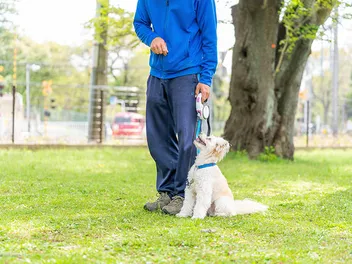
Leash training is essential for every dog, no matter how well-behaved they are. Several public places require dogs to be on leashes, and your leashed dog is generally safer and easier to manage around other dogs that may not be well-behaved. Slowly introduce your Labradoodle to their leash; when they're comfortable wearing it, you can train them to walk next to you without pulling.
Summary
Your Labradoodle puppy is like a blank slate, so with your guidance, they can develop the desired behaviors and values to grow into a more adaptable and adjusted adult dog. Patience and consistency are essential to successful training, along with early socialization and positive reinforcement. Every dog will learn at a different pace and respond better to certain methods, but with perseverance, you can have your Labradoodle trained reliably over time.
Sources
Featured Image Credit: Lopolo, Shutterstock
Expert dog care, straight to your inbox
News, insights, expert advice, and everything dog.

No spam — unsubscribe anytime.
By signing up, you agree to our Terms & Conditions and Privacy & Cookies Policy.
How useful was this post?
Click a star to rate. You can leave written feedback afterwards. (We read all feedback.)
Nicole has loved animals of all sizes her whole life so it's no wonder she has dedicated her career to helping them through what she loves best: learning, writing, and sharing knowledge with others. She’s the proud mom of two dogs, a cat, and a human. With a degree in Education and 15+ years of writing experience, Nicole wants to help pet parents and pets around the planet to live happy, safe, and healthy lives.