How to Potty Train a Vizsla: 8 Vet-Approved Tips & Tricks



The Vizsla is a strong, independent, and intelligent dog that tends to take well to training, especially as a puppy. Potty training is one of the first things that you should focus on once you bring home your new Vizsla puppy. While it shouldn’t take too long to get the job done, don’t expect the training process to be a cakewalk. Accidents will happen, and patience will be necessary. Here are a few important tips and tricks that you can use to make the training less stressful and more effective overall.

The 8 Tips for Potty Training a Vizsla
1. Spend Extra Time at Home
It’s important to stick around at home as much as possible while you are potty training your Vizsla puppy. Vizlas are intelligent yet strong-willed and need the opportunity to go outside often for potty relief. Otherwise, they may develop anxiety, frustration, or inappropriate elimination habits, which can sometimes lead to destructive behavior.
If your pup can’t go to the bathroom outdoors because you aren’t around to take them out, they will likely make a mess in the house before your return. So, if you can’t take your dog outdoors at least once every couple of hours throughout the training process, hire a dog walker or have a friend or family member take them out in your place.
Once they have been potty trained, you should be able to leave them home for a few hours between bathroom breaks, depending on their age, individual bladder control, and overall health.
2. Designate a Specific Potty Spot
It’s a good idea to designate just one spot in your yard for potty time. Taking your dog to the same spot each time you go outside for a bathroom break will help them understand that you’re out there to take care of business, not explore. After taking them to the same spot a few times when they have to relieve themselves, they will start to associate the spot with potty time.
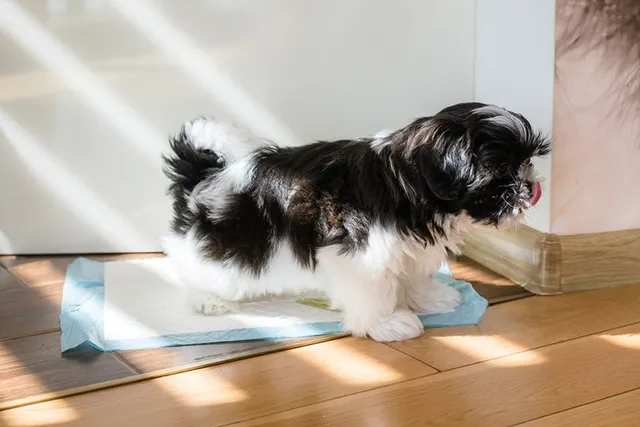
Before long, they will know exactly what they should be doing whenever you head to the spot. The same tactic can be used if indoor elimination is necessary (for example, in young puppies, during illness, or when outdoor access is limited), but most dogs should be gradually transitioned to eliminating outdoors as their primary routine. Lay a few potty pads on the spot(s) where you want your dog to relieve themselves, and then take them there whenever they show signs of having to go potty. Eventually, they will know how to go to their spot on their own.

3. Create a Schedule and Stick to It
Like toddlers, puppies don’t know how to hold their bladders for long periods because bladder control develops gradually with age, so there isn’t much time to get them to their spot when they have to go. For this reason, you should create a potty schedule and stick to it until your dog understands how to tell you when they need to get outside for a potty break or until they can hold it for longer periods. Your potty schedule should allow your dog to get outside for a bathroom break every 1 to 3 hours at first.
You should also include one or two nighttime breaks for the first few weeks. Once they show that they can hold it, you can adjust your schedule to every 4 to 6 hours during the day for older puppies, and you may be able to skip nighttime potty breaks altogether. Eventually, you’ll get into a rhythm and will not have to refer to a schedule any longer.
4. Consider Crate Training at Nighttime
A great way to help reduce the risk of accidents in the house while you sleep is to crate train them for nighttime. Most Vizslas want to relieve themselves away from their living space, so they will try not to go to the bathroom while spending time in a crate that is appropriately sized. There simply isn’t enough room in there!
Your pup will do what they can to hold their potty until they can get out of the crate and to a more suitable bathroom spot. So, you’ll wake up to a clean house and crate, but you’ll have to make a beeline for the outdoors with your dog for a bathroom break.
By the time they are 3 or 4 months old, they may be able to wait until the morning before relieving themselves, although many puppies still need a nighttime potty break depending on their individual bladder control and development.

5. Don’t Turn Potty Breaks Into Playtime
When you head outdoors for a bathroom break, ensure the break does not turn into playtime or an explorative adventure. You should take your dog to the bathroom spot, give them time to relieve themselves, and then head back inside. If they don’t use the bathroom after a minute or two, go back in and try again later.
This will keep your dog on task and ensure that you don’t have to deal with 30-minute potty breaks in the future because exploring and playing around have become the norm. You can always head back outside for a walk or playtime after a bathroom break; just make sure to reward them immediately after they eliminate so they associate the behavior with positive reinforcement, and separate the break and the fun time with a quick trip inside.
6. Look for Signs That Your Dog Needs to Go Potty
When you begin potty training your pup, look for signs of them needing to use the bathroom. If you learn the cues that they display, you may be able to anticipate their need to eliminate and reduce the likelihood of accidents. Once you realize they need to go potty, get them outside or to their potty pad before your floor becomes wet.
Signs to look for include:

7. Keep Treats Readily Available
If there is one thing that motivates a Vizsla puppy, it is a treat. Praising your dog with a pat on the head and a treat every time they use the bathroom in the correct spot is a surefire way to get them to associate the practice with a positive experience.
Once your puppy learns that they’ll be rewarded with a treat whenever they go outside to pee, they will be more likely to repeat the behavior. After a while, you can gradually reduce food rewards and replace them with praise or other reinforcement for good potty behavior.
8. Never Use Negative Reinforcement
Vizslas are eager to please and do not react well to punishment or aversive training methods. If you punish your dog by yelling at them, swatting them, or intimidating them in any way, they could develop fear, anxiety, or confusion, which may lead to avoidance, hiding during elimination, or continued accidents.
When you catch your puppy using the bathroom in an inappropriate place, interrupt them calmly and take them immediately to the appropriate elimination area. Never use punishment or aversive techniques. The more positive the potty training experience is for your dog, the easier and quicker the process will typically be.

Summary
Potty training a Vizsla puppy is not the easiest job in the world, but this breed’s intelligence and eagerness typically make it responsive to consistent, positive training, which can make the process less stressful and more rewarding for everyone involved. Being patient with your pup is vital, but when they understand potty time is a positive experience, your Vizsla will be less likely to have accidents as often indoors.
Featured Image Credit: TMArt, Shutterstock
Expert dog care, straight to your inbox
News, insights, expert advice, and everything dog.

No spam — unsubscribe anytime.
By signing up, you agree to our Terms & Conditions and Privacy & Cookies Policy.
How useful was this post?
Click a star to rate. You can leave written feedback afterwards. (We read all feedback.)
Rachael has been a freelance writer since 2000. In this time she has had an opportunity to research and write about many different topics while working to master the art of fusing high-quality content with effective content marketing strategies. She is an artist at heart and loves to read, paint, and make jewelry. As a vegan, Rachael is obsessed with helping animals in need, both in her community and anywhere in the world where she feels she can make a difference. Animals also happen to be her favorite topic to write about! She lives off the grid in Hawaii with her husband, her garden, and her rescue animals including 5 dogs, a cat, a goat, and flock of chickens.