Click-and-Treat Dog Training: What Is It & Vet-Verified Tips


In this article
Training is an incredible tool that enables pet parents to modify challenging dog behavior to have a well-mannered and educated companion. There are several different methods out there, but you want to be sure you’re using the best type of training for your canine pal. You might have heard about “click-and-treat dog training” (or clicker training) when researching techniques. But what exactly is it? How does it work? What are the benefits?
Click-and-treat dog training is a relatively simple method that works exceptionally well for most dogs. It helps clarify what you’re trying to teach them, and there are many other excellent benefits to using this method (though there are a few downsides too). Here’s a closer look at click-and-treat dog training!

How Does It Work?
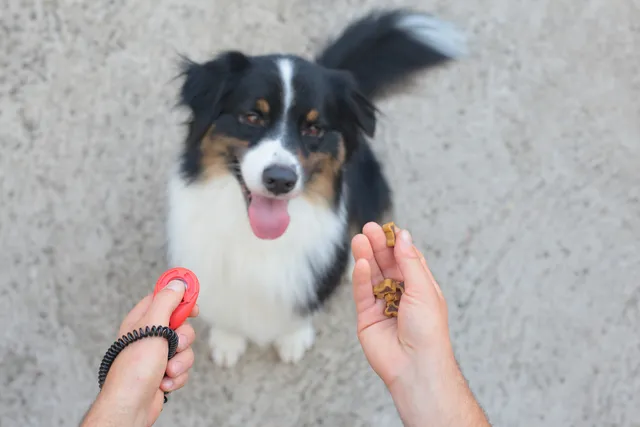
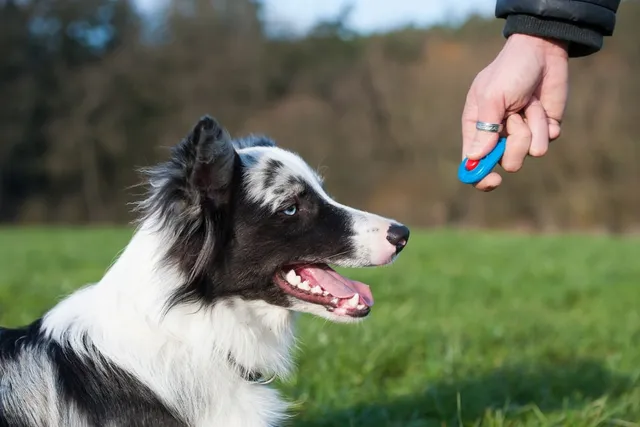
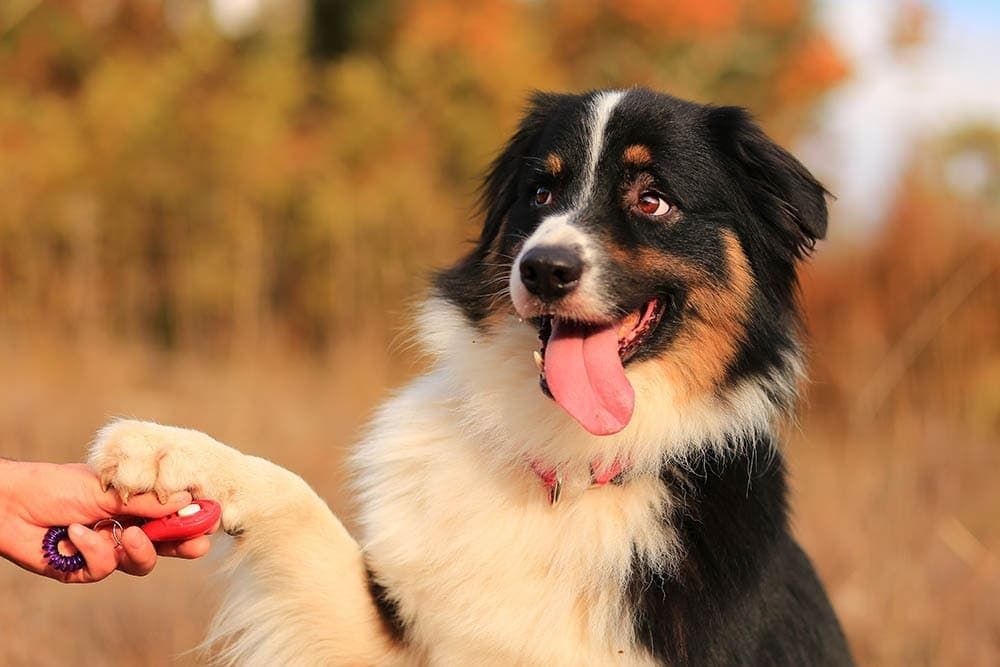
How exactly does click-and-treat dog training work? Essentially, it is training using positive reinforcement (treats) but with a clicker. So, what is a clicker? It is a small noise maker that makes a "click" sound.
Click-and-treat dog training is based on behavioral science that has studied how animals learn. A study determined that when behaviors are reinforced, animals are more likely to do the behavior again.1 So, with this type of training, you’re teaching your dog the behaviors you want them to do and rewarding them when they do them (instead of punishing them for what they shouldn't do), making learning easier for your pup.

What Does the Click Mean?
But why a clicker? The click lets your dog know exactly what they’re being rewarded for! You have to time it just right, but clicking at the exact moment your four-legged friend does what you want tells them what the right thing to do the next time is. Essentially, it is a tool that allows for clearer communication, taking a lot of guesswork out of the equation for your canine pal and reducing frustration.
Think of the click part of the training as a way to mark moments. Since you probably don’t make a clicking sound outside of training, it’s a unique sound that will draw your pet’s attention. If you weren’t using a clicker, though, you could use another distinct noise, such as snapping your fingers.
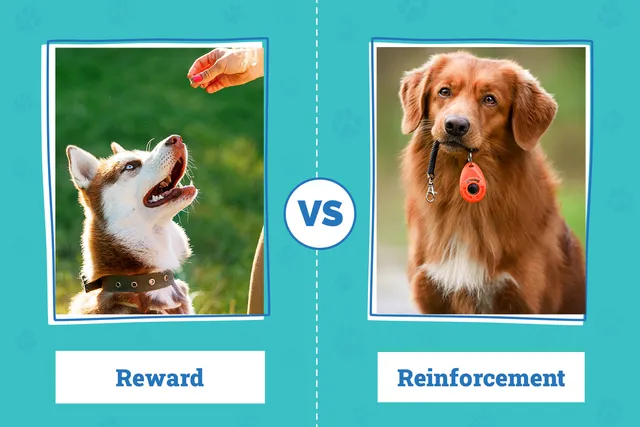
But the click part of click-and-treat dog training is utterly useless without the treat part. The treat is the reward that positively reinforces your pup’s behavior. The click merely lets your dog know a treat is on the way.
The most crucial part of click-and-treat dog training is getting the click to sound at just the right moment. For example, if you’re teaching your canine pal to sit, then the second their butt hits the floor is when you need to click. If you wait to click it when they get up again, they’ll think they are being rewarded for rising instead of sitting. So, the click works like a marker for your desired behavior, letting the dog know exactly why they will get a reinforcer and working as a bridge between the sound and the moment when the treat will be delivered. Therefore, clicks must always be followed by rewards!
Where Is It Used?
This type of positive reinforcement training is useful for any sort of dog training. Whether you’re trying to teach your puppy basic commands, such as “Sit!” or “Leave it!” or attempting to train your canine pal in something more complicated, click-and-treat training can be highly beneficial. Since it relies on positive reinforcement and teaching your pet what to do rather than what not to do, this sort of training is helpful in all situations.


Advantages of Click-and-Treat Dog Training
Click-and-treat dog training has quite a few advantages, with the main one being that your dog is being positively reinforced for the behavior you’re teaching them. The other significant advantage is that your dog is better able to figure out what you want them to learn.
Think about trying to teach your pup to lie down. You want to reward them as soon as their belly touches the ground, but some pups might immediately pop up once they see your hand about to deliver a treat, which means you can’t reward them fast enough. So, they might think you’re rewarding them for rising instead of lying. But if you click when their belly touches the ground, you’re marking the exact moment you’re rewarding them for. So, click-and-treat dog training makes things much clearer for your pup.
Another advantage of click-and-treat dog training is that dogs that undergo this training are typically fond of learning new things. They’re motivated to earn a click so they can earn a reward! This sort of training is more like a game, which makes it more fun for your canine companion, making them more willing to play and learn.
Click-and-treat dog training can also take some pressure off you. Instead of searching out your pet’s mistakes to correct them, you’re focusing on them when they’re doing what they should so you can find the right moment to click. This makes it less likely that you’ll get frustrated, which means training will be more fun for you too. This kind of training is based on looking at the positive or desired side of behavior that is good for both parties involved.
Finally, click-and-treat dog training is an excellent time to bond with your pup and have fun!
Disadvantages of Click-and-Treat Dog Training
There aren’t many disadvantages of click-and-treat dog training, but there are a few downsides.
One is that you have to remember to carry around both the clicker and a reinforcer. Forget one or the other and training is off the table! You need to have both items handy for this training to work properly. The typical reinforcers used in clicker training are yummy treats; however, other desired or valuable rewards are also available. The opportunity to play with the favorite toy, a belly run, and a word of praise can be incredibly reinforcing for some pups.
Your dog should also learn what the clicking sound means, and this is usually learned quickly by offering them a treat right after the sound, but investing a couple of days on “charging the clicker” is important. If this is new for you, starting with easy behaviors is a must. In the beginning, you should focus mainly on food treat reinforcers and then gradually start mixing up the delivery of other reinforcers that you know your pup values and appreciates. Each dog is unique, so for this to work, you need to know your dog’s likes and dislikes.
The next downside is that this sort of training takes a bit of time to run smoothly. You have to learn just when to click so you’re marking the correct moment. For example, it is easier to mark the “sit” down (butt on the floor) behavior that is offered for a few seconds than the highest point in a “jump,” which is only present for a fraction of a second. Getting that worked out can take time, so you’ll have to be patient with yourself and be wise by choosing behaviors that don't require extreme precision while you get your timing just right!


Frequently Asked Questions
You might still be wondering about click-and-treat dog training, so here are the answers to some of the most commonly asked questions!
Do I Have to Use the Clicker Forever?
No, you shouldn’t use the clicker forever. Once your dog has mastered the command or trick you’ve been teaching them, you can phase the clicker out. A clicker is just a training tool; it's useful due to its uniqueness and precision, but you can use the word “good” to let your pup know that they excelled and will get something nice for it!

What If My Dog Doesn’t Like Treats as a Reward?
Dog treats don’t have to be the reward in this type of training; it’s just that most dogs are food-driven and will enjoy treats. If yours does not, are you sure you have a dog? Jokes aside, a reinforcer is anything the dog perceives as a positive outcome; it could be lots of praise and love, a quick game of tug-of-war, or something else your dog loves.
Where Do I Find a Clicker?
You can find a clicker online or at pretty much any pet store. They’re incredibly cheap too!

Conclusion
Click-and-treat dog training can be incredibly beneficial for your dog, as it helps clear up any confusion they may have about what they are being reinforced for. All you need for this type of training is a clicker, treats, and a bit of patience! It might take you some time to figure out just when the clicker should be clicked, but it shouldn’t take too long before you and your pup are breezing through training.
See Also:
Sources
Featured Image Credit: elounix, Shutterstock
Expert dog care, straight to your inbox
News, insights, expert advice, and everything dog.

No spam — unsubscribe anytime.
By signing up, you agree to our Terms & Conditions and Privacy & Cookies Policy.
How useful was this post?
Click a star to rate. You can leave written feedback afterwards. (We read all feedback.)
Misty Layne lives out in the woods in small-town Alabama with her two Siamese - Serafina & Jasper. She also has an array of stray cats, raccoons, and opossums who like to call her front porch home. When she’s not writing about animals, you’ll find her writing poetry, stories, and film reviews (the animals are, by far, her favorite writing topic, though!). In her free time, Misty enjoys chilling with her cats, playing piano, watching indie and foreign films, photographing abandoned places, and catching up on her never-ending TBR list.