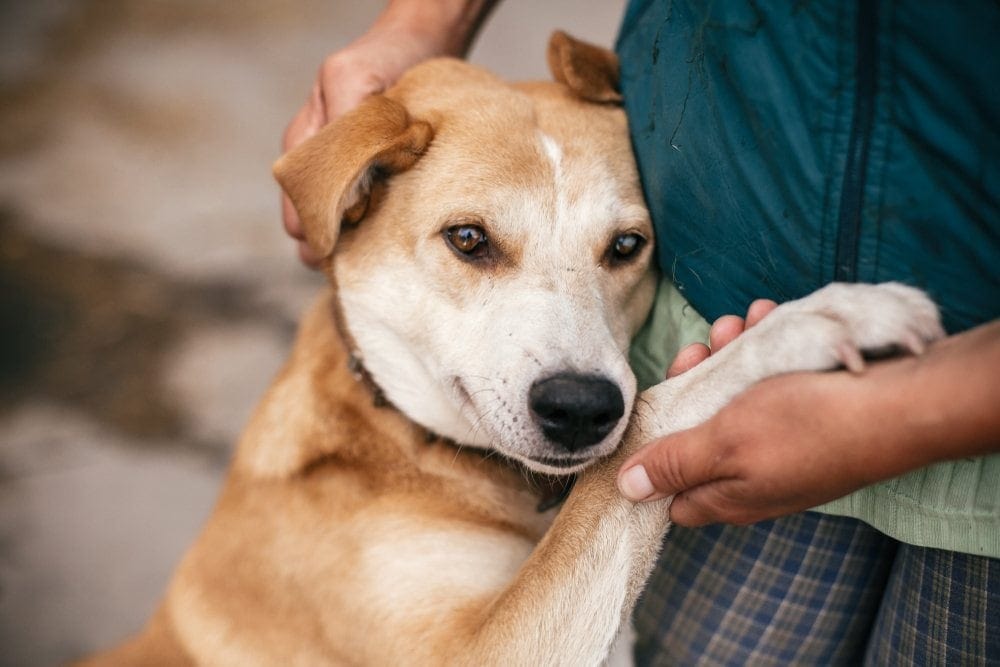
Social anxiety can be crippling for humans, and things like going to work and facing social engagements seem nothing short of overwhelming. Unfortunately, our canine family members can experience the same kind of social anxiety that we do. It’s important to understand the signs of social anxiety in dogs so we can catch the problem early in its development and address it to hopefully minimize the side effects.


What Is Social Anxiety in Dogs?
Social anxiety presents itself when a dog feels uncomfortable in social situations. The typical dog with social anxiety experiences extreme fear and unease when around strange people and/or other animals. They may even become anxious when around people they know if things get too loud or rambunctious. Social anxiety is usually fear driven due to a lack of experience in social situations.1
Social anxiety can make it tough to walk your dog, spend any time outdoors in social settings together, or even have visitors come to your home. You might find yourself avoiding social gatherings with your dog and planning walks outside of hours when your community is busiest with foot traffic.

What Are the Signs of Social Anxiety in Dogs?
Dogs with social anxiety typically show one or more signs of their anxious feelings. While a dog might be calm going into a social situation, anything that makes them uncomfortable or fearful can quickly result in feelings of anxiety, so signs of the ailment can come on without much notice, if any at all.
The signs of social anxiety2 that all dog owners should be aware of include:
- Cowering away from strange people and/or other animals
- Shaking
- Pacing
- Marking territory in inappropriate places
- Barking and/or growling
- Excessive panting
- Destructive behavior
- Aggression
Not all dogs show signs of social anxiety in the same way, nor is their anxiety triggered by the same things. You should understand your dog’s unique temperament, personality, and life experience to determine how they might show signs of social anxiety.
Just because a dog growls at a stranger once doesn’t mean they have social anxiety. If this condition is a problem for your dog, they will show signs of their distress anytime they feel anxious, which could be every time they’re in a social situation.
If your dog is showing signs of social anxiety, we suggest you speak to a vet.
If you need to speak with a vet but can't get to one, head over to PangoVet. It's our online service where you can talk to a vet online and get the advice you need for your dog — all at an affordable price!

What Are the Causes of Social Anxiety in Dogs?
Sometimes, social anxiety in a dog can be traced back to just one cause. However, for many dogs, the anxiety is caused by multiple things. A common cause is a lack of socialization. When a dog is not exposed to strange people and other animals while a puppy, they can develop a fear of strangers and animals that lasts into adulthood. That fear can then translate into social anxiety.
- Traumatic Experiences — Unfortunately, many rescue dogs come from abusive backgrounds that can cause them to distrust strangers and/or other animals.
- Cognitive Dysfunction Syndrome (CDS) — Elderly dogs may have CDS, which is similar to Alzheimer’s disease in humans. CDS can cause a dog to get confused or misunderstand what is happening in a social setting, which can cause anxiety.
- Fear of the Unknown — Things that happen that your dog is not familiar with can cause them to be fearful and develop social anxiety, as they don’t know what to expect. Strange noises, unknown objects, or too much commotion can create fear in a dog.
- Medical Problems — When a dog is ill, it can make them feel vulnerable in social situations. Hormone imbalances can make them unreasonably fearful and anxious. Painful problems like gum disease can cause anxiety and aggression. In cases like these, the anxiety is typically a secondary condition.

How Do I Care for a Dog With Social Anxiety?
The first thing to do when you suspect that your dog has social anxiety is to make an appointment with your veterinarian. They will likely complete a thorough examination to ensure that there are no underlying health conditions at play. From there, they may recommend over-the-counter or prescription anxiety medication to make your dog more comfortable and reduce, if not eliminate, the signs of social anxiety.
It is a good idea to work with a trainer who specializes in anxiety problems. They can help socialize your dog and get them used to being in different social situations without becoming fearful or anxious. It will take plenty of exposure, practice, and patience, but the work should result in a more social dog that feels comfortable in most social settings.
Frequently Asked Questions (FAQ)
Can Social Anxiety Be Avoided?
It’s impossible to say if social anxiety can always be avoided. However, things can be done to minimize the risk. First is socializing your dog with other people and animals. They should be introduced to visitors inside their homes and people in public from the time that they are puppies. Trips to the dog park should begin early too.
Making sure your dog is exposed to many sights and sounds is also essential. Go to the city, where they will see buses and hear vehicle horns honking. Head to the park, where flying birds, kites, and balls are around. Walk through a train station if possible. Spend time at the beach. Go for daily walks where you know that you’ll run into people and animals. All these things will help desensitize your dog so they are not afraid of their surroundings.

Is Medication Always Necessary?
While medication can help ease the anxiety that a dog feels, it is not always necessary. Sometimes, socialization and behavioral correction are all that it takes to rid a dog of their fears and get them to feel more comfortable in social situations overall. Training and working in places where other people and animals are present are crucial when socializing and correcting behavioral problems.
What If Medication, Socialization, and Training Don’t Work?
Chances are that at least one of these things will work for your dog; however, more than one type of treatment may be necessary to achieve the desired outcomes. If nothing seems to work, the only thing left to do is to keep an eye on your dog’s health and work with them with patience, love, and encouragement. You should see improvements as time goes on. Always seek help from your veterinarian whenever you have any concerns or doubts.
Conclusion
Dogs can develop social anxiety just like we can. Fortunately, they don’t have to suffer from the pain of anxiety their entire lives. With the help of their human companions, veterinarians, and trainers, their anxiety can be managed and maybe even eliminated.
See also:
Featured Image Credit: Bogdan Sonjachnyj, Shutterstock
 What Is Social Anxiety in Dogs?