Get

In Your Inbox

Dogster is reader-supported. When you buy via links on our site, we may earn an affiliate commission at no cost to you. Learn more.

Nuclear Sclerosis in Dogs: Our Vet Explains the Signs, Diagnosis & Treatment

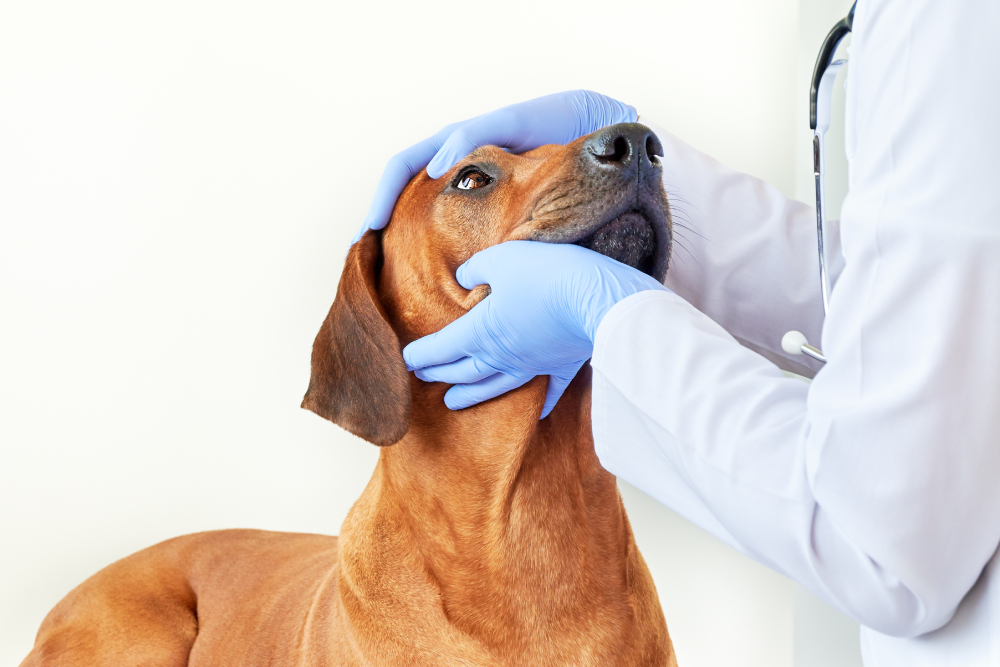
Veterinarian ophthalmologist examining dog's eyes

As our pets age, one common ocular change seen in senior and geriatric dogs is a condition called nuclear sclerosis, or lenticular sclerosis. Nuclear sclerosis can change the appearance of your pet’s eye, but you also might be wondering how exactly it impacts their vision. Fortunately, nuclear sclerosis minimally, if at all, influences vision and doesn’t require veterinary intervention. Continue reading more below to learn about this incredibly common condition.

dogster face divider

What Is Nuclear Sclerosis?

Before getting into the details of nuclear sclerosis, it is a good idea to review basic ocular anatomy.

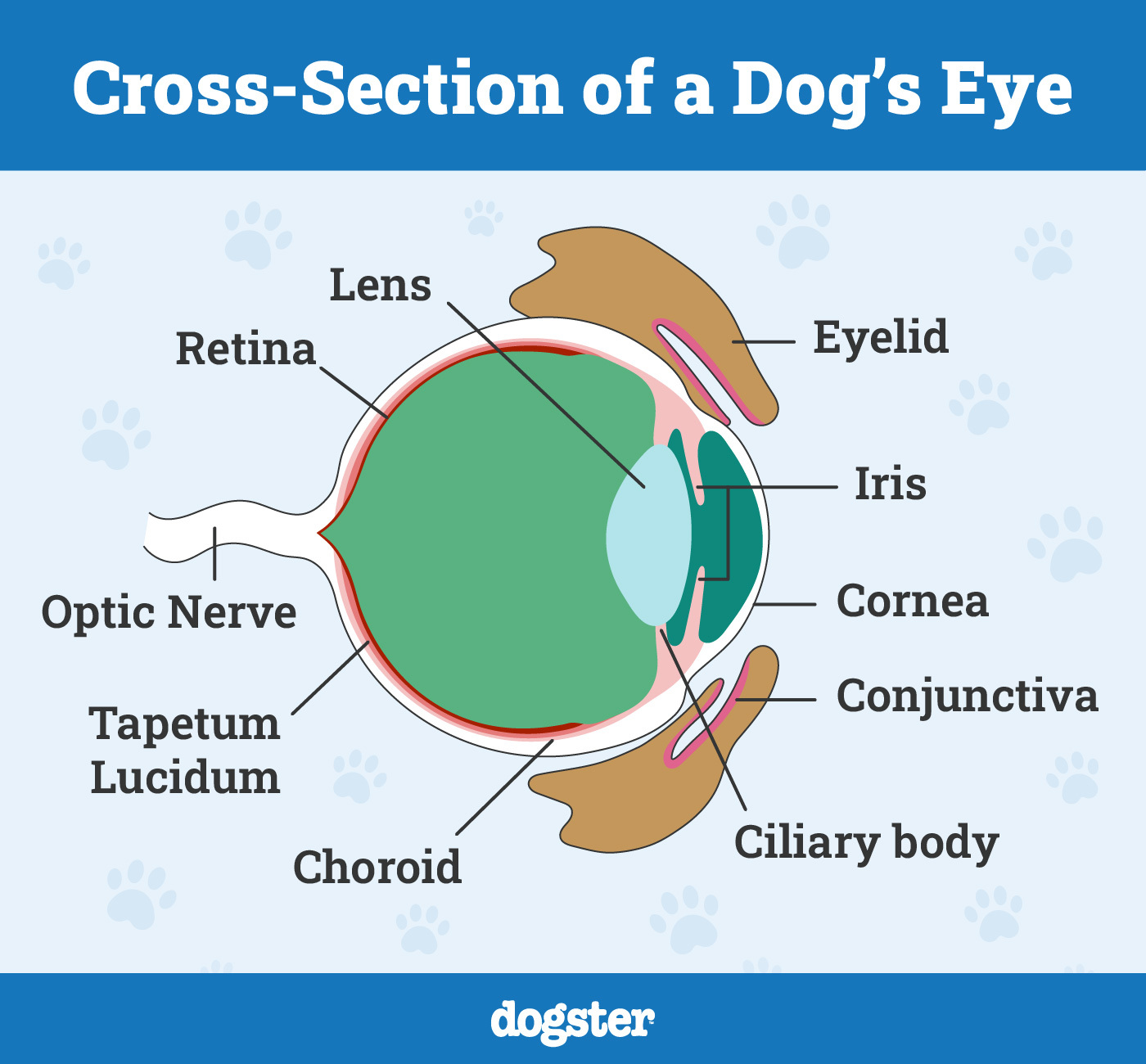
The cornea is the outer layer of the eye that appears clear and rounded. Within the cornea is a clear fluid called the aqueous humor. The colorful part of the eye is the iris, and this is the part of the eye that constricts and dilates to adjust to light. The pupil is the dark portion located within the center of the iris, and the lens lives behind the iris. The lens helps control the shape of light as it enters the back of the eye and interacts with the retina. Meanwhile, the back of the eye is where vessels and the optic nerve are housed.

So, what happens to our pet’s eyes with nuclear sclerosis? With nuclear sclerosis, the lens which is typically clear becomes uniformly cloudy or hazy. This causes the center of the eye to appear blue or grey. Fortunately, this doesn’t seem to significantly impact a patient’s ability to see and is a common age-related change.
You’re welcome to use our images, but we require you link directly to this site for credit (ex. Image from Dogster)

What Are the Signs of Nuclear Sclerosis?

A gray or hazy appearance to the eye is suggestive of possible nuclear sclerosis. This change is most commonly noted bilaterally. Additionally, your pet may have a harder time with depth perception. However, nuclear sclerosis is thought to only minimally affect vision, if at all.

If your dog is showing these signs, we suggest you speak to a vet.

If you need to speak with a vet but can't get to one, head over to PangoVet. It's our online service where you can talk to a vet online and get the advice you need for your pet — all at an affordable price!

PangoVet_Mention-in-Content Savings V1

What Causes Nuclear Sclerosis?

The exact cause of nuclear sclerosis is not known currently. A theory is that as more lens material is replaced in the aging dog, the lens itself doesn’t grow. As a result, the lens becomes thicker giving a darker appearance to the eye.

How Is Nuclear Sclerosis Diagnosed?

Nuclear sclerosis can be differentiated from cataracts through an ophthalmic examination. During the ophthalmic examination, a light is shined into the eye. The lens is evaluated with an ophthalmoscope, and through the lens, the retina is examined. A lens impacted with nuclear sclerosis will still be transparent and the retina can be fully visualized.

A Note on Cataracts

Cataracts are another very common eye change associated with older age. The lens in a dog with a cataract appears different from the lens of a dog with nuclear sclerosis. In cataracts, the lens will develop opacities and light cannot pass through to the retina. Cataracts do not impact the entire lens all at once; often, there will be a small cataract present, and with time, that cataract can become larger until the entire lens is involved.

During evaluation using an ophthalmoscope, the retina may be partially or fully obscured as a result of the opacities within the lens. Cataracts will require veterinary care, as they can lead to complete blindness and have secondary complications, like uveitis.

Small old purebred dog of toy terrier breed has problem with partly blind cataract eyes.
Image Credit: Irina Nedikova, Shutterstock

How Is Nuclear Sclerosis Treated?

Due to the lack of impact nuclear sclerosis has on vision, treatment is not needed. Again, this is considered a normal part of the aging process. Care should be taken, however, to monitor for the development of a cataract. Cataracts can sometimes be missed until vision is impaired unless regular ophthalmic exams are performed.

How Do I Care for a Dog With Nuclear Sclerosis?

Caring for a dog with nuclear sclerosis doesn’t require any special care. It is a good idea to have a wellness exam performed by a veterinarian every 6 months in senior dogs, and at least annually in younger dogs. This will allow for ocular changes to be timely addressed.

divider dog paws 4 oct 2024

Frequently Asked Questions (FAQ)

Now That My Dog Has Nuclear Sclerosis, Will They Develop Cataracts?

No, not necessarily. It is important to note that nuclear sclerosis and cataracts are the two most common eye conditions in adult and senior dogs. There is a high chance that a senior dog will develop one or both conditions in their lifetime.

Blind dog, eye cataract.

What Can I Do to Prevent the Formation of Nuclear Sclerosis?

Fortunately, nuclear sclerosis does significantly impact vision. As a result, there is nothing that needs to be done to address this condition. Furthermore, there is no treatment present to prevent this from occurring either.

divider dog paws 4 oct 2024

In Summary

Although the appearance of a sclerotic lens may be concerning, it is actually a benign process that doesn’t interfere with vision. Nuclear sclerosis is a common age-related change that doesn’t require medical intervention or treatment. Care must be taken to routinely have the eyes evaluated as cataracts can develop in dogs with or without nuclear sclerosis, and a thorough eye examination will allow differentiation between the two conditions.


Featured Image Credit: Zontica, Shutterstock

Want content like this delivered to you?

Sign Up For Our Newsletter

News, insights, expert advice, and everything dog

* By submitting, you agree to our Terms & Conditions and Privacy & Cookies Policy.

How useful was this post?

Click on a star to rate (you can leave written feedback after clicking submit)

Help us improve Dogster for pet parents!

Your feedback really matters.

What did you like about this post? Also how can we improve it?

Join the conversation

Leave a Reply

You’re very welcome to leave a comment or question. Please know that all comments must meet our community guidelines, and your email address will NOT be published. Let’s have a positive and constructive conversation.

Talk With A Vet Online

Peace of mind,
anywhere, anytime

Affordable vet advice

8 Best Dog Foods for Diabetic Dogs in 2025 – Reviews & Top Picks

If your beloved dog has been diagnosed with diabetes, you may be in shock and overwhelmed by the situation. The good news is...

Will a Pitbull Be Good With My Kids? Temperament & Personality Traits

Pitbulls have inherited a bad reputation for being overly aggressive and temperamental dogs, but saying that all Pitbulls are like this is far...

Auggie Dog Breed: Info, Pictures, Care Guide & More

The Auggie is also sometimes referred to as an Aussie Corgi and is a mixed breed that crosses the Australian Shepherd and the...

Fake Testicles for Dogs: Vet-Verified Facts & FAQ

Neuticles were introduced to the world in 1995 by an inventor named Greg Miller. These are fake testicles designed just for dogs that...

More related

What Do Dogs Think About All Day? Vet-Verified Insights, Emotions & Body Language

Dogs communicate via their body language and various vocalizations. As a dog parent, you should become familiar with your dog’s body language, as...

15 Canada Pet Obesity Statistics & Facts to Know in 2025

Note: This article’s statistics come from third-party sources and do not represent the opinions of this website. Obesity is a serious condition that...

10 Interesting Labradoodle Facts That You Should Know

Labradoodles are a popular hybrid dog that’s a cross between a Labrador Retriever and a Poodle. These dogs have remained a favorite amongst...

How Smart Are Corgis? Canine Intelligence Explained (Vet-Verified Info)

There’s nothing wrong with a “dumb”- but loving dog, but some owners have a special place in their hearts for the smart ones....

Keep reading

What Is Hydrolyzed Protein Dog Food? Pros, Cons, & FAQ

If your dog is allergic to proteins or struggles with inflammatory bowel disease, you have probably heard about hydrolyzed protein dog food. Meat is one of the most common allergens found in dog food, which often leads to itchiness and...

dog eating from bowl in kitchen

What Are Tocopherols in Dog Food? Vet-Verified Nutritional Facts

Commercial dog food is what most owners feed their dogs because it’s convenient, and affordable compared to homemade food, and typically offers all the nutrients that a dog needs to thrive and enjoy a high quality of life. Many different...

dog eating dog food

How to Start a Dog Food Business: 10 Tips & Tricks

Given how important nutrition is to pet health, starting your own dog food business can be an interesting and even lucrative idea. Indeed, according to IBISWorld, the pet food industry brings in $27 billion a year, and it is growing...

Pet Food Packets At Store

Can Dogs Eat Teddy Grahams? Vet-Approved Facts & FAQ

Before changing your dog’s/ cat’s diet or introducing new ingredients or supplements that they haven’t eaten before, especially when it comes to human food, make sure to consult your veterinarian first. Every dog/cat is different and requires an individual approach...

Can Dogs Eat Teddy Grahams

Can Dogs Eat Daikon? Vet-Approved Facts & FAQ

As daikon radishes gain popularity in human cuisine, it’s only natural for dog owners to wonder if it’s safe to share this sweet and crunchy vegetable with their pups. The short answer is yes, dogs can eat daikon—not only is...

Can Dogs Eat Daikon

How Often Should Puppies Eat? Vet-Approved Guide & Scheduling

Raising puppies is not for the faint of heart. It’s a tough gig, not unlike raising a newborn baby, but it is extremely gratifying, rewarding, and a whole lot of fun. One of the most important parts of successfully caring...

puppies eating from bowls together

Dinovite Dog Food Review 2025: Recalls, Pros & Cons

Review Summary We want our pets to be healthy, so we search across the seas and plunge deep into the Internet to find the best dog food available (that we can afford). And still, that may not be enough. Like...

Dogster_Dinovite Dog Food Review

Can Dogs Eat Pop Rocks? Vet-Verified Facts & FAQ

Pop Rocks certainly are a favorite among consumers for their variety of flavors and all the fun you get to have as they pop, crackle, and fizz in your mouth. Bite down on one and you’re in for even more...

Can Dogs Eat Pop Rocks